
There is nothing more stark than the difference between the concrete jungle of New York City and the towering mountains of Salt Lake City. Yet, a shared love for sweet treats has just bridged the gap.
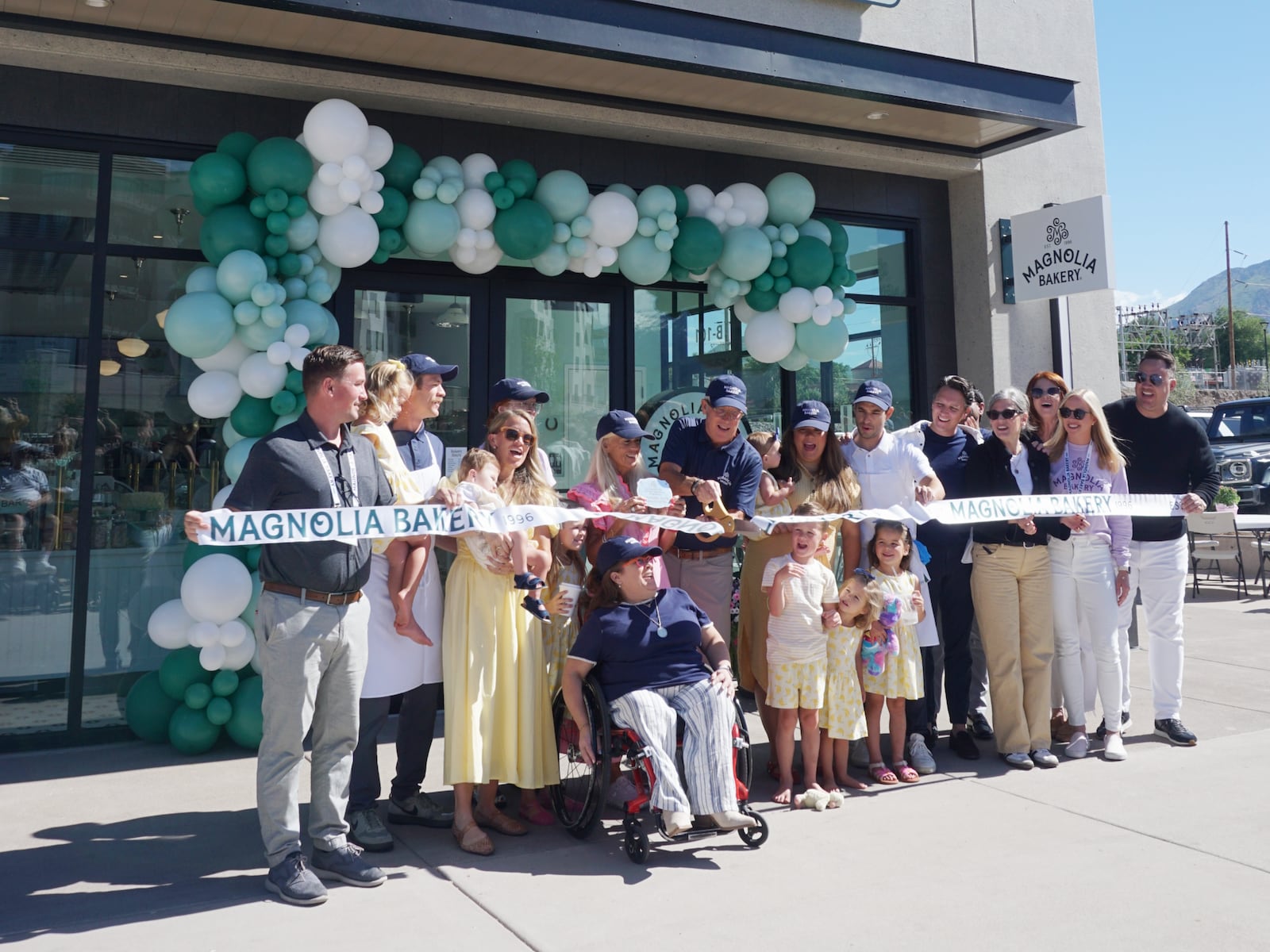
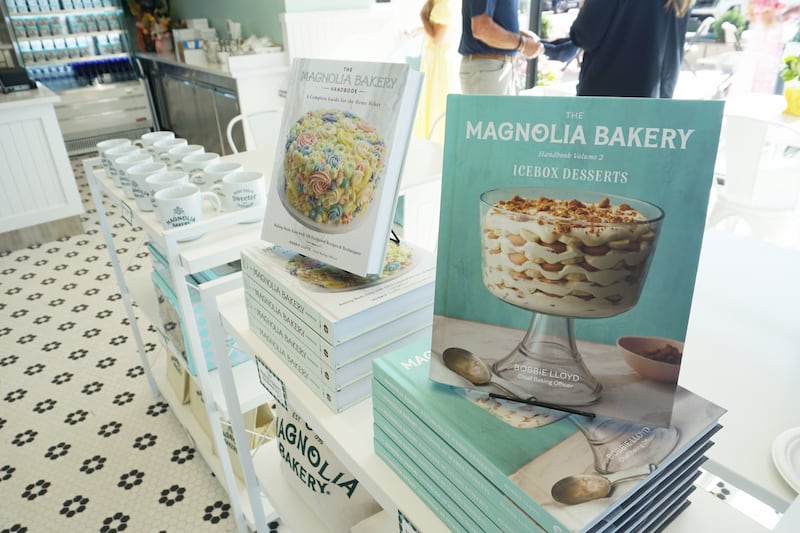
Last week, Magnolia Bakery opened its first U.S. franchise location in Holladay, Utah, to long lines and an eager crowd. Kirk Schneider and his family, the first U.S. franchisees, had a triumphant ribbon-cutting and grand opening ceremony, joined by Magnolia CEO Nathan Louer and its owner Bobbie Lloyd. Lloyd was also Magnolia’s former CEO and currently serves as the CBO, a dual title referring to her role as chief brand officer and chief baking officer.
Known for its iconic red velvet cupcakes and banana pudding in New York City, Magnolia’s expansion to Utah came as a surprise to more than just Utahns, but to Schneider and Lloyd themselves. “We were not looking to be in the baking business, and she was not really looking to be in Utah,” Schneider says.
So why would a famous New York City institution choose Salt Lake City for its first domestic franchise?
The story began in Ireland.
A shared recipe for community values
Running a bakery wasn’t always the plan for the Schneiders. Almost two years ago, Kirk Schneider and his wife were on a bike trip in Ireland, fresh from selling Nate Wade Subaru, which had been one of the country’s most successful Subaru dealerships. There, they met Lloyd, who at the time was the CEO of Magnolia Bakery. They were regular patrons whenever they visited New York City and hit it off instantly. The group remained in touch after the trip until one day Schneider received a call. “They called and said, ‘Why don’t you come to New York, and we’ll see if we like you and you see if you like us?’” Schneider says. “And here we are. It’s really kind of a serendipitous story.”
For a local bakery like Magnolia, the franchise model was never in the picture. When Lloyd and her former business partner bought the bakery 20 years ago, it was a corner neighborhood shop. Their goal wasn’t to franchise and instead envisioned opening additional locations in the NYC metro area. But as the brand grew, it expanded into an international franchise model, becoming a global powerhouse with over 40 locations today. It also opened U.S. stores in Chicago and L.A., but these remained under corporate ownership.
For Magnolia Bakery’s leadership, choosing to entrust its first U.S. franchise to Schneider came down to something that couldn’t be manufactured: alignment. Louer says, “You can’t do franchising right unless you have, and I don’t say this lightly, extremely high-quality individuals that want to take the brand to the next level, and feel like it’s their brand just as much as I feel like it’s ours at Magnolia. It felt like a real connectivity of values.”
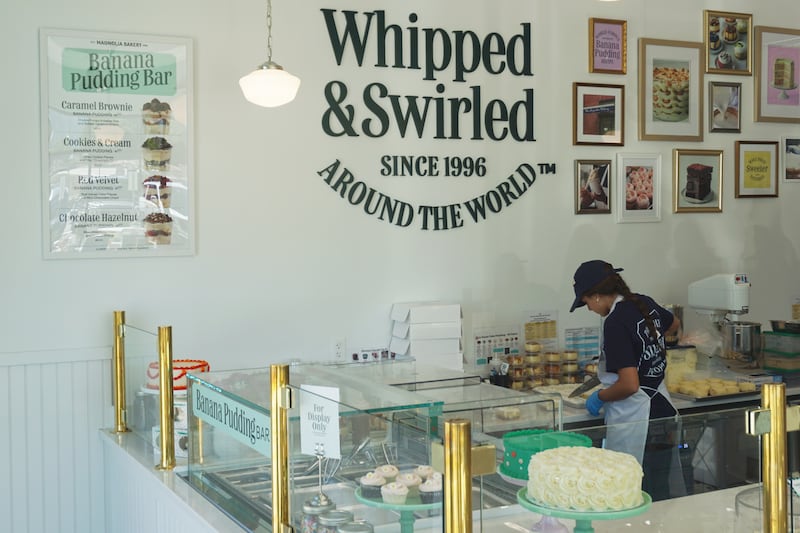
The Schneider family’s background as successful entrepreneurs who built multigenerational relationships resonated deeply with Magnolia’s core values of enterprising spirit, togetherness and sincere service.
These same values run deep in Utah’s business culture, which prioritizes long-term relationships and community over quick transactions. This shared commitment to people proved to be the perfect recipe for success.
“Sincere service is number one,” Lloyd says. “And then another big one is being part of a community. Because when you’re part of a community, you know your customers, you know what they want, you know what they like.”
Finding the franchise sweet spot
This community-first environment directly led to a massive shift in Magnolia’s corporate strategy.
Emerging from the pandemic, the bakery’s original framework was to become a heavy direct-to-consumer digital CPG business. According to Louer, the idea was to “be in retail — Target, Publix, Walmart, Costco, all over the country.”
However, as the world reopened, management realized that people were craving a sense of community and connection in thoughtfully built locations.
“There’s been this hard retrenchment to physical experience,” Louer says. “You see it in festivals, concerts and food experiences. … It became very clear that we needed to build more brick-and-mortar locations. We’re now prepared to go all-in on this franchise model and get great partners all over the country to do this in the right way.”
And Utah was the perfect post-pandemic market. Louer continues, “We don’t want to sit around in our houses forever anymore. I want to be out in the sunlight looking at the mountains, experiencing different things. … We want to build our locations in areas that have some sort of gravity towards them where people are attracted.”
The location is an increasingly popular spot, with new businesses like Trader Joe’s and Bobby’s Burgers by Bobby Flay as neighbors. Schneider describes the search for the right location. “When we came and looked at these spaces, I said, ‘Anyone in that corner?’ They said, no. And I said, ‘That’s us.’”
The expansion signals serious confidence in the Utah market, and the momentum is already building. A second Salt Lake City location in Foothill Village is opening this fall, with talks of more to come.
“We have this model where we’re selling three to five stores to franchisees,” Louer says. “You don’t want to do one or two because you get people who are buying themselves a job. They’re going to come in, and they’re going to run the stores themselves, and they’ll be in that cyclicality for years and years. … There’s this symbiotic deal where we feel excited about Utah, but we don’t want to go to 10 stores. That would be growing in a way that I think would be irresponsible. So we’ll start with a few and then grow from there.”
The team can’t be any more confident about the road ahead. Standing outside the new Holladay location, Louer puts it simply: “How can you not be optimistic being out here looking at the mountains?”
High altitudes and dirty sodas: Rewriting the recipe for Utah
One of the biggest hurdles Magnolia faced came down to a literal science. Elevation changes baking, meaning a recipe perfected in Manhattan will turn out differently in Utah. Because everything at Magnolia Bakery is baked fresh in-house from scratch, there are no shortcuts.
To ensure that the Utah treats matched their classic Magnolia counterparts, the Holladay location sent its head baker to New York City for four weeks, and Magnolia’s culinary training manager arrived a week before opening to adjust the recipes. “They’ve got a master baker, and he is called the mad scientist,” Schneider says. “He tweaked those recipes and made them just perfect.”
Adapting to Utah required more than just accounting for altitude. Magnolia Bakery added an important local twist: the dirty soda. But getting the Magnolia team on board required a complete Utah experience.
“The soda culture in Utah is a little lost on the rest of the country, and they did not understand at first why we thought that was important,” Schneider says of Magnolia’s leadership. Then, he took them to Swig. Schneider explained the importance of incorporating this uniquely Utah tradition. “It’s important for people in Utah,” he says. “I believe it is. And then [Magnolia’s team], on their own, accepted that. And they developed the different sodas.”
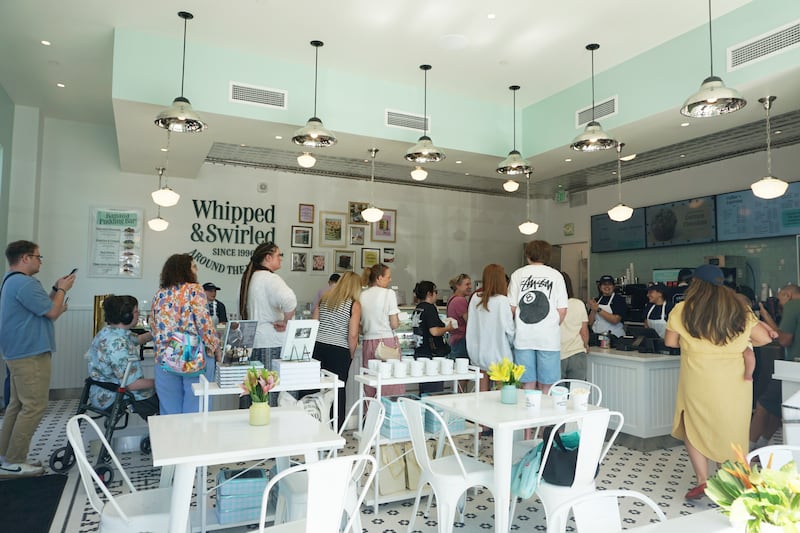
The Holladay location is now officially the first Magnolia Bakery in the world to offer fountain sodas, including selections like Banana Fizz, Blueberry Jamboree and other Magnolia Bakery-specific flavors, a menu you won’t find at any other location.
The final product is authentically Utah, right down to the location. Kirk Schneider grew up just blocks away from the new storefront, which was the historic ZCMI building, considered America’s first department store.
While it’s a demanding operation, Schneider is embracing the journey. “I’ve done more dishes this week than I’ve done in the last 20 years,” Schneider says. “And I enjoy every bit of it.”
