
This story appears in the July 2026 issue of Utah Business. Subscribe.
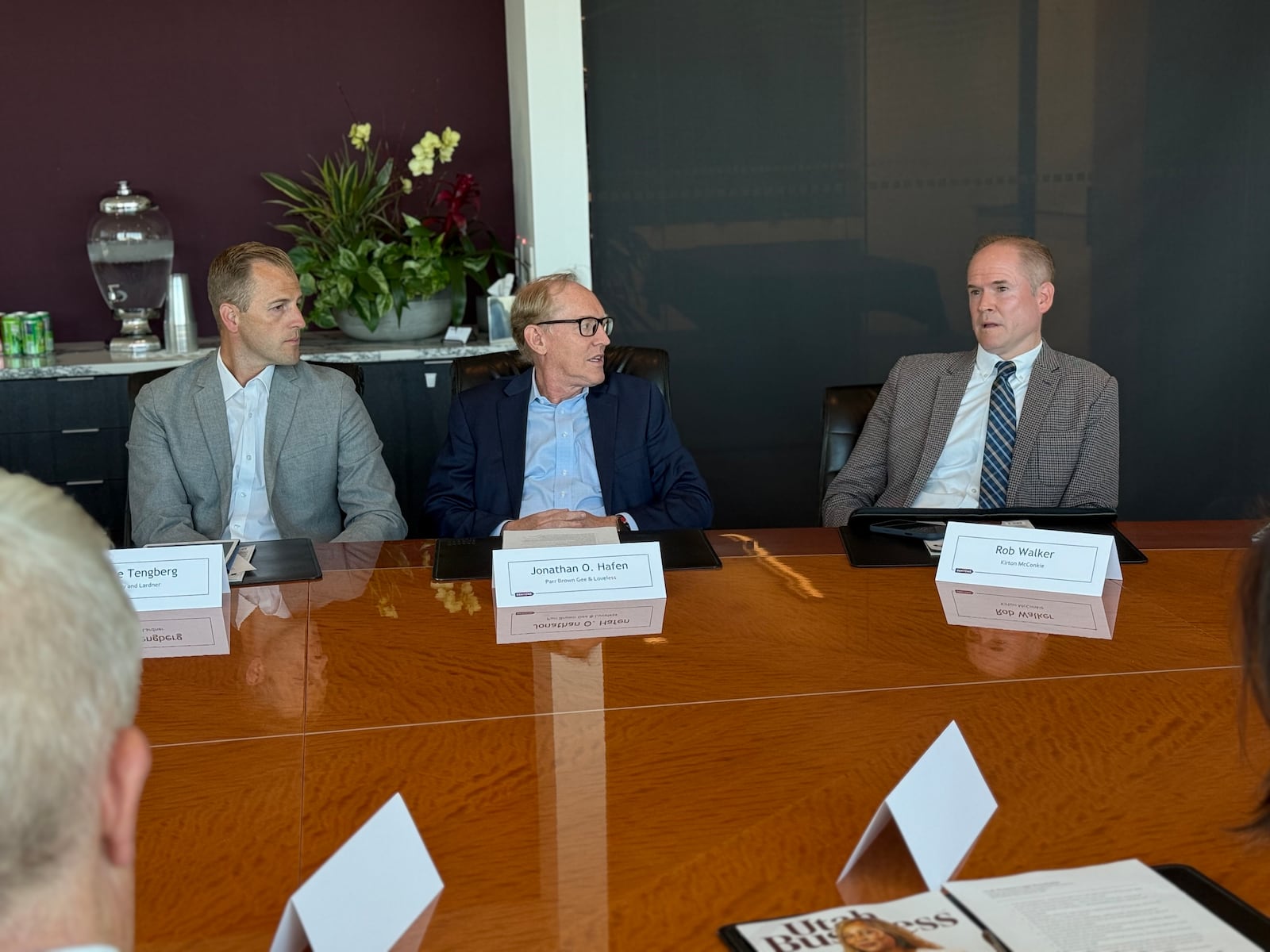
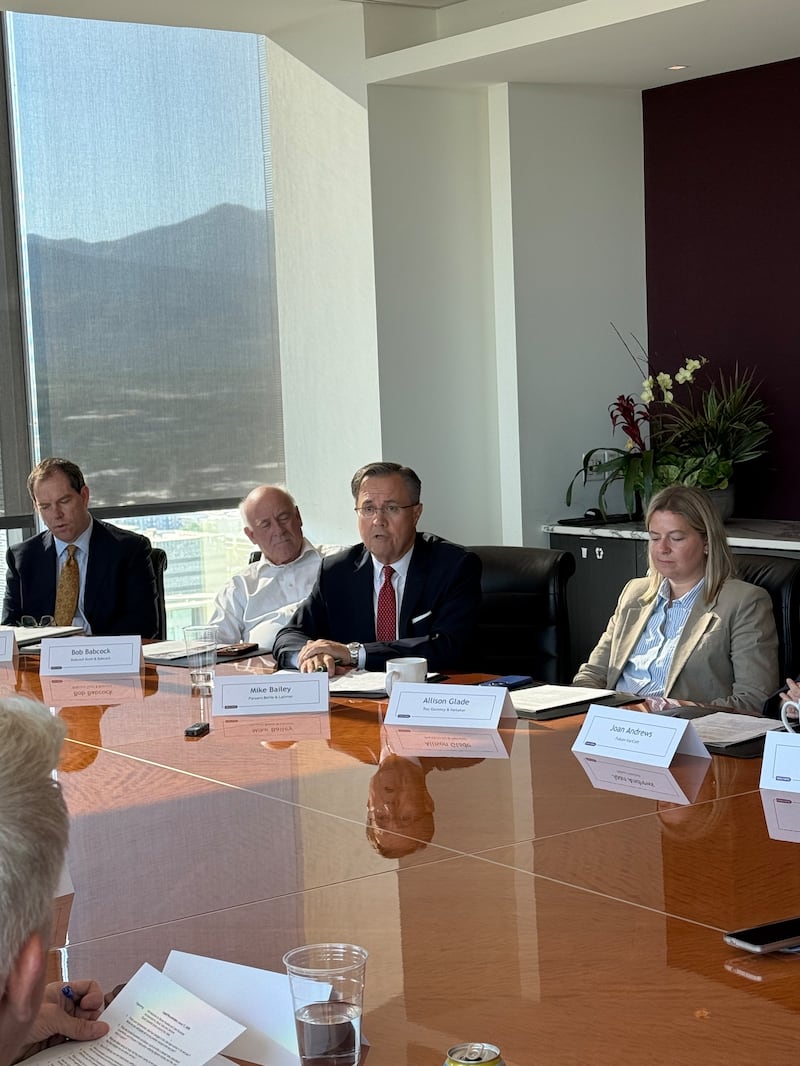
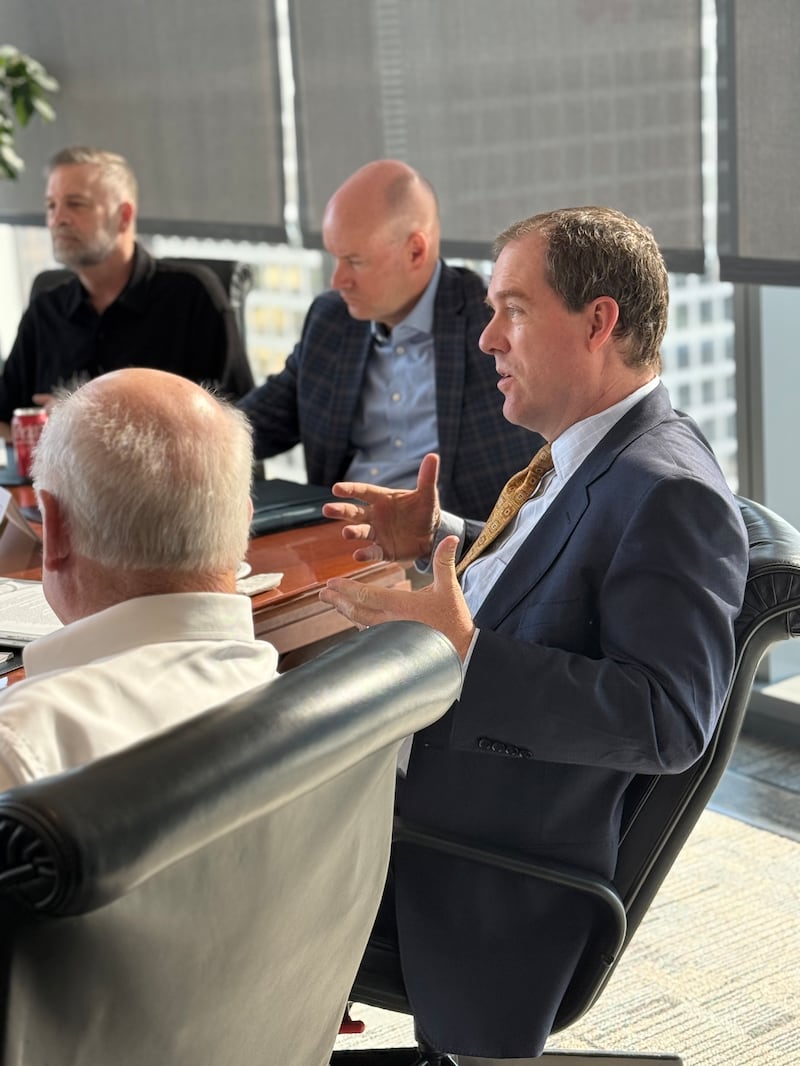
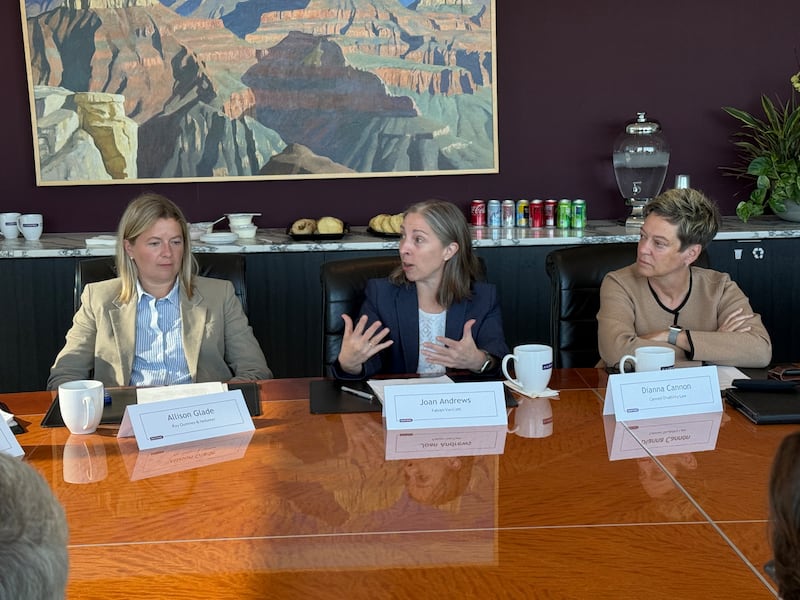
Last month, Utah Business hosted a roundtable conversation sponsored by Dentons Durham Jones Pinegar and moderated by David W. Tufts, partner at Dentons. The roundtable discussed AI, hybrid models, and threats and opportunities in the legal industry in Utah.
From your perspective, what has changed in the Utah legal market in the last year? What do you anticipate will be the greatest change in the next year?
Mike Bailey | Director, Strategic Growth | Parsons Behle & Latimer
We’re fortunate that in the 11 cities that we’re in, the economy is strong in those cities. It’s a little bit like the stock market: You wake up every morning, and there are all these things happening around the world, and yet the stock market is still going up. … For the most part, our clients have shelved those concerns and are continuing to move forward and grow.
John Huber | Shareholder | Greenberg Traurig LLP
It’s exciting how Utah has grown so much and matured. One thing that I have been involved with is the international expansion of our businesses, even small businesses that are stretching their wings across the globe, either in seeking markets for their products or seeing opportunities to grow. We have great trade groups and business groups here with World Trade Center Utah and 47G that are helping.
Rob Walker | Attorney | Kirton & McConkie
With broader AI adoption worldwide, there seems to be this continued pressure for speed, predictability and a demonstrable value in what we provide and putting our arms around that. How we help that going into the future seems to be quite a change. It’s coming — no matter what we want to say about that and how we deal with those three aspects of speed, predictability and value.
What are clients asking for today that they weren’t asking for two years ago? And how has that changed how you deliver services, if at all?
Keith Woodwell | Management Committee Member | Clyde Snow & Sessions
I’m getting a lot of clients that are saying, “I’ve already done the docs on this. Grok helped me do it. What I really want is for you to put your eyes on it, make sure it’s okay, but I don’t need you to draft the docs.” The expectation is that we’re the editors to make sure that whatever they’ve done for themselves isn’t going to get them into trouble. That’s led to difficult conversations at times, [where you have to say,] “This is in the ballpark, but it’s not exactly fit for [the] purpose of what you’re trying to do.”
Dianna Cannon | Lawyer, Social Security Disability Law | Cannon Disability Law PC
The thing that I’ve seen in the last couple of years is [clients] wanting continual access to me. “Well, if I have your email, I can email you at 11 p.m. and I expect an answer.” I don’t know if that’s really driven by being able to go online and get answers; “Well, now I’m just going to ask my attorney.” That has been a big change in just the last five years, that you need to be available at all times.
What guardrails or governance frameworks have your firms adopted for AI use and what have you encountered with regard to ethical pitfalls?
Emily Schilling | Partner & Practice Group Leader, Environment, Energy and Natural Resources | Holland & Hart LLP
[AI is] in our engagement letter, and it’s a discussion you have to have at the outset with your clients. … Historically, we have been driving towards greater leverage, and one thing that AI is doing is affecting our ability to leverage the same way that we did because they’re not so interested in our associates. It affects leverage, it affects training, it affects hiring decisions as we look into the future.
Aaron Murdock | Corporate Partner | Mayer Brown
We use [AI] all the time. It’s really good at distilling the key points out of massive amounts of information. On the transactional side, you can do that initial call that used to be done by a junior associate and then you can start the analysis and the thinking, and that’s where the value is. … We have in our engagement letter that clients expect it, and they want the efficiencies from it.
Mark Morris | Senior Partner | Snell & Wilmer
I don’t think very many people are aware that the Utah Legislature passed the AI Policy Act in 2024. It’s going to sunset at some point, but in the meantime, the disclosure obligations are critical. You need to let your clients know that we’re using AI and here are the risks, here are the benefits — judges certainly have an opinion. I know some courts are insisting that now, in addition to other things you do when you file a brief, some courts are saying, “We want to know if you’ve been relying on AI for this,” because some courts have been burned.
Stanford Purser | Solicitor General | Utah Attorney General’s Office
We have a policy. Beyond the informed consent to the client, we require all of the attorneys to train on it and to read background materials on the ethical use of it. We require everybody that does use it to also verify the source.
Brent Baker | Partner | Spencer Fane LLP
Hallucinations is a secondary gripe that I have with associates using AI. The first problem I have is that they’re not learning, or they’re outsourcing critical thinking. … They have to be able to look at a fact pattern and make some decisions based on that fact pattern.
Jonathan Hafen | Shareholder | Parr Brown Gee & Loveless
[AI] is one of the most disruptive things that we will ever see; I thought it was going to be COVID. I think we’ve learned to adapt. … What’s interesting to me is thinking about what it’s replacing, but then what it’s not replacing. One of the things AI will not replace is reading a room, having a conversation with a judge, examining a witness. Our process on the litigation side is not going to get replaced by AI because it is about people.
Mike Bailey | Director, Strategic Growth | Parsons Behle & Latimer
There’s almost no relationship in the world as strong as that of an attorney and the client. It’s unbelievable how our clients come to rely upon everything that we say and everything that we do. We have to make sure that as we use this tool, which is a valuable tool, we don’t let it affect those human relationships that we have with our clients.
Bob Babcock | President | Babcock Scott & Babcock
I’m intrigued by the new people coming into law school. The first five years for attorneys, there’s real pressure because those assignments historically went to some of those people, and now it goes to AI. How do you get them from zero to six or seven years of experience without them trudging through? We all started on that, looking at documents. And how do you get them to that point without that kind of experience?
Stanford Purser | Solicitor General | Utah Attorney General’s Office
The judgment combined with experience is so important. It’s one thing to recognize, “This is just flat wrong,” versus, “There’s a lot of right things, this sounds right.” Can you pick out the few nuances that are wrong? A lot of that just comes with experience, knowing the law and having worked with it enough to think, “This doesn’t sound quite right.”
Victoria Tomoko Carrington | Registered Patent Attorney | Maschoff Brennan
The Utah State Bar Journal recently published a piece by the Young Lawyers Division, and they shared some research on how young associates now post-COVID are more likely to respond to an email after work hours, compared to before COVID. … It’s interesting because some associates like me are feeling this pressure to immediately get answers and be responsive, because we’ve got all these AI tools. But on the flip side, AI is a tool; professional judgment remains yours. How do we integrate both of those?
What is driving the current pace of lateral hiring and attorney movement? How is your firm approaching talent retention?
Jonathan Hafen | Shareholder | Parr Brown Gee & Loveless
One of the things that’s key for the rising generation is choices. It’s really important for lawyers to have the opportunity to find the right fit. … You look at our market now, and it has matured as a legal market. … We’ve got top national firms here, top regional firms. … If people find the right spot, at least what I’m seeing, people stick. That’s a good sign.
Emily Schilling | Partner & Practice Group Leader, Environment, Energy and Natural Resources | Holland & Hart LLP
I find that associates and even partners who are interested in lateral moves are looking for … collaborative environments. They’re looking to learn not just through AI. They’re looking to work with partners who are committed to their development and committed to what flexibility they may need.
Blake Tengberg | Partner | Foley & Lardner LLP
We are still seeing so many attorneys who have an interest in working with Utah companies, who want to interact, build a practice here, and have clients here, which I think is fantastic. For all its pros and cons, Utah is still a smaller business state, but growing certainly. I love that we’ve got laterals that are leaving these larger law firms that have an interest in developing a practice here.
Has the hybrid work question been resolved at your firm, or is it still a source of tension among staff and attorneys?
Aaron Murdock | Corporate Partner | Mayer Brown
There are three days that we expect attorneys to be in the office. Most of the business support professionals are in four or five days. … I think that will continue to be an issue because it is so easy to work remotely now. There’s been a general shift in recognizing that we do need to get together in person some amount of time to remain engaged and have that sense of team that is so important in these high-stress professions.
Keith Woodwell | Management Committee Member | Clyde Snow & Sessions
Associates don’t mind being in the office; it is more the senior partners who are in the office less. … Especially with your associates, you’ve got to make it worth their while to be in the office. It’s got to be a good environment. It’s got to be fun. I’m hosting a [World Cup] watch party on Friday for all of our associates, where we’ll feed them and watch the game. … Almost not a single day goes by that I’m not at lunch with one or more of the associates from our office. That’s where the connections really happen.
Rob Walker | Attorney | Kirton & McConkie
It feels more stable, but maybe it’s not fully resolved. It is increasingly important to set clear expectations while preserving enough flexibility for collaboration, training and client service. Since the COVID era, there seems to be no replacement for those in-person interactions. … It really seems to be important in preserving the firm culture as well when you have those in-person relationships and that opportunity to be accountable to not just what we’re talking about from a work setting, but to know about that individual and what’s going on in their lives.
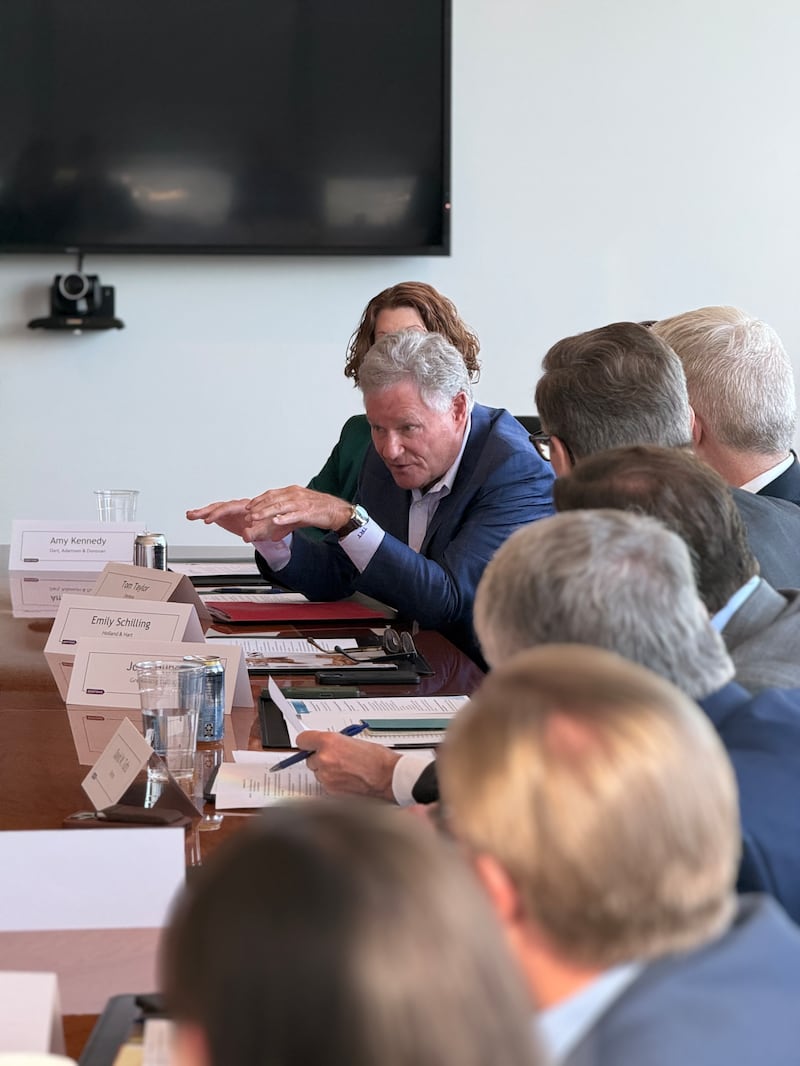
Amy Kennedy | Senior Partner | Dart, Adamson & Donovan
My firm is a little bit different since we are a boutique practice and there are four of us on our family law team. We offer some flexibility. I love my Fridays working at home; I will die for that. Our associates appreciate that opportunity to be flexible because they’ve got younger kids, they’ve got a lot of things going on in their life, but they also crave being in the office because they want that mentoring.
Clark Cannon | Attorney | Fragomen
We have a hybrid model where we require people to be in the office two days a week, but we’ve found that people like to come in more often, sometimes three or four days a week. … We found that bringing people in the office is great for collaboration, mentorship and development, and people crave that — especially younger attorneys. … It leads to retention and building culture.
How has the legal and political environment today around diversity initiatives affected your firm’s approach to diversity, recruitment and retention?
Clark Cannon | Attorney | Fragomen
At Fragomen, we do business immigration law, and so diversity is at the core of what we do. … Half of our associates are minorities; we’re the only Am Law 100 firm that’s female-owned, and half of our partners are female. It’s something that draws people into our firm that are interested in the area of law that we’re working in, and it’s something that we continually focus on and keep as a foundation of our practice across all of our offices worldwide.
Joan Andrews | Shareholder | Fabian VanCott
It’s just good business sense. Utah is becoming a much more diverse economy, and having different perspectives in the room … is going to result in a more informed business judgment and things that you can bring to bear on providing effective representation to your clients. Regardless of shifting political winds, I think there’s still a business case to be made for ensuring that our workforce is representative of the clients that we’re working with.
Are there specific regulatory or legislative actions at the state or federal level that are creating headwinds or tailwinds for your practices and clients?
Bob Babcock | President | Babcock Scott & Babcock
We typically can have more courage than other people in the community to stand up and say, “Something needs to be done and this needs to get fixed,” and deporting 15 million people is not a fix. … I’m very concerned and my clients are very concerned about what’s going to happen. … That’s a plea I would make, to be aware of that and see if there are places where you can say anything to political leaders to have the courage to do something.
Lance Lehnhof | Shareholder | Buchalter
I don’t know if this is a headwind or a tailwind, but I think it’s something that’s coming to the legal industry: private equity investing in and acquiring law firms. We’re working on two of those deals right now. It started with the more commoditized firms, … but it’s coming to the bigger firms as well. … It’s coming faster than people may realize.
John Huber | Shareholder | Greenberg Traurig LLP
On a positive note, a tailwind for us is the development of legislative authorization of the [Utah] Business and Chancery Court. Early indications are that this is a very positive development, and we’re optimistic that it will be a benefit to our clients moving forward.
What do you see as the most significant opportunities or threats facing your practice over the next few years?
Blake Tengberg | Partner | Foley & Lardner LLP
The economy here is doing so well, and that’s obviously great for those of us who are transactional attorneys; that’s always great for our business. Utah was so predominantly tech heavy, that we’re now seeing a lot more clients that are in the consumer products, consumer goods, and I love that. The entrepreneurial spirit here is still very strong in Utah. It gives attorneys a great opportunity to collaborate with our clients, to cross-sell them on other areas that we can be working on.
Dianna Cannon | Lawyer, Social Security Disability Law | Cannon Disability Law PC
Court used to be in person. Now, lots of times, they’re trying to provide court by telephone, not even face-to-face like a video. You’re trying to interact with your client, give them that personal service, but you’ve got to balance that against what is happening with technology. … That, to me, has been the most challenging and difficult part of the last few years, and it’s just going to continue forward.
Joan Andrews | Shareholder | Fabian VanCott
There are still tremendous opportunities here in Utah. I love being here. I think about why I stayed here after graduating from law school, and I’m so thankful and appreciative that I did because this has been just a wonderful legal community. One of the challenges is going to be finding that balance between saying, “How do we adapt in a way that is not ‘the sky is falling,’ … but doing what we need to do to effectively serve our clients in what is clearly a rapidly changing profession?”
Allison Glade | Attorney | Ray Quinney & Nebeker
Real estate is slow to change. The legislature does tinker sometimes with changes to affordable housing. … An opportunity we’re really seeing is the ability to be involved in some of the really large projects that are coming to Utah and have been in Utah. The sophistication level has been exciting and an opportunity for us to move forward.
Brent Baker | Partner | Spencer Fane LLP
The biggest problem I see facing lawyers today is that we’re losing respect from the client base. It has everything to do with lawyers, with fees, but it also has to do with judges. At the national level, we’re seeing things that we’re just shocked about, and no one seems to care. It’s the general erosion of respect for our profession, and we’re seeing that in spades now.
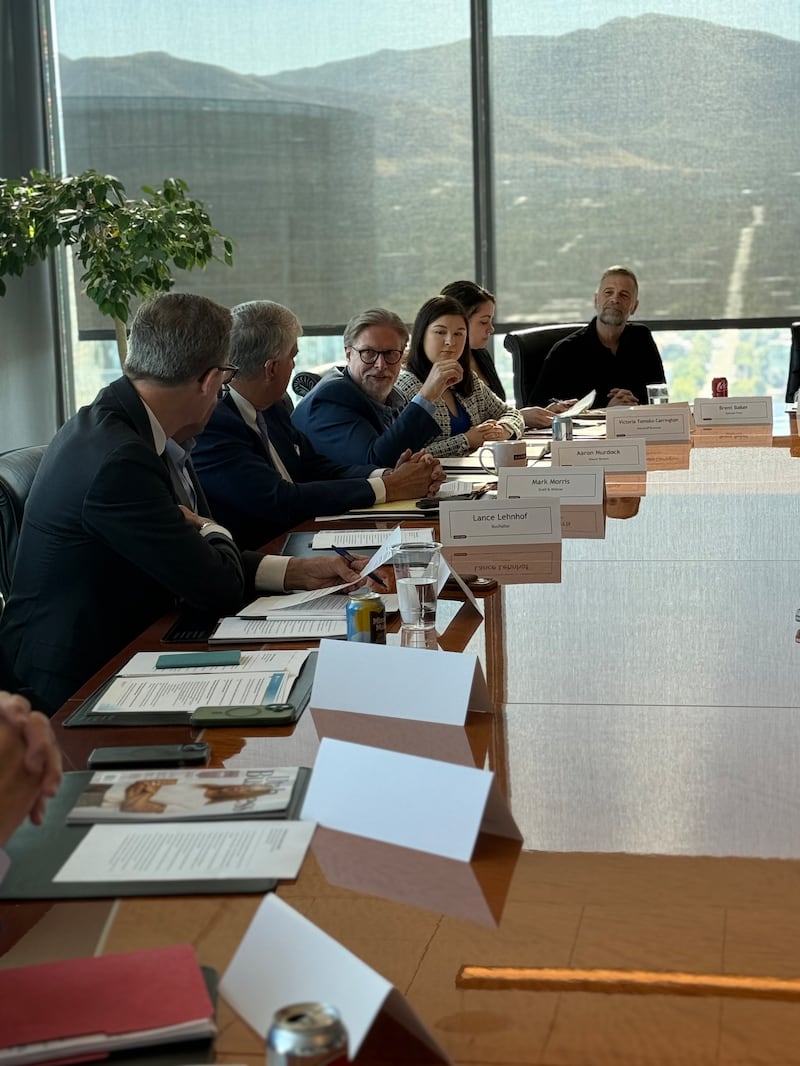
Victoria Tomoko Carrington | Registered Patent Attorney | Maschoff Brennan
A challenge that Utah lawyers are facing and I’m excited to continue facing is innovating and keeping up with the pace of Utah businesses. … There’s just incredible opportunities that Utah is experiencing in [the life sciences industry]. … From my perspective as a biotech patent attorney, … that’s where I’m continuing to see ways to stretch myself and get better at practicing law.
Lance Lehnhof | Shareholder | Buchalter
We’re in a business that historically has predominantly made our money [by] selling our time, and in a world where efficiency is growing at an exponential rate, figuring that out and how we continue to provide good value to our clients while getting paid fair value for what we do is going to be a real challenge over the next couple of years and require [some creative] thinking.
Tom Taylor | Shareholder | Dentons Durham Jones Pinegar
I look at AI as just a tremendous opportunity to serve our clients, become more efficient and provide better, faster, hopefully cheaper work product to our clients. I think the part of the question here is, how are we preparing? I know at our firm, we are doing a lot of AI training. … Technology is the big opportunity. … I’m sure in five years, there’ll be some other technology that none of us can even envision right now, but it’s an exciting time to be a lawyer in my view and see what’s going on with some of the technology platforms.
Amy Kennedy | Senior Partner | Dart, Adamson & Donovan
One of the great opportunities I see in our legal community is all of the national and international firms coming to town. I’m in a small firm and family law practice is very niche, but I can partner with people who have very good contacts and great expertise, and that has been a fantastic resource. With that, however, all of our rates had to go a lot higher, and that is making access to justice particularly challenging because not all of our family law clients can afford legal services.
