
This story appears in the June 2026 issue of Utah Business. Subscribe.
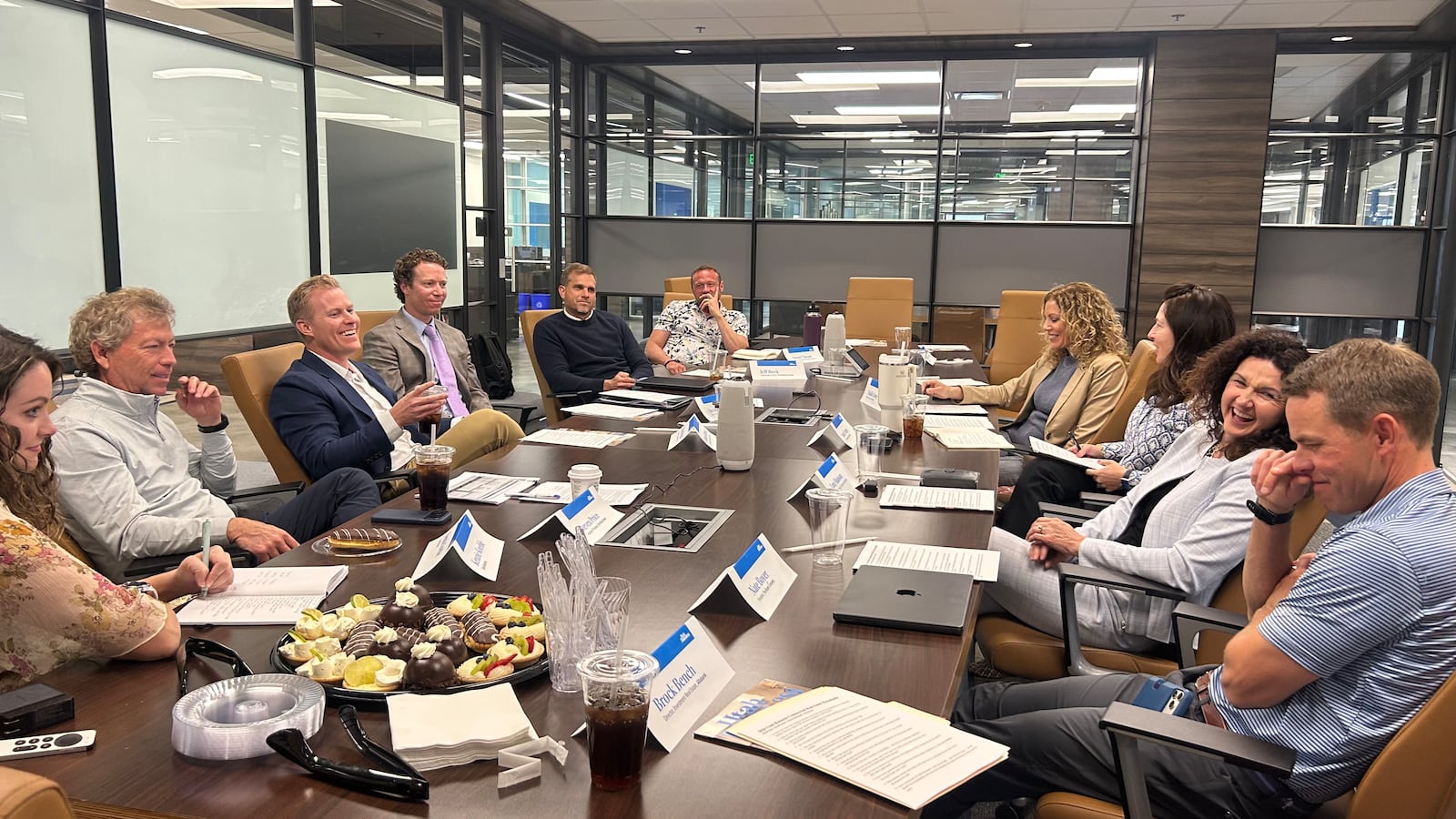
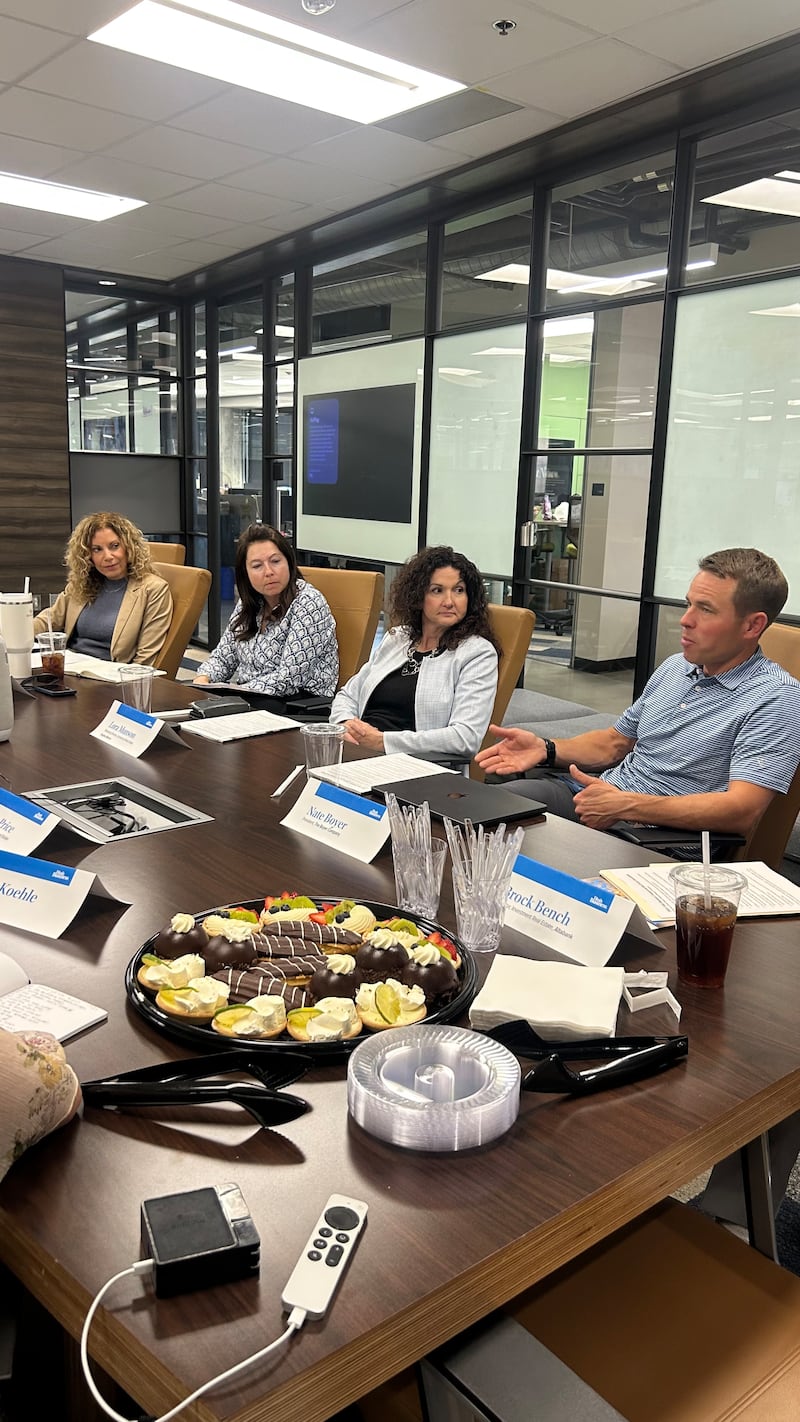
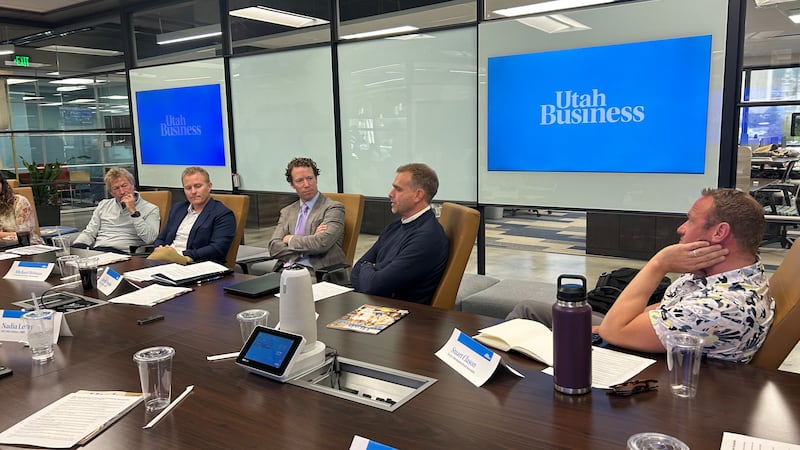
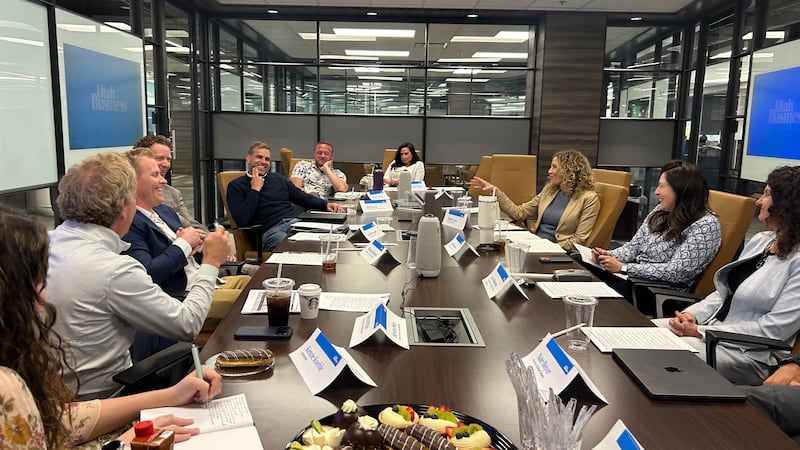
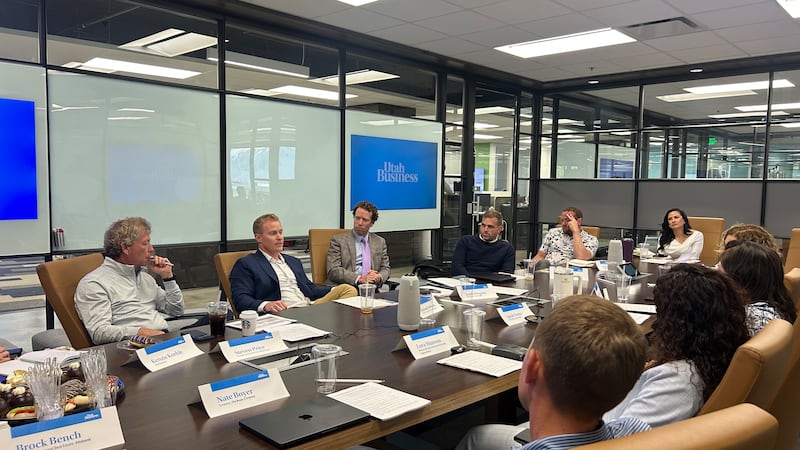
Last month, Utah Business hosted a roundtable conversation held at the Utah Business office and moderated by Sarah Narjes, general manager at Mortenson.
In what ways does Utah’s business-friendly environment and job diversification support commercial real estate resilience compared to our national peers? In what ways are we better positioned than some of our national peers?
Michael Holman | VP, Development and Finance | Overland Group
We do a lot [of commercial real estate] in Arizona, and … because there are so many more institutions that go in and out of a market like Phoenix rather than a tertiary market like Salt Lake, we see more boom and bust that happens outside of Utah. … I think it’s because you have fewer institutions that come to a tertiary market. It is also tangentially related to the business that we do and the fact that we have diversification. We’re not necessarily ultra-heavy in one thing that attracts massive capital solely to that industry and then retracts as soon as things go bad.
Stuart Clason | Regional Growth Director | Utah Regional Growth Association
I would agree with this being a tertiary market, but as a first-generation pioneer, I’ve always been very impressed with the overall diversification, like tourism, which is a major driver for our rural communities, and we’ve leveraged the national park assets. When you over-specialize … and inflation is high and money is low, you’re going to feel that. We have a very diversified economy, which allows us to absorb when there are swings in the economic cycle.
Nate Boyer | President | The Boyer Company
I appreciate the fact that we still have good in-migration, and Natalie Gochnour would quote that we have 40,000 to 50,000 people still migrating into the state, creating a new city essentially every year. … Have we overbuilt? Maybe, on the multifamily front, downtown, Salt Lake County specifically. But I love the diversity of our economy, and affordability is a concern, but it is something that we still come out ahead on compared to the coastal markets.
Steven Price | Founder & President | Price Real Estate
We probably have 45 of the 50 Fortune 50 companies here, but they’re not in downtown or Salt Lake City — they’re in the northwest quadrant and other areas. … We should have a downtown where our vacancy is falling and where people want to be, and not just other sectors of the economy. … There’s a chance and opportunity for us in the capital city to attract businesses. We have an international airport built in this century, and it’s vibrant. We’ll have 99 gates when that airport is done in a year and a half, and yet our downtown is lacking what other downtowns our size should have.
How are interest rates and capital market conditions affecting transaction volume, pricing expectations and deal structures?
Jacob Despain | Senior Commercial Real Estate Relationship Manager | Zions Bank
Lending has been pretty steady for a period of time. … We consider it a borrower’s market right now for deals that can pencil, and the deals that appear to be getting done have some special things to them. … Deal structures are becoming a little more competitive. Banks are having to sharpen their pencils both on rates as well as structure.
Brock Bench | Director, Investment Real Estate | Altabank
We’re seeing more market competition from other banks. We are also seeing a lot of outside money coming in, more than just traditional family offices that used to really dominate. It’s been kind of a mix, but business has been good. … Going forward, it could easily unravel itself. But retail and industrial are really hot right now. … Banks in general are bullish on Utah, and that’s why they’re willing to put the equity here as well. They want to be here.
Jeff Beck | Co-Managing Partner | BlackPine
In terms of deal structures and getting deals done, acquisitions have still been tough, with negative leverage. People still remember cap rates from a few years ago, and no one wants to change what their valuations are, so it’s been really hard to acquire anything. From a development standpoint, we’re all just waiting for those rates to drop, and they just aren’t. … Construction costs are still going up. It’s like we’re working on every angle, trying to get the bankers and contractors to help us out.
Nadia Letey | SVP | CBRE
There have been so many landlords who have done short-term loan extensions, and when they do that, the lender holds parameters of what those deals need to look like. You can’t give a screaming lease rate on a deal because the lender won’t allow you to do that in some cases.
There’s a little bit of a disconnect in what tenants think they can achieve versus what landlords can actually provide from a deal perspective.
Lora Munson | Managing Director | Hughes Marino
What we’ve seen is an increase in what I would call a quiet foreclosure, where it’s not really being foreclosed on, but you have the money behind the project that ends up taking over from the people who were proposed to own it. … It’s a big deal because it’s quiet. It’s not actively advertised out there, but there’s a lot of activity where things change hands very subtly.
What does construction pricing currently look like?
Nate Boyer | President | The Boyer Company
For the first time in a number of years, we’re actually getting calls from contractors, which is a good sign instead of us having to really encourage them to look at our projects. It doesn’t mean that they aren’t busy. They are, but it’s about finding the contractors that have open holes in their schedules. If developers get good coverage, I’d say we’re seeing some really competitive pricing, and back to the point on the financing rates, it’s because of those rates being high that the private markets are slowing down. The public projects are tailing off a little bit.
Jacob Despain | Senior Commercial Real Estate Relationship Manager | Zions Bank
Some call me Pollyanna, but of all the western states, Utah is one of the best. Maybe that’s depressing for the rest of the West, but I wouldn’t want to tackle these issues anywhere else but with everybody around this table. I’m optimistic because there are so many good people.
Steven Price | Founder & President | Price Real Estate
We’re moving into a new economy — we used to go to things, the “go to economy,” now we have the “come to us” economy. We look at it as the Amazon effect, but it was happening long before Amazon. … 90% of America lives 10 miles or less from Walmart, and Walmart will get it there quicker and usually cheaper. … Drones are coming next. … That’s what the future looks like, so we won’t build a building without a drone port.
Jeff Beck | Co-Managing Partner | BlackPine
We just tried to get a deal done with Amazon in a small bay, and the city recently passed an ordinance that does not allow them in the areas where we have some of the buildings. … It’s going to be very interesting to see how cities adapt to this idea that we want something in the next hour. [That product] has to be fairly close to you; it can’t be way out west. There’s a huge opportunity and risk as we think about how those facilities are going to be built.
What do you want to address as far as how zoning and entitlement are going relative to Salt Lake or other counties?
Michael Holman | VP, Development and Finance | Overland Group
We have a project downtown that we’re developing as apartments and condos that financially makes sense. The problem is I can’t go to [a bank and say], “Hey, I’m building condos, give me 70% of the cost,” because usually, the answer comes back as, “How many do you have pre-leased?” Oftentimes, I have to go and pre-sell enough of my condos that my lender and equity feel comfortable. … If I have 150 units, I have to go find 100+ people willing to buy a condo that will be delivered in two and a half years. … While on paper you could do it and I would love to do it, there are enough factors and variables that make it too difficult, too risky and almost impossible.
Jade Leslie-Teran | EVP, Business Development | Reef Capital Partners
The condos that we built, they’re people’s second, third, fourth or fifth homes, but it’s a completely different model. … [They have a] different liability, different financial model. They’re usually attached to a resort component, so they have different rules.
Lora Munson | Managing Director | Hughes Marino
There is no [commercial] development without a population base. … Why would you risk the livelihood of your company when you can’t guarantee that you’ll have a trained workforce or even an untrained workforce to make it run? … I’m not talking about companies that have to go to a specific location; I’m talking about a company that can work virtually anywhere. They’re going to go where they can guarantee they can get labor to do the job.
Stuart Clason | Regional Growth Director | Utah Regional Growth Association
Work with communities that you know how to work with and who are open for development. [With the example of San Juan County,] if that’s where the uranium is and we need uranium, you have to go to where the fuel source is. … We have given away our supply chain on rare earth minerals, and we’ve got to win it back.
What needs to go right for the inland port to be successful and accelerate opportunity? What risks are there?
Steven Price | Founder & President | Price Real Estate
Goods, products and people can only move four ways: road, rail, air, sea. We have road — I-15 and I-80. We have air. … I just finished eight years on the airport board, and our luggage fits in a teeny little piece of the nose comb. All the rest is free. … 174 years ago, rail was connected in Promontory, Utah, one of our two transcontinental rail lines. What we don’t have is a port. … What that will probably be is more clearing customs here to manufacture.
Nate Boyer | President | The Boyer Company
The inland port is an economic development tool, like a supercharged tool that you can [use to] bring in a large manufacturer. One of the hardest things with tax increment is that you have to bring the county along, the city along, the school district along, and that can be really hard. The inland port can bring its muscle and … chase big deals for the state.
What’s one thing we should start doing, stop doing or keep doing to make sure that we’re successful going forward in commercial real estate?
Lora Munson | Managing Director | Hughes Marino
We need to have more collaboration between every group. We talk about government coming in, and cities don’t want this; they say they want housing, but they don’t want density. We need to have more opportunities for bankers, the city, the developers, the end users, etc. to all sit in the same room and really solve the problems instead of trying to solve them in a silo.
Nate Boyer | President | The Boyer Company
We need to stop hating AI. It’s inevitable. It’s coming our way, and we’ve got to figure it out as it relates to office and commercial space.
Jade Leslie-Teran | EVP, Business Development | Reef Capital Partners
I think people will grow to love [AI]. When I graduated from college, Google was brand new, but none of our professors would let us use it. People will grow to be dependent on it and learn to love it and use it.
Brock Bench | Director, Investment Real Estate | Altabank
The bright spot going forward is just being creative and building structure, whether it’s bonding, LIHTC (Low-Income Housing Tax Credit) or opportunity zones. We see that’s probably the most successful direction as of right now. With communication with the cities, the developers and the bankers, that’s a clear path forward.
Steven Price | Founder & President | Price Real Estate
We have a job to do as an industry. And that job is in this new economy, … we can help communities understand that these industrial buildings are a part of this new future and we want to capture it.
Michael Holman | VP, Development and Finance | Overland Group
There is a significant amount of change that’s happening rapidly, and the biggest thing that has to be modified going forward is the ability to adapt to those changes. We have a lot of legacy companies. We have a lot of groups that are very dedicated to Utah — which is fantastic — that have been doing the same thing in the same way for a lot of years. It is going to require a lot of adaptation to adjust to the things that are changing.
Jacob Despain | Senior Commercial Real Estate Relationship Manager | Zions Bank
Notwithstanding the adaptation to change, I still think one of our strengths is our people. Zions Bank celebrated 150 years two years ago, and what has made us and so many around the table strong is our ability to have integrity and execute on what we say we’re going to do. I hope that we can believe in the goodness of each other and fight the battle together for the good of all.
Jeff Beck | Co-Managing Partner | BlackPine
[We need to] help cities understand what we’re seeing in the market and help us. There are some cities that we feel excited to do deals in and some that we don’t; development is hard and when you have a city that isn’t willing to feel like a partner, … that’ll make it difficult.
Stuart Clason | Regional Growth Director | Utah Regional Growth Association
We need to keep pioneering both together and as individuals, … and also know why we’re pioneering. … This is a place to pioneer, so we need to keep forging ahead.
Jade Leslie-Teran | EVP, Business Development | Reef Capital Partners
Everyone would love to see a faster building permit process. Time is money and if you want to get something done, I think it starts there; make the process smarter.
Nadia Letey | SVP | CBRE
Change, build, collaborate and then keep coming back to the office. Everything that we’re talking about, especially the collaboration aspect and the change, people like to talk with each other and we do better as we communicate and talk face to face; that’s something that we’re starting to see strengthening. A lot of companies are asking their people to come back and I think that’s a lot of the reason why.
