
This story appears in the May 2026 issue of Utah Business. Subscribe.
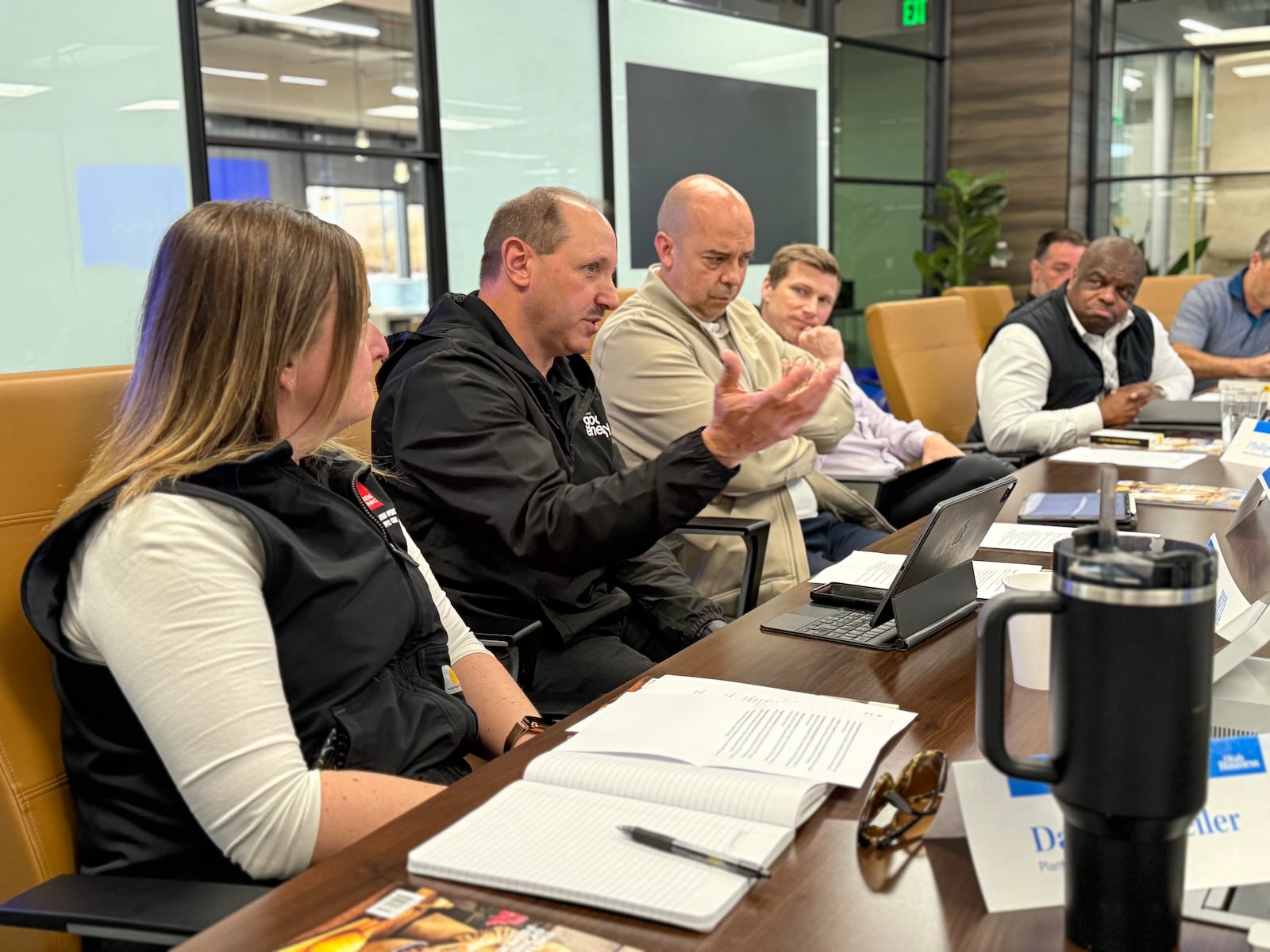
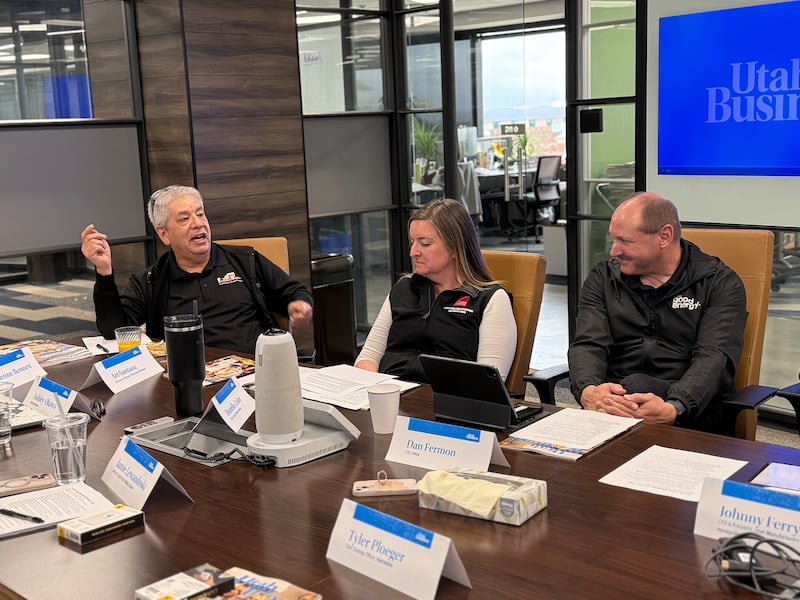
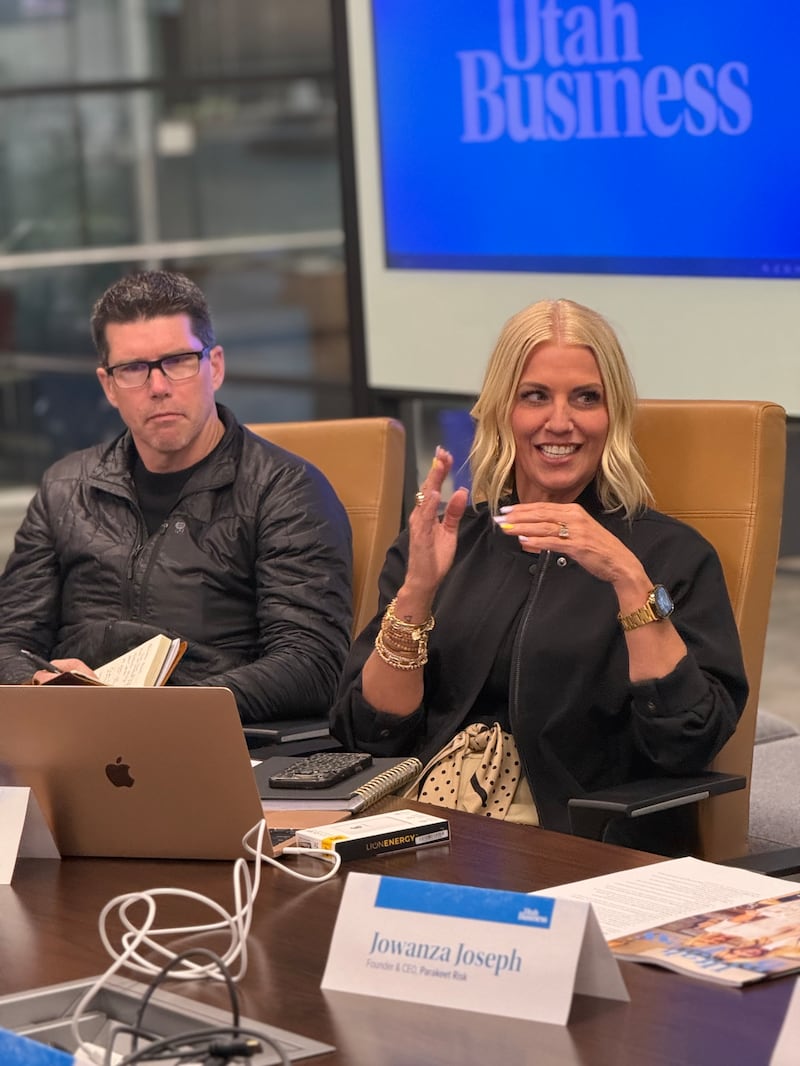
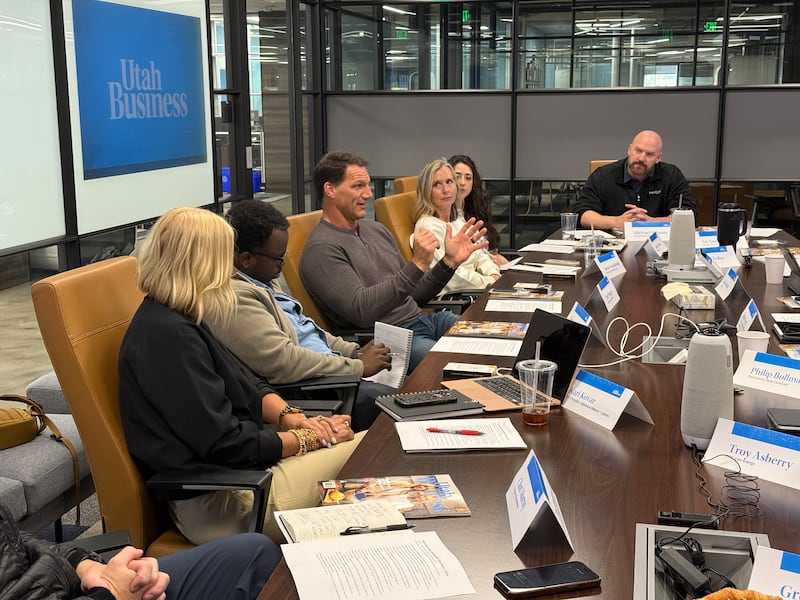
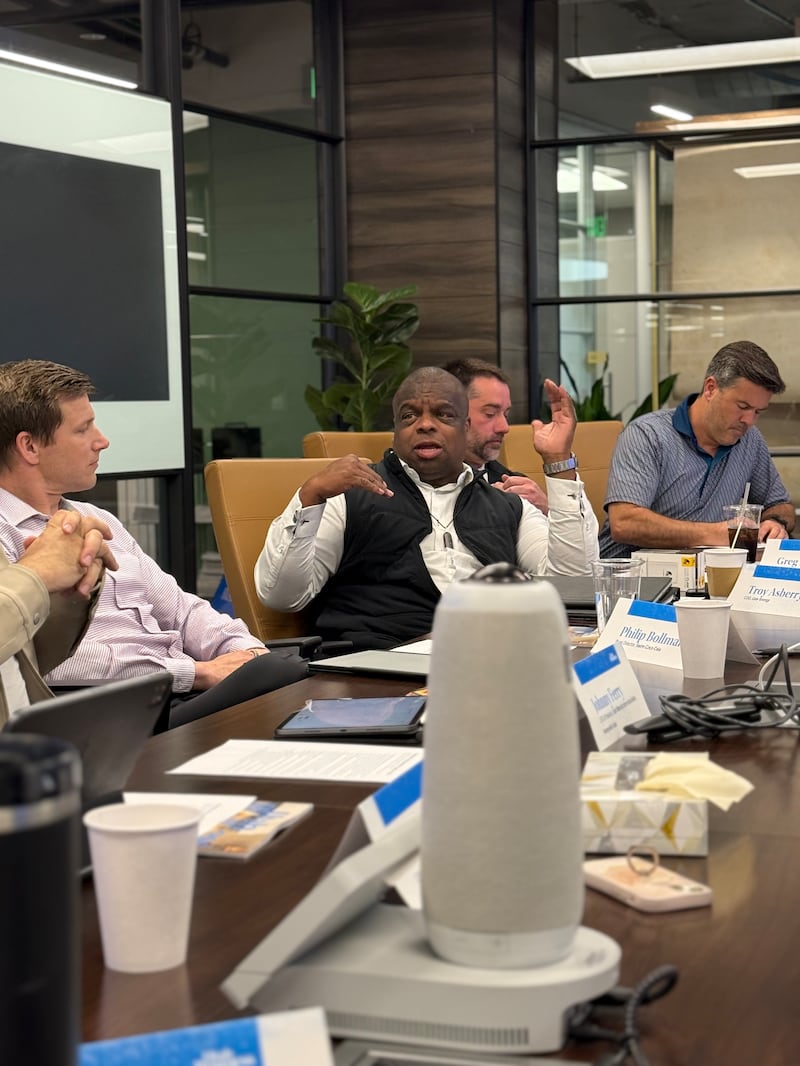
Last month, Utah Business hosted a roundtable conversation sponsored by Parakeet Risk and moderated by Johnny Ferry, the CEO and president of the Utah Manufacturers Association. The roundtable discussed the current state of the manufacturing industry in Utah.
What’s top of mind for you right now, in both your company and the current manufacturing environment?
Dan Fermon | COO | Torus
In terms of using an international supply versus a domestic supply, there could be benefits with low-cost wages in other countries versus what we have here. But there are geopolitical risks. There’s the activity regarding tariffs. There are longer lead times associated with procuring goods for our products to be made. That’s the challenge. The good news is when you find the right talent locally, you can be so much more effective at that.
Danielle Zeiler | Plant Leader | Owens Corning
Cost pressure is [top of mind] for us. We supply the residential homebuilding industry. Homes are already extremely expensive, so we’re facing a lot of pressure. We actually get most of our raw materials from the local region, but even they are facing stricter regulations for processing and mining. We convert sand and stone into insulation, so as those regulations increase and costs increase on their end, we’re feeling that.
Art Santana | Operations Manager | Paramount Machine
We are the busiest I have ever seen a manufacturing machine shop in my life. … Who’s going to be building all these flying taxis that the governor is bringing? Who’s going to be making all the mini nuclear reactors? … We can make a little bit of that, but we cannot make more. It’s just too many.
What is the current state of the manufacturing workforce pipeline, and what is your company doing to improve employee retention?
Troy Asberry | COO | Lion Energy
Our group is young, but they are a group that hits the clock at 7:30 a.m., and when that bell rings at four o’clock, they’re running out. It’s the mature group that stays longer, whose work ethic and attention to detail are spot on. For young people, you have to tell them, “Don’t bring your phone on the floor. It’s a distraction. [We] don’t want you to get hurt.” And as soon as they get a chance, … they’re trying to get to their phone.
Art Santana | Operations Manager | Paramount Machine
We gave up trying to [stop phone usage on the shop floor], because people will quit or not come back to work. As long as they don’t abuse it, they can use their phones on the floor. That has worked for us because people continue to come and work. … [If] you fire somebody, there’s nobody to replace them with, especially on our end. So we’ve got to work with it. Hopefully, they get better at it, but it’s not getting any better.
Kari Kovar | CEO & President | Cottonwood Millwork + Cabinets
We have a truly multigenerational workforce. When I got here, I had a gentleman who was 80 years old who worked part time. … What we’ve tried to be really intentional about is putting training in place, which is really hard when you’ve got an old guard that doesn’t want to give that information out because somehow they might not be relevant. You have to create that level of trust and have them be part of the process, … having our more tenured employees teach our younger folks. The beautiful thing that has happened is we have also had reverse mentorship; [the younger generation] is now training and coaching the 50, 60 and 70 year olds.
Philip Bollam | Plant Director | Swire Coca-Cola
We offer a very inclusive work environment. It really comes down to work-life balance, and that’s going to mean something different for every employee. … They’re humans, they’re people first, they have families, they have lives and there are a lot of things outside of our control that we need to support them with. And really, the team likes to win. We want to create an environment of winning, especially for those technical folks. Because they’re the ones who put the cape on every day and get the plant up and running.
Danielle Zeiler | Plant Leader | Owens Corning
The biggest thing I hear from my employees is safety. Unfortunately, a lot of our employees have come from employers … where [they’ve been] either burned, electrocuted or some other injury. … It feels like table stakes for a lot of us to be providing a safe workplace for our employees, but don’t take it for granted. Even though some of our guys are coming off the fields, coming off the mines, they’re like, “I have to wear gloves to do this?” … Once people get into that culture and realize we truly want them to go home in the same condition they came in, that has helped us stand apart in central Utah.
For frontline workers, mid-level workers and your managers, how are you bridging generational gaps and communication?
Jamie Lewandoski | Director, Supply Chain | Minky Couture
I’ve noticed we have some younger managers, and they don’t have the skills to talk to other people and lead. We do micro-leadership meetings like, “How would you handle this situation? What would be the best option?” We talk about it in a group so we can figure that out because honestly, [you will eventually need] to talk to someone about something that you don’t want to talk to them about. It’s difficult. And a lot of times, they don’t have those managing skills.
Tyler Ploeger | Chief Strategy Officer | HydroBlok
I think [having workers] two generations apart creates massive conflict because the old guard says, “Just do it,” and the young people say, “Why?” … You almost have to shrink the gap with a person in between. Instead of asking these guys to come down two generations, you have to find somebody who can, I hate to say, play referee between those two generations.
Kari Kovar | CEO & President | Cottonwood Millwork + Cabinets
Two weeks ago, we took all of our managers and leads and we had them offsite at UMA. They did a day and a half [training], and it was everything from leadership styles to personality traits to emotional intelligence and critical conversations. … I told [our employees], “I want you to do this training because I believe it will help you not only professionally, but personally, with your wives, kids, significant others, community, whatever the case may be.” Every one of them came back and said, “That is so true.” [One employee] got teary-eyed and said it was life-changing because he now knows some of the ways he shows up isn’t necessarily helping his team, but he now has a new point of view and perspective that he can use, which is pretty awesome.
Dan Fermon | COO | Torus
We have what’s called 100-day demo days, where each group has their top projects, and they’re typically cross-functional teams. You’ve got a wide variety of teammates that are involved. … These are the things that the business is focused on that’s going to help us achieve our objectives for the year, but breaking them down into chunks of roughly every three months.
In what ways are you integrating automation and AI into your manufacturing shop floors and elsewhere?
Troy Asberry | COO | Lion Energy
Our new stuff is all over-the-air updates, … and we’re all used to it, because if you have an Apple product or an Android product, they’re pushing stuff to you. … A lady called and said, “Hey, when I use a Vitamix, my lights flicker.” What do we do? We go out and buy a Vitamix and say, “Oh yeah, it does flicker.” We made a firmware update and sent it out. Now nobody has that problem anymore. For us, it’s the ability to look in and see what our batteries are doing. If we can fix that with a firmware update, that’s exactly what we’re doing. We’re not rolling the truck out to you. We’re not asking you to return it. That old school way of doing business is done. If you have hardware you’re sending out, you have to have an LCD screen and over-the-air updates. If you are not moving toward that technology, you will not be in business long.
Philip Bollam | Plant Director | Swire Coca-Cola
I think there are a lot of folks who are scared of AI and automation, [that] it’s going to take our jobs. We’re looking at it as a tool for our frontline teammates. Whether that’s analyzing our safety data and coming up with safety plans based off of that, or even downtime prediction we’re rolling out to make our teammates’ lives more efficient. We’re leveraging it to make our teammates’ lives easier and safer.
Jamie Lewandoski | Director, Supply Chain | Minky Couture
We’ve hired [an AI] systems integrator because we had 20 different systems that 20 different people were using. We brought in someone who actually analyzes our systems and is creating AI with that, with predictability on ordering, using our KPIs, fine-tuning so that we’re getting visible boards up for our employees to see.
What are the biggest risks in your manufacturing operation, and how are you managing them?
Danielle Zeiler | Plant Leader | Owens Corning
We melt sand and make glass. I think it was 2021 when a massive power outage took out half the state. If our melters don’t have electricity, they solidify, and glass is this magical product that, when it’s solid, it insulates. When it’s liquid, it conducts. We were without power for 16 hours and were within about 45 minutes of losing our melters. … We would have lost at least $16-20 million. People wouldn’t have had their jobs for 18 months. Energy reliability is a huge issue for us to the point where I was on the phone with Sen. Owens saying, “You need to figure out how to power your state, or we’re taking our business elsewhere.” … What has been reassuring is the state is taking the energy grid very seriously. We now have three grids that feed the Nephi line versus the one that was taken out.
Clint Murray | President | Prime Machine
For us, the risk of health insurance continues to increase at 18%, 21%, 25%. I made the decision three years ago to go to a captive [insurance] where we’re taking the majority of that risk as a company, and then we’re trying to manage that risk. We’ve gone to captive insurance on our healthcare, our general liability, our automotive and we’ve done it under workers’ comp, because I can manage that risk at 8%, 9% of annual increase versus the 15 to 25% that the big insurance carriers are trying to pass on right now.
Tyler Ploeger | Chief Strategy Officer | HydroBlok
You have to go outside the state for a lot of the money because private equity venture firms all want to be in three-, five-year exits, which manufacturing companies are generally not; they’re a lot longer tails. There is a bit of that risk for us to figure out when the right time is to build another plant. I look at … how much do we have to automate? I have risks tangential with people, and if I can avoid people, the risk profile goes down. If it costs us $100 million or $50 million to build a plant, when is the right time to deploy that capital? Where and what is the constraint on the growth curve with building products and other things to understand that?
How do you manage growth and capacity planning, particularly when deciding where to expand your operations or build new facilities?
Michael Simons | VP, Manufacturing | Bullfrog Spas
The hardest thing for us is our competition has gone to low-cost countries. Most of the big spa hot tub manufacturers are manufacturing in Mexico or China, and other places, and that’s where our competition is. With tariffs, it’s easier to import into Mexico, add some value to it and get it … tariff-free than me paying a 15% tariff on a raw material. There are a lot of difficulties that we have compared to our competition, which is penalizing us. Not just labor.
Clint Murray | President | Prime Machine
We’re located in the Granary District, so we are downtown. It’s good for the workforce. People like to come into Salt Lake, but the restrictions ... I’m getting letters from Salt Lake City saying, “How are you retaining your water? What are you doing about your waste?” They’re asking a lot of different questions that they’ve never asked before. It’s becoming more difficult to operate downtown.
If you could change one thing today in manufacturing to improve it for the next decade, what would it be?
Tyler Ploeger | Chief Strategy | OfficerHydroBlok
How do we make every manufacturing company become the next SpaceX, where everyone wants to create the next SpaceX? How do we make [the next] generation of kids believe that creating a manufacturing company is just as sexy as a software company that can grow at 10x year over year? To me, that comes with a shift in policy with private equity, the funding of companies and the exit strategies. It’s a little bit tangential to where money flow is going to be, but because we have more predictable cash flows than most software companies now, I believe it will become the new industry of choice.
Greg Robbins | Sales & Customer Service Manager | Lion Energy
I’d say local and federal incentives on domestic manufacturing, rather than trying to go for the cheapest thing, let’s outsource it. It’s incentivized with the younger generation, but also increases cash flow to build here and source here.
Troy Asberry | COO | Lion Energy
I don’t want us to turn our back on globalization. We have to think and act locally, but we want to be global. We don’t want to be isolationists. There’s a big world out here, there are big parts of this world that we can all benefit from, and we have to understand what parts of the supply chain and manufacturing process we do well and what things we don’t do well. I want us to continue to look at the globe, but we do have to take care of home and think local as well.
Philip Bollam | Plant Director | Swire Coca-Cola
All manufacturing companies should be good stewards toward their communities and the environment. It shouldn’t be dictated by the states or the local government, or the federal government to do the right thing. Over the next 10 years, I’d like to see more companies do the right thing when it comes to the usage of water, how we manage our labor and the other raw materials we are using to make products.
Jowanza Joseph | Founder & CEO | Parakeet Risk
Energy abundance will be key to having a strong future of manufacturing, also transportation infrastructure. Those are some of the biggest barriers to building, and especially getting started building. Hopefully, in the future, our electrical bill is 10 cents.
