
This story appears in the April 2026 issue of Utah Business. Subscribe.
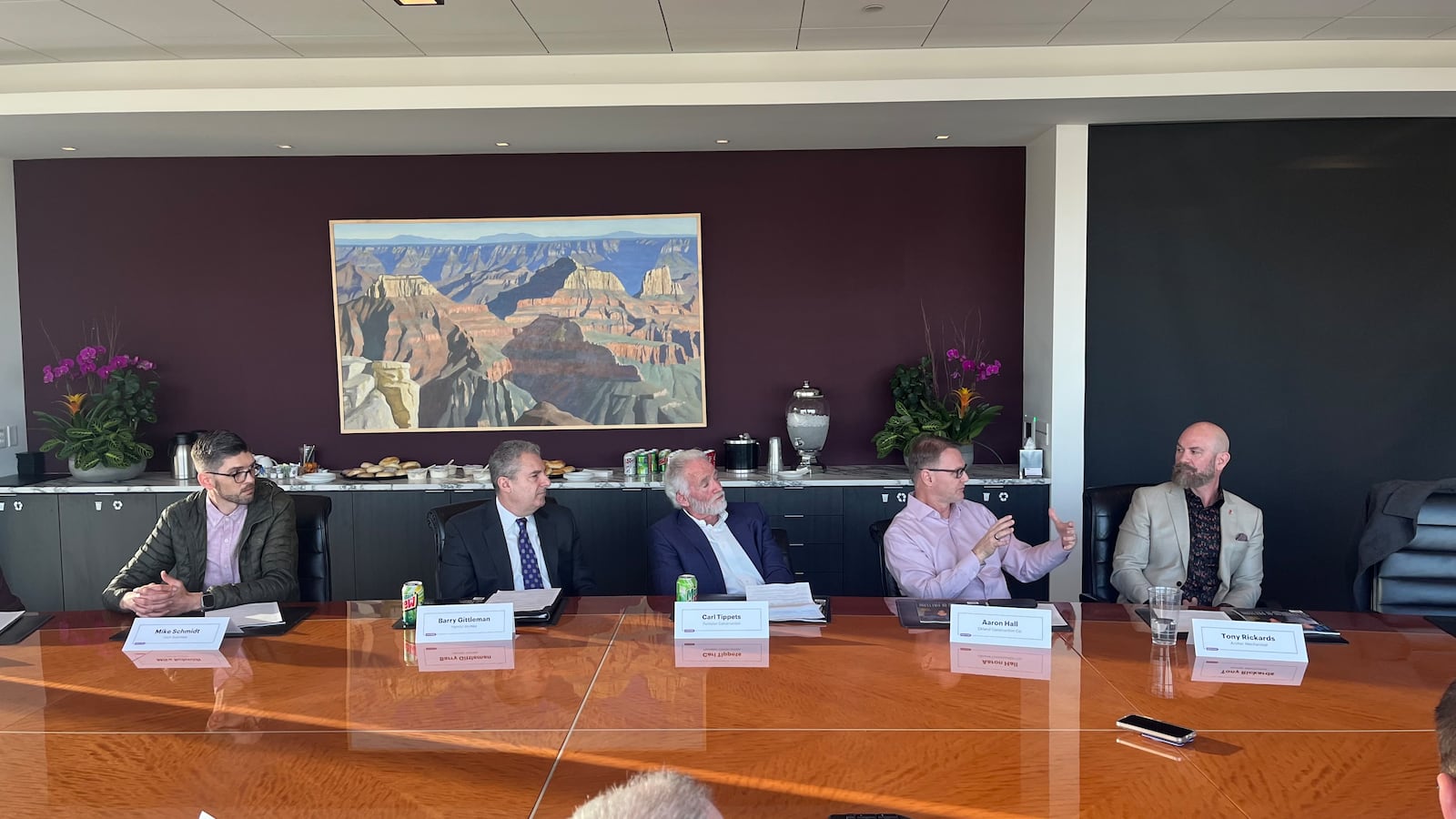
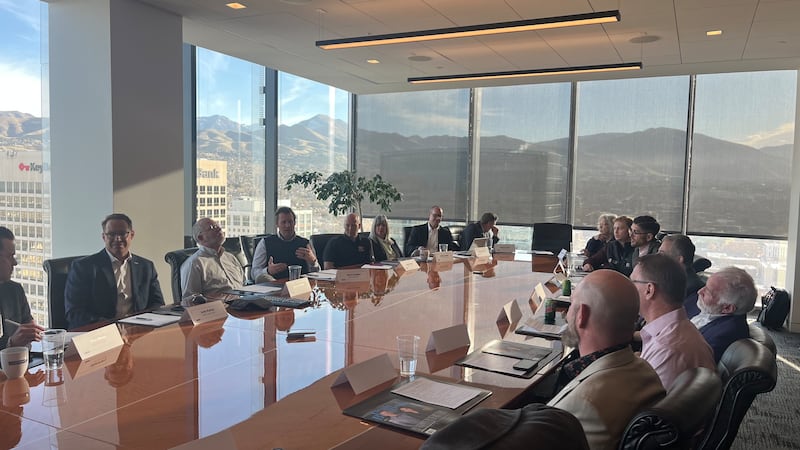
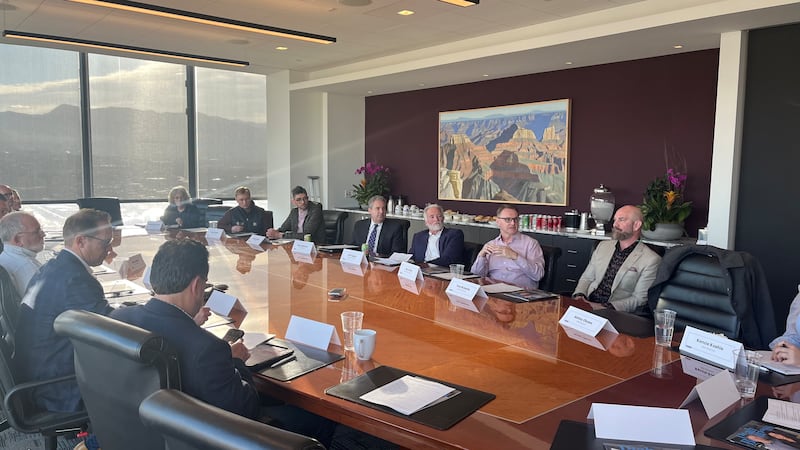
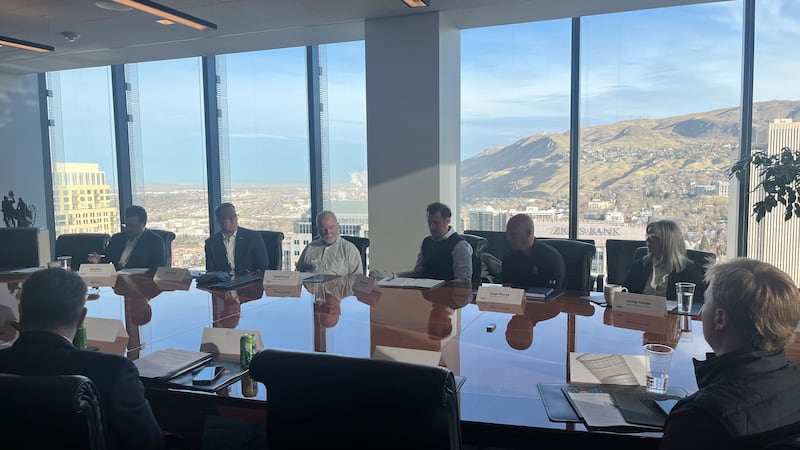
Last month, Utah Business hosted a roundtable conversation sponsored by Dentons Durham Jones Pinegar and moderated by Joey Gilbert, the CEO and president of Associated General Contractors. The roundtable discussed the current state of the building and construction industry in Utah.
When we met last, the outlook for construction was very strong. What has played out since then?
Stephanie Nix-Thomas | CEO & President | Claude H. Nix Construction
The economy has remained strong. There’s lots to bid and we’ve maintained a really strong backlog. What surprised me is that jobs that we win aren’t really ready to go. We’ve had to pivot to keep our schedule and slide in some flexibility.
Kendall Smith | VP, Building | Hughes General Contractors
We’ve seen similar stuff. … It’s been difficult in scheduling our people because you feel like you have a job and they’re going to get ready to go on it, and then it gets postponed because either they haven’t gotten their bank loan or it’s just not quite penciling. It’s been a little bit difficult that way as far as trying to make sure that everybody is busy, but not getting too busy.
Cooper Eckman | President & Owner | Eckman Construction
We’re seeing a lot of projects come out, both public and private on the Eckman side. It’s pretty typical to go to some of these pre-bids for public projects and it’s not abnormal to see 15 to 20 GCs. That’s something that surprises me with all the growth and the strength that we’ve had. We still have a lot of competition and a lot of GCs chasing work.
Brett Barkdull | VP, Preconstruction | Jacobsen Construction Company
The excitement of another round of the Olympics coming in a few years has created an urgency to get some downtown stuff shaped up and new projects off and going. That has a ripple effect throughout the whole community that we’re going to see. Eight years feels like a long time away, but it’s coming quick.
As we look at the future, what are the constraints holding us back in the construction industry?
Aaron Hall | Director, Operations | Okland Construction
We’re seeing an increase in the scale and size of projects and some complexity of projects overall. … When those jobs shift and move out because they’re not planned, it is a massive shift in people’s backlog and resource planning. … It definitely reaches into the right talent and the right training to be able to scale up for those types of projects.
Sage Thorpe | VP, Regional Operations | Whitaker Construction
Big projects compared to the small ones, there is such a gap that there’s a ton of competition on those smaller ones — more than I’ve ever seen in the last five, six years. And then, only certain people can qualify for those larger projects because of resumes and qualifications. [Only] some people are in that gap and that can build that strain on them.
Carl Tippets | President | Pentalon Construction
If you’ve got these large projects that are 24 months long [or longer], then you’ve essentially got a bridge across most economies. There are very few dips in the economy that are lasting longer than that timeframe. It gives you some guaranteed backlog and some work that you’ve got to work extra hard to manage that process, but it’s an opportunity for us to get across some of those hard times.
Our legislature did an audit of DFCM (the Division of Facilities Construction and Management) and is concerned about the cost. What causes state projects to cost so much, and why should that be a concern of the state legislature?
John Kemp | COO, Mountain West Region | Suffolk Construction
A DFCM project isn’t a developer-driven job. It has different requirements as far as sustainability, mechanical systems, the longevity of the project. … There are opportunities. But at the same time, the state gets a really good building for what they pay for. The DFCM and the contractors do a really good job delivering those projects for them.
Stephanie Nix-Thomas | CEO & President | Claude H. Nix Construction
The rapid growth in Utah is another constraint, but it also adds cost to construction in our build-out and the things that we need to deal with. … It’s an opportunity for the contractor and technology, but it costs more money to do it that way. … We’re running out of space. We have natural constraints in Utah that we have to deal with. That’s just going to increase construction costs, especially in the near term, and especially with the size of the projects that are rolled out.
What are the workforce challenges for construction that you’re seeing now?
Andrew Jones | VP | Tempest Enterprises
Sometimes with your workforce, it’s like an NIL deal [where college athletes profit from their personal brand]. You’re trying to invest in somebody that you don’t know exactly if they’re going to pan out, but you don’t want them to leave. … You might have them for one or two years, but you need to get a project done, and they’re still learning. You’re in a bit of a catch-22.
Kendall Smith | VP, Building | Hughes General Contractors
We’ve got to invest. At Hughes, we try really hard to hire student learners every summer. One thing that’s been a really great thing to see is that the state of Utah is starting to dump money into school districts and their CTE programs. … Hopefully, we’ll see some of the fruits of that in the future with people who want to be in construction.
Jennie Tanner | Owner | Tanner Glass & Hardware LLC
The people that we interview want to get paid what they need to pay their bills, and they tell you upfront: “I have to have $30 an hour,” rather than, “What does the position pay?” … They want what they think they should have. … Everybody thinks that they can be a business owner. They see you doing it, and they see you successful, so they think they can go out and take all of your information and compete against you.
Tony Rickards | CEO | Archer Mechanical
This industry’s really come a long way. … One of the things that the industry has put a focus on is the development of its people for both safety, their skillsets, their leadership competencies and how they can really change their lives by having this career as something as a foundation for their lives and their families.
John Kemp | COO, Mountain West Region | Suffolk Construction
We’re seeing a shift of young people coming out of high school wanting to get into the trades. A lot of the trade schools … [have] waitlists to get into most of the programs — specifically electrical, mechanical, plumbing, welding and skilled trades. A lot of the youth are seeing what’s happening with AI, … and they’re seeing the trades as a great place to be. We should give credit to that and put more emphasis on training. … As we continue to feed that desire that a lot of the young people have, we’re going to be okay in developing.
In what ways are technology and AI having an impact in the industry?
Brett Barkdull | VP, Preconstruction | Jacobsen Construction Company
I come from an estimating background, so I know the redundancy of sitting there and taking off pipe bollards and specialties. … You run that through an AI program, and it can help a lot. But more often than not, the plans that we’re dealing with are at a schematic design level or a conceptual design level. … AI has a hard time capturing that stuff. … It’s often been said that estimating is more of an art than a science. That’s where the artistry comes in, with experience to pull all of the information that AI can produce into one usable package.
Carl Tippets | President | Pentalon Construction
It’s fun and interesting to think about all that AI can do and contribute to the industry, but it’s also important to identify what it can’t do. If you start to separate management from processes, what it can do is help with the management processes, … but it’s not going change the trade processes in the foreseeable future. It’s not going to replace electricians.
What is one thing that you could tell a parent, an educator or a school guidance counselor as to why an individual or a youth should look at construction?
Cooper Eckman | President & Owner | Eckman Construction
There’s a lot of people that don’t realize that construction involves so many different departments and routes that you can take, so spread more awareness on that. There’s business development, marketing, estimating, project management, risk management, accounting, etc.
Stephanie Nix-Thomas | CEO & President | Claude H. Nix Construction
It’s not just a good-paying job — it actually supports our way of life. You can turn on the faucet or flush your toilet because of somebody in this industry, and we should be proud of that.
Andrew Jones | VP | Tempest Enterprises
Physical hard work — especially in the early years of someone’s career in the crafts — can facilitate an idea of service, which leads to success and happiness both physically, emotionally and mentally. … It can now springboard you into your future success in your later years.
Jennie Tanner | Owner | Tanner Glass & Hardware LLC
I mentor young women to get into the construction industry. One of the things that parents don’t sit around their dinner table and talk to young women about is, “Would you like to be an electrician?” That doesn’t ever enter the mind of a parent or a guidance counselor to talk to young women about. … There are just so many facets of what interests you and where your strengths are, and leading you to that point with mentorship is really important.
Sage Thorpe | VP, Regional Operations | Whitaker Construction
This has probably been one of the hardest things I’ve ever done, working in this industry, but it’s been the most rewarding. … They say that for every seven people that retire, one comes in. If you come in and differentiate yourself, learn a craft or a skill, whether it’s in management or the craft side, you could have a very fruitful career and one that’s very challenging, but very rewarding.
Clint Costley | President | KIER Construction
I would plead with any parent to teach their child how to work, no matter what profession they choose. … The built environment touches every aspect of our lives. Whether you get a drink at Maverik on the corner, whether you go to a place of worship on Sunday, whether you go to an office building like this during the week, whether you have a roof over your head, it impacts everything that you do in your life.
Glen Perry | CEO & President | COP Construction LLC
[Construction is] one of four industries that actually creates wealth, true wealth. You look at mining, agriculture, manufacturing and construction. You take a raw material, you add labor to it, and you sell it for more than you started with. There’s no other industry other than those four that do that. … It’s one of the industries that’s the lifeblood of our world.
Utah is one of the highest housing markets in the country, but we’re not building enough houses. What are you seeing right now, and how is it impacting your segment of the building and construction industry?
Carl Tippets | President | Pentalon Construction
It used to be that a rental was basically transitional housing until you could get to home ownership. As difficult as home ownership is now becoming, there are many who are just giving up on that “American Dream,” and home ownership is less desirable than it once was. Somebody on Saturday doesn’t want to go out and mow the lawn; they want to go out and play golf or go hiking. … Rental is becoming a choice rather than just a default.
Barry Gittleman | CEO & President | Hamlet Homes
Since 2022, I’ve heard multiple stories of people who had someone out of state who wanted to move to Utah for a new job and declined because of the lack of affordability. … All of us, whether you’re in residential or commercial, are going to have problems getting good workers to our companies if we can’t address affordability better.
Tony Rickards | CEO | Archer Mechanical
We as an industry should really start looking at how our resources are allocated and the distance to the jobs that we have. If we can keep them close to [workers’] homes within 25 miles, why wouldn’t we want to reduce their commute time so they can have a better impact in their family lives, so they can reduce fuel costs and we can have a better air quality?
To go to low-density, smaller homes, citizens of a community may fear that that’s going to drive down their home’s value. Do you see this happening? If you could change one thing today in our construction environment to improve it for the next decade, what would it be?
Barry Gittleman | CEO & President | Hamlet Homes
It’s actually proven to be a false fear. People think that smaller, more affordable homes will decrease their home value across the street, and the smaller homes have a higher price per square foot, which is the No. 1 input going into appraisals. It actually increases the value of your home to have more smaller homes nearby that are at a higher price per square foot.
Clint Costley | President | KIER Construction
We’ve got to make density less of a four-letter word. Lot sizes have to shrink — no longer is it acceptable to have a half-acre lot. You can’t even afford to plot a subdivision with half-acre lots anymore. The raw ground is too expensive. In order to create affordability, … we’ve got to be able to condense our environment a little bit more.
Glen Perry | CEO & President | COP Construction LLC
Utah is an interesting market. … It doesn’t matter how busy it gets; it continues to be super competitive. It’s different than any other market in the country that I’ve worked in. I don’t know what drives that, but it’s a mentality here that is hard to get your mind around. You would think that the busier it gets, you’d see an uptick in profitability, but you just don’t see it from our perspective.
Aaron Hall | Director, Operations | Okland Construction
An exciting opportunity would be to have better project delivery and contracting methods that harness the diverse talent that the construction teams bring and a more collaborative environment. … You’re going to see better collaboration, less defects down the road — some of the early designs are just not complete. You’re going to get paid for a better service in the long term. It’s better for us in building and satisfaction, better profitability and you get a better product.
