
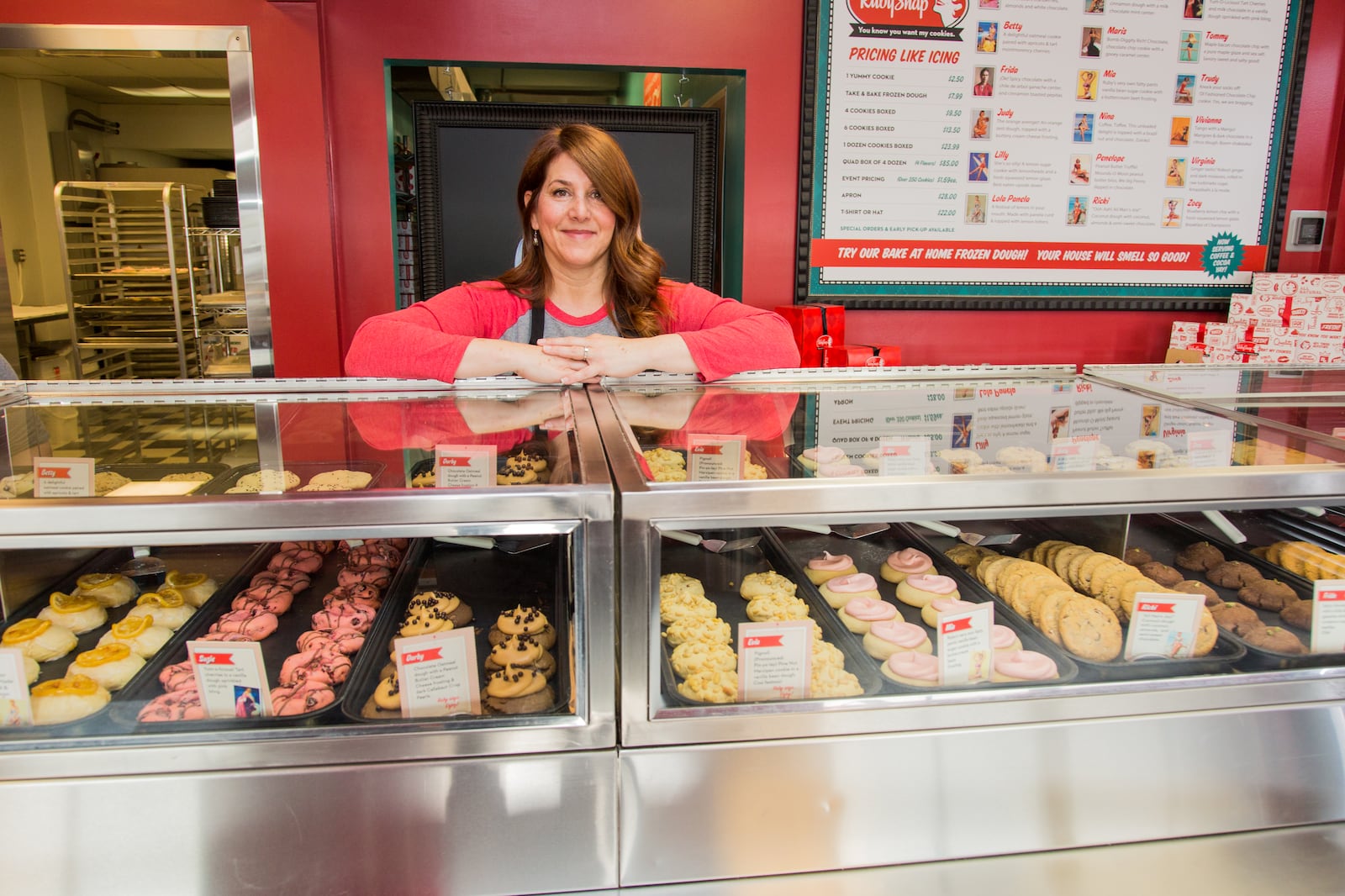
When her bakery was little more than an idea, Tami Steggell recalls exploring a rundown neighborhood. When a man caught her looking into a building, he asked, “Would you like to rent this building?” Steggell replied, “Oh no, I’m just daydreaming.” But he convinced her to talk to the landlord. She remembers, “[The landlord] called me and said, ‘I heard you have a dream. I’d like to hear about it.’”
Years later, Utah is home to a multimillion-dollar “cookie war” of fast-scaling chains. Meanwhile, RubySnap is thoughtfully growing out of a single craft bakery location in Salt Lake City.
RubySnap’s story is nearly 20 years in the making and offers a roadmap for local artisans looking to compete with national juggernauts. Founder Tami Steggell’s emphasis on ingredient integrity and a sophisticated retail distribution strategy is what helps it thrive outside the franchise fray.
From architectural designer to cookie connoisseur
Before diving into the cookie industry, Steggell worked in architectural design for 15 years. When she no longer loved it, she decided it was time to start her bakery. “Leading up to that, I’d been creating recipes for many years.” It felt natural to share them with the public. The 2008 economic crash was the final push she needed to kickstart her business.
“I decided that I really wanted to bank on myself,” she says. “If I was going to lose money, I was going to lose it because it was my fault and not the market’s fault.”
She cashed out her last $10,000 from an IRA, hopped in her car and drove around, looking for a place to house her bakery.
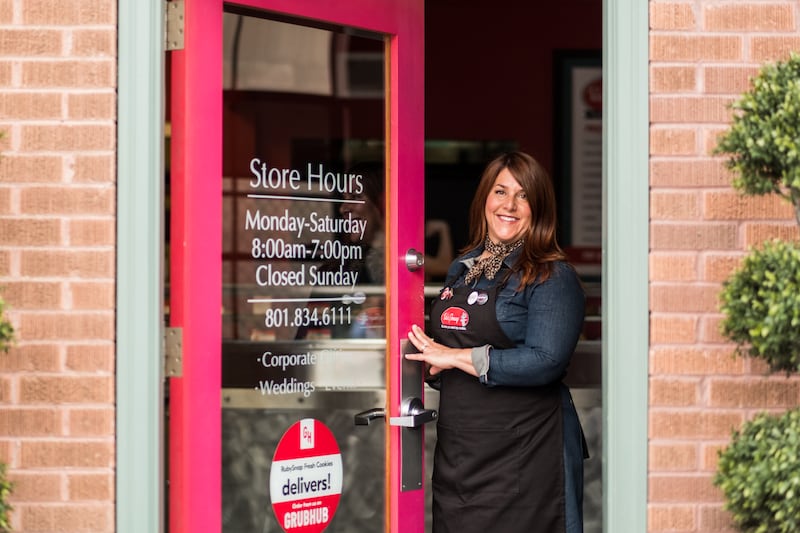
Fast forward to her exploring that rundown neighborhood, peeking into a building that would eventually become RubySnap. Fortunately, the landlord had made it very affordable for Steggell to start her business there. She drew up plans, got all the permits and refurbished the whole thing.
After 18 months in the business, the bakery lost its trademark to a major corporation, making a complete rebrand necessary. Although challenging at the time, in hindsight, Steggell sees this as a blessing. “It allowed me to reevaluate my brand … and find a name that I loved even more. I think you just have to roll with the challenges. That’s part of being an entrepreneur.”
With a new name and rebrand, RubySnap continued to grow. Now, the bakery has been around for nearly two decades.
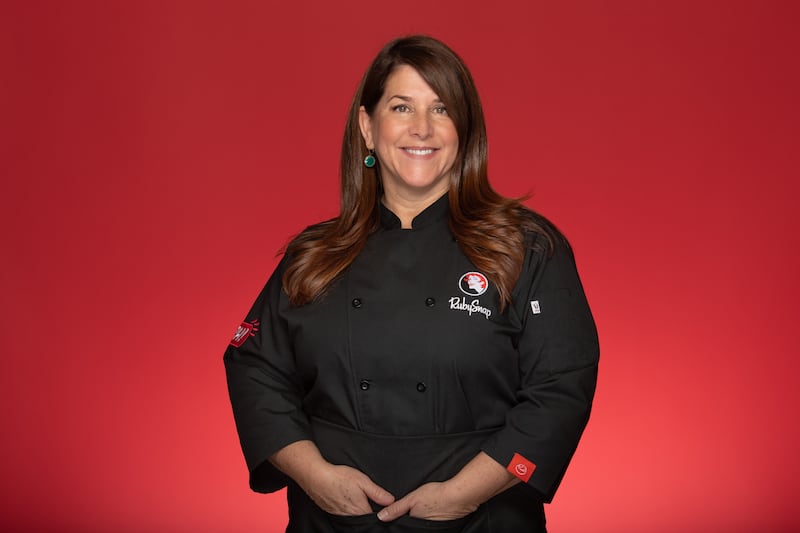
‘Real ingredients deliver real flavor’
When she was in school, Steggell loved learning about the World War II era. The name RubySnap comes from a popular female name from the 40s, “Ruby,” paired with a trendy phrase from the same era, “snap.” When you walk into the store, you’re greeted with an atmosphere reminiscent of the 40s: cement floors and a metal counter with airplane paraphernalia everywhere.
Predominant attitudes of the 40s are also infused into everything Steggell does. She says the 40s were a time when “we were still pulling things from the earth and using produce in season.” In the bakery, they try to use fresh ingredients whenever possible. Although it’s more expensive, she does it because “real ingredients deliver real flavor.” Each flavor is thoughtfully crafted. “We don’t have a boilerplate dough that we just throw things into. We actually are building the flavor of that cookie.”
For example, one of March’s specials is the Lucy cookie, which includes a lime dough and a cheesecake center, topped off with a lime curd. “We zest all of our own limes, we juice our own limes and we create our own lime curd.”
RubySnap is known for its inventive flavor combinations, like the Sophia, available in June and July. This cookie is a burst of tropical flavors, including ingredients like passionfruit and hibiscus. The Betty, another March special, is an oatmeal cookie filled with Mediterranean apricots and tart Montmorency cherries. The Vivianna includes mangoes, dark chocolate and bergamot, available from October to December.
Steggell loves to know where her unique ingredients are coming from — so much so that she even started a food blog called Bite Me Industries that honors farmers, millers and ranchers and their stories.
Internationally influenced
Steggell grew up in Saudi Arabia because of her father’s work as an electrical engineer. Constant moves forced her to break out of her inherently shy shell, but the most interesting way living abroad shaped her was how it influenced her perception of food. She started noticing how different flavors meshed together within dishes.
In her work, she’s incredibly influenced by international flavors, and tries to go on vacation twice a year. “It’s a good way for me to reset,” she says. “It helps me to get creative again and influences what’s coming up in the future [with] cookie designs and recipe development.”
For example, while traveling and eating new dishes in Indonesia, it sparked the idea for a new flavor. The BillieAnn is a seasonal “coconut carrot curry” cookie made with fresh steamed carrots. “When I’m relaxed and not worried about what I’m responsible for, my creative juices start overflowing.”
Growth through retail distribution
Many cookie brands in Utah have taken to franchising as a go-to growth strategy, and Steggell actually did try to grow RubySnap in this way at one point, opening five other stores across Utah and Las Vegas. But she and her team didn’t like it. “Bigger wasn’t better; it was just bigger. And we just wanted to be better.” The next year, they closed all five stores and went back to being a singular craft bakery. She loves it. “I feel like local gives your city soul.”
One of the problems was that franchising often comes with “cheapifying” ingredients. “I wasn’t willing to do that so long as my name was attached to the brand,” Steggell says. “I really wanted control over flavor delivery and a high-quality product.”
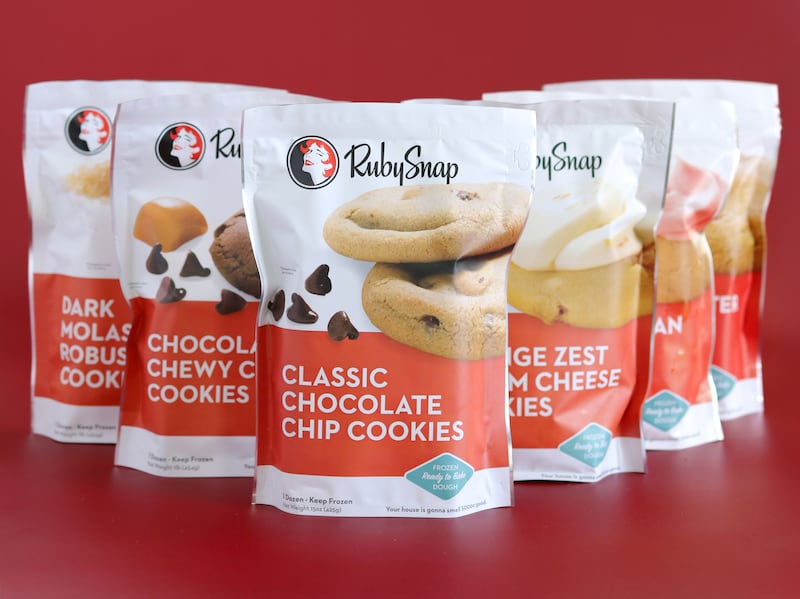
So, she pivoted. In 2010, while selling at its local farmer’s market, RubySnap was discovered by Whole Foods, and in 2011, by Harmons Grocery. Now, RubySnap has dedicated shelf space in the frozen section of both grocery stores, as well as Lee’s Marketplace. It’s also hoping to launch in Texas soon.
Because they do all their own distribution, Steggell says they’re able to maintain the level of freshness that she wants to. She worked hard to see which of her doughs would be good as a frozen product. The result? The dough they sell at these high-end grocery stores is exactly the same recipe as what is sold in the bakery.
Steggell also does private label manufacturing, creating recipes for other brands. Right now, she’s working on a recipe for a major baseball team.
Defining success and developing your dream
Even though it’s not the path she chose to take, Steggell says there’s nothing wrong with franchising. “We all define success differently. I define success by the value of our relationships that we have with our partners and the quality of our recipes.” For her, that meant growth outside of franchising.
To other food entrepreneurs who want to work outside of the franchise game, she says, “I think it’s really easy to give in to peer pressure when you see what’s going on around you. But it’s okay if your dream looks different than somebody else’s dream.”
There’s a learning curve to retail distribution. “You have to learn about nutrition. You have to learn about UPC codes. You have to learn about food tracking.” But there’s no reason for this learning curve to stop you from pursuing growth.
Steggell recommends reaching out to fellow entrepreneurs or hiring brokers to help you learn what you need to. “I’ve noticed that small companies are really good at helping each other. … There’s always somebody willing to help you and teach you.”
She also recommends not being afraid to ask questions. This helps partners see that you really care about the relationship. “I think people appreciate that. They appreciate that you want to know instead of pretending like you don’t know.”
And whatever you do, Steggell urges, don’t give in to fear. In the early days of RubySnap, she would go into work every day and say, “Today I’m going to give it my best, and at the end of the day, I’m going to call it my best.” She continued to do that, day after day. “I didn’t ever give in to the idea of defeat.”