
This story appears in the April 2026 issue of Utah Business. Subscribe.
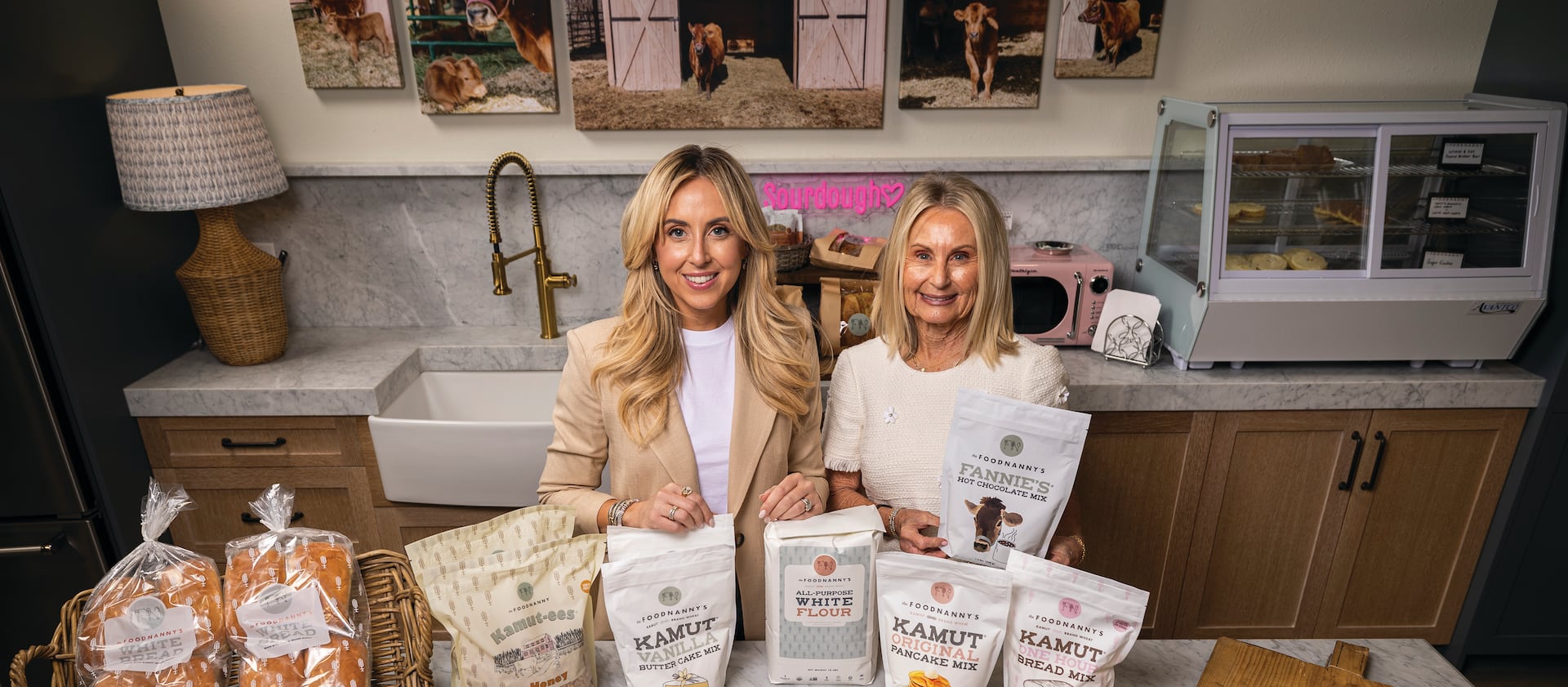
When you walk into The Food Nanny store in Salt Lake City, it feels like entering a home kitchen.
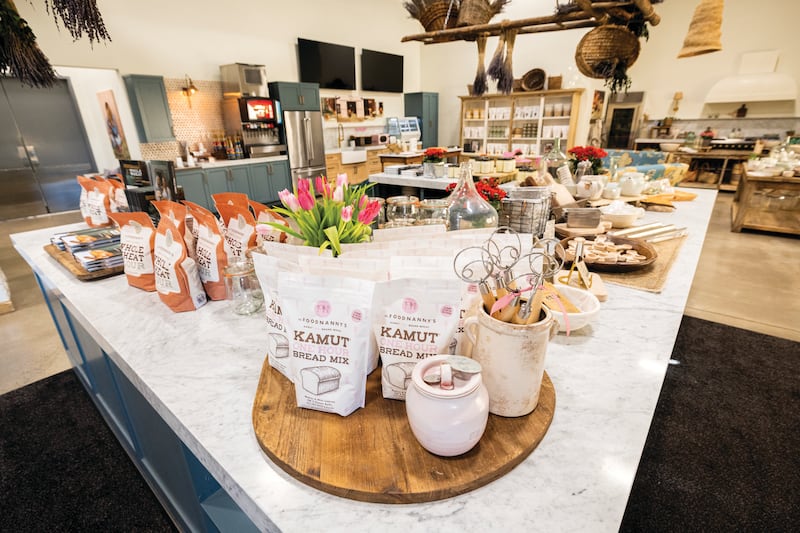
Along one wall, you’ll see a kitchen counter and oven, with an island displaying flour, cereal, baked goods and cookbooks. Throughout the store, you’ll find tastefully curated products on display and for sale: from beautiful kitchenware in pink and green pastels, to various cooking mixes for pancakes, bread and more, to sweaters and ballcaps proudly proclaiming “Utah,” to candles in Mason jars that smell of cold summer nights and warm Christmas mornings.
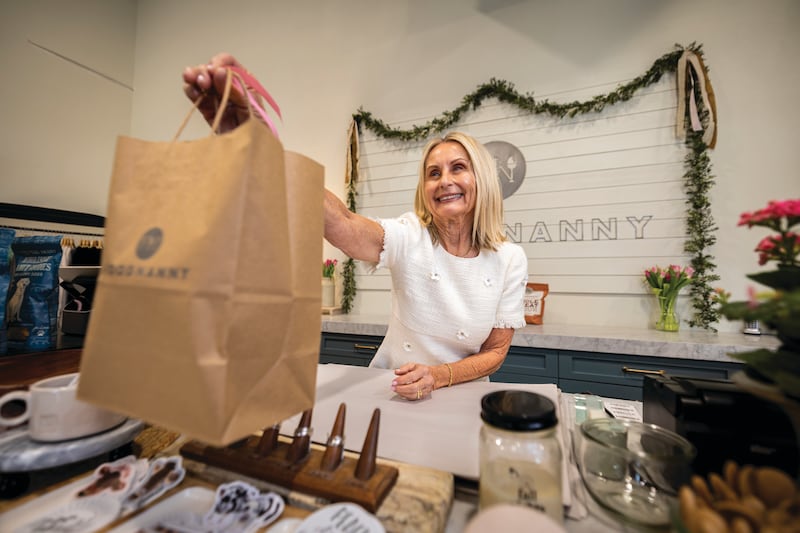
This is all only second to the friendly energy you’ll receive if you meet the mother-daughter duo, Liz Edmunds and Lizi Heaps, who will enthusiastically greet you like you’re a guest in their home, perhaps placing a homemade pretzel or cookie in your hand and insisting they get you a Diet Coke — a true Utah welcome.
It wasn’t easy for Liz and Lizi to get to this point, but no matter what phase of their journey they’re in, they’ve always had their core values in place: loudly loving anyone who walks through their door and teaching their audience how to cook for family and community.
Liz: The ‘OG’
A common thread in both Liz and Lizi’s stories is that of necessity. As both mother and daughter state, “Necessity becomes the mother of invention.”
Liz always had a unique meal plan for her family — made up of theme nights and balancing variety and portion sizes. But it wasn’t until she consulted a nutritionist, when her son was diagnosed with a rare ulcer, that she realized how intentional she already was in feeding her family and how to improve the plan.
Liz always shared her passion for food and community with everyone she could, which often meant a house full of neighborhood kids. “Friday night, all of our friends would come over for pizza after all the games,” Lizi says about her upbringing. “That was going on everywhere we lived, all over the U.S., until we finally settled in Utah.”
Liz and her household were gaining popularity from more than just her children’s friends. She says, “Once I got more nutritionally sound on my meal plan, people started to pay attention. Wherever we moved, I always helped my neighbors, my friends, my church people with my meal plan.”
When her husband lost his job due to Delta’s bankruptcy after 9/11, Liz needed to figure out how to support her family while he started a new venture.
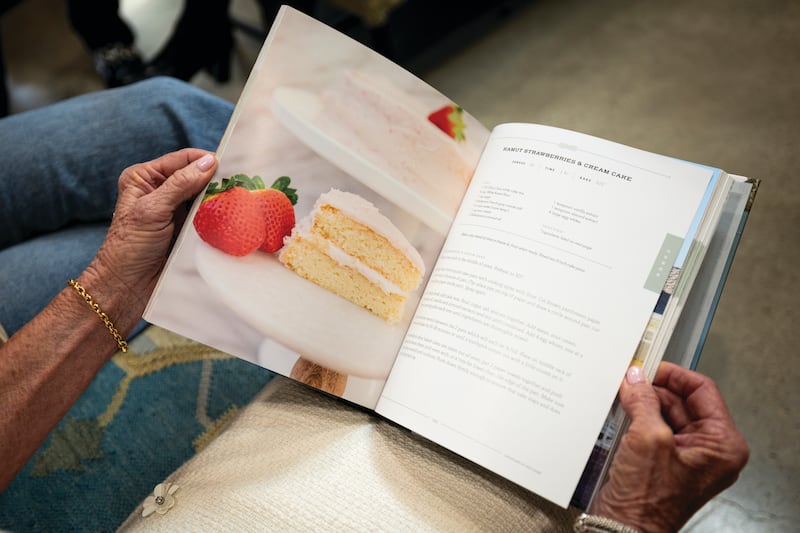
Around the same time, her eldest daughter got married, moved away from home, and realized what a refreshingly unusual thing it was to have home-cooked meals and theme nights. She encouraged Liz to write a cookbook — and thus, The Food Nanny was born.
The same month Liz’s first cookbook was published in 2008, BYUtv approached her with a proposition. “They needed some content with food and said, ‘You could rescue dinner,’” Liz says. “So then, I did that for four seasons.”
Lizi, the youngest of Liz’s seven children, was in high school when she helped her mom sell the cookbook. “There was no internet,” Lizi says. “She was at every church event, every women’s event, nurses conferences, Swiss Days, you name it. I had to watch my parents reinvent themselves in their 50s. Her show kept the lights on.”
Going to these events with her mom, working alongside her to get this cookbook into the hands of as many who would listen, would unknowingly lay the foundation for when it would be Lizi’s turn as The Food Nanny.
Lizi: The show goes on
Even as a young girl, Lizi shared her mom’s passion for food and sharing it with people.
“When Lizi was 11 years old, she was inviting her girlfriends over on a Saturday or during the summer and making them homemade bread and mostaccioli,” Liz recalls.
When Liz and her husband left for Europe to serve an LDS mission, The Food Nanny on BYUtv ended its fourth and final season. Around the same time, Lizi and her new, young family moved to Colorado. After years of promoting her mother’s cookbook, Lizi, along with the rest of her family, was ready to move on from The Food Nanny.
But just like her mom, The Food Nanny was born out of necessity — and four years later, it was Lizi who now needed The Food Nanny.
When a financial crisis hit Lizi’s family, she was left stunned and looking for options. “I’m sitting there with my fourth little baby and the IRS is knocking on our door, and I had zero clue. What am I going to do? Your world is rocked,” Lizi says.
Liz flew out to visit Lizi and taught meal planning at the church, when it clicked. “We’re trying to encourage people to get back to cooking for their family,” Lizi says. “We’re sitting in the car and we’re driving over to Chick-fil-A and all of a sudden, I said, ‘Mom, your message of family dinnertime never dies. We’ve got to bring The Food Nanny back.’”
Before stepping into The Food Nanny, Lizi called her sisters to see if they wanted to be part of the brand they had helped their mom build over all those years. “[My sisters said,] ‘Good luck! We’re so sick of it! You can have it.’ And that put a fire under my butt,” Lizi says.
At the time, Instagram had just introduced Live videos, and Lizi figured, why not try it out? With kids falling off couches, no trained experience, and not even a tripod to hold up her phone, Lizi started these livestreams to share cooking videos with her growing audience.
Even now, with a thriving business and almost 500,000 subscribers on Instagram (and having moved back to Utah), Lizi still handles all of the social media work herself. If she doesn’t, then “the heart of it will go away,” she says. “I know what they want because I see all the comments come in.”
“She’s got a lot of people supporting her, all the workers here, but she is the main character of the Instagram, and it’s very, very hard,” Liz adds. “Without [Lizi], we would not be where we are today. This girl’s work ethic and her drive, her personality, her guts, her everything, it’s all because of her. Yes, together we have built the business. I’m her biggest fan, and I know she’s my biggest fan, and together we make an incredible team.”
From mother to daughter
Mapping this passing of the torch from Liz to Lizi offers an interesting guide to how their audience has evolved over the lifetime of The Food Nanny — an adaptive process that any business has to navigate to define what it offers and what its customers want. Since there was no internet when Liz first started The Food Nanny and blogs were new, it made sense that starring in a TV show and hand-selling a cookbook was absolutely the best way to get in the hands of customers (literally).
But with the natural conclusion of the BYUtv show and the underlying current of change as Instagram entered the scene, it made for the perfect opportunity for Lizi to burst from the ashes with her phone in hand — a reborn “Food Nanny,” ready to redefine how to deliver their message of food and family.
“People don’t even know [Liz] as The Food Nanny now,” Lizi says. “They’ll ask her, ‘Are you The Food Nanny’s mom?’ And she’s like, ‘I am The Food Nanny!’”
In this fast-paced, ever-changing digital era, their audience is already looking for what’s next. “What’s crazy now is that I’m the old,” Lizi adds. “They want my daughter, who’s just turned 16. She could have her own thing, and with these TikTok girls, she would kill it. She’s beautiful, she’s really good with makeup, the moms want to watch her. I’m getting kicked to the curb,” Lizi jokes.
Building on The Food Nanny brand
With The Food Nanny growing in new directions, Lizi has expanded her mom’s original mission of healthy, family cooking, updating the brand to fit a modern audience who desire to connect with old roots and live a timeless lifestyle.
Not long after reviving The Food Nanny on Instagram, Liz and Lizi stumbled upon the next thing that would forever set The Food Nanny apart: Kamut flour.
Years before, Liz discovered her love of whole-wheat Kamut. But when she was on her second LDS mission to Europe, she discovered white Kamut flour at a little restaurant in Italy and knew she had to find a way to get it back home. “[The restaurant owners] said they’d been buying it from the U.S. and have been for 30 years, and nobody in the U.S. has ever heard of it,” Liz says.
When Liz and her husband got back from their mission, they found where the Italian restaurant bought their white Kamut flour — a farm in Montana — and eventually, The Food Nanny licensed the flour to be the only people in the U.S. who can sell white Kamut flour online.
“It’s an ancient grain, so it’s never been genetically modified,” Lizi says. “It naturally has low gluten and is high in protein — 16% protein.”
When Lizi poured out all her old flour and replaced it with Kamut in an Instagram Live, her audience became intrigued. “We weren’t even going to share it,” Liz says. “But everybody said, ‘What is that flour? Tell us about it!’”
As Lizi is raising her family in the same home she grew up in, she has also started raising cows on her land — expanding another aspect of The Food Nanny brand.

“[Raising cows] is one of the coolest experiences,” she says. “It has made me more grounded and connected to my roots that I didn’t even know about. My great grandma had cows and made her own butter, and my aunt just gave me her old butter mold.”
Fannie, arguably the fan favorite of Lizi’s cows, often makes appearances on The Food Nanny Instagram. “Me and Fannie, our souls are connected,” Lizi says. “I love her like a child, no joke.”
Not afraid to speak her mind
The reason The Food Nanny has resonated with so many people is the food planning and cooking, but it’s also because of the passion and energy Liz and Lizi exude while sharing their message. And this is where there’s a difference between Liz and Lizi: Lizi doesn’t hold back.
“[Lizi] will not hesitate to talk about our religion on our Instagram,” Liz says. “I was very nervous to because I thought, ‘Oh, people won’t follow, they won’t like me.’ And she did it from the get-go, and people respect her for it.”
For Lizi, the only way to reach their level of influence and success is to give it your all — your opinions, your time, your skills, and most importantly, yourself.
“If you don’t believe in [your business] and you don’t have a passion for something, you’re never going to get to this point,” Lizi says. “This has been the hardest thing I truly have ever done. It started as just helping myself, and now it’s become such an animal. [We] have three stores, all these employees, every vendor that relies on you. It’s not a 9-to-5 job. … You turn from survivalist into businesswoman.”

Reflecting back on how Liz and Lizi have gotten this far, amid fluctuating media and audience attention, running on necessity and passion, their story is certainly one of transformation, adaptation and growth. For Lizi, their success hasn’t come from any formal training, but rather hard work and grit.
“You can’t teach this,” Lizi says. “[To be an entrepreneur], you have to have a different kind of mindset. It’s not textbook — that’s for doctors. This is the creative crazies that are willing to risk it all.”
