

In South Salt Lake, a local art school named Workshop SLC spent years developing a loyal creative community. Its founder dedicated time, energy and capital into the business to build it from the ground up. But eventually, she was ready to step away from the daily operations and spend more time creating her own art.
Enter Chase Murdock. Instead of being forced to close up shop, Murdock acquired the business in 2021. For the founder, it was an exit that rewarded her for the years of commitment to the business. For Murdock, it was an opportunity to skip the zero-to-one phase of building something completely new and acquire an already profitable and operating business.
This will be the new normal across the country. Small local businesses are the backbone of the American economy, and as more Americans reach retirement age and leave work — a phenomenon dubbed the “silver tsunami” — many family-owned businesses are facing a succession problem.
In Salt Lake City, 58% of small business owners plan to retire in the next decade, which is 40% more than the national average. Additionally, 42% of Salt Lake City business owners have already thought about identifying a new owner, which is well above the national average of 28%, showing that local business owners in Utah are ready to let go of their businesses.
One generation’s exit is becoming another generation’s entrance. A growing strategy known as entrepreneurship through acquisition (ETA) is turning the silver tsunami into an opportunity, connecting retiring baby boomers with a new wave of young buyers who would rather own a business than climb the traditional corporate ladder.
The modern searcher
A typical small business buyer is an Ivy League MBA graduate who launches a “search fund.” After raising funds from various investors, they screen thousands of small businesses and, eventually, acquire one of them. There has been an increase in investors in these search fund spaces, notably Peterson Partners in Utah.
Tanner Hale and Matt Orlandi of Wasatch Legacy Partners both fit this profile. They recently graduated from the Wharton School of the University of Pennsylvania, which has a strong curriculum dedicated to this new ETA model, then partnered up and returned to the Mountain West region. While Hale and Orlandi search for deals nationally, they see the Mountain West as an underserved market with less competition from outside buyers.
“The obvious reason [we chose the Mountain West] is that we are both from Utah. It’s where our families are and where our network is,” Hale says. “The non-obvious reason is that a lot of our classmates who are searching are searching in coastal cities. There’s not a lot of eyes on Utah or the Mountain West in general. We wanted to zig where people are zagging.”
Alongside these Ivy League MBAs, a different wave of buyers has been emerging: undergraduate students and mid-career professionals.
At Brigham Young University (BYU), Reid Tileston became the first to receive his Ph.D. in Entrepreneurship Through Acquisition in the nation from Case Western Reserve University, and helped pioneer one of the first undergraduate ETA classes in the country. He believes that Utah produces students who are uniquely equipped to run a business, despite not having any Ivy League or corporate America experience.
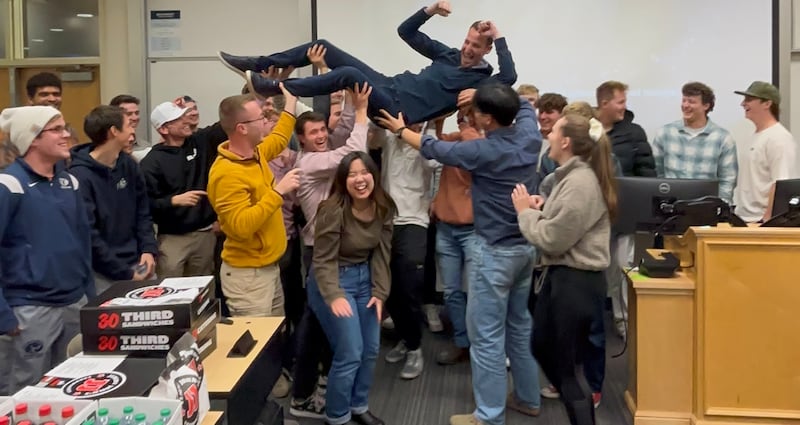
“BYU undergrads are their own unique species. Because of the LDS missions, they are already very entrepreneurial and mature for their age, and have the ability to go off and do [the hard things necessary to run a small business],” Tileston says.
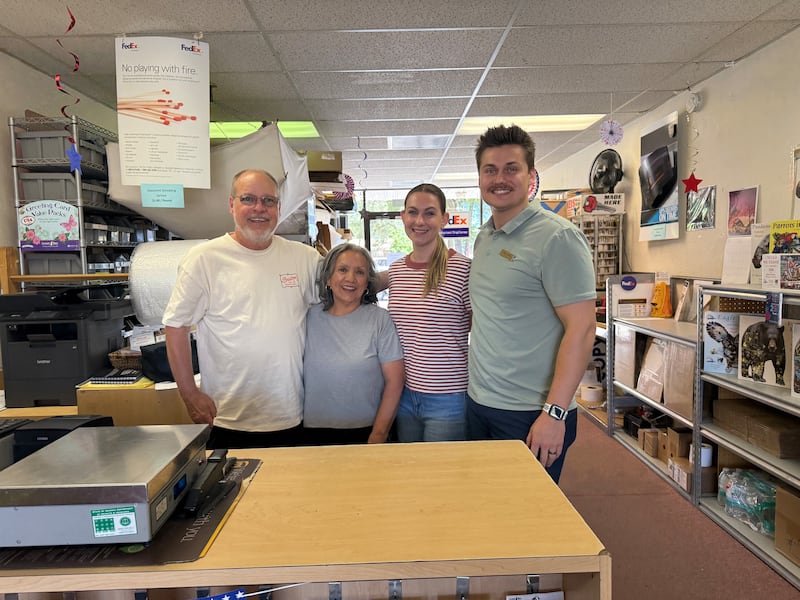
Porter Flake, a recent BYU grad, is an example of this new wave of young business owners. Flake, during his final semester at BYU, searched for and acquired an independent packing and shipping business in his Arizona hometown.
“If you have that belief in yourself and have that desire, don’t wait,” Flake says. “Just send it. It’s a hard thing to buy a business, but it’s totally worth it.”
Scott Holley, executive director of the Lassonde Entrepreneur Institute at the University of Utah, was a former entrepreneur through ETA, and he believes strongly that business ownership is a skill that doesn’t require an Ivy League degree.
“Classroom education puts a high value on getting the answer right and being cerebral,” Holley says. “But building a coalition and being able to execute requires a more tactile, hands-on approach. The most skillful managers are the ones who learn by doing.”
Holley reports seeing mid-career professionals, usually in their 30s and 40s, who come from industry and general management experience, showing interest in pivoting to business ownership. “There’s a lot of great family-owned companies in Utah that are going to need transition, and that’s exciting,” Holley says.
The fine print of small business ownership
While ETA can draw in many interested in skipping the startup phase to sit themselves in an executive seat, buying a business isn’t necessarily a shortcut.
Murdock, who co-founded Decada Group, a firm that operates a portfolio of acquired companies, notes that the difficult role of small business acquisition goes beyond the day-to-day operations — it’s honoring the legacy and hard work of the previous owner.
“When you buy a business and replace the founder and owner with yourself, you’re performing a heart transplant,” Murdock says. “The heart, soul and culture of the company is often built around the founder. A good leader has to understand that change is hard.”
Richie Connolly, a BYU MBA graduate, had to manage that change when he acquired the Utah College of Dental Hygiene in Orem from its founder, who was ready to retire in his late 80s.

“The founder took on a lot of risk when they built the business,” Connolly says. “They put everything on the line to build it from zero to one. They care a lot about what they’ve built. It’s their life’s work and they’re putting it in your hands.”
Additionally, there is the foundational element of leverage. Most ETA acquisitions are tied to Small Business Administration (SBA) loans, which require massive personal guarantees.
“When you go buy a business, 90% of buyers are personally guaranteeing a large amount of debt from a lender,” Murdock says. “You’re putting your home, your family and your personal balance sheet on the line.”
As the ETA space has grown, so have the failure rates. Murdock notes that the most recent data reflects some of the highest failure rates in history. Because most acquisitions are heavily leveraged by SBA loans, an unsuccessful ETA venture can have steep consequences.
“You have to remember a failure is oftentimes filing for bankruptcy, not just closing up shop and taking a website down like when you’re starting a company,” Murdock says. “Right now, I personally know four people who are either starting, in the middle or just finished a bankruptcy proceeding because they bought a business and it did not go well.”
A win-win-win deal
Both technology and competition are rapidly changing the future of small business acquisitions, and the ETA space can be a haven for those willing to take the risk.
With AI disrupting traditional corporate jobs, buyers — especially Gen Z — view ETA as a viable alternative to roles facing AI displacement. Buying local service businesses, like HVAC companies, tire shops or manufacturing facilities, provides a level of job security that cannot be easily automated or displaced by AI developments.
“There are so many layoffs happening in the workforce right now, and it scared me,” Flake says. “I don’t want to go and work my tail off for someone else just to be laid off because they don’t need me anymore. I want to put that faith and trust in myself.”
At the same time, AI has been a force multiplier for new owners. “Entrepreneurs who come in with a willingness to apply AI to old-world problems are going to have an opportunity during the next 10 to 15 years to drive strong competitive advantages within industries just by putting AI at the center of improving overall business operations,” Holley says.
But as awareness in ETA and small business acquisition grows, so does competition.
“There are a lot more buyers than there are sellers, and in any marketplace, that creates tension around purchase price,” Murdock says. “The ask price is substantially higher than the deals we were looking at five or six years ago.”
At the end of the day, connection is what leads to winners — for buyers, sellers and the local community that the business serves.
“Being the first to get to a business is no longer the way you win,” Orlandi says. “You win by ultimately forming that connection [and partnership] with a business owner and aligning with them on what they want.”
