
This story appears in a special Legal Elite publication of Utah Business. Subscribe.
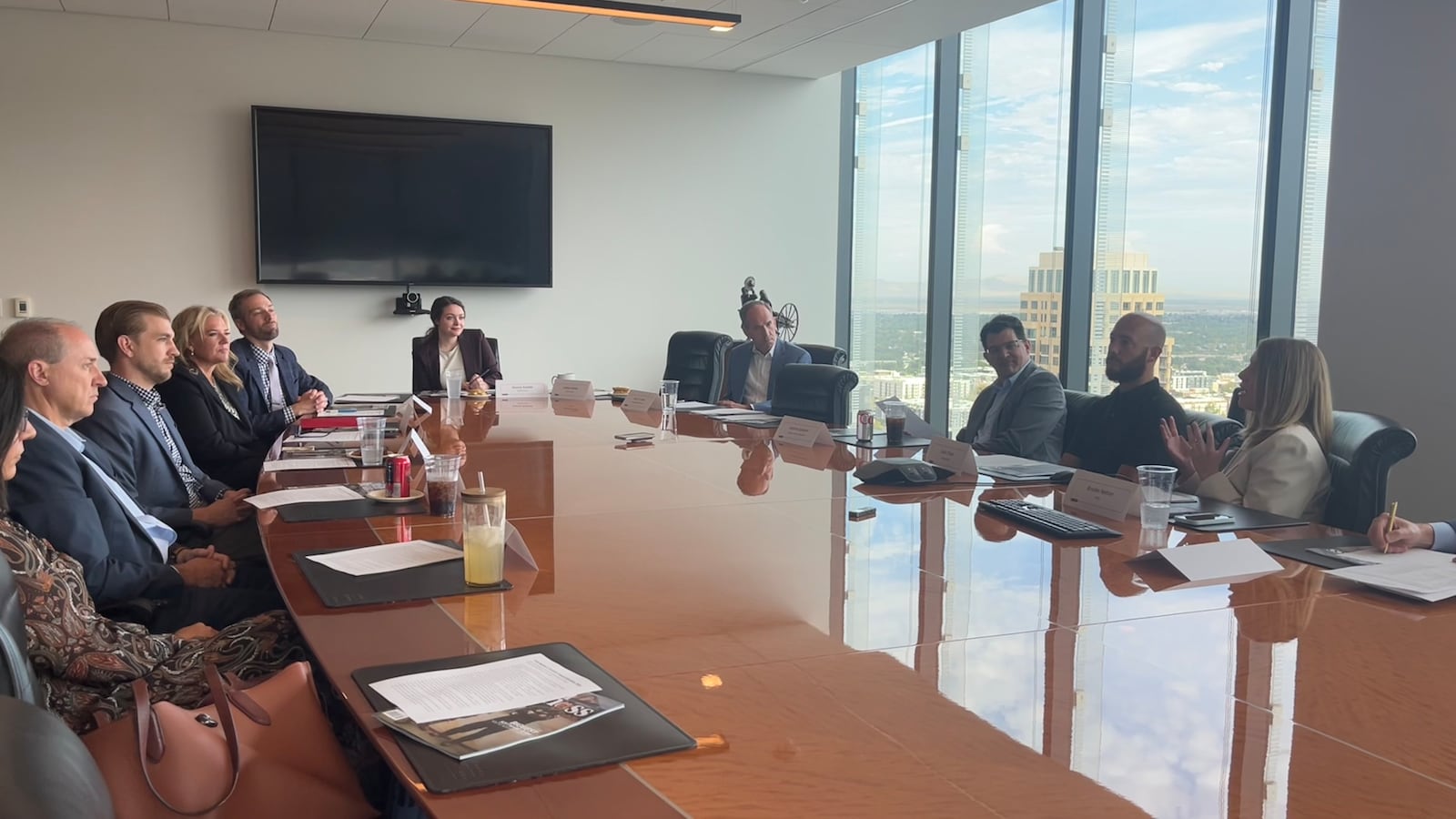
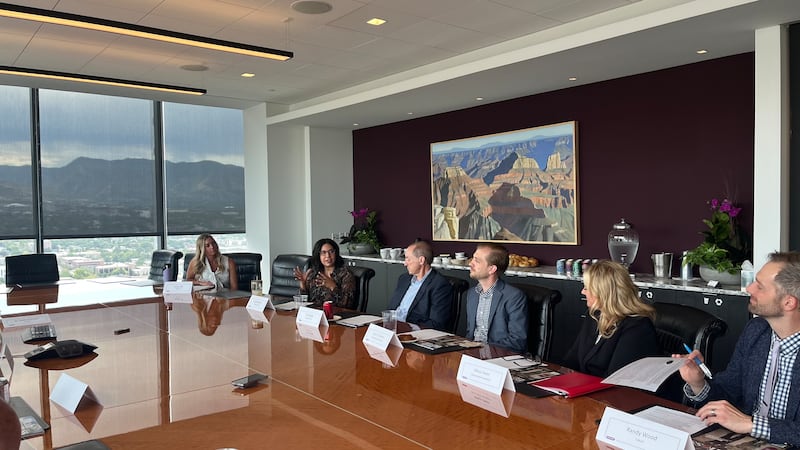
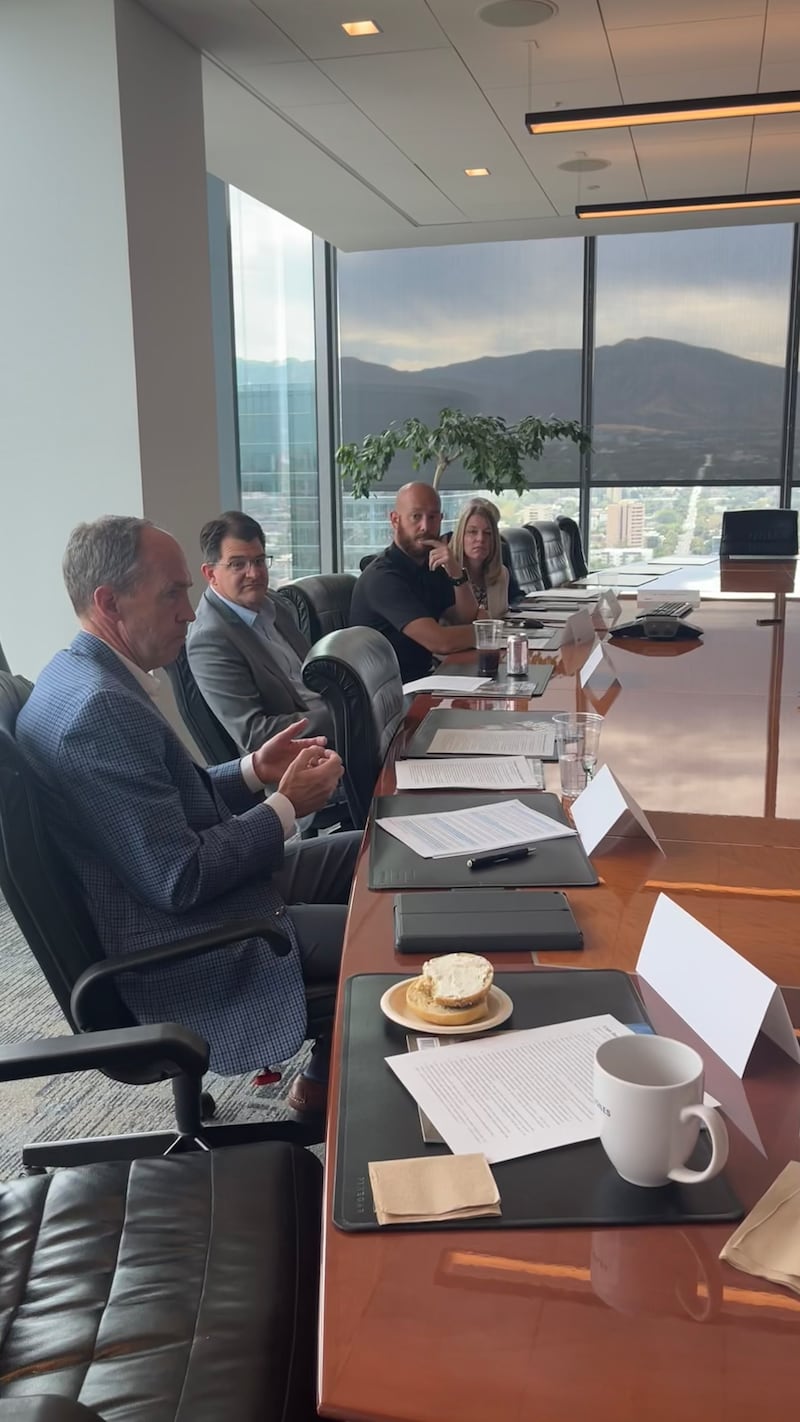
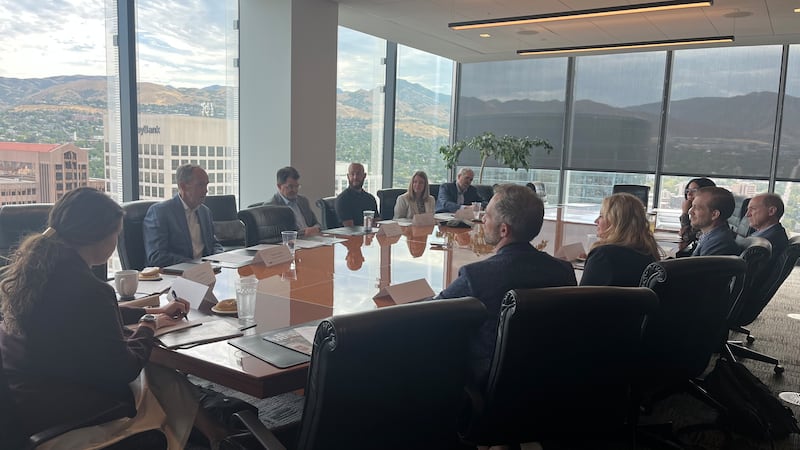
Last month, Utah Business hosted a roundtable conversation sponsored by Dentons Durham Jones Pinegar and moderated by Alissa Owen, in-house legal counsel at Deseret Management Corporation. The roundtable discussed how corporate counsel leaders are embracing AI they don’t entirely trust, rethinking what it means to be a legal advisor and hiring for mission alignment.
Some might say, “AI is like having new interns: super helpful, but you don’t entirely trust it.” What does AI look like day-to-day, and where have you drawn the line between legal, IT and compliance responsibilities?
Andrew Sjoblom | Chief Administrative Officer & General Counsel | Children’s Miracle Network Hospitals
I work very closely with [our head of IT] and other experts on his team to develop policy. At least in our world, we find that it’s developing very quickly. We weren’t the quickest adopter of AI, but we’re finding that the policy we had internally a year ago is already outdated, and we’re working on another one. As we see AI’s capabilities and ways we can use it in our business, we need to be constantly evolving that policy to make sure we’re protecting our data.
Justin Nelson | Associate General Counsel | Western Governors University
We’ve been really intentional about searching for AI tools that can improve our efficiencies, help us be more confident in the work that we’re doing. … I use it on a regular basis, and I’m at a point now where I feel like it would be hard to go back. That’s a good thing for us. It has improved my confidence in my work product. We are also careful with our team not to think of it as a replacement for actual judgment.
Brooke Nelson | Corporate Counsel | PACS
One of the big advantages of using AI that is particularly tied to legal analysis or statutes or regulations is helping us summarize complex regulatory schemes in ways our stakeholders are better able to understand. … [It also] reassures them that what we’re doing is really to make their lives easier and safer, and that we’re not just throwing up obstacles for the sake of throwing up obstacles. … One thing we’re very sensitive to as a healthcare company is making sure that AI is very secure. We’re dealing with protected health information or personally identifiable information.
Camila Moreno | Associate General Counsel | Layton Construction
I’ll have business leaders that’ll send me a contract and they’ll say, “I had AI do a risk analysis just to be helpful,” and it’s usually not very helpful for me. … It is amazing at picking up risk, but without being able to connect why that matters. If it can explain it to our business leaders in a way that makes things more efficient, that’s great. … [In emails,] suddenly everyone writes a little bit better and a little more clearly. You can tell when it’s AI, but it makes my job easier to understand what they need and when they need it. … There are pros and cons.
It’s been said, “Data is like uranium: super valuable, but you don’t want to hold onto it very long.” How have you approached data and privacy?
Tim Schade | General Counsel | Lifetime Products
When we got rid of file cabinets, it was a lot easier to keep stuff because when you ran out of file cabinet space, you had to get rid of things. And now, you don’t seem to run out of file cabinet space — you just put it on a server somewhere. AI is changing that; privacy is changing that. … It makes my job easier to just say, “If we don’t have it, we can’t lose it.” … It’s hard to convince people to get rid of their email and some of their stuff that they haven’t looked at for 12 years.
Jessica Hill | Director, Customer Trust, Product & Privacy Counsel | New Relic
The big thing, and especially with AI, website chatbots and everything now, is a lot of disclaimers. To be quite frank, these demand letters come without an understanding of the technology and collection practices themselves. A lot of it is just informing the user: “By interacting with this, you’re agreeing to X,” and then having some sort of, for lack of a better term, an opt-in to interact with the thing on the website.
When it comes to selecting outside counsel, have you vetted based on how willing they are to innovate, adopt AI and increase efficiencies?
Justin Nelson | Associate General Counsel | Western Governors University
When we’re interviewing potential counsel, [we ask], “How are you improving efficiency and are you using AI to do so?” The firms that we’re really attracted to right now are those that are actively looking for ways to improve their efficiency for us. … It is a sign of somebody who’s open to thinking about a problem differently, their ability and willingness to adopt technology and AI.
Brian Lloyd | Chief Legal Officer & Corporate Secretary | Merit Medical Systems
I hope I don’t sound contrarian here because efficiency’s obviously critical, but when we’re looking for outside counsel, first and foremost is getting the right answer. I remember private practice being told that clients hire lawyers — they don’t hire law firms. If our team is going to stand in front of the management team, stand in front of the board, we have to have confidence that the answer we’re giving our management team, that we’re giving our directors, is right.
Dan Stevenson | General Counsel | Urim Capital
We definitely still choose based on the judgment and the lawyer. … The days have passed [where] it’s almost a badge of honor that they don’t use AI. They [would] warn about how wrong things will be if you use AI, and [that they] would never do that. But that doesn’t make sense anymore. AI is a great junior associate or intern, and if you’re not using it, you’re wasting money and time. Even the most brilliant law firms are going to have to figure out how to adopt this technology.
Randy Wood | VP, Associate General Counsel | Cricut
I hate to be that patient that comes into the doctor’s office [with] WebMD and Google Gemini, … but I have been really pleased with all of my outside counsel allowing me to come in educated and say, “Hey, I recognize I’m not the expert in this arena, but I did come prepared on our call today,” and then have them gut-check my AI analysis of the situation. … I have found it extremely helpful to come more prepared because I’m being brought up to speed on issues in areas or statutory regimes that I didn’t know anything about previously.
How often do you connect the business stakeholders with the outside counsel directly?
Camila Moreno | Associate General Counsel | Layton Construction
Just like when we were all working at firms, you have to know your client and each business leader and if they’ll appreciate being directly on the line or if they want a two-sentence summary after. … If I’m looking for outside counsel, it’s because it’s not an easy answer and not something that I could just educate myself on. … I don’t ask a lot about their AI. I just ask that they can run conflicts quickly and get me what I need.
Tim Schade | General Counsel | Lifetime Products
We have a very small group, and we’ve had them for a very long time. … It’s like having that conversation with my brother. I’ve worked with the same people for 20 years. When I sit down across the table, I say, “Hey, I need you to do this,” and they say, “Well, that’s fine, but then you’ve got to do this,” and I go, “Yeah, we can figure that out.” That is probably the most valuable thing that I have. … But now, it would be hard to start and find somebody else, just because we feel so invested in the success of the firm and they feel invested in our success.
Brian Lloyd | Chief Legal Officer & Corporate Secretary | Merit Medical Systems
That’s one of the great pleasures of being in-house general counsel, is the collaboration with the business team and being able to truly be a counselor. I think “counselor” is a word that has meaning. … I remember a conversation with one of our directors, … and his comment was that in his experience, the sooner he involves counsel … in resolving an issue, the sooner he gets to the right answer. Part of our responsibility to the organizations we work with is to understand the business at a level that we can be an effective counselor.
Taylor Shaw | Chief Legal Officer & Corporate Secretary | Just Ingredients
Attorneys as gatekeepers is really an antiquated thought process for what we do. Nowadays, there’s so much more value we could add. We have so much context on the background of risk that we can help guide the strategic vision of a company. There’s a lot of power in that. If you utilize it correctly, you don’t ever have to say no. … [Our CEO will] come to me and say, “Okay, you’re going to tell me no on this,” and I’ll say, “I won’t tell you ‘no’ unless it’s illegal or I really should. But I’m going to warn you of the risks. … Just understand if you go this way, here’s what that could look like down the road.” … We should really be able to empower the other executives to make business-minded decisions with legal in mind.
For those representing companies with strong brand identities, how much of your role involves shaping culture?
Brooke Nelson | Corporate Counsel | PACS
One of the first values at PACS is love. It’s literally in our stated values. We’re encountering people at a very vulnerable and potentially scary point in their lives as a patient coming into a skilled nursing facility. … Our conversations are indirectly impacting patient care, and that is something top of mind as I’m giving advice. … If you work at a company with a strong cultural identity, make sure that you as a legal team are not separate and apart from that, that you’re really buying into that mission because I think it helps you earn that trust as a strategic advisor.
Justin Nelson | Associate General Counsel | Western Governors University
We’re a very mission-driven organization, and our mission is to change lives for the better by creating pathways to opportunity. … That’s what motivates people to align with us and helps us be more persuasive when our legal advice is aligned with that mission. … Even though our job is to defend the university, we’re actively asking, “Where did we go wrong? What did we do? And how do we get better? How do we improve?” Not just, “How do we get WGU out of this or defend the company?”
Jessica Hill | Director, Customer Trust, Product & Privacy Counsel | New Relic
I love the discussion of a purpose-driven mission because I [like to] say, “Why don’t we take it a little step further?” One good example is that we work with Paramount and we help them monitor their uptime, availability and any issues when they’re streaming the Super Bowl. We’re impacting millions of individuals. If you take a purpose-driven focus, you realize the impact that you’re having. … That’s where I find a lot of meaning in my work, is the helping aspect of everything.
Taylor Shaw | Chief Legal Officer & Corporate Secretary | Just Ingredients
We just recently hired a commercial corporate counsel. … The biggest thing that I looked for and that I hired based on was personality, on their willingness to roll up [their] sleeves and get involved and proactively address issues. Also, humility. … Attorneys are always so stuck on perfection. … Everyone is going to make mistakes. I would much rather have a hire that I can sit down and have a hard conversation with, who can accept constructive feedback and we can work together and see improvements rather than someone who thinks that they know it all.
Dan Stevenson | General Counsel | Urim Capital
Everyone knows you either waste so much time with the wrong people, or they save you so much time and they reflect so much better when you have the right people. It is absolutely critical. … There is something to humility … and culture. In a 30-minute interview, you just can’t get enough. You have to use references, or you’ve got to find out if they’re really a culture fit for what you’re trying to do at your company.
Randy Wood | VP, Associate General Counsel | Cricut
I just hired somebody, and I did a contract exercise — I had fake emails, a whole fake transaction. … In the course of the email, if they had attention to detail, which is huge for me, someone said that their mother passed away. I only had one candidate [say], “Before I even start, I just wanted to extend my condolences to your loss.” Some of that EQ (emotional quotient) is something that I’m also looking for, … that we take extremely seriously.
What gives you hope?
Tim Schade | General Counsel | Lifetime Products
The future is bright. The people that are coming into the industry are good. Not just smart, but good. They have a good perspective. That, to me, helps. When I start looking at the future of the industry, I feel like it’s in good hands and that gives me hope.
Brooke Nelson | Corporate Counsel | PACS
What gives me hope is seeing businesses and in-house counsel partner together in ways that seem really collaborative. … It gives me a lot of optimism that we’re growing and building a really, really strong foundation.
Andrew Sjoblom | Chief Administrative Officer & General Counsel | Children’s Miracle Network Hospitals
One of the blessings of being an in-house attorney is being able to work for mission-driven organizations. … We raise money for children’s hospitals. We’re a nonprofit. It gives me a lot of hope to see the support for that among corporate partners we work with. I also love working with the people inside my organization, especially young people who are so passionate about making the world a better place or changing the world.
Brian Lloyd | Chief Legal Officer & Corporate Secretary | Merit Medical Systems
When we look at the future, innovation is such a critical part of our business, but it is also a critical aspect of the hope that I see. It is in our products that we develop, the difference that they make in patients’ lives.
