
This story appears in the August 2026 issue of Utah Business. Subscribe.
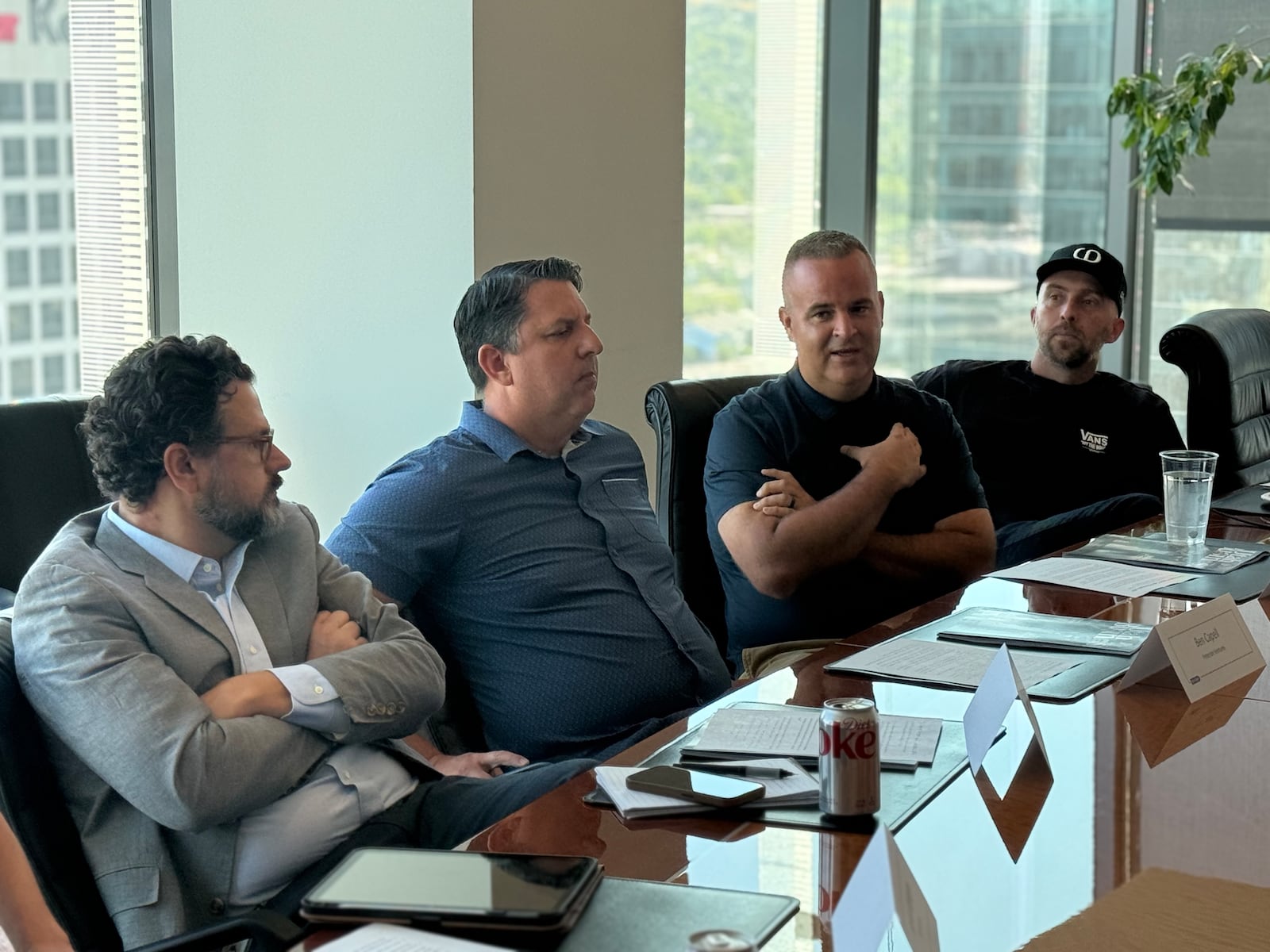
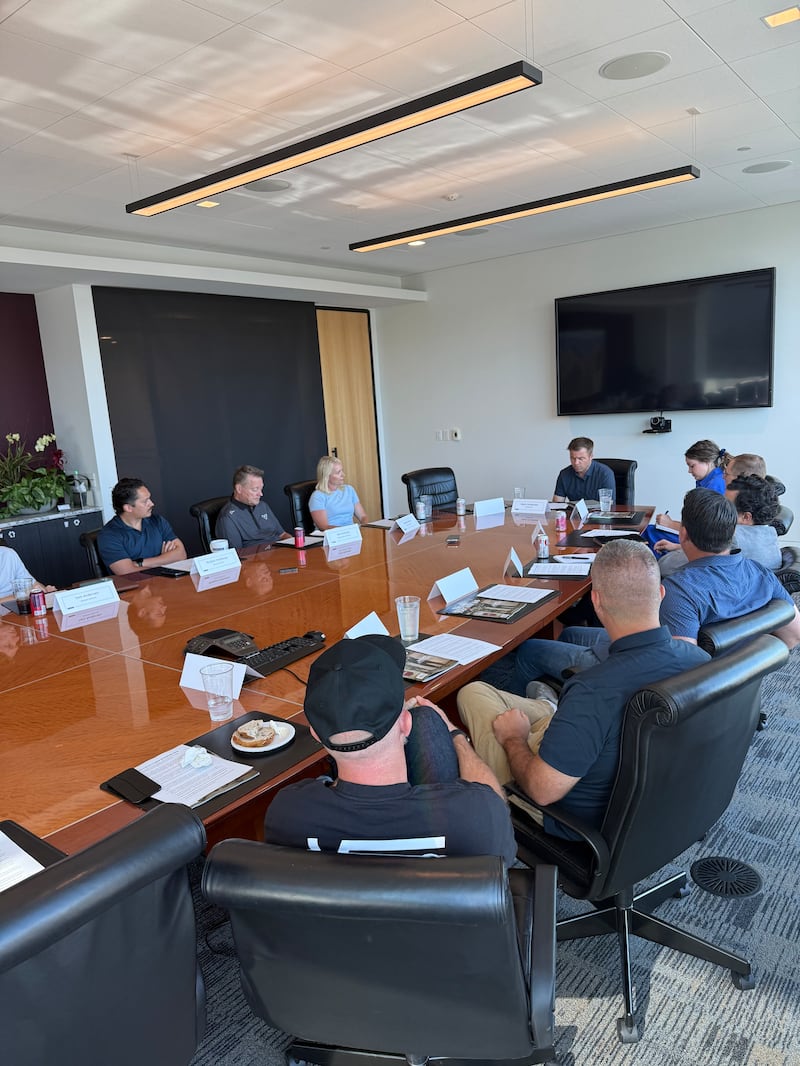
Last month, Utah Business hosted a roundtable conversation sponsored by Dentons Durham Jones Pinegar and moderated by Gavin Christensen, founder and general partner at Kickstart. The roundtable discussed the growing divide between hyperscale AI bets and the rest of the venture market, and what that shift means for fundraising, liquidity and Utah’s place in the innovation economy.
Christensen started off the conversation by saying this: “We’re all optimists in this profession. I know I am, so I’m excited about what the future looks like, but I’m also recognizing [fundraising] is pretty different than what we’ve experienced. … I want to see our industry continue to be vibrant and have entrants and serve our entrepreneurial customers really well.”
What’s the biggest way the industry has changed, and are we better or worse for it?
David Frazier | Managing Director | Frazier VC
91% of the money going into huge top 30 funds is a shifting of the market; indexers [will] say, “We’re trying to get a ton of money into a very small handful of AI-forward, future hyperscaler type companies and then 9% that’s not.” It’s bifurcating. I don’t think it’s an accident. People are gaining confidence in these concentrated Silicon Valley bets and, as a whole, have lost confidence in other types of venture, in smaller companies trying smaller, scrappier, more unique things. That’s how I frame everything: It’s hyperscalers versus the rest of us, and how do we carve our niche and how do we drive value? That’s a lot of what we ought to think about.
Cory Cozzens | Co-founder & Managing Partner | Philo Ventures
It’s almost a different asset class versus what we’ve traditionally thought of as venture capital, those early-stage explorations. Are we better or worse off for it? It’s important to define who the “we” is. Are we speaking to the early-stage founders? [They are] worse off for it. There’s just less capital available to them. But that concentration has enabled big foundation models and massive checks to those players that otherwise would’ve been very difficult to do if they had to syndicate that much money from a bunch of different players in the space. There is a subset of “we” that benefits from it on the entrepreneur side.
Ben Lambert | General Partner | Pelion Venture Partners
We’ve actually seen exits happen that totally prove the mega funds work. We’ve seen companies return funds multiples over when you’re investing in the Series D of some of these big companies. … The venture market, both from the GPs to entrepreneurs and from LPs (limited partners) to GPs (general partners), is quite efficient. … We’re seeing a reaction to what happened in 2020 and 2021 when anyone could raise their emerging manager fund and put massive marks on companies. LPs are going to people that they trust because a lot of trust was lost during that time period.
Rachelle Morris | Managing Director | Stalwart Ventures
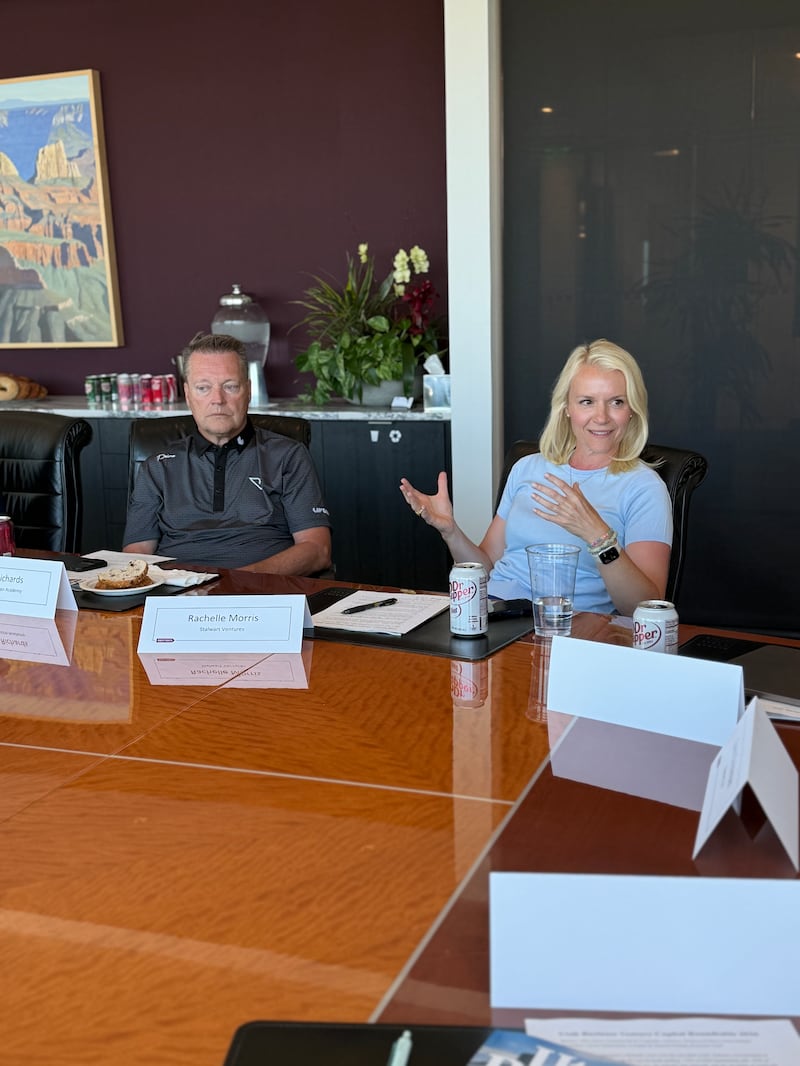
It is interesting because when we were raising our fund, … we were receiving a lot of advice of, “You’re going to raise your Fund 2, and so really it’s Fund 3 that you’re going to need to show some DPI (distributed to paid-in capital). … Once you’ve successfully raised Fund 3, then Stalwart is going to be a firm and a platform for many, many years.” The industry has been disrupted while we’ve been investing out of Fund 1. So we definitely feel the pressure, as an emerging manager, to have a flagship win of something to point to in order to raise our Fund 2 next year. … [Maybe it’s] not necessarily DPI out of Fund 1 to raise Fund 2, but we have to show that there are some very clear breakout winners.
Ben Capell | Managing Director | Peterson Ventures
There was a period of time in Utah when vertical SaaS was really critical to this market and we excelled at that. … But now, AI has enabled nontechnical co-founders to do pretty interesting technical businesses. … Right now, we’re in this hyperscale environment where, if you’re not growing 1,000% year over year, it can be actually hard to raise capital today. So businesses that five years ago were growing 7,500% year over year and would have been a lock for a fundraise are not raising capital. There’s been this feast-or-famine environment that is interesting.
What is the current status of AI-based startups in our region vs. coastal ecosystems? Are we behind? Where do we win?
Sam Andersen | Partner | Element Ventures
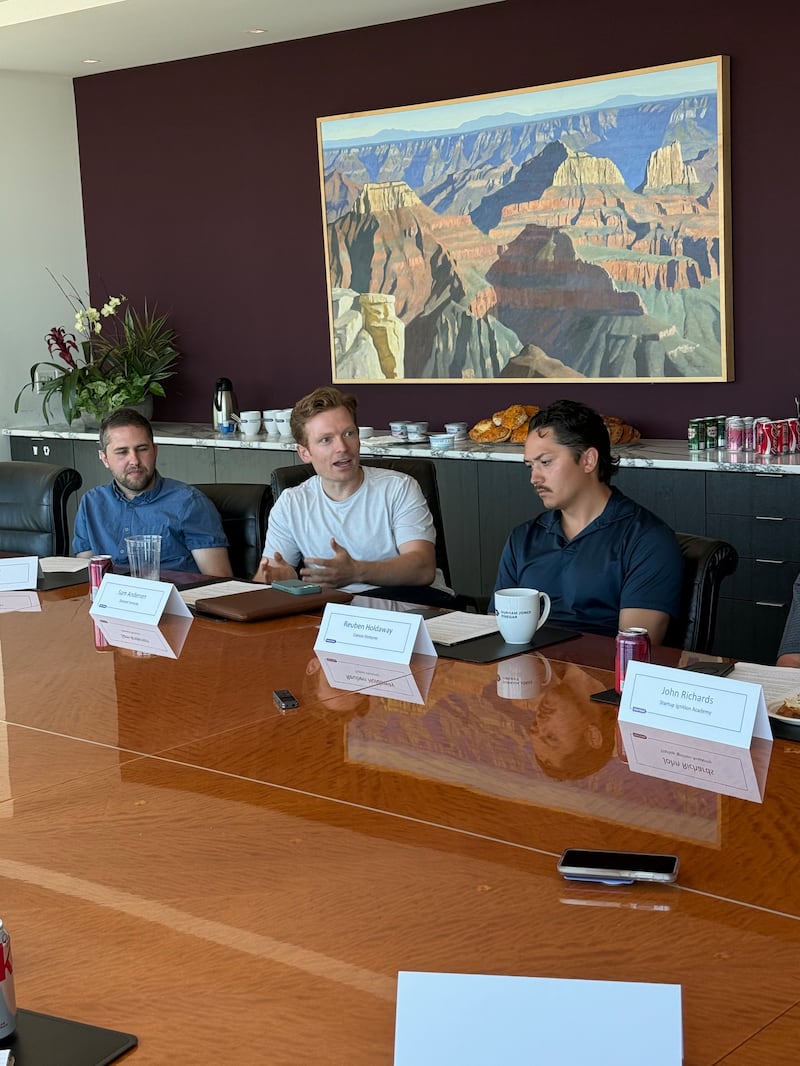
It’s changed the feedback that we give at the pre-seed stage. We tell founders, “How quickly you go from zero to a million probably doesn’t matter nearly as much as how quickly you go from 1 million to 5 million to 10 million to 15 million. You need to really nail this product, understand the customer.” … The clock starts and we know that Series A people are looking at those growth trajectories, and we don’t want them to run into a product-market fit problem at 1.5 million, stall out for eight months while they go and try to solve it, because that all builds a track record that ends up hurting them in fundraising later on down the road.
Barrett Edgington | Principal | Run Ventures
It’s really hard when you have a triple-triple going on and that company is still struggling to get external capital to fundraise. From an internal perspective and a reserves perspective, we’re not willing to give up on something just because it’s only a triple-triple. I could make an argument for either side, but I feel like it has to revert at some point, whether that’s support from the internal investors or new external folks.
John Richards | Founder & CEO | Startup Ignition Academy
I’ve been through four cycles of my career and the same things happen over and over. … During the personal computer revolution, there were articles written in 1979 to 1981 saying, “All workers are going to lose their jobs to these personal computers. They’re going to replace everybody. It’s going to be terrible.” Of course, none of that happened. Productivity went up, and we all became wealthier. Same thing with the internet. “All these companies are going to go away. All the brick and mortars are going to go away.” That didn’t happen. AI is going to be a very powerful tool that entrepreneurs are going to use, but they have to follow business principles.
How are you thinking about the decreasing costs of developing niche solutions? Is there interest, especially in later-stage seed strapping? How are we thinking about that?
Sam Andersen | Partner | Element Ventures
The economics of specialization and exchange aren’t going to die either. … Not every business out there has the technological expertise, the interest or the time [to build tools internally]. … You think of my dad’s orthodontic business up in Brigham City, Utah. He’s not sitting down to recode his practice management software using Claude Code. He’s going to pay some provider out there who spent the time to understand his workflow and to understand his business, … someone who specializes in building orthodontic practice management software.
Cory Cozzens | Co-founder & Managing Partner | Philo Ventures
At the very early stage, we see lots of compelling opportunities from an IRR standpoint to pursue that seed strap opportunity. We’re going to write a check; it’s not going to go Series E, but we’re going to get great IRR because it’s not going to cost much to build this thing and get it deployed to whatever the niche is. But historically, those downstream investors haven’t existed. There was nobody that I could call and say, “Hey, there’s another great IRR play. Not going to be a unicorn, but going to be incredible.” That didn’t exist.
DPI is what LPs want to talk about right now. With the IPO window still narrow and strategic M&A subdued, which paths to liquidity are actually working for your funds — secondaries, continuation vehicles, strategic sales — and which ones are mostly theater?
David Frazier | Managing Director | Frazier VC
DPI is certainly cyclical, … but in my mind, there’s a whole other element to the story, which is AI. That, to me, also informs the other half of the equation: Are we being honest about what all our companies are actually worth? … If all you’ve got is a hammer, [then] everything’s a nail. If AI gets twice as smart and there’s this large set of companies that are failing that criteria, it’s going to suck. … We’re in this crappy, slow, unfortunate moment in a cycle, and it’s got to change.
Ben Lambert | General Partner | Pelion Venture Partners
One of the things that’s most frustrating about being a VC … is the only control that we have as an investor is our initial check. Everything outside of that is completely out of our control. … Great founders are smart about positioning themselves, but I don’t think anyone in here invests in companies so that they can be bought. Hopefully, the goal is you invest so that these can be a self-sustaining public company that can be around forever.
Barrett Edgington | Principal | Run Ventures
I’ll push back just slightly because, for the most part, I agree. As investors, there’s a lot of stuff out of our control, and it’s frustrating, especially if you’re a proactive, Type A person who wants to be able to control. … But we do have the opportunity for secondary sales. It’s not entirely out of our control — we can manufacture or at least attempt to manufacture some type of DPI. We don’t want to be a crying victim that it’s completely out of our control, because that’s not entirely true.
Landon Ainge | Founder & Managing Partner | TribeAngels
Because I started my career [in M&A], I just want to say there are only four reasons people buy companies: It’s because they’re cash-flowing, they’re buying capability, they’re buying distribution or they’re seeing a multiple expansion. Those are the only four reasons people typically buy companies, and those aren’t going to change. We talked a little bit about, ‘Don’t invest in a company unless you see it as sustainable and cash-flowing.’ That’s true, because that’s how you control the timeline of exits. You can say yes or no to these not-as-good acquisition offers. But as a case study, we’re still generally investing in companies that we see in Utah that aren’t quite sustainable, IPO, cash-flow companies. That’s okay; we’re getting there.
What’s a belief you held about venture capital five years ago that you no longer hold?
Reuben Holdaway | Principal | Convoi Ventures
One thing that we were really stringent on in the early days of Convoi was that there needs to be a technical founder from zero to one, and specifically around regulated industries that we’ve been getting more excited about over recent years. With this wave of AI, we’ve been able to see companies, see these founders — especially if they don’t have a product background — be able to build a legitimate product, get to market, get some meaningful revenue without having that technical co-founder.
Landon Ainge | Founder & Managing Partner | TribeAngels
Five years ago, I believed that venture capital would continue to grow with AUM for a large amount because we were going to see the U.S. as an innovator. I think we’re testing that right now. I also believed that we would increase the amount of GPs in a regional basis, maybe more industry-specific, or vertical-specific. I’m not sure if that’s holding true.
Cory Cozzens | Co-founder & Managing Partner | Philo Ventures
Venture capital used to be a must-have, and it’s no longer. You can build cheaper, you can build faster. There are plenty of exciting tech businesses that no longer do venture.
John Richards | Founder & CEO | Startup Ignition Academy
I believe that TAM (total addressable market) and broad vision were important, and I now no longer believe that they can rescue a fuzzy wedge. I need to know the wedge, the distribution, the repeatability. It’s more important to me what customers they can get and build in the next six to 12 months than where they’ll be five years from now. … Our entrepreneurs can navigate these waters even better than the coastal entrepreneurs who are so dependent on massive amounts of capital.
Rachelle Morris | Managing Director | Stalwart Ventures
I’ve been in this industry now for four years, and coming from the vantage point of having worked with LPs my entire career where we looked at venture capital as an asset class inside of a comprehensive portfolio, and now being inside of the asset class, … I’ve grown to appreciate so much more the role of the entrepreneur, the role of deals that happen inside of an ecosystem, and how each entrepreneur story, each startup story, each deal gets done. … It’s a fascinating business to be a part of.
What are the ways you hope to change in the next five years?
Ben Lambert | General Partner | Pelion Venture Partners
Next five years, I think we’ll reset the way we live our lives; massive businesses and massive value creation will happen. There’s never a better time to try and start a company.
Landon Ainge | Founder & Managing Partner | TribeAngels
For the next five years, honestly, … when you look at where AI goes, it goes towards hardware. The use of AI is in hardware. We’ll see a massive willingness to have hardware because it provides stability to larger companies.
Ben Capell | Managing Director | Peterson Ventures
We raised our first fund in 2012. There were sub a hundred funds that were less than $100 million in size, and now there are thousands, literally. There’s never been more funds, so it’s never been more important to be able to identify what you do, communicate it clearly and figure out how you play within that ecosystem.
Reuben Holdaway | Principal | Convoi Ventures
AI continues to solve enterprises’ problems, so I’m excited about the business opportunity for AI solving societal problems. I don’t think there’s any reason Utah shouldn’t be the center of gravity for innovation with clean air, minerals and materials. That’s what I’m excited for in the next five years.
