
For the first time, a Utah venture capitalist has been appointed chair of the National Venture Capital Association.
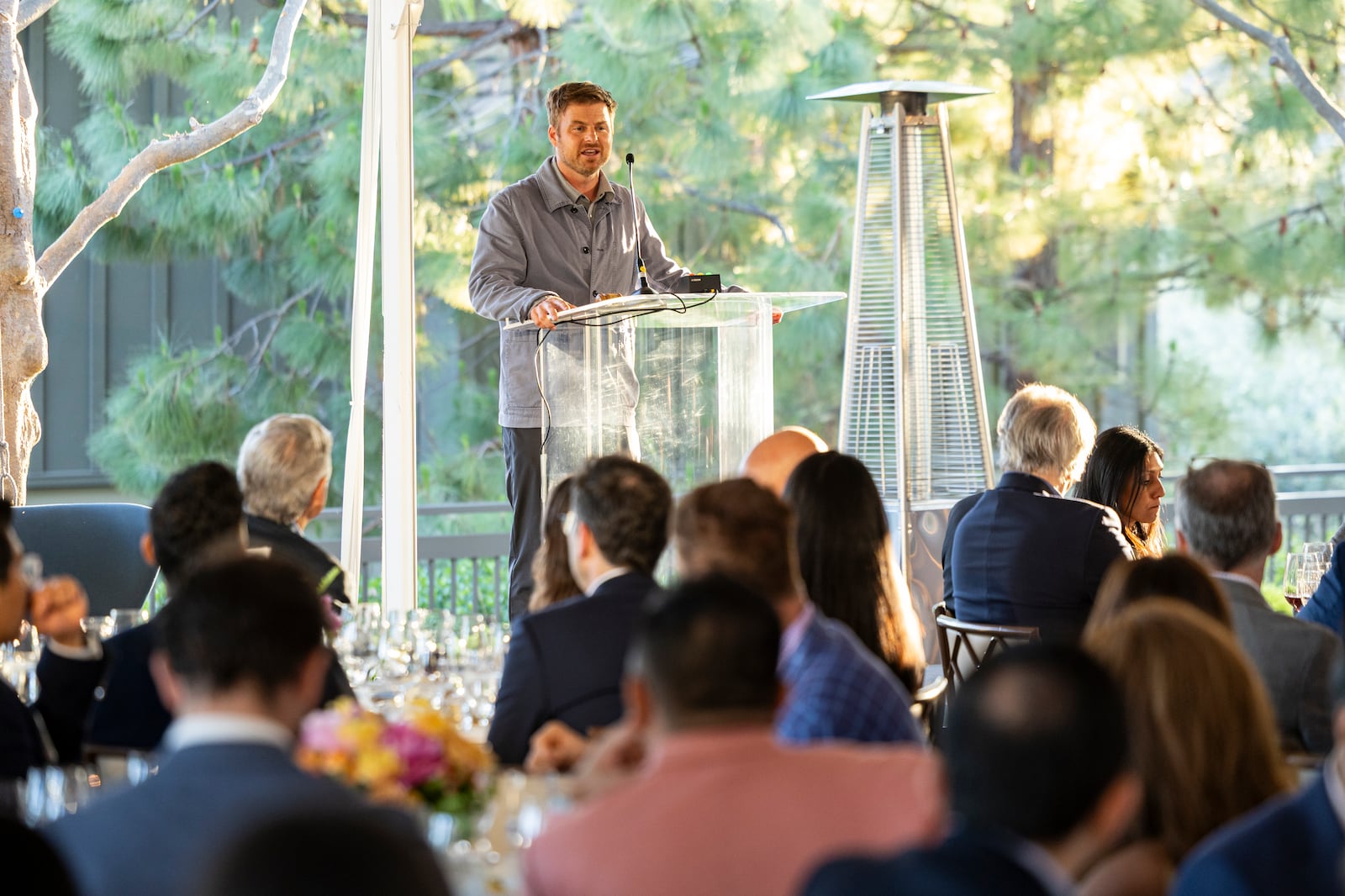
Gavin Christensen, founder and general partner of Kickstart, joined the NVCA four years ago and was soon asked to sit on the association’s board, further increasing Utah’s venture capital presence nationally. Christensen was officially appointed chair at a gathering in Rosewood Sand Hill in Menlo Park, California, on May 14, where limited partners at Kickstart and CEOs of its portfolio companies joined the celebration. This appointment confirms Utah’s VC leaders are key voices in the national venture capital dialogue.
“Gavin brings a deeply networked and collaborative approach to venture capital that reflects where our industry is headed,” NVCA President and CEO Bobby Franklin states in a press release. “He has spent nearly two decades proving that world-class innovation can take root anywhere. Gavin’s leadership will be incredibly valuable as we extend our reach across the full spectrum of venture, from emerging managers to established firms, and across every region of the country, to further strengthen our advocacy for a robust, vibrant entrepreneurial ecosystem.”
Utah Business sat down with Christensen to understand what this one-year commitment means to him, to Utah and what he hopes to accomplish while serving.
You were just named chair of the National Venture Capital Association, the first person in Utah with this title. Why is this significant for our state and our visibility nationally?
My bet has always been that [Utah], this community, this ecosystem is going to be a thriving, exciting place to invest. … When I would pitch an LP, I would say, “I’ve got this great seed fund, and we’re investing in Utah.” [They would say], “Hold on, Utah?”
‘Why Utah’ was most of the conversation. These days, that’s much less so the case. For me, I feel like being invited to be part of the board, and then eventually becoming chair, is part of a Utah moment. … People see what’s happening in our ecosystem, they admire it, they think it’s working well, they see the way funds are working with entrepreneurs, the way they’re working with the government and think that’s worthy of note. … The hard work of what so many people have been doing here for so long is really paying off — great economy, great results in the entrepreneurship realm and successful funds.
You hear what venture capitalists nationwide have to say about Utah. What’s the buzz?
Utah has the respect of investors and entrepreneurs outside of Utah [because of] the way we go about building businesses. They’re asking me to take this role right now because we have such amazing venture funds and companies on the coast, but the venture capital industry is about so much more than the coast. It’s the story of people like myself with Kickstart, where it’s like, “Hey, I started with a $4 million fund, and we’ve had an outsized impact on Utah.” This industry matters, not just for a few cities, but across the U.S., and it’s a big part of the job growth and innovation that’s happening.

What is your perspective on the current state of the venture capital industry in Utah and how it compares to your early days?
[Utah’s] beginnings were so incredibly humble, and I think whether you’re part of that heritage or not, being here, you feel that. There’s this experiment to be successful together. What’s been accomplished in my career in 20 years in this industry and in the state, it does make me very bullish. Why would this ever slow down or stop? … I have a lot of optimism for the future, even though we’re in this moment of disruption, but … these moments of disruption are a great opportunity for entrepreneurs.
What do you wish all policymakers understood about venture capital before making decisions?
One of the messages that’s really important to get out there is that when you increase regulations on VCs, whether it be carried interest or tax policy, the ones you hurt actually are the emerging managers who are trying to get going. The larger funds will be just fine, but the emerging funders outside the coast are trying to get a foothold and … that’s generally who’s hurt the most, because they have the least ability to react.
As a member of the NVCA board in years past, what did you uncover on the policymaking side of venture capital that surprised you?
What I’ve discovered … is a little bit frightening. Every year or so, there’s some well-meaning lawmaker … who is trying to accomplish something and inadvertently or advertently is killing part of the golden goose. It could be tax policy, it could be regulatory-related, but just recognizing that the system that motivates and incentivizes venture capitalists to invest in very risky investments — scrappy visionary entrepreneurs that take a long time to pay off, but when they do, they can pay off big — is so critical. Every year, there are policies that would handcuff our ability to [invest], and that’s a huge chunk of job growth in the U.S. and why our economy is as successful as it is. The NVCA … focuses on being a watchdog to protect the innovation ecosystem.
Why does the NVCA exist? What’s the biggest value you’ve seen to the extent of wanting to get involved on this level?
The previous chair had a great metaphor. She compares the NVCA to the paramedics of our industry. They’re going in and fighting fires and really preventing. Our country, what makes the U.S. special [is] we have this amazing history, we have this incredible system. But you look economically across the world, there are a lot of people who work hard, a lot of people are smart, a lot of people are entrepreneurial, but we have this incredible innovation system that is working so well that it’s resulting in a huge chunk of our economic activity, and that makes us so successful economically.

What’s your focus as the NVCA’s new chair?
A lot of my focus will be on making sure the administration and representatives are aware of the needs of venture funds and entrepreneurs throughout the country. We’re balancing the needs of larger funds and smaller funds. AI is a super exciting wave of innovation that will likely eclipse — in terms of impact — some of these previous waves of innovation. It’s going to enable a lot of exciting entrepreneurship, a lot of disruptive entrepreneurs to create great businesses and new products. We want to make sure that’s something the whole country experiences. We can do that by just encouraging a real free market and capital flowing across the country into startups.
Does having you in this seat with the NVCA help Utah?
I feel like this is a Utah moment to say, “Hey, we’re a relatively small state population-wise in the middle of the country, but we’re known for a few things.” Some are awesome. Some are weird and funny. One of those things is we’re known for entrepreneurship and creating amazing companies. I hope [being in this position] builds Utah’s brand. The change in tenor of the conversation from where I started my career in Utah to now is amazing. The respect we have from other investors and entrepreneurs. A lot of people have worked hard for that to be the case.
You talk to VCs from all over the U.S. Are there things that we can learn from other states that Utah can do better?
For sure. I recently attended a global venture capital conference in Dubai. One of my big takeaways was that just because you’re on top — economically or in venture capital or in entrepreneurship — doesn’t mean you always will be. You need to make sure you are not taking for granted the progress you’ve made, the momentum you have, and that you continue to feed the right environment to really prosper. I think we’re doing that well in Utah. We’re very pro-business, but there are things neighboring states are doing that are very aggressive. I think there are always things that we can look at and say, “OK, how do we make this a better environment for new funds to form and more entrepreneurs to find success or hire more people?”
What is limiting Utah’s growth potential?
We are going to keep bringing great entrepreneurs here, but some of the limiters I worry about are making sure we have education for people who are moving here. For the people that live here, it’s education for their kids, housing, water, the Great Salt Lake. This stuff matters because as we aspire to continue growing, those start to be the limiters.
