
This story appears in the May 2026 issue of Utah Business. Subscribe.
As Scientia Vascular CEO Rick Randall remembers it, the air was thick with apprehension as employees walked into the Everest Conference Room at the company’s design and manufacturing facility in West Valley City.
The day before, 290 Utah-based employees reported to work and learned that their neurovascular device company had been purchased for $550 million by Medtronic, the world’s largest medical technology company by revenue. This series of town hall meetings, starting first thing Wednesday morning, would be different than their usual quarterly town halls.
Would the company remain in Utah? Would Medtronic want to change the company’s family-oriented culture, so prevalent in the bins of free snacks lining the breakroom counters and in the smiling photos lining the hallway walls ⎯ headshots of every employee in the company, grouped by the year they started?
They filed into the room, greeted by the top executives from Medtronic’s Irvine, California-based neurovascular division. The executives wore Scientia baseball caps and brought 300 cookies decorated with the Medtronic and Scientia logos.
“Every employee got to meet senior management, and they put together a fabulous presentation showing why having this facility in Utah is so important,” says Randall. “The Medtronic executive made this comment that it seems like most medical device companies have some kind of site in Utah, and how Medtronic never did and has always wanted a foothold here.”
Kelvyn Cullimore, president and CEO of BioUtah, adds, “That’s a true statement on their part. The life sciences industry in Utah has, for the last decade, been the third-fastest-growing life sciences community in the country, and much of that growth has been in the medical device space.”
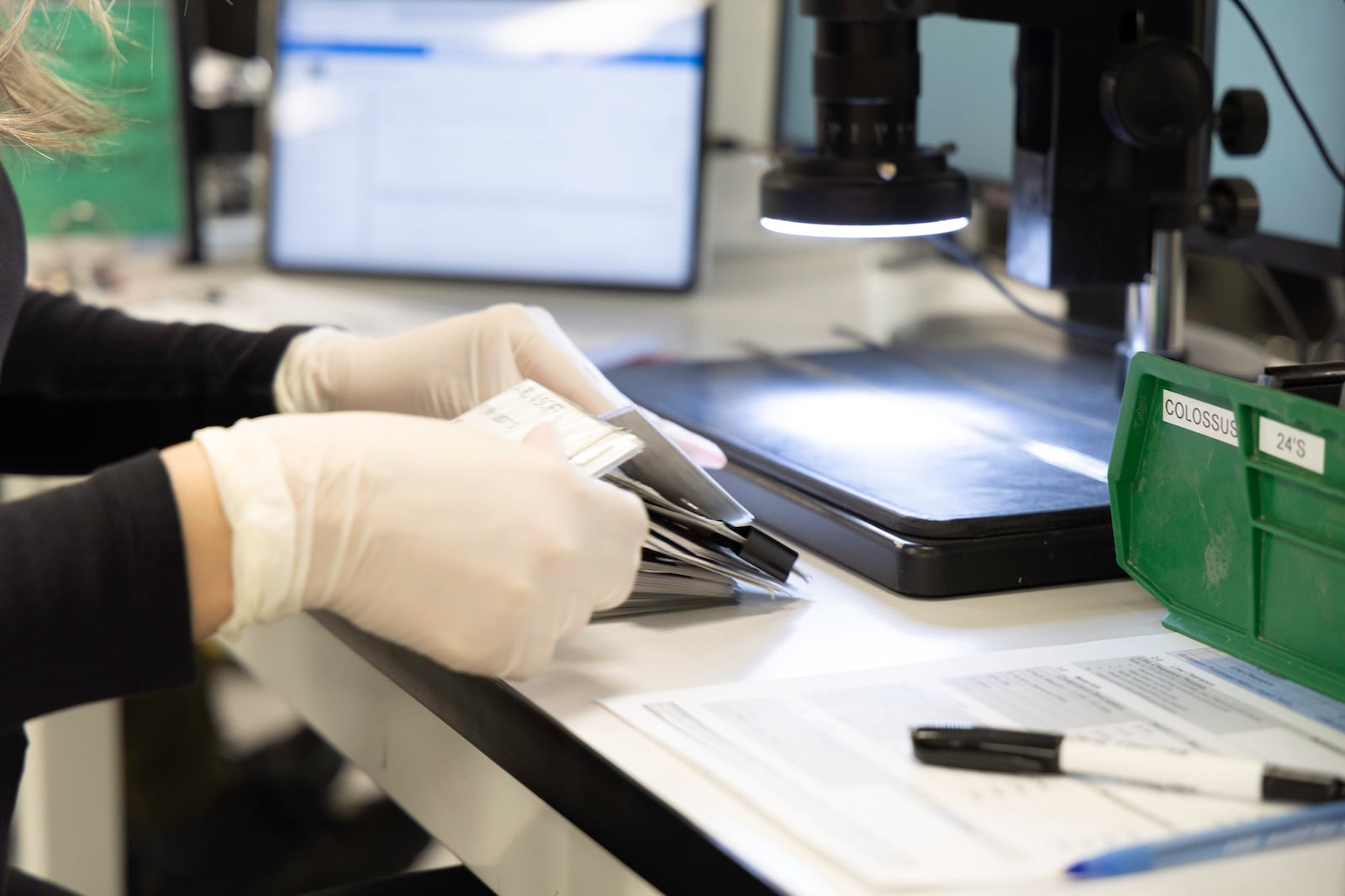
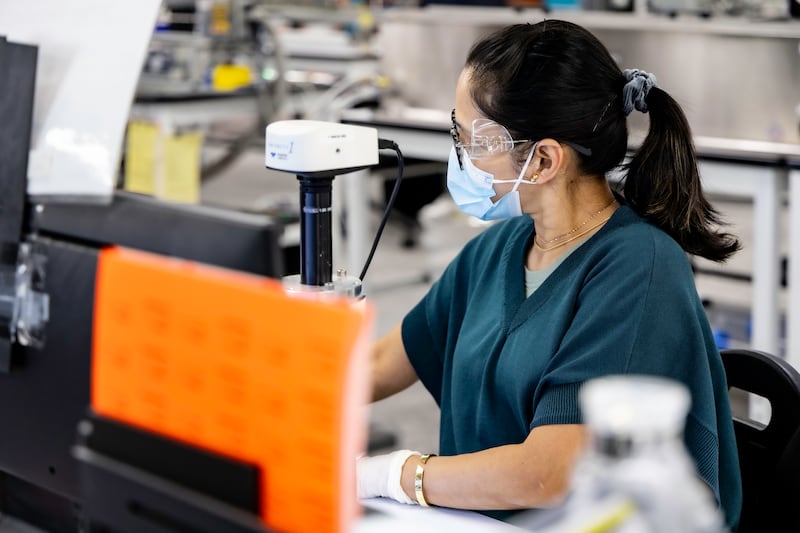
The employees at Scientia do important work. Here, in this two-story beige building that blends anonymously into rows of manufacturing facilities and warehouses, and in its clean-room facility a few blocks away, Scientia makes devices that change the way doctors treat strokes and brain aneurysms.
As Randall shows a visitor around the building, an employee overhears the conversation and proudly holds up a long strand of nickel-titanium alloy shaped like al dente spaghetti — a replica of the company’s signature Aristotle guidewire, which helps neurosurgeons navigate blood vessels to find a path to the brain. The microfabricated guidewire needs to be taut enough for surgeons to steer through an artery, but also soft and blunt enough not to cause damage.
Randall takes the visitor into a room where neurosurgeons can test new versions of its Plato microcatheter, hollow tubes that ride the guidewire like a rail to deliver liquids and coils that treat clots and aneurysms. Scientia also makes aspiration catheters ⎯ the Socrates line, of course ⎯ which use suction to remove blood clots.
“The brain is a complex environment,” says Linnea Burman, SVP and president of Medtronic Neurovascular. “While vessels in other areas of the body are straight, the tortuous anatomy of the brain presents unique challenges. … Scientia has developed best-in-class products that more safely and effectively enable access, with disruptive technology across the neurovascular portfolio.”
How Scientia’s medical devices save lives
Strokes are the fourth-leading cause of death in the United States and the leading cause of disability, Burman says, and Scientia’s products reduce the need for open surgery to treat strokes or drilling through the skull to stop bleeding around the brain.
“When you have a clot restricting blood flow to the brain every second, a certain number of brain cells expire,” Randall says. “Speed is critically important. Being able to puncture the groin and enter into the femoral artery, and then quickly getting a catheter to the blockage where you can grab that clot and extract it, is critical. We had one study that showed we carve 10 to 15 minutes on average off those cases.”
John Lippert founded Scientia in 2007 out of his garage in Reno, Nevada ⎯ once telling his parents, “I’m going to use the great vessels of the body as freeways to get to organs and treat diseases,” ⎯ and moved the company to Salt Lake City in 2013. Lippert started with guidewires, then later added catheters, commercializing them after receiving FDA approval in 2024. Scientia’s revenue grew from $52 million in 2024 to $72 million in 2025, according to Randall, with catheter sales growing from $7 million to $15 million.
For Medtronic, the prospect of scaling up to international distribution is the low-hanging fruit. More than 99% of Scientia’s revenue comes from the United States, while Medtronic’s neuroscience business sells into more than 90 countries.
“That’s what will create additional jobs here in Utah,” Randall says. “That’s the main reason we strategically did this. The rest of the world, especially developed countries in Western Europe and Japan, they see videos, they’re on social media, they see doctors using these products in the brain, and they don’t have access to them.”
“This will ultimately be a billion-dollar deal. It’s $550 million on the surface, but as you read the fine print, there are earn-outs and payouts over the next several years that are very likely to push this over a billion-dollar transaction.”
— Kelvyn Cullimore
Burman says 12 million people suffer strokes each year, and last year, Scientia products treated 90,000 patients. Scaling Scientia’s impact represents a significant opportunity in a neurovascular market that Grand View Research expects to grow 5.4% annually to $11.91 billion by 2033.
“This combination of best-in-class products and treatment therapies, combined with best-in-class access, will be incredibly powerful in simplifying procedures for physicians, saving critical time and improving patient outcomes,” says Burman.
Salt Lake City has become a hotbed for medical device talent. Randall divides his time between the office in West Valley City and his home in Wilmington, North Carolina, and the route from his hotel to the office takes him past Stryker’s 137,000-square-foot neurovascular headquarters building every day.
“We’re fortunate that there is a really good employee base here in West Valley that ranges from assemblers who are catheter and guidewire builders to regulatory people to marketing people to R&D engineers,” Randall says. “This has been a good place to staff a company, and under Medtronic, that is only going to grow dramatically.”
Randall credits Lippert’s vision and design innovation for catalyzing the company’s growth. Lippert brought in Randall as CEO in January 2025 and shifted his own role to chief technology officer, where he oversees research and development. Stacy Lippert, John’s wife, runs the people side of the business and serves as the keeper of the culture.
“It’s a family business,” Randall says. “It was started by a family, and four of those family members still work here.”
Cullimore sees the deal as the continuation of a pattern. Utah fosters entrepreneurism; entrepreneurs invent new devices and large companies absorb and scale those operations, expanding their presence in the state.
“I think it’s important to recognize that this is a transaction of major proportions,” Cullimore says. “This will ultimately be a billion-dollar deal. It’s $550 million on the surface, but as you read the fine print, there are earn-outs and payouts over the next several years that are very likely to push this over a billion-dollar transaction.”
