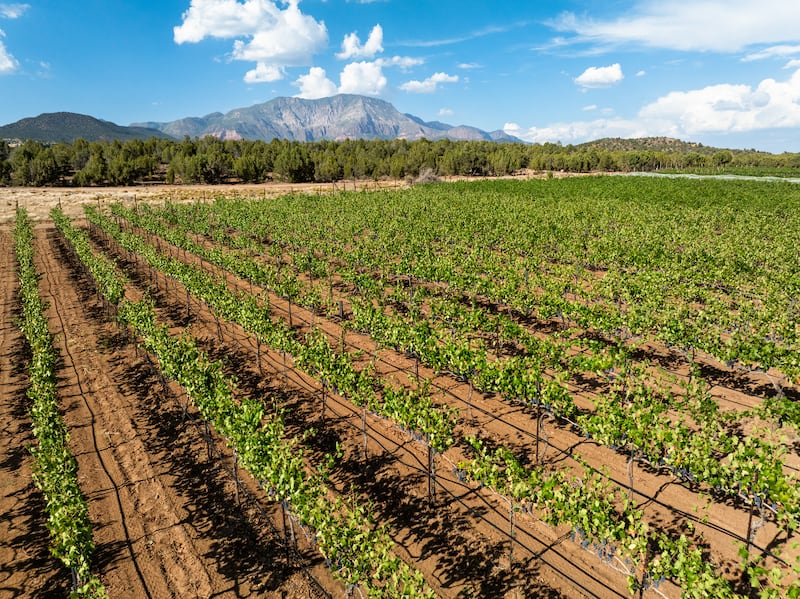
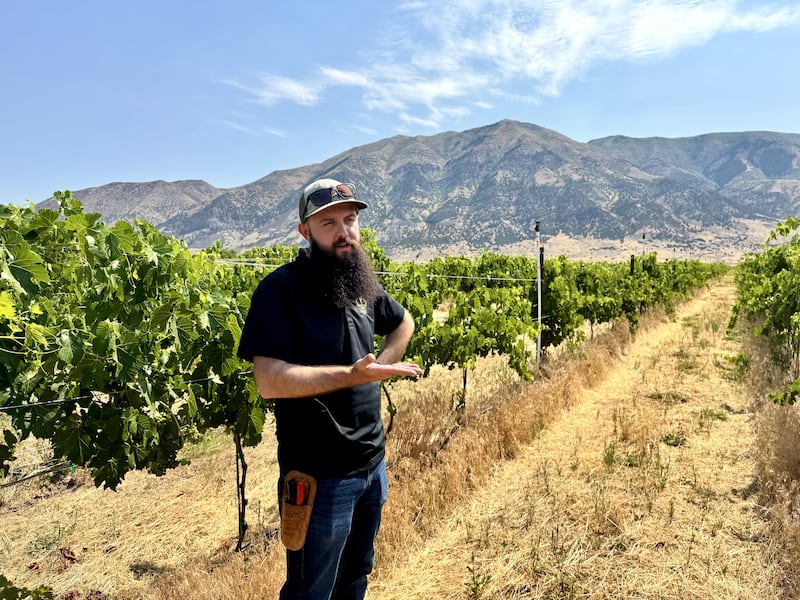
I visit the Purple Sky Winery vineyard in Honeyville the same week as Utah’s historic heat wave. Standing among the rows of grapes, flies bite at my ankles and sweat drips down my back. But as Purple Sky general manager and head winemaker David MaKieve tells me, it isn’t the heat that’s a concern for wine grapes — it’s cold snaps like the one Utah had this past spring.
An unusually warm winter coaxed the vines out of dormancy weeks early, so when frost rolled through in April, the exposed buds were already vulnerable. In other words, Purple Sky was at risk of losing its entire crop.
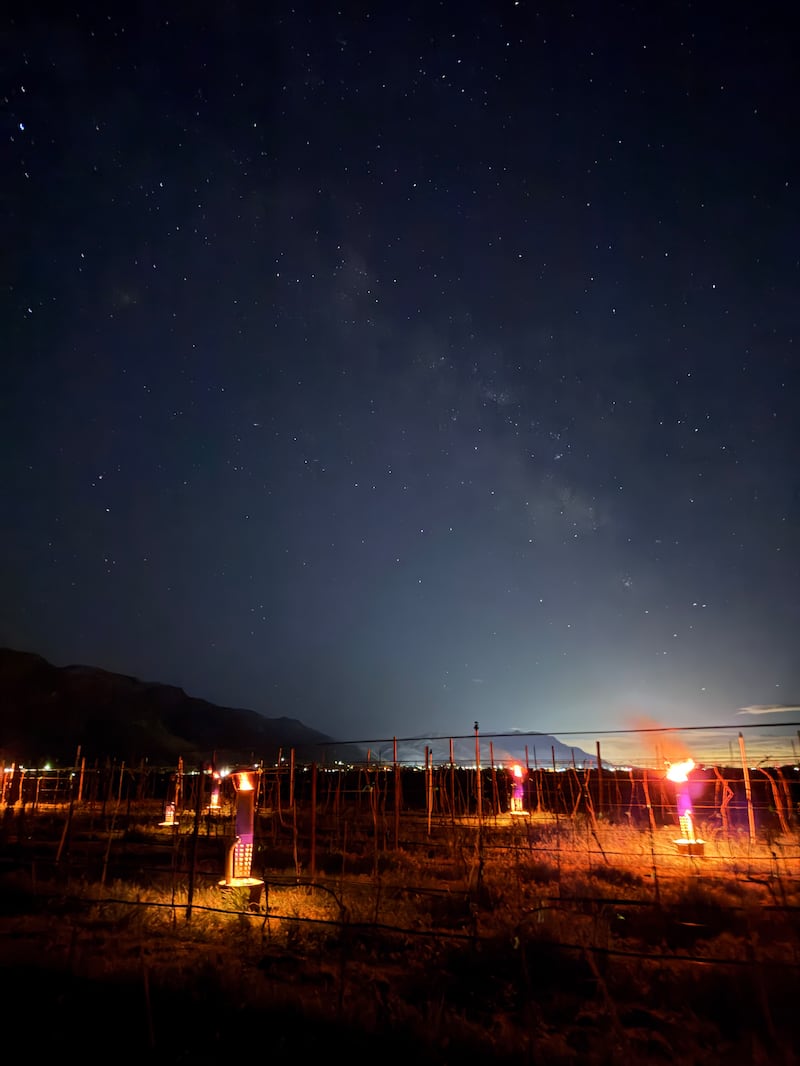
To fight it, MaKieve and his team ran overhead sprinklers, encasing each bud in a thin shell of ice that, counterintuitively, kept it just warm enough to survive. But the vineyard’s canal water doesn’t arrive until May, so after a second, harder freeze, the crew turned to smudge pots as a last resort: old-fashioned diesel burners capped with a small smokestack that were historically used in orchards. For three nights straight, MaKieve and his vineyard manager took turns watching over the open flames.
“It was full cowboy mode at that point,” MaKieve says. But it worked. The crop was saved.
Purple Sky expects a better yield this year than last, though the frost-sensitive La Crescent grapes came in sparser than usual. Other Utah vineyards weren’t as lucky.
The upside of struggle
At Spanish Valley Vineyard & Winery in Moab, owner Jared Richards says the same warm winter woke his white grapes early, and the freeze hit them hard. He’s anticipating 50% or less of a normal harvest this year.
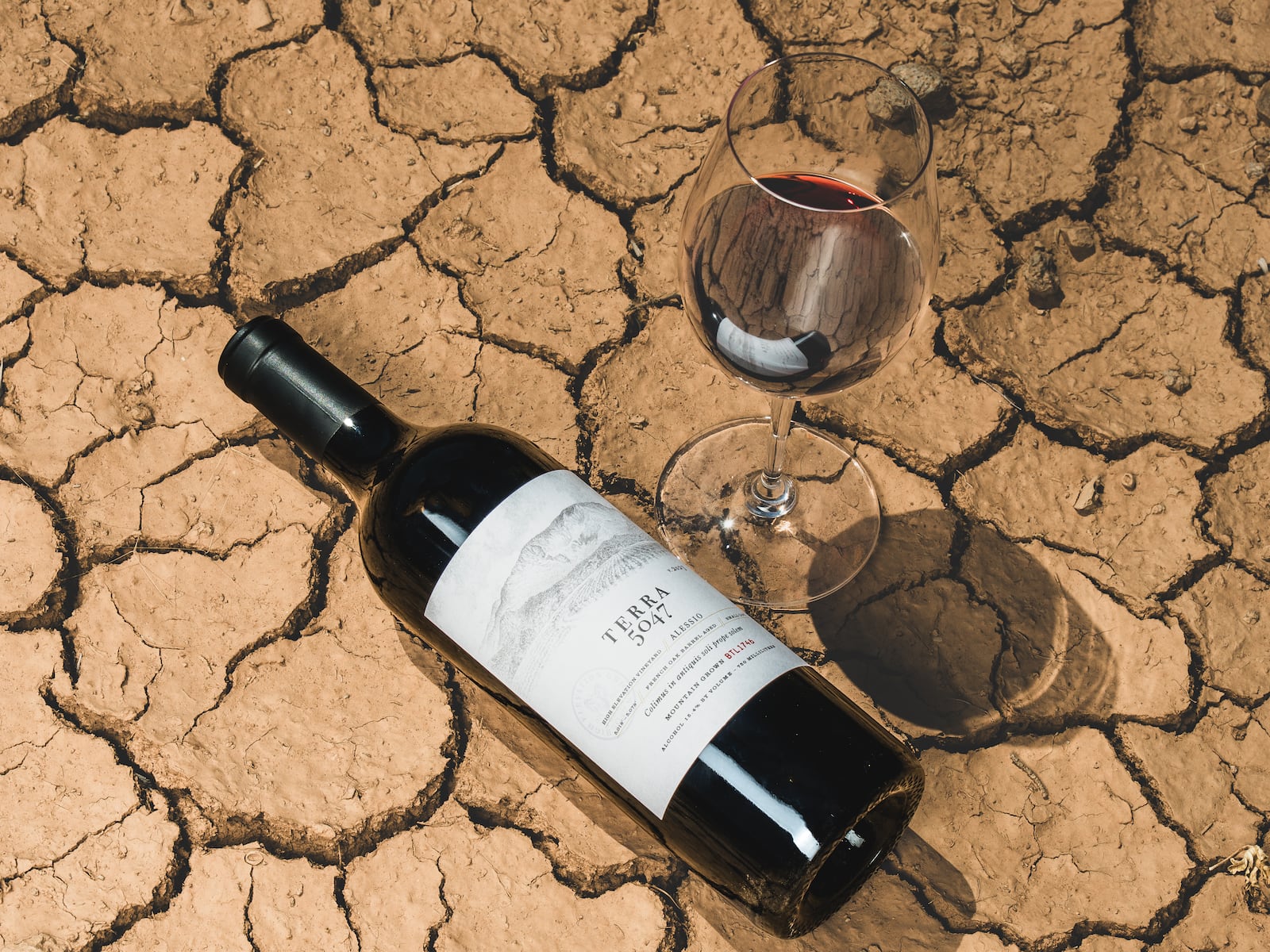
At Terra 5047, perched at an elevation of 5,047 feet outside St. George, vineyard manager Kris Lange and consultant Pete Seghesio say the damage to their wine grapes was limited to the earliest-budding varieties, though losses were minimal compared to other growers they know.
The concept of wine being made from Utah-grown grapes still surprises some people. And while our increasingly intense weather is a real threat to the state’s growers, there’s an odd upside: the best wine is often made from grapes that have to struggle to survive.
“Grapevines that struggle typically have to go down different metabolic pathways,” MaKieve says. As they dig deeper into the soil, the resulting fruit develops a more complex flavor.
At Spanish Valley, some vines root 80 to 150 feet down to chase groundwater. Richards says the vineyard is operating on half its typical water allocation this year — down from three-quarters last year — but he isn’t worried. Luckily, the drought-tolerant grape is far less thirsty than other Utah crops like alfalfa or corn.
Betting on the unfamiliar
Utah’s wine industry is still young enough that every vineyard is, in some sense, experimenting. In fact, Spanish Valley Winery’s whole existence traces back to a 1978 Utah State University agricultural experiment testing whether wine grapes could replace uranium as the region’s cash crop. Purple Sky just planted its first vinifera vines — Riesling, Cabernet Franc, Pinot Noir, Chardonnay, Gewürztraminer and Grüner Veltliner — to see how the traditional European varieties will fare, inspired in part by Mt. Naomi Winery, a Cache Valley vineyard already growing Riesling successfully. Terra 5047 leans on its high-elevation temperature swings and deep volcanic soil to create what Seghesio calls “the darkest Merlot” he’s ever worked with, so rich and inky it’s almost black.
What’s most fun about the state’s small wine scene, according to MaKieve, is the audience. Because so many Utahns are newer to wine, without the inherited snobbery of places like Napa, he’s found room to make something weirder.
“A lot of the wine drinkers in Utah are … coming into it with wide-open eyes,” he says. Purple Sky’s cold-hardy hybrid grapes produce wines with bubblegum, grapefruit and white pepper notes that might get laughed out of a traditional tasting room. But “for younger drinkers, newer drinkers, people who haven’t been told that the only good wine is some big, oaky, heavy Cabernet — this is actually way more approachable for them.”
Still, the industry has a long way to go, and the people building it are the first to admit it.
“[Wine experts outside of Utah think], ‘These guys don’t know what they’re doing. They don’t have the heritage or the vintage or the expertise,’” Richards says. “And to be truthful, that’s all probably right.”
And yet, Spanish Valley’s origin story might be the best evidence that Utah wine is here to stay. Fifty years later, uranium’s out. The grapes live on.