

This story appears in the June 2026 issue of Utah Business. Subscribe.
Between 140,000 and 500,000 abandoned mine lands located across the United States sit largely untouched, with estimates of up to $100 billion in economic value locked inside. These remnants of earlier mining eras represent significant untapped opportunities — critical minerals waiting to be recovered for use in national defense and manufacturing.
These abandoned mines also come with public safety issues — people have been known to venture into abandoned mine shafts. On the flip side are environmental dangers, with cases of heavy metals and toxins released into nearby creeks and tributaries.
Brian Somers, a registered lobbyist and president of the Utah Mining Association — which represents and advocates for one of the oldest industry associations in the state — is focused on inactive mines as part of its larger remit.
“Our mission is to represent the mining industry, including hard rock, industrial minerals and coal operators, and also service companies that work in the mining industry,” Somers says. “Anything that could have a potentially positive or negative impact, we want to be involved in those discussions, and make sure that we’re advocating for Utah to be the premier mining jurisdiction in the world.”
The dangers of inactive mines
CMRN’s large estimate of 140,000 to 500,000 untouched abandoned mines represents a wide range, but Somers estimates that with about 14,000 abandoned mines in Utah alone, that number is reasonable. He notes that this category may include “an old mine shaft that hasn’t been closed, all the way to sites that require full-scale remediation.”
Inactive mines can be responsible for a range of environmental challenges. One notorious example of a major environmental disaster was the 2015 Gold King Mine wastewater spill in Colorado, where Utah was one of the surrounding states affected. The incident released heavy metals and toxins into Cement Creek, a tributary of the Animas River.
“That’s an extreme example, but water holding facilities that haven’t been properly remediated can absolutely pose an environmental risk for communities,” Somers says, citing polluted soils and radioactive pollution. He notes that the Utah Department of Energy has been cleaning up a site in Moab for years, referring to the Atlas Minerals uranium mine, whose tailings — or waste materials that are a byproduct of the mining process — polluted the Colorado River. April marked the milestone of more than 16 million tons of radioactive waste being removed from the Colorado River, but the cleanup work continues. “There’s a last sprint to get that done,” Somers says.
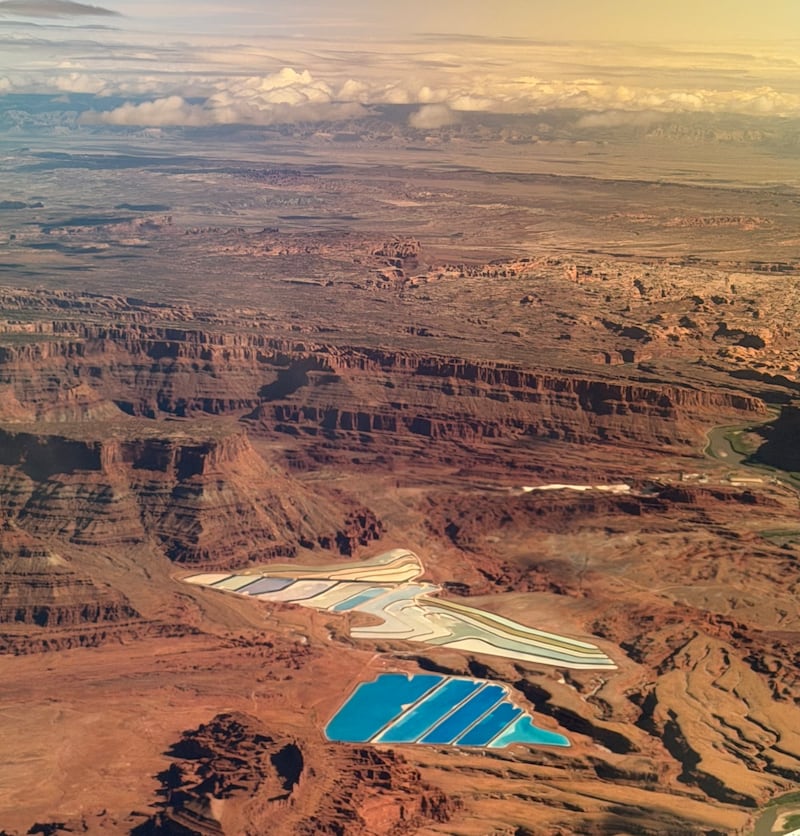
Crucial ores in the mines
In Utah and across the West, researchers and industry leaders are exploring how these sites could be reprocessed to recover critical minerals.
To cite one example, Utah’s Spor Mountain mining district in Juab County is the primary global source of beryllium, a mineral critical to the aerospace, electronics and medical industries — and one whose tailings may also hold recoverable rare earth elements. That kind of legacy footprint, where past extraction left behind material that modern technology can now identify and process, is precisely what the industry hopes to unlock.
Another example: Manganese is found in historic tailings. “Manganese wasn’t something that was particularly valuable,” Somers says. “But now, it is one of the critical minerals that the U.S. military is looking to source domestically.”
As the Utah Mining Association works with the CMRN, a membership-driven, nonprofit based in Salt Lake City, they collaborate to bring together universities, government agencies and private industries to identify, recover and process critical minerals from legacy mining sites. These materials are essential for technologies ranging from satellites and aircraft components to microelectronics and energy systems. Right now, this initiative is in its beginning stages; not all the complex pieces are in place.
“The opportunity is real, but turning legacy mine waste into a reliable domestic supply chain will require sustained investment, regulatory clarity and processing technologies that can work economically at scale,” says Denee Hayes, co-founder and CEO of CMRN. Hayes is also a senior fellow for the College of Science and the College of Mines and Earth Sciences at the University of Utah, serving in an advisory role to the dean. “The university advises on processing methods, and we work in collaboration on sampling and characterizing,” she explains.
Early estimates suggest the economic value locked within these abandoned mine sites across the U.S. could reach up to $100 billion nationwide, according to CMRN. But the organization says that the path from promise to production is not straightforward.
Most mineral recovery technologies are designed for primary ores, and applying them to low-grade mine tailings often leads to poor recovery outcomes, making the investment risky. Realizing the full potential of tailings reprocessing requires integrated frameworks that combine resource recovery with site rehabilitation, plus comprehensive geochemical assessments to prioritize locations with the highest recovery potential.
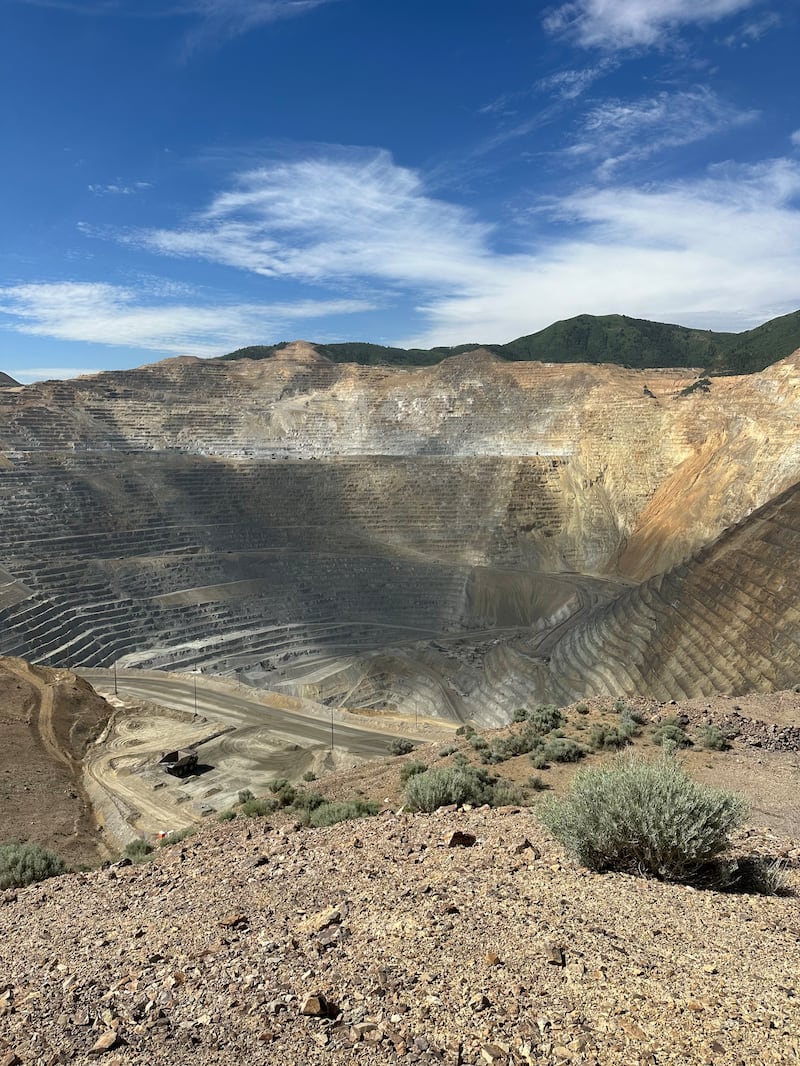
Challenges to recovering essential minerals remain, but the need for them is inarguable. With China as the largest producer of gallium-bearing ore, Russia also at the top of the list, and the federal government’s desire to be less dependent on China, finding domestic sources for gallium is key.
“We’re 100% reliant on the Chinese for gallium right now, so we need to try and fix that problem,” Somers says. According to the Center for Strategic and International Studies, China produces 98% of the world’s supply of raw gallium. Additionally, China restricted gallium exports in August 2023 before enacting a total ban in late 2024. Though a temporary trade truce has paused that ban until late 2026, the vulnerability remains clear.
“In Utah, there’s potential for recovery from primary sources,” Somers says. Gallium is employed in electronic applications, while another mineral — germanium — is used for semiconductors. “There’s actually a mine in southern Utah that’s been closed for a long time and was just purchased by an operator,” Somers says. “They’re hoping to reopen that, and that’s a primary source for germanium and gallium.”
As Utah transforms these dormant giants from environmental liabilities into strategic assets, it is providing the rest of the nation with a blueprint. Legacy mines are getting a second life, not as hazardous final chapters, but as untapped national treasures.
Editor’s note: An earlier version of this article incorrectly referred to the Atlas mill as the Atlas mine and incorrectly identified the Department of Energy as a Utah agency.