
This story appears in the September 2026 issue of Utah Business. Subscribe.
Wildlife and electricity don’t naturally mix, but across global power grids they interact every day in ways that are costly, dangerous and often misunderstood.
For utilities, wildlife-related outages aren’t rare. They account for about 20% of all power disruptions in the U.S. In Kenya, those numbers climb to 30%. Each incident can trigger cascading effects, from service interruptions for households and hospitals to equipment damage and wildfire risk.
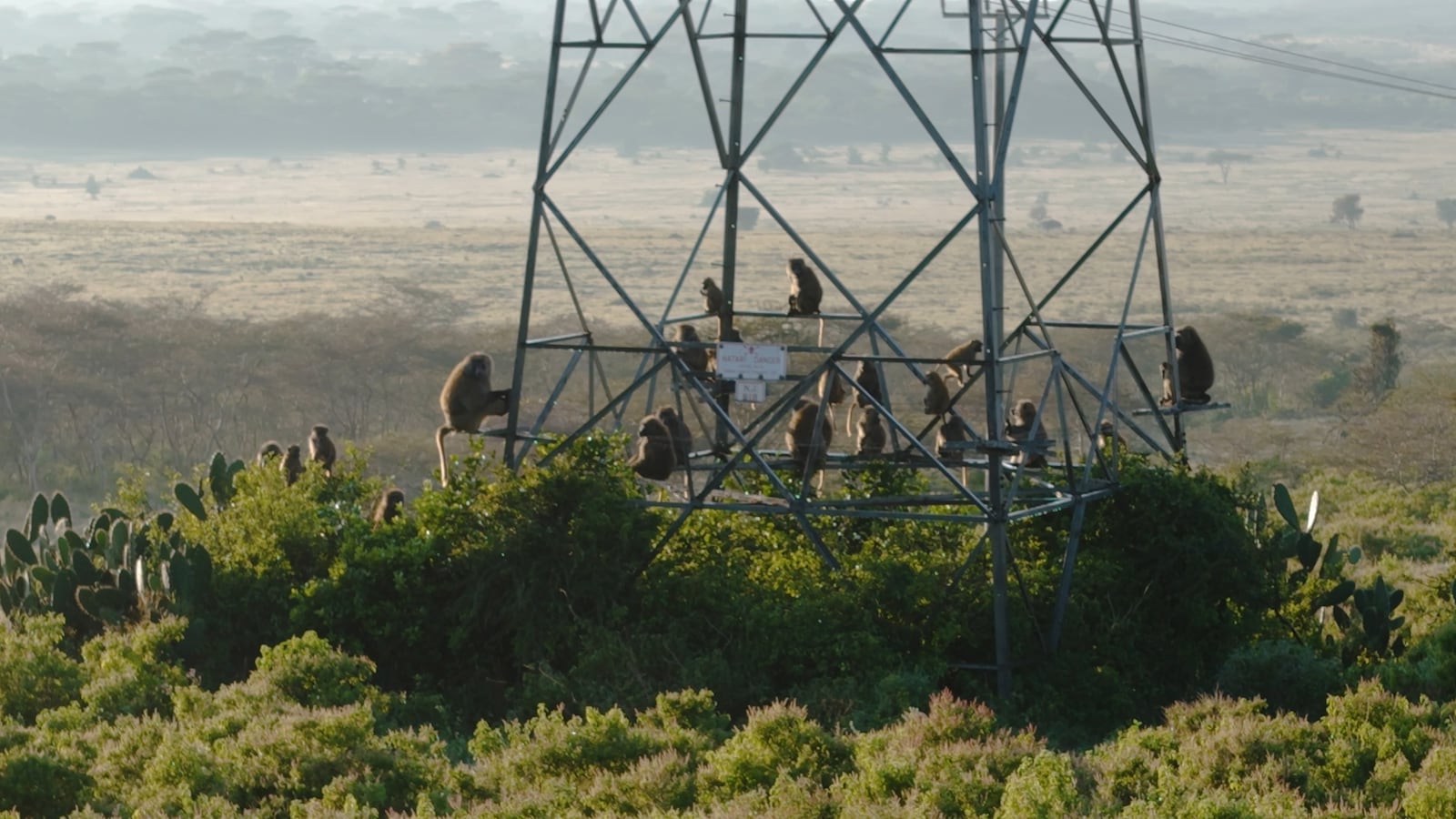
Utah-based Kaddas Enterprises has built a business around preventing these conflicts, while also developing a range of custom thermoplastic products and manufacturing solutions for industries beyond energy and utilities. Now, through a new five-year agreement with Kenya Power and Lighting Company, the company is bringing its BirdguarD product line to one of the most wildlife-rich and rapidly developing energy markets in the world — East Africa. From soaring raptors to monkeys, East Africa is home to an extraordinary range of wildlife that experts hope to protect from the growing footprint of human infrastructure.
The Kenyan partnership is designed to reduce outages, extend the lifespan of electrical assets, and keep wildlife safe from electrocution on uninsulated lines. It also reflects a worldwide shift in how utilities are thinking about infrastructure, where reliability and conservation are increasingly linked rather than treated as competing priorities.
For Kaddas Enterprises, the Kenya partnership is part of a global portfolio that spans 17 countries and all 50 U.S. states, with projects ranging from sloths causing power outages in Chile by using infrastructure as their own kind of slow superhighway to drone-assisted installations in Israel.
Power system disruptions
At first glance, a bird landing on a power line might seem harmless. But if it lands on two points of electrical equipment at once, it can complete the circuit, causing electrical current to flow through its body.
Wildlife interactions with power equipment often follow predictable biological behavior. When birds perch on lines or poles, their wingspan can bring them into contact with energized components, allowing electrical current to pass through them and potentially causing an outage. Large birds of prey are among the most common contributors.
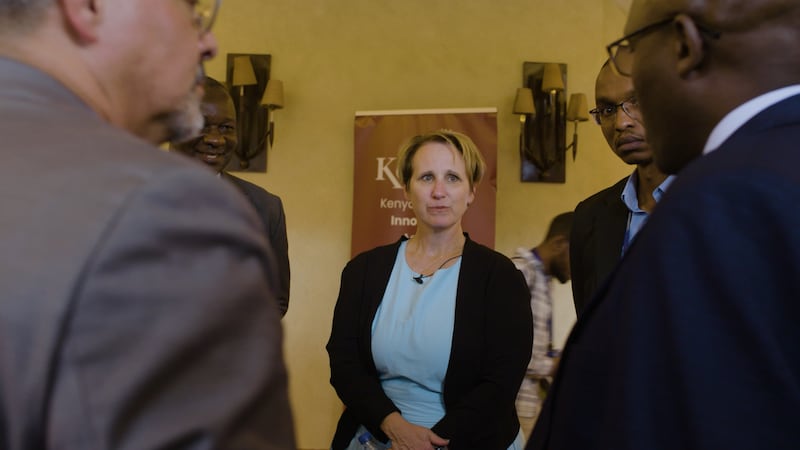
“Their wingspan is so great that they will go face-to-face or face-to-ground and close that circuit,” says Natalie Kaddas, second-generation CEO of Kaddas Enterprises.
Squirrels, snakes and monkeys can also trigger outages by contacting energized equipment or climbing infrastructure. This often results in equipment failure that can require full replacement of affected components. In some cases, fallen animals that have been electrocuted can even ignite fires when they contact the ground.
For utilities, the challenge is both technical and economic. Each outage requires repair crews, replacement parts and system downtime. In rural or high-biodiversity regions, the problem is amplified.
That’s where Kaddas Enterprises’ BirdguarD product line comes in, using physical barriers to keep animals from contacting energized parts of electrical infrastructure.
“It’s a low-cost insurance policy to make sure that your critical infrastructure isn’t taken down by an animal,” Kaddas says.
Investing in prevention
Kenya’s energy system is expanding alongside its growing economy, but reliability remains uneven, with only about 47% of Kenyans having consistent access to grid electricity.
As the country looks to attract new industries, infrastructure stability has become a national priority.
“Reliable power is going to be critical for tech jobs to come to that area,” Kaddas says, pointing to Kenya’s broader push to grow its technology sector alongside tourism and development.
For Kenya Power and Lighting Company, the partnership with Kaddas Enterprises is about redesigning the system to prevent them.
“We aspire to ensure peaceful coexistence between nature and the energy infrastructure,” says Henry Pwani, head of research at Kenya Power and Lighting Company’s Institute of Energy Studies and Research. “By safeguarding wildlife, we’re also improving power supply reliability for our customers. This is a win-win situation for the environment and our business.”
Dr. Joseph Siror, managing director and CEO of Kenya Power and Lighting Company, describes the agreement as a turning point.
“This collaboration proves that a reliable grid and the safety of our nation’s precious wildlife are not competing goals, but one and the same,” he says.
Working with the grid
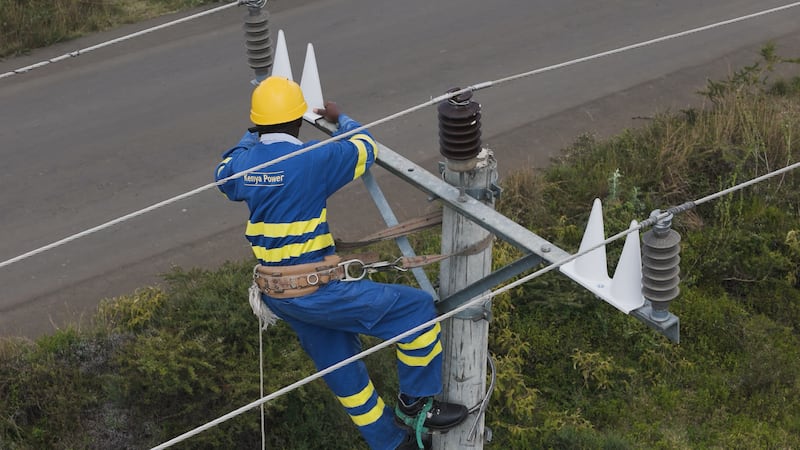
The system uses insulated covers installed over distribution lines, transmission components and substation connection points. These are areas where animals are most likely to land or interact with equipment.
The installation process is simple but coordinated with utility crews. Power lines are temporarily shut down in short intervals, usually four hours at a time. Linemen climb poles and snap molded plastic insulation pieces onto crossarm structures where birds often perch.
The technology is already being tested at the Soysambu Conservancy in Kenya, a key habitat for raptors such as the augur buzzard and martial eagle.
“In the Soysambu Conservancy, there’s not a lot of trees, so we want to make sure that birds can use these crossarms safely for hunting,” Kaddas says.
Early results from the pilot have been promising. Kaddas Enterprises reports no recorded electrocutions or outages since installation began in the conservancy, though the project is still in early-stage evaluation.
Local pilot to global model
The collaboration project with Kenya is structured as both a deployment and a data collection effort.
Kenya Power will identify pilot locations, support installation and evaluate performance. Kaddas Enterprises will provide technical expertise, training and demonstration products while receiving near real-time feedback from field conditions.
That data will help determine how the technology can scale across Kenya and potentially other regions facing similar challenges.
“The goal is to have a good sample size of data that we can then share with other utilities across the African continent,” Kaddas says.
The project also has backing from the Salt Lake Chamber, which has helped facilitate international meetings and introductions, including discussions with Kenyan leadership.
“The United States and Kenya have a vibrant strategic partnership,” says Kendra Gaither, president of the U.S.-Africa Business Center, part of the U.S. Chamber of Commerce. “Kaddas Enterprises and Kenya Power and Lighting Company are helping write the next chapter in this storied relationship.”
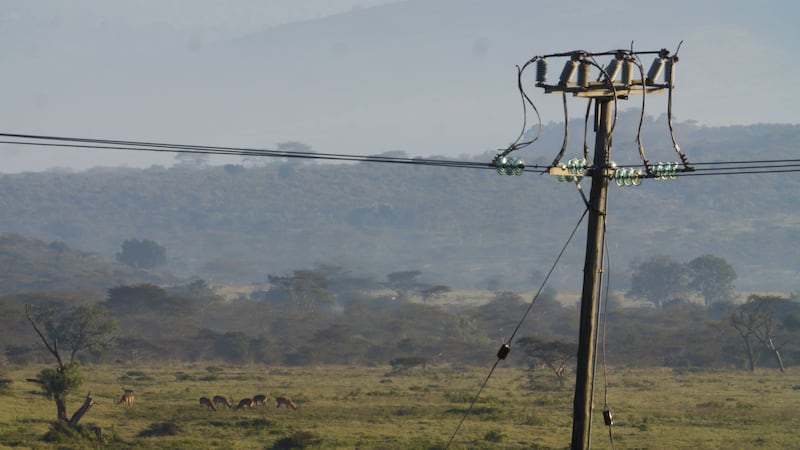
The company has tackled wildlife-related infrastructure challenges across diverse environments, using solutions that include ground-based protection systems and advanced deployment methods.
As global energy demand grows and infrastructure expands into more biodiverse regions, the intersection of wildlife and power reliability is becoming even more important. For Kaddas Enterprises and Kenya Power, reducing outages is one part of a broader approach to building utility systems that account for both ecological and economic realities from the start.