

This story appears in the August 2026 issue of Utah Business. Subscribe.
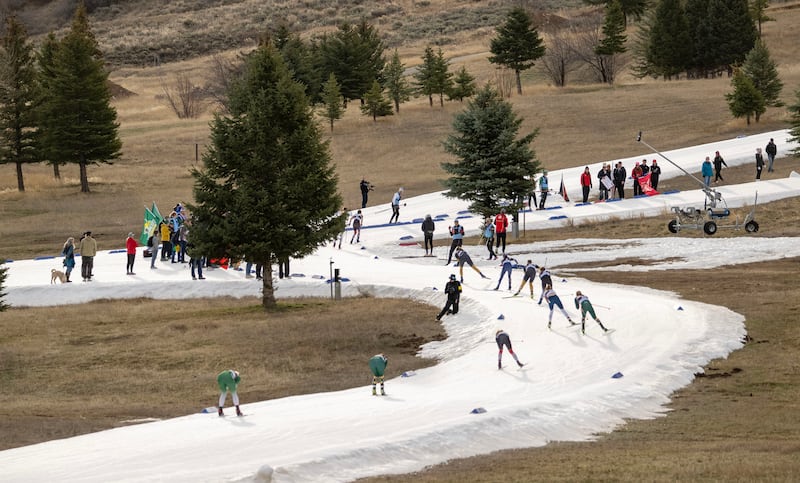
This year, Utah experienced its lowest snowpack in recorded history. As of today, 2026 is already the second biggest Utah fire season on record. Our reservoir storage, built up during wetter years, is the buffer carrying us through. The weather ahead is uncertain, but our response doesn’t have to be.
This is a crisis by any measure, and an exclamation point in a continuing trend of water challenges in Utah. The good news is Utah has spent years building partnerships, systems and the conservation mindset needed to respond. We must continue focusing on the demand side of the water equation, ensuring every investment delivers maximum impact.
In partnership with the Janet Quinney Lawson Institute for Land, Water and Air, we have been describing Utah’s water system the way a prudent household or business might describe its finances.
Precipitation is income. Mountain snow accounts for roughly 95% of Utah’s water supply. When snowpack is low, less water reaches our rivers and streams, our reservoirs fill less efficiently, our groundwater gets drawn down faster and the Great Salt Lake — the last stop in our water system — receives less of what it needs to stay healthy. A bad snow year is felt everywhere downstream.
Evaporation and plant use are the costs we cannot avoid. Rivers and streams function like a checking account for daily needs, while reservoirs are savings set aside during wetter years. Groundwater is a long-term investment to be drawn down with great care. Human use (in homes, on lawns, in factories and on farms) is the expense side of the ledger. And for a large part of the state, the Great Salt Lake is the final balance at the end of the year. It tells us whether we are living within our means.
Right now, our income is down, and our expenses are up. While we cannot control the weather, we must manage the expense side of the ledger together, and Utah has already been building the tools and the partnerships to do it.
This is where the Utah Way shows up. Utah’s water future is not the responsibility of any one sector. It is a coalition of agricultural producers, water districts, state agencies, universities and households, all doing their parts. Utah’s business community, organized through Utah Rising, is showing up and getting to work.
Utah Rising has set the targets to reduce municipal and industrial water use by 16% by 2030, advocating for the water infrastructure Utah’s growth demands and building real water literacy among Utah’s business leaders. The progress is tracked publicly at Utahrising.com.
Business cannot solve Utah’s water challenge alone. No single sector can. But it has the scale and civic muscle to make the work go further, faster. While the income side of our water balance sheet is not fully in our control. The expense side is. Utah has never been a state that waits for weather to fix the books. We solve and coordinate together.
