
Since coming close to death from a staph infection as a young man, Tom Bishop has dedicated his career to having the biggest impact possible on communities that mean something to him. Now, nearly a decade into building a high-impact company, Bishop is making a difference at the highest level by doing his part to save the planet.
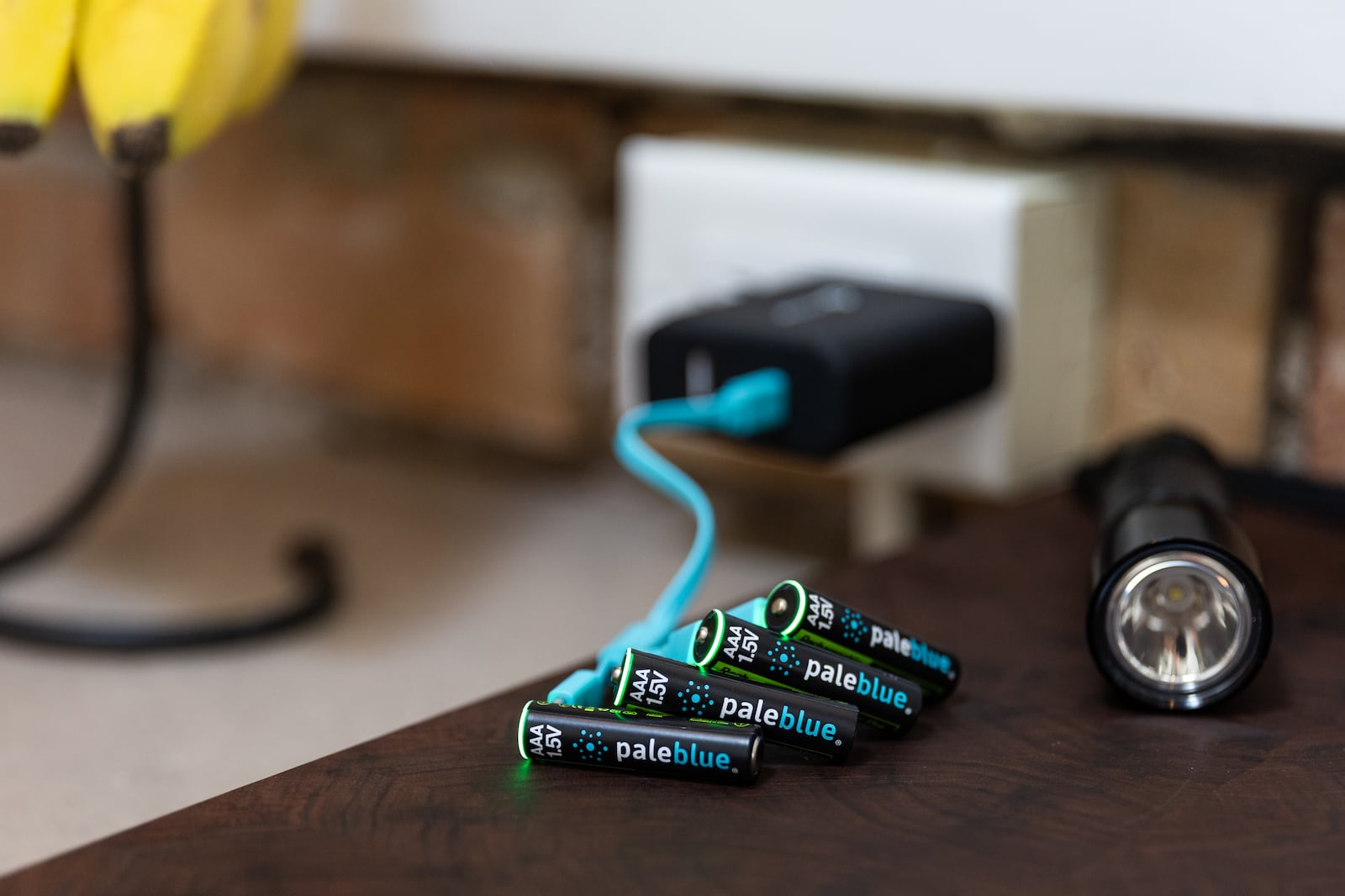
Bishop’s company Paleblue, based in Park City, Utah, sells rechargeable batteries, but they’re more than meets the eye. These batteries can be recharged over 1,000 times with voltage equal to traditional single-use alkaline batteries, making Paleblue batteries the last ones people may ever need to buy.
“We’re throwing away a million pounds of batteries in the U.S. alone,” Bishop says. “We need to be less wasteful with our resources because resources aren’t infinite.”
Batteries may not be the first thing that comes to mind when people think of waste, but Bishop points out that batteries are an item everyone buys. Of the millions of pounds of batteries thrown away each year, many end up in landfills and waterways where they leak corrosive and poisonous battery acid.
“Everybody needs them, uses them, and understands the problem,” he says.
Better batteries, better world
However, understanding the problem isn’t enough. Solutions aimed at reducing waste can be costly, and even ineffective. It wasn’t enough to make a rechargeable battery — it had to be the best one on the market. With Bishop’s background in materials science and mechanical engineering, as well as stints at successful startups such as Owlet and Skullcandy, he was well-suited to tackle the problem, which resulted in a product that pays for itself after a few charges. All of his combined experiences gave investors the encouragement they needed to invest in Paleblue.
“We knew him; we knew that he would probably be successful, and the idea of rechargeable batteries is a no-brainer — both the cost savings and the environmental impact,” says Jeff Danley, co-founder of Utah-based venture capital firm Element Ventures. “We liked him, and we liked the idea, and that’s why we decided to back it.”
A fellow outdoorsman, Danley enjoys fly fishing and recalls seeing an AA battery cracked and leaking in the water. He also recalls the many times he has purchased a pack of batteries, knowing most of them would end up in a landfill.

“If I can reduce that, it makes me feel good, and there’s also cost savings,” Danley says.
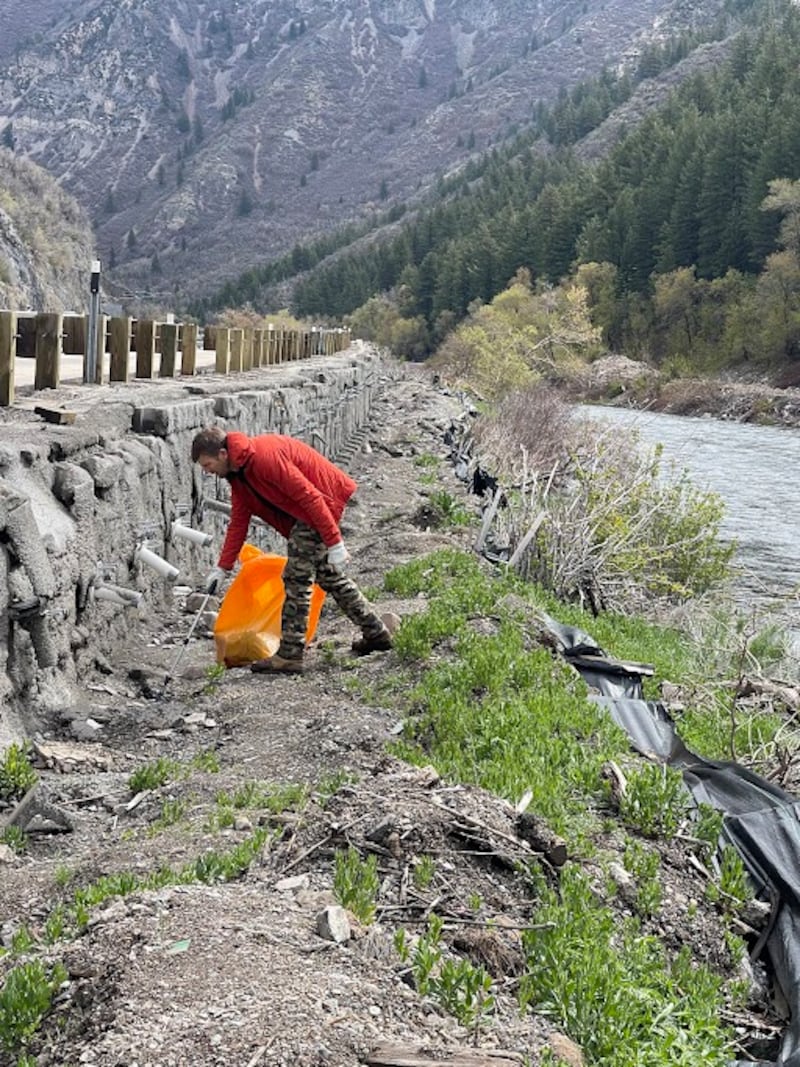
Bishop says the experience of actually seeing a battery in the water is a unique one, because batteries don’t float. If they could float, Bishop theorizes, the world would have solved the single-use battery issue long ago because people would have seen the problem better. It’s partially why one of the many nonprofit organizations Paleblue partners with is Fish For Garbage, which aims to clean up waterways and provide watershed education.
A legacy of resilience
In addition to being motivated by his love of the outdoors, Bishop says being a father to two children inspired him to pour into a company that would have lasting global impact.
“Being a parent and looking down the road at the future I want to leave my kids, it was like, what could I do with my skill set that would leave the world in a better place?” Bishop says.
Just because the technology and product are sound doesn’t mean everything runs smoothly. After four years of fundraising and seeing some success, Bishop faced the biggest challenge of his career: the 2023 Silicon Valley Bank failure. Paleblue had just started a fundraising round when the bank closed, and capital markets froze.
“That was a punch in the stomach. You can do everything right, dedicate years of late nights and long days and sacrifice, and then something out of your control could take it all away in a moment,” Bishop says.
Paleblue pulled through, though, because it had enough inventory and support to survive, thanks to Bishop’s belief in the company’s mission and team. His resilience in business — and life — can be traced back to his first near-death experience in his early 20s.
Finding inspiration in tough moments
An avid snowboarder, Bishop had ACL surgery following an accident on the slopes. After the surgery, he faced a life-threatening staph infection. The infection lingered for months while doctors tried to figure out what was causing it and how to treat it. Ever the optimist, Bishop was sure he would pull through, although he says those closest to him weren’t as confident.
Coming close to death caused Bishop to reevaluate his priorities. His longtime colleague and friend Sam Paschel credits that first near-death experience with shaping Bishop’s approach to giving back throughout his career.
“He wants to build his career around things that get him out of his seat,” Paschel says. “If you want to know a defining moment and factor that put him on this path, I think it’s because of that one central experience.”
Shortly before the Silicon Valley Bank failure, Bishop had another health scare that required open-heart surgery. This time, as a husband and father of two, the stakes were much higher.
“I’ve been trapped in floods and had near misses with avalanches,” Bishop says, “but these two experiences … were in slow motion. I had months to think about things. Coming out of the second one, it was the same experience of dedicating myself to meaningful work, but also to being the best father, husband, son, friend, pet owner. … I feel like my early experiences were about me … now, it’s about being part of a bigger world.”
Receiving open-heart surgery felt like a full-circle moment that deepened his resilience, perhaps just in time to weather the storm of Silicon Valley Bank’s failure, Bishop says.
A bright, rechargeable future
Since recovering from that uncertain period of time, Paleblue has secured contracts with both the U.S. military and prolific guitar string manufacturer Ernie Ball. In industries that rely heavily on technical equipment, batteries are typically replaced before every mission or performance to ensure reliability. By partnering with Paleblue, these industries have significantly reduced their electronic waste.
Paleblue also recently released the fourth generation of its product and looks forward to more partnerships and product iterations in the future. There will undoubtedly be more environmental and entrepreneurial challenges to face, but Bishop is confident he and Paleblue will pull through.
“The best things that have happened to me have been the hardest things,” Bishop says. “The hardest things have created the most amount of growth and opportunities to do things better and be smarter.”