
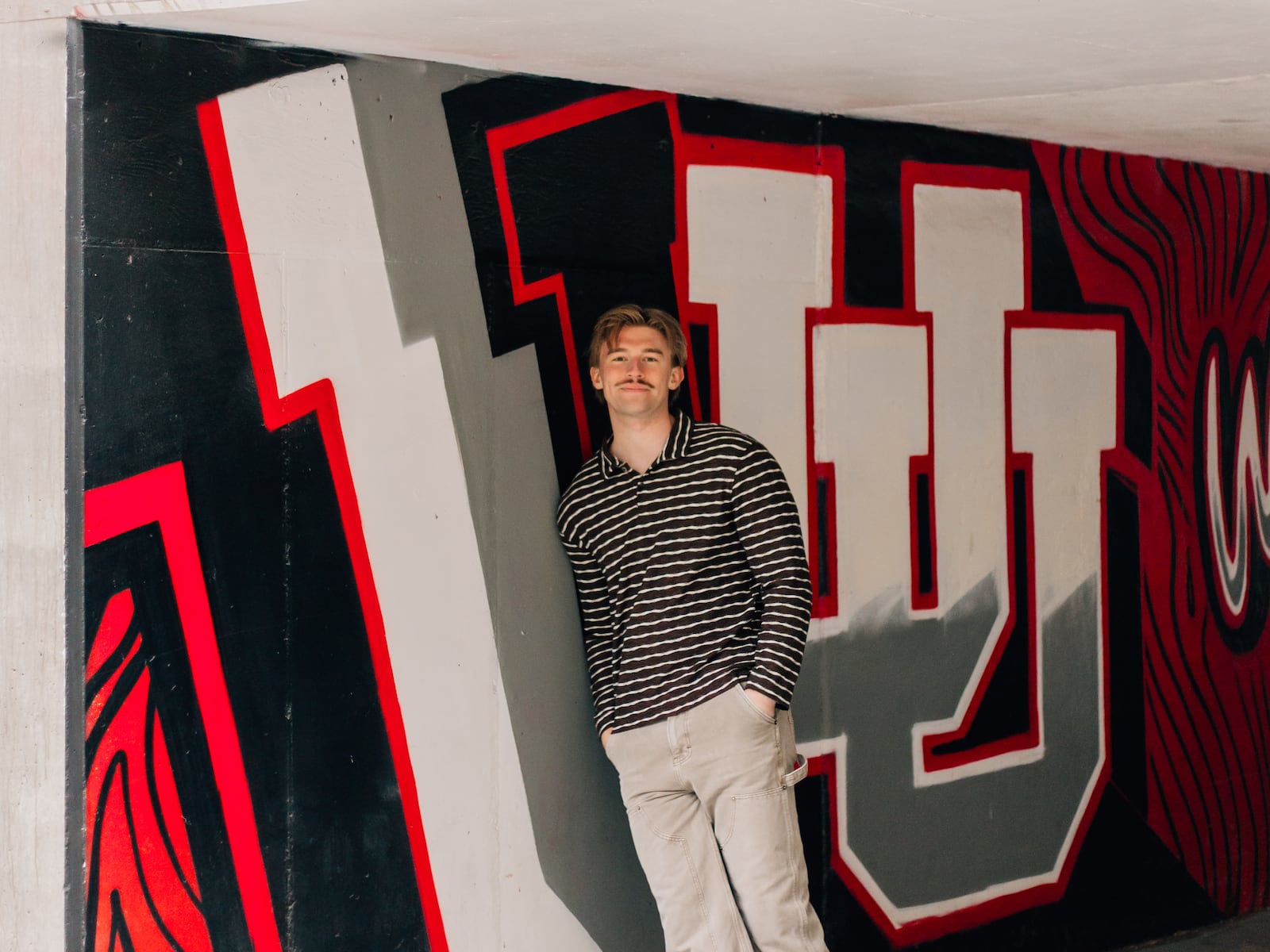
Sky Sorenson is like other founders. He’s obsessed with his business. He worries about cash flow. He doesn’t take a salary because he wants every dime to go back into the business. He would take his laptop to his classes at the University of Utah and, head down, crank out content for his sports media site Field Rush as the professor’s voice provided what he calls background noise.
Sky Sorenson is not like other founders. Instagram is the front door of his growing media business, but he despises social media as a destructive force. He says his obsession with his business has damaged relationships, but he also says his business saved his life. He talks about plunging into a depression so deep, he was flat on his back for a year, but he expresses gratitude for his struggles. He runs a sports media platform, but he uses it to encourage empathy about mental health issues.
You need to meet Sky Sorenson. His story is about a dorm-room founder who launched a college sports fan community that (as of July) has 224,000 Instagram followers; but it’s also about the ever-increasing lure of the entrepreneurial path for college students who think differently.
“It’s not that I’m completely incapable of working for someone else,” Sorenson says. “I just don’t want to. I don’t like being told what to do.”
Jan Sorenson says it doesn’t surprise her that her son started a college football media brand.
“I can’t imagine Skyler doing anything but having his own company,” she says. “He doesn’t have a traditional mindset as an employee. He marches to the beat of his own drum. He is a creative, and his brain turns on or creates at the most random times, like the middle of the night.”
Sorenson started Field Rush in his freshman year at the U. He remembers his excitement at the idea of going to college, the buzz he felt at freshman orientation and the prospect of Saturdays at Rice-Eccles Stadium stoking his football obsession.
Then one December day, feeling alone and sad, Sorenson felt like he was on the verge of crashing. Throughout middle school and high school, his identity was Sky Sorenson, basketball player. Now he was another college freshman, adrift in a class of more than 5,000, feeling lost. He told his mother he wanted to go home to Provo, and she convinced him to give it more time.
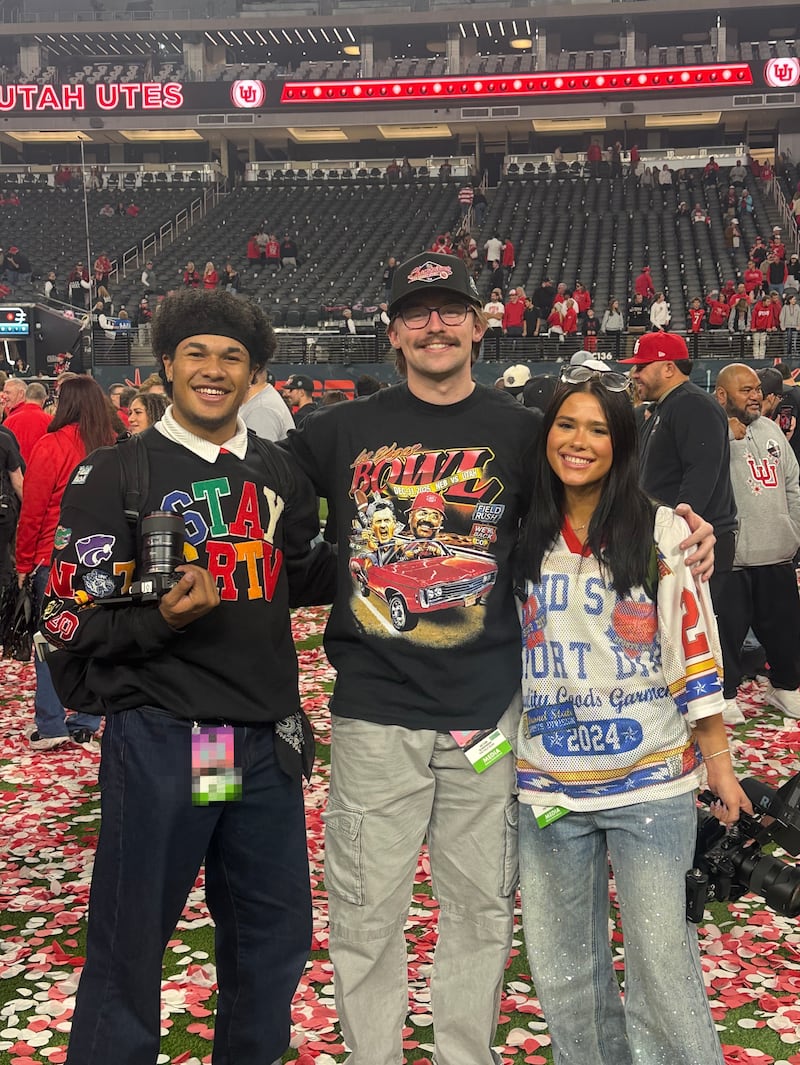
“I just didn’t know where I wanted to go with my life,” he says. “It’s quite natural in college, but I just didn’t have any idea who I was anymore. So when I started Field Rush, I was just trying not to be depressed anymore. … It wasn’t necessarily a business idea.”
Sorenson says that Field Rush’s social media engagement numbers exploded when he stopped recycling news and started posting what fascinated him most as a hardcore fan — debates about the ugliest uniforms and the best Saturday stadium traditions.
A new way to break into the media business
More and more college students, like Sorenson, see their best path into media as brand creators — starting as aggregators, then hiring reporters or videographers as they grow. ZipRecruiter’s 2026 Graduate Report shows nearly 38% of 2025 and 2026 college graduates actively considering starting their own businesses, rather than following the traditional track that starts in a cubicle.
Sorenson graduated last December from the David Eccles School of Business and has a team of five part-timers. He says that he believes growing a media business is easier than the traditional path of paying dues in a small media market, then hopscotching from city to city to work for larger outlets.
“What’s so awesome about media is the overhead is so much less than consumer products businesses,” Sorenson says. “That’s something I really do enjoy. We don’t need a $50,000 friends-and-family donation. I don’t even really pay myself. All the money just goes back into the business.”
Growing up, Sorenson would binge-watch ESPN highlights and devour sites like Barstool and Deadspin. His mom says, “He would check scores constantly and he could answer pretty much any question about historical football stats at a young age.” He drew inspiration from models like Kenny Beecham, who founded Enjoy Basketball in 2022 at age 25 and grew it to more than 4.16 million followers across channels.
Sorenson says he had to learn to trust his own ideas.
“I grew up with a pretty low self-esteem,” he says. “I just didn’t have a lot of confidence in myself. … I was so down on myself all the time. And when it comes to trying to not compare our brand to other brands, that’s the same kind of story. I don’t want to take the life away from Field Rush because we compare ourselves to content from another brand.”
Sorenson has cultivated relationships with 80 Football Championship Subdivision (FCS) college marketing departments — “the people who run their Instagrams, Twitters and TikToks” — which gives Field Rush a niche with mid-tier schools like Idaho, Montana and Montana State.
For example, Field Rush partnered with Idaho to develop a “Fightin’ Taters” graphic, designed by Creative Director Kyle Little, that the football team wore on its helmets for its 2025 home opener. ESPN’s College Gameday ran a segment on the helmets, and Field Rush earned royalties on merchandise sales.
“I didn’t even know a media company could design a helmet,” Sorenson says with a laugh.
More than a college sports fan site
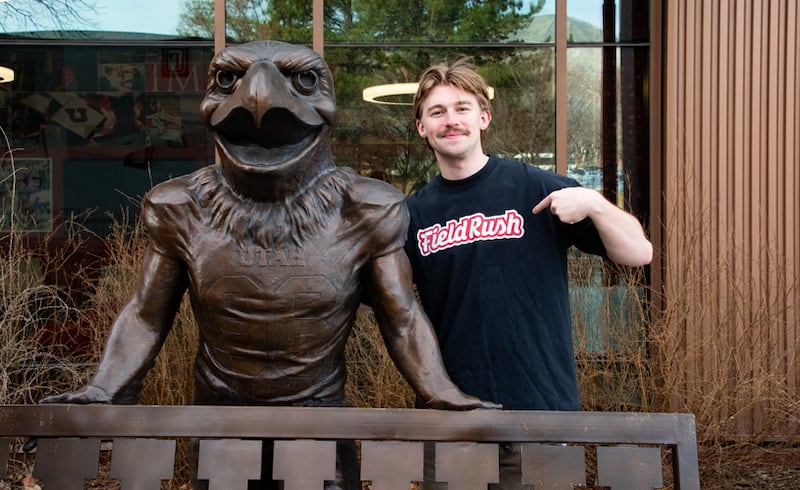
Field Rush’s other differentiator is its mission to “shine a light on mental health issues” and make it “a place where you can love college football but also a place where you can learn to love yourself.”
Sorenson talks openly about the depression he experienced from November 2024 to November 2025, his senior year, that made it hard to get out of bed.
“I was still working on Field Rush, but I was going through the motions,” Sorenson says. “I don’t know if I’ve explained this to anyone before — being depressed was one of the best things that ever happened to me because it has allowed me to see life, and also Field Rush, in a different kind of way. … I think it’s so natural to want things, to have goals and dreams, but I don’t think it’s necessary to attach your [self-worth] to this idea that if we fail, we’re a screw-up. It’s just not true.”
Field Rush gained notoriety last year with its sensitive treatment of the death of 24-year-old LSU wide receiver Kyren Lacey from a self-inflicted gunshot wound.
“We did a story about Kyren Lacey not as a football player but as an individual, as a human being,” Sorenson says. “It did pretty well engagement-wise, but that’s not why I’m talking about it. Kyren Lacey’s mom posted it on her Instagram, and I remember thinking, ‘This is the kind of stuff I want us to do.’ This is the stuff that is important. When I die, when everyone else dies, this is the kind of stuff people will think about.”
