
This story appears in the July 2026 issue of Utah Business. Subscribe.
Sometimes, we notice something in the world that needs fixing, and we just can’t let go of it.
Travis Winn first felt that way on the urban playgrounds of southern Spain, getting schooled in street soccer by 13-year-olds while serving his LDS mission. In 2006, Winn and six others launched Calle with the goal of creating the world’s premier street soccer lifestyle brand.
Even after Calle folded in 2012 and Winn started and sold other companies, the regret of unfinished business still gnawed at him. He sensed that something was broken with the United States’ system for developing soccer players, and he wanted to do something about it.
“If you travel overseas, you see street soccer being played by kids on little courts all over the country, and that’s the base of the game,” Winn says. “In America, it’s uniforms and coaches and club teams and referees, all the stuff you don’t see in Brazil or Spain.”
In 2022, at the age of 42 and a decade and a half after Calle was first founded, Winn relaunched Calle as a for-profit streetwear business. A year later, he added a nonprofit called Free the Game, which has built seven street soccer courts to date, including three in Salt Lake City. His journey offers lessons for founders who want to build a revenue model for social impact.
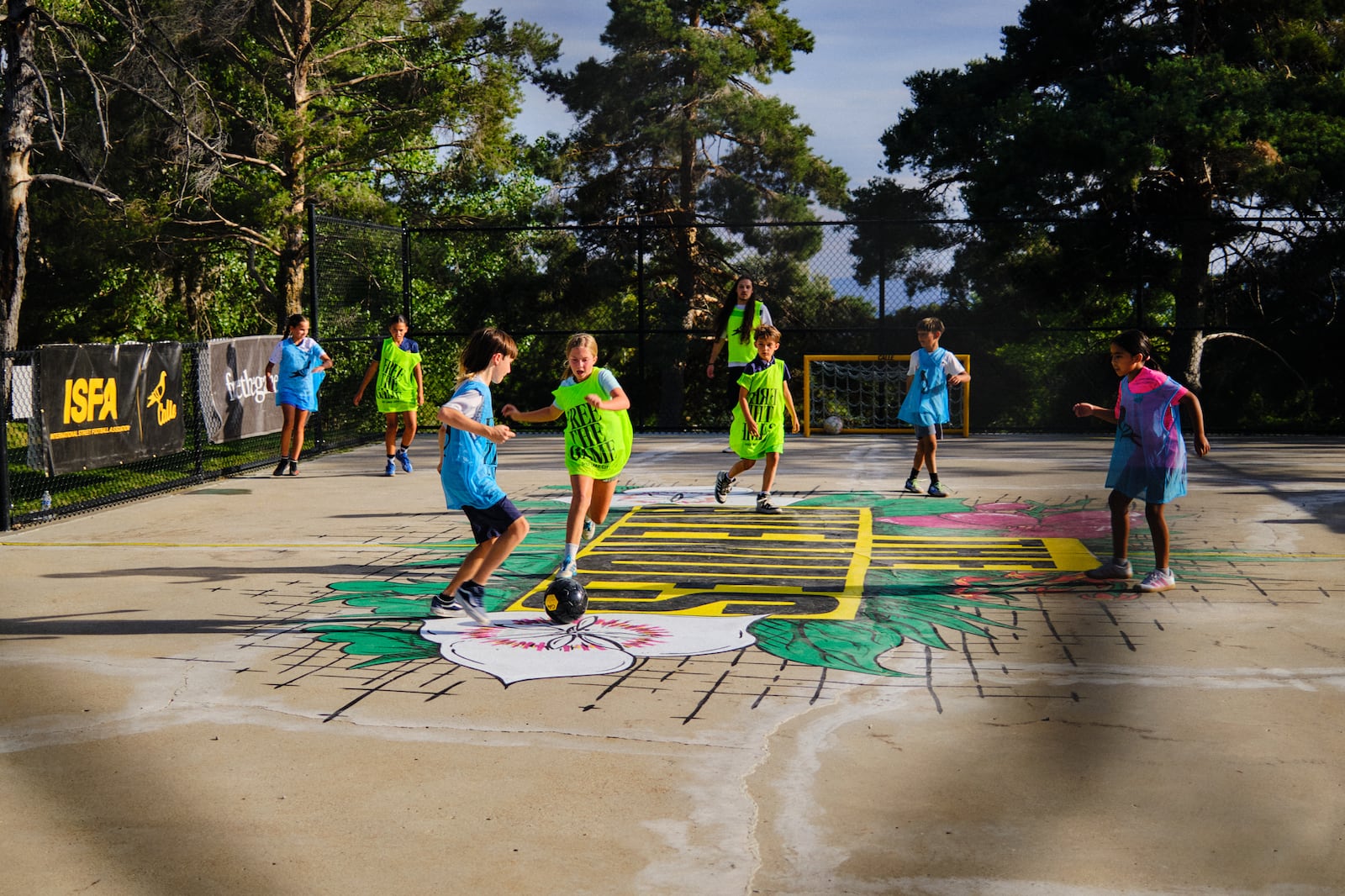
Winn believes deeply that the U.S. youth club system, with elaborate travel schedules and teams so large that some kids barely touch the ball, is too inefficient for development and too expensive for lower-income families. Even worse, he says, “It’s not fun for a lot of kids because it’s too serious. The idea that you can be elite at 12 years old is nonsensical to me. When you play four-on-four, it’s better for skill development because you’re always on offense or defense, and the ball is never more than 20 or 30 feet from you.”
The countries that dominate the FIFA World Cup — Brazil, Argentina, Germany, France — all have something in common. Their best players grew up playing street soccer, three or four players to a side, and kids from any economic level can compete, expanding the talent pool.
“That’s really why I brought Calle back,” Winn says. “I realized the number one thing missing from soccer in the U.S. was fun.”
That vibe will be on full display July 31 to August 1 at the Gallivan Center when Salt Lake City hosts the U.S. National Qualifier for the International Street Football Association (ISFA) World Cup. Salt Lake City’s bid was selected over San Diego and Sacramento, and qualifiers will go to the Netherlands in September to represent the United States.
Lesson One: Passion is the fuel for resilience
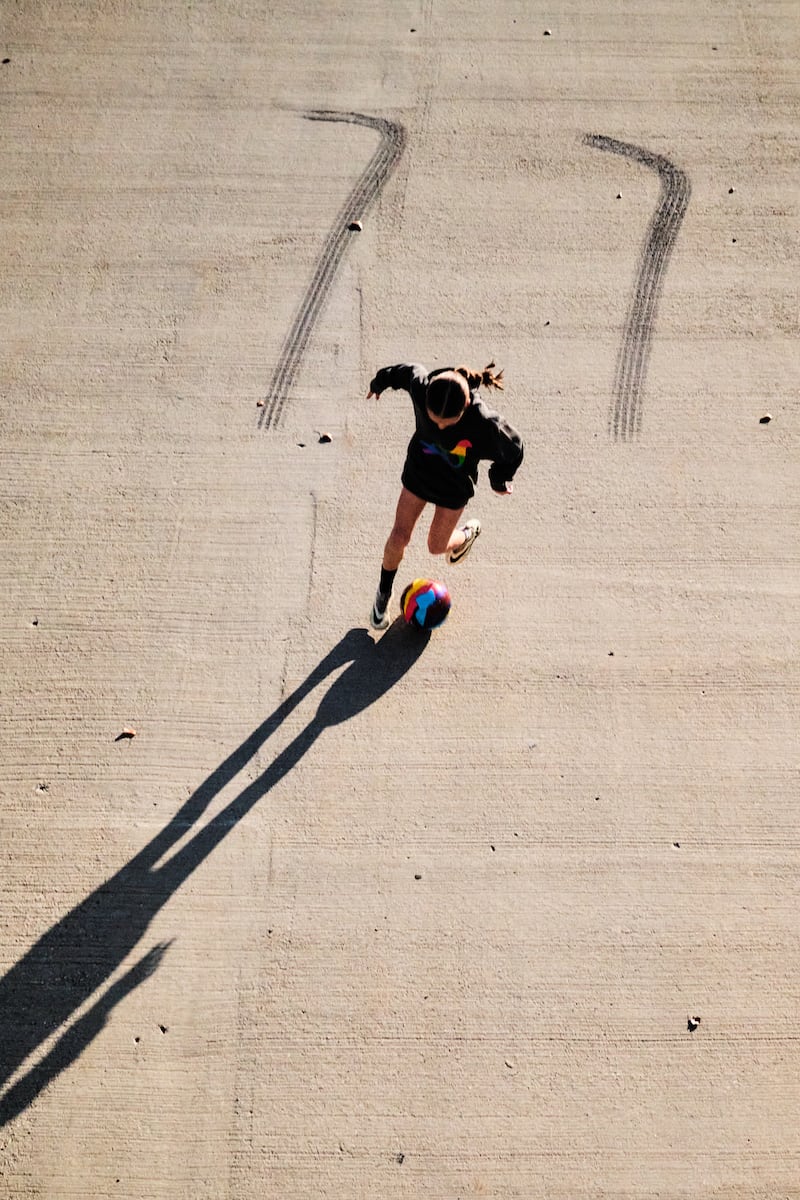
We can trace Winn’s fascination with street soccer to the neighborhood “futbita” courts of Cadiz, Spain. Winn says he thought he was a pretty good player — after all, he had been highly recruited in high school and was a Division I midfielder at BYU.
“I got humbled by 13- and 14-year-old kids, and I had this aha moment,” Winn says. “I asked these kids if they played on the local club team, and they said ‘No, we just play here in the street.’ And my mind was blown. You don’t have a coach? You don’t have a team? Then it hit me: Oh, the game teaches the game.”
When Winn brought back the Calle brand in 2022, he was intent on growing that same kind of unstructured street soccer culture in Utah and beyond. To do that, the relaunched Calle would do something it didn’t do in its first iteration: It would use 10% of proceeds to fund Free the Game and build courts in city parks all over the country.
Calle sells apparel and soccer balls direct-to-consumer but with a retail location at its Granary District headquarters that includes a soccer court and a cafe that has turned into a party room.
“Our first six months, we had several dozen people ask if we rent out our space for birthdays or corporate events,” Winn recalls. “We said no, no, no, no. Then we thought, maybe we should listen to the market. … Soccer-themed parties have actually become a bigger part of the business.”
Winn operates the business during the day with a singular focus on generating the revenue needed to build more courts. In his creative time in the evening, Winn thinks about where Free the Game goes next.
“Being an entrepreneur is sometimes soul-wrenching,” Winn says. “It’s heavy to think that my family doesn’t eat if I don’t close deals. … But if I’m being honest with you, making money for the business is not my passion. I don’t need to die with a billion dollars in the bank. I want to change the game. If I didn’t have the social impact part of it, I wouldn’t have brought Calle back.”
Lesson Two: Find people who believe as deeply as you believe
Juan Carlos Becerra-Gomez, president of Free the Game, thinks he was 12 or 13 years old when he became a devotee of the Calle brand in its first iteration.
“I had this Calle soccer ball, perfectly weighted so it stuck to your foot, and I loved dribbling, so that’s what we used,” he says. “I lived in an apartment complex out in West Jordan with my family, and all my friends would come out. We had a basketball court that was fenced in, and we created our own Calle-like soccer court. That’s how I fell in love with the brand.”
Becerra played competitive soccer, but his happiest memories were summer games with friends.
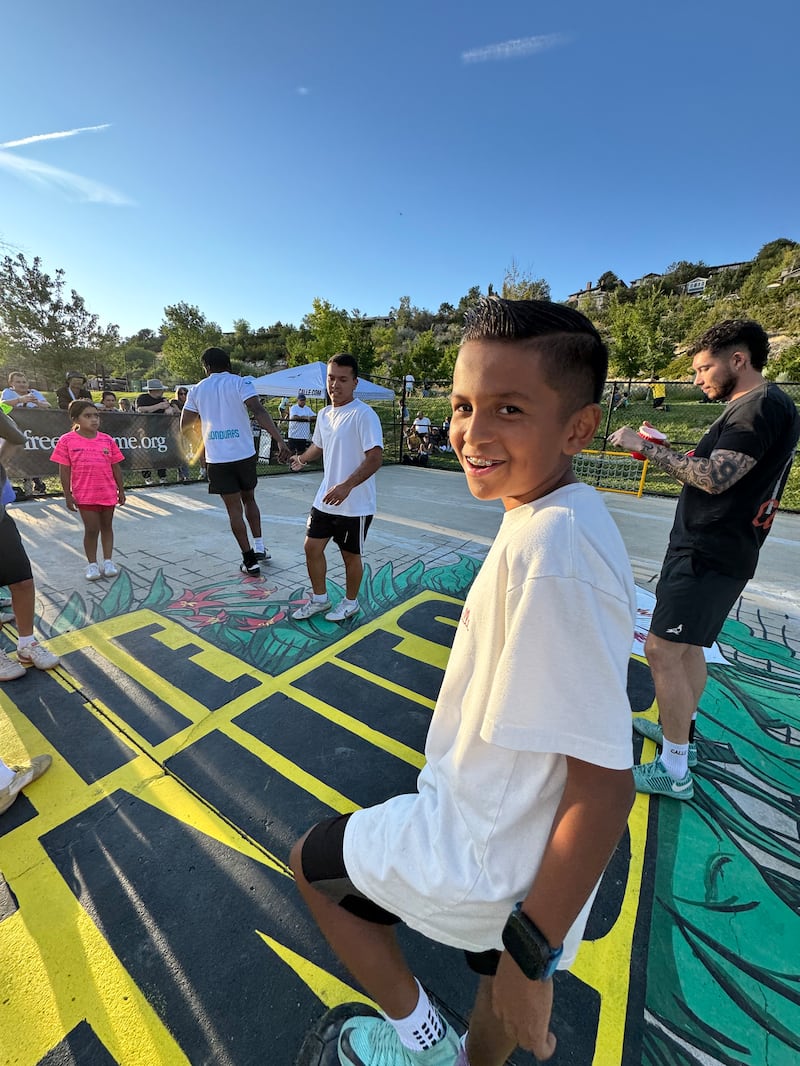
“We’d wake up at 10 a.m., have breakfast and play from 11 to 5,” Becerra says. “One of the biggest things that unites Calle and Free the Game is not only making the game accessible to more people, but the freedom to go out there and just have fun. No parents. No coaches yelling at kids to pass the ball. Street soccer is freedom.”
Becerra learned Calle was back when his brother told him about the drop-in games at Calle’s headquarters. Becerra would stop by, and he and Winn would have deep conversations about the state of U.S. soccer.
Winn asked Becerra to join Calle’s board in 2024, and at the end of 2025, he asked Becerra to lead Free the Game. Winn calls Becerra “my brother.”
“He’s just as passionate as me about changing the game and making it available to more people,” Winn says. “There are just too many people that U.S. soccer doesn’t even talk to. He and I agree 100% on that.”
Free the Game works with cities and local artists to build courts on cement pads in city parks. The artwork on each court is unique to its location — Salt Lake City has courts at Sugar House, Sherwood and 11th Avenue parks, with Liberty and Fairmont parks expected to open this summer. It takes two to three weeks and about $30,000 to build each court.
“Someone always asks why anyone would want to play on cement instead of grass,” Winn says. “Around the world, this is how you start playing soccer. The benefits are you don’t have to mow it, you don’t have to water it, and once it’s in, there’s no maintenance on it.”
Lesson Three: Build a movement, not a business
Calle’s headquarters is a gathering place for the Salt Lake City street soccer community, and that’s by design.
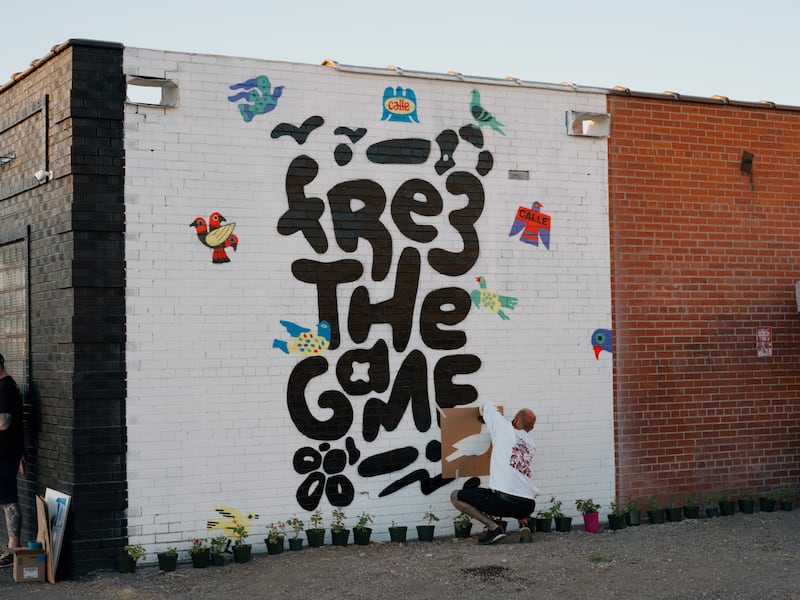
Enter the building at 625 South 600 West, and walk through Calle’s retail shop, past T-shirts, hoodies and hats sporting the brand’s distinctive pigeon logo and past Calle’s signature street soccer balls (the official ball of the 2026 ISFA World Cup).
Beyond the shop, there is a cafe and a wall of TV screens, where the community gathers to view World Cup games or Saturday international games. And beyond that is an indoor street soccer court, where you can find Wednesday night drop-in games, and on at least one Friday night this spring, kids swarming the building for the Secret Midnight Soccer Club, hosted by a 9-year-old Utah street soccer star, a Calle-sponsored athlete named Maggie Jones (IYKYK).
So, how long will it take Calle and like-minded partners to have a material impact on the game?
“One of our bigger ambitions is [that] what pickleball did to tennis, Calle can be for soccer,” Winn says. “You can argue that many more people are playing pickleball now than tennis, but that happened quickly, just in the past 10 years.”
