
This story appears in the July 2026 issue of Utah Business. Subscribe.
The first time Zack Nelson uploaded a video to YouTube, he wasn’t thinking about venture capital, product lines or disrupting an industry. He was thinking about 10 cents a day.
Back in 2012, Zack launched his channel JerryRigEverything as a side project built on curiosity and hands-on problem-solving. The early videos focused on Jeep repairs, smartphone teardowns and durability tests that showed the inner workings of popular devices.
The audience started small. In the first year, Zack uploaded 100 videos, banking on persistence, and gained 2,000 subscribers as a result. The goal was simple. Get enough people watching the videos to earn 10 cents a day from ads. It wasn’t glamorous work. It was repetitive, technical and time-consuming. Yet Zack maintained a key edge: His content was consistent.
That consistency turned into momentum.
Today, JerryRigEverything is closing in on 10 million subscribers with nearly three billion total views. For most creators, that would be the end of the story. For Zack, it became the infrastructure for something much larger than a content channel.
It became a product development system.
The spark behind the startup
The pivot from tech content creator to manufacturer didn’t begin on a whim. It began with a relationship.
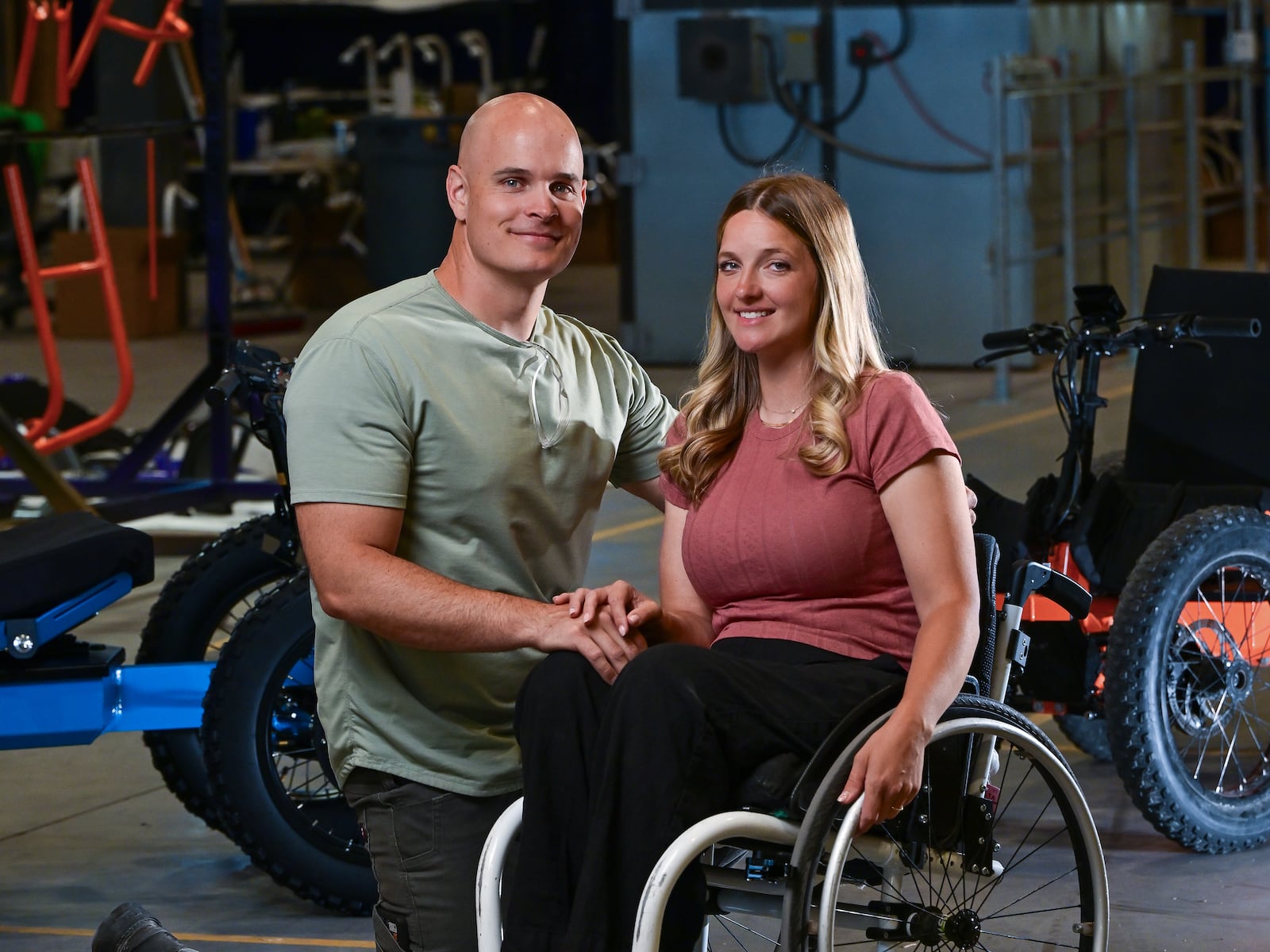
Seven years ago, Zack met Cambry, who would later become his wife. Cambry was paralyzed in an equestrian accident at age 18 and uses a wheelchair. A lifelong athlete, she suddenly found her world restricted to flat pavement, relying on a piece of equipment to help her thrive in daily life. “If my wheelchair were to fall out of the back of a truck and be out of commission, my whole life would stop,” she explains.
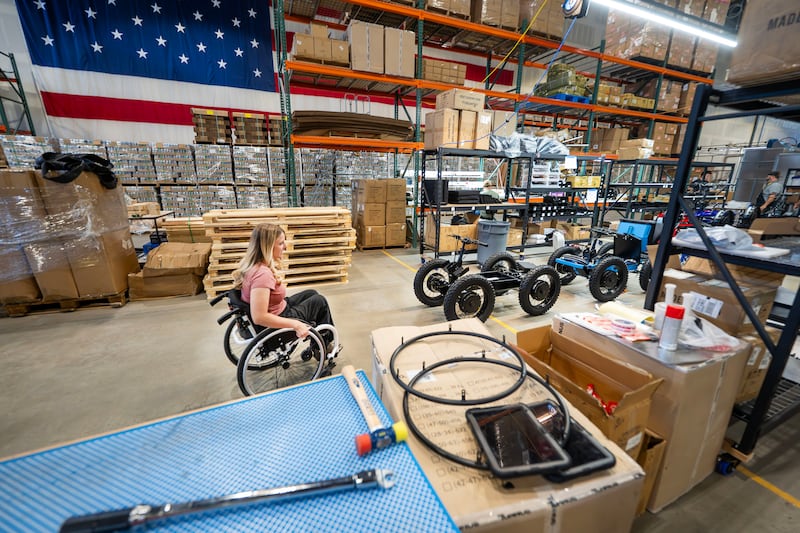
Early in their relationship, Zack noticed a simple but frustrating problem. Everyday terrain that most people ignore, such as grass, gravel or uneven trails, made basic outdoor experiences nearly impossible for Cambry.
Curious whether there was a way to improve her mobility, Zack asked Cambry if she had ever considered upgrading her chair.
That conversation sparked what would eventually turn into Not A Wheelchair, launched in 2020 in Spanish Fork, Utah.
“I took two electric bikes and welded a seat in the middle of them to make an off-road wheelchair,” Zack recalls. Cambry used that makeshift wheelchair on a date to hike the iconic “Y” in Provo.
At the time, commercially available off-road wheelchairs cost north of $20,000. Even standard manual wheelchairs cost around $6,000 while still offering limited mobility in outdoor environments.
As their relationship grew, Cambry says Zack recognized the challenge extended far beyond her experience. “The more he saw into my world, the more he realized it was affecting not just me, but other individuals like myself with disabilities,” Cambry recalls.
The result was an early prototype of The Rig, an off-road electric wheelchair designed to handle terrain most mobility devices aren’t built for. Zack filmed the entire build process and uploaded it to JerryRigEverything. The video didn’t just perform well. It triggered something closer to market research at scale.
Comment section R&D lab
Viewers commented on the engineering and asked why this type of product wasn’t commercially available at a lower price point. They asked Zack to build more and to make them available to the public.
For Zack, it was the first clear signal that his YouTube audience wasn’t simply there for the content, but to use the platform to advocate for unmet needs in real time.
The impact extended beyond his audience. Cambry says The Rig changed the way she viewed her own future.
“I had this tunnel vision of what my life was,” Cambry says. “Zack opened it up with The Rig, and it opened my eyes to a lot of different possibilities. It felt like a piece of me had come back.”
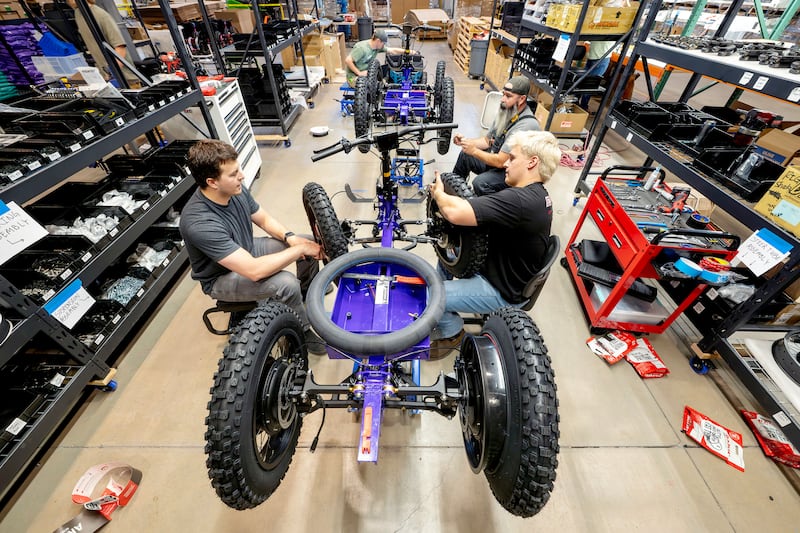
That experience became the foundation for Not A Wheelchair, a company focused on making customized manual wheelchairs and off-road mobility more accessible.
“The fact that we can do this for others … when we see someone get their Rig and see that joy in their face, it’s so rewarding,” Cambry says.
Instead of pursuing venture capital funding, Zack leaned into something he already had — a massive, engaged audience who could provide an immediate response to prototypes, ideas and failures.
In a sense, the channel became a live feedback loop for manufacturing decisions. Every upload functioned as both a demonstration and a survey. Comments served as qualitative research. Viewer engagement helped validate demand before production ever began. Every iteration of The Rig is shared with millions of viewers who dissect performance, suggest improvements and stress-test ideas through feedback. It was effectively audited before it ever reached production.
For a founder in the physical product space, that level of direct feedback is rare. For Zack, it became standard operating procedure.
The transparency also created something unusual in the medical mobility space — trust.
The medical device industry often carries skepticism from consumers who feel pricing and innovation are disconnected from real user needs. By contrast, Not A Wheelchair has built credibility through visibility.
Just one hour after speaking about his business trajectory, Zack uploaded a video unveiling the next generation of the product called The Rig 2.0. The updated model features improved suspension, increased torque and a top speed that has increased from 13 miles per hour to 18 miles per hour.
For most companies, that level of iteration would take months of internal testing. For Zack, it happens in real time with an audience watching.
Funding innovation with views
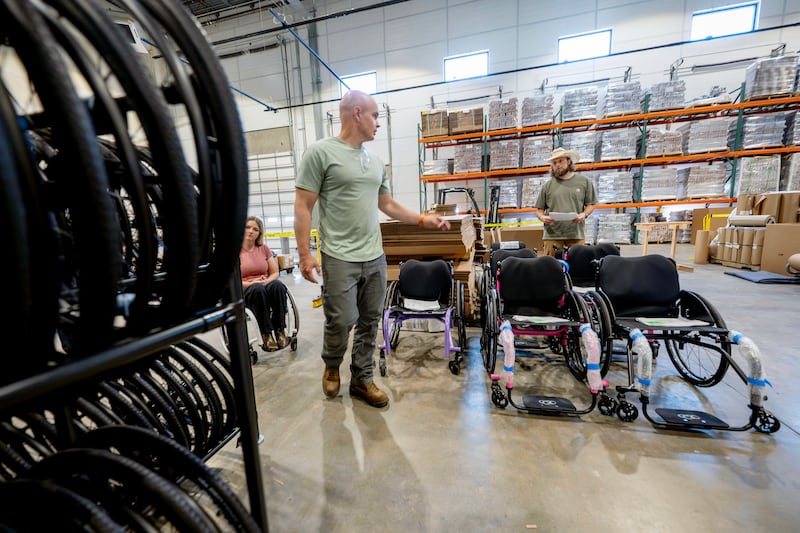
Not A Wheelchair was built entirely through earnings from JerryRigEverything. That independence isn’t accidental. Zack is explicit about his reluctance to bring in venture capital.
“The best thing about having a YouTube channel is we don’t need advertising,” he says.
Zack estimates that many companies in similar industries spend 20-50% of their budgets on advertising alone. By contrast, JerryRigEverything functions as both a brand engine and a distribution channel for Not A Wheelchair.
That structure eliminates a major pressure point for startups in manufacturing. Instead of scaling growth through investors or paid acquisition, Zack scales through audience engagement. More importantly, it preserves control over pricing.
“I’ve always been very nervous that the minute we bring in outside funding, we would lose our ability to make inexpensive wheelchairs,” Zack says. “When someone needs a product to survive, you can charge whatever you want for it, and they have to pay for it, and I don’t feel like that’s the right thing to do.”
That philosophy shapes everything from design decisions to pricing strategy.
Zack expects Not A Wheelchair to break even in late 2026 or early 2027, with a goal of long-term self-sustainability without compromising affordability. He’s also floated a future transition to an employee-owned structure, which he believes would help preserve the company’s mission as it scales.
The content-to-company pipeline
The current business model flips traditional startup logic. Instead of raising capital to fund research and development, content funds it. Instead of hiring market research firms, Zack relies on direct audience feedback. Instead of spending heavily on advertising, his self-built channel pays him and organically distributes product information.
He’s quick to note the business model isn’t dependent on scale alone. While JerryRigEverything provides reach, he argues the framework is replicable. “I would highly recommend dabbling in all branches of social media,” he says. “If you don’t have social media, you don’t exist.”
For Zack, the key variable is not audience size but interaction quality. Consistent posting across platforms is a form of ongoing product validation.
What began as a channel earning 10 cents a day has evolved into a multimillion-dollar operation spanning media and manufacturing, built through iteration rather than outside funding.
“When you stick to something, and you truly believe in it,” Zack says, “that translates over time.”