

&Collar is taking the dress shirt industry by storm, one comfortable, stain-resistant, wrinkle-proof shirt at a time. Each shirt is made of the equivalent of 15 plastic water bottles, spun into high-performance fabric. Founder Ben Perkins has built the company on a simple idea: make a great product, then make it sustainable.
The conception of &Collar
Perkins grew up in Southeast Asia. While living in Hong Kong, he came to love the Under Armour brand, which was gaining popularity at the time. “I loved the way the fabric felt,” he says. Simultaneously, his hatred for the discomfort of dress shirts gave him an idea: “What if I make a dress shirt made out of this material?”
He was 13 when he started working on a dress shirt prototype made with athletic material. When he contacted a local factory to produce his product, he learned the minimum order quantity was 5,000 shirts. “My parents’ allowance didn’t cover 5,000,” Perkins laughs. So he tabled the idea for the time being.
While serving a mission for The Church of Jesus Christ of Latter-day Saints in the Philippines, he had to wear a dress shirt every day. He hated it. The hot, humid weather wasn’t a good combination with those white shirts. When he got home in 2016, the pain point of dress shirts was fresh on his mind.

He decided to rekindle his teenage idea to build his resume. He figured telling a potential employer he designed a successful product line would make him look good in a job interview.
As he built the product, he reached out to the best branding team he knew: his sister and her advertising friends. Together, they built &Collar. The company officially launched in August 2017.
A dress shirt made of plastic bottles
Perkins didn’t create &Collar because he loves dress shirts, so he refused to “put more trash out in the world,” as he solved the uncomfortable, sweaty-shirt problem.
Sustainability is a big part of what sets &Collar apart. Their shirts are made from recycled plastic bottles, which are processed into thread before being woven into shirts. This aspect of the company didn’t surface until the &Collar team was designing the second iteration of the shirt. In 2018, they added both stain repellent and sustainability features.
Perkins remembered a 2010 Nike campaign in which recycled plastic bottles weaved themselves into jerseys. He realized there was already a process for turning plastic into high-performance fabric.
“We end up paying 15% or 20% more for the cost of the shirts,” Perkins says. “We don’t pass it on to customers, because that’s a tax we’re OK paying.”
Perkins says the most important part about making sustainable shirts is making a great product. He quotes the founders of Allbirds, who make sustainable footwear, saying, “People don’t buy sustainable products. They buy good products.”
&Collar has stayed committed to sustainability, despite challenges. What makes the shirts attractive to buyers is the stain-repellent quality. “The traditional way of repelling is through PFAS,” Perkins says. “People call them forever chemicals. They do some really awesome things, but they’re not awesome themselves.”
The challenge was obtaining PFAS results in a sustainable way. Though a difficult process, Perkins says it was worth it.
“I think the barriers to entry are becoming lower for entrepreneurs … It’s easier than you think and cheaper than you think to go [from] concept to product.”
— Ben Perkins
“It was important to us to build something really good,” Perkins says. “Good for the end user and good for the world. I think those things can happen at the same time.”
For entrepreneurs looking to build a great, sustainable product, Perkins has some advice: Failure is imminent.
Mistakes are part of the game
Perkins says he wishes he knew from the get-go that mistakes are critical to the entrepreneurial process.
He recalls an early lesson he learned in quality control. He’d just ordered 2,000 shirts, the largest order he’d placed up to that moment. When he received them, the shirts were cream, not white.
When he reached out to his manufacturer in China and asked why they were cream, they responded, “We hear cream is very popular in the U.S.” But Perkins was selling white shirts, not cream. Now, Perkins always orders a product sample to make sure everything looks good.
Though frustrating at the time, Perkins says the experience is funny to look back on. They ended up selling the shirts at a marked-down price as “prototype shirts.” Perkins laughs, “They were our fastest-selling shirts ever … and for the next two years, people were like, ‘Hey, are those prototype shirts ever coming back?’”
Don’t be afraid to ask
Making mistakes is a great way to learn a lesson that sticks, but if you want to avoid silly ones, he recommends relying on your village.
Perkins reflects, “Do you know how many mistakes we could have skipped in years one and two if I had just emailed the Thread Wallets founders and been like, ‘Hey, where should I warehouse and ship out our products?’ That would have saved me so much pain and hundreds of thousands of dollars.”
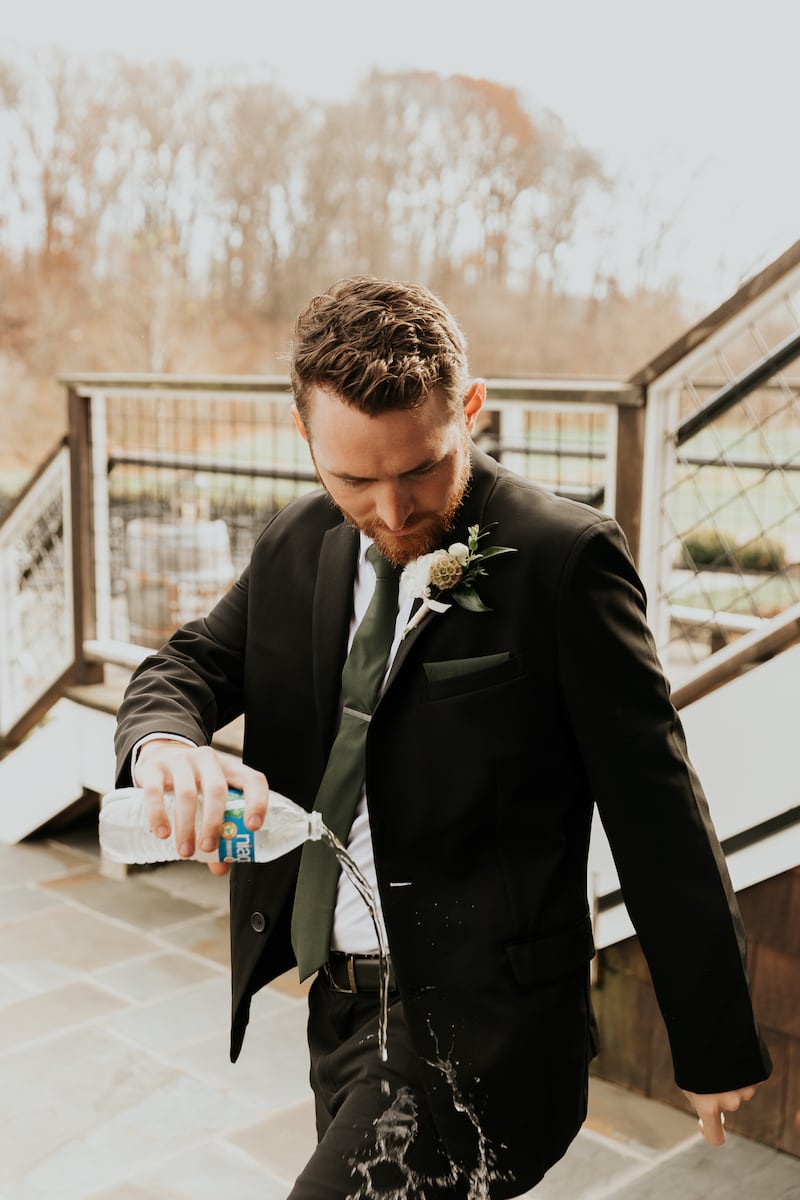
Perkins says he loves Utah because entrepreneurs look out for their own.
“Don’t be afraid to reach out to people and ask specific questions,” he says. “There are a lot of people out there — if you just reach out to them on email or LinkedIn — willing to give you 30 minutes or an hour.”
As helpful as these types of conversations can be, Perkins says they only matter if you act on them.
“I am the biggest proponent and champion for just going out and starting it,” he says. “I think the barriers to entry are becoming lower for entrepreneurs … It’s easier than you think and cheaper than you think to go [from] concept to product.”
And when it comes to sustainability, Perkins urges entrepreneurs not to overcomplicate it. Simply design a great product, and pay a little extra to manufacturers so they can make it in a way that’s better for the world.