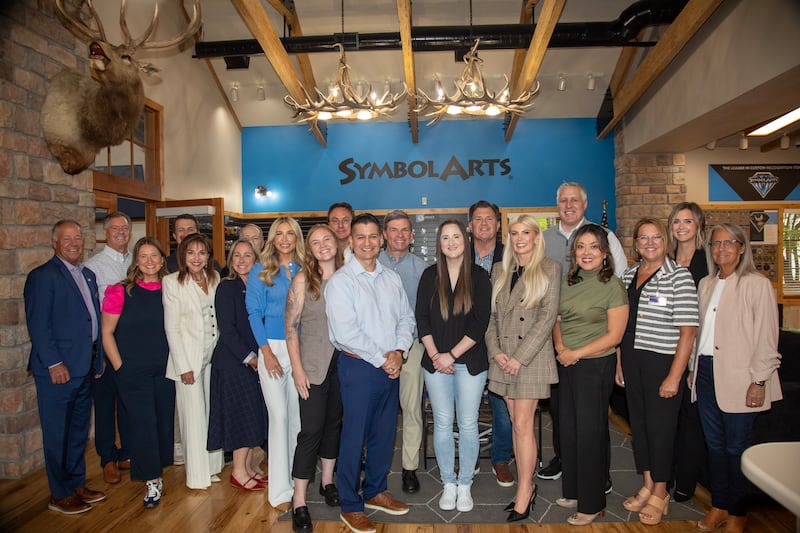
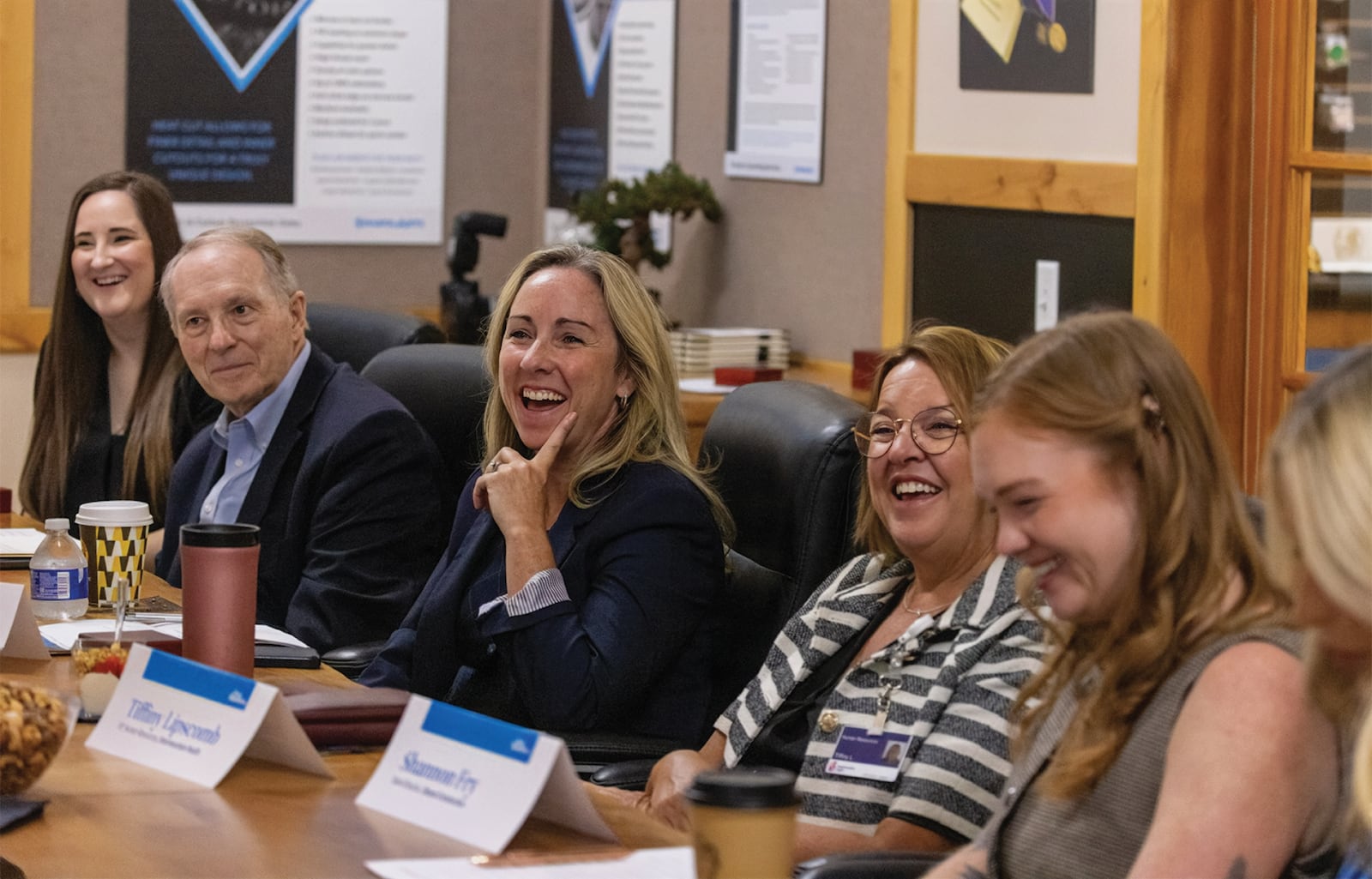
Last month, Utah Business hosted a roundtable conversation sponsored by SymbolArts and moderated by Emily Rushton, president of Waterstone Human Capital. The roundtable discussed how Utah organizations are building internal culture as they scale — measuring what’s often intangible, investing in the people who drive culture every day and recognizing the deep connection between the environment inside their walls and the communities outside them.
Was there a specific moment or turning point that made you realize culture wasn’t just an HR initiative but a business imperative?
Sandi Hendry | Founder & Owner | Minky Couture
When I started, I wanted something very doable for moms, very kid-friendly. They could run to the soccer thing, a doctor’s appointment, but you weren’t going to get docked a whole day’s wage because you wanted to make playoffs. I set the culture early that we’re all about caring for each other and having each other’s back. … With 350 employees now, they’re passionate about Minky. They’re passionate about covering each other. … It’s a safe place. … Setting the culture early, how the top treats the bottom and the bottom treats the top, I think it comes around.
Jake Hinckley | Director, Learning and Development | Kelso Industries
We’re in mergers and acquisitions. When we originally started, we thought, let’s acquire these companies. They’re already successful. They have years in the business. Let’s let them run as is. But as we started to acquire more businesses, … we recognized the cultures within each of those organizations approach change differently. They approach innovation differently. One of our co-founders said, “Is there anything you could develop that could be a cultural assessment that we could administer prior to the acquisition?” … We’re in the initial stages of doing that … to gauge where those cultural alignments are and where they’re misaligned. … We’re using the Competing Values Framework by Dr. Kim Cameron. It’s a phenomenal framework.
Bruce C. Kusch | President | Ensign College
When I became president of Ensign College, I had strong feelings that the institution was not living up to its potential. … If they wanted status quo, they had the wrong guy. We were LDS Business College when I got there. We changed our name in 2020. We changed our mission statement after I’d been there a year, and that was a game changer. … In 2017, we were serving about 2,000 students a year. 2026, we’re serving nearly 30,000. That required a different culture where we were not all thinking alike, but we were all like-minded. … When we hire someone, I interview every prospective employee. If there’s not a full commitment to be mission-aligned, we pass.
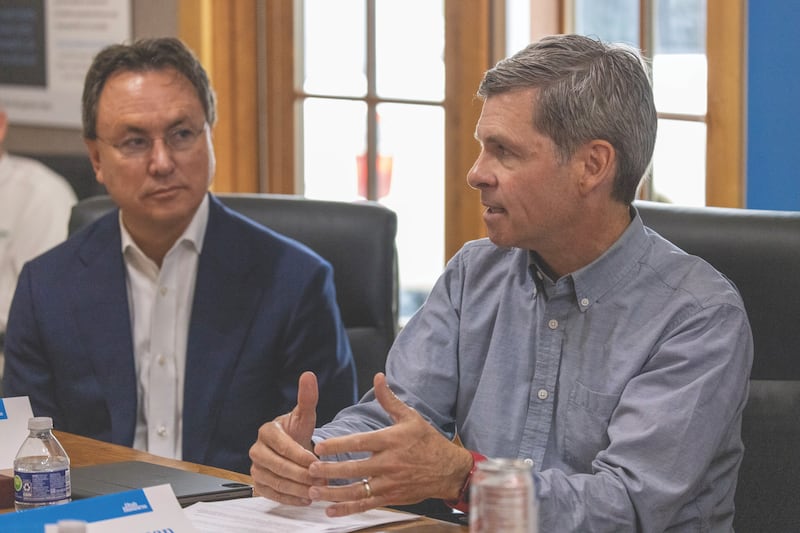
Michael Waterman | VP, Culture and Engagement | CHG Healthcare
In the early 2000s, we had 50% turnover in our company. … Our first chief people officer said, “What if we created a workplace that people wanted to come to every day?” … That meant they had to change a lot of behaviors, … have leaders show up and have weekly one-on-ones with people. You had to learn about their spouse or their kids’ names or their pet’s name. You had to actually start caring about people.
Since that time, culture is a business strategy at CHG. … When you invest in people, and you care about them, and you see their value and talk about their impact, they commit. They stay longer. … We’re at about 12% turnover now.
How do you define a “healthy” work culture, and how has that definition evolved for you over the past few years?
Shannon Fry | Talent Director | Okland Construction
I really love defining culture and values as behaviors and actions we take versus origin or identity or a starting point. That makes it possible for everyone to join in, for it to feel healthy, accessible and inclusive. … For a healthy work culture, is there balance? Because there are moments where we have to ask more of our people. … And my question is, if we’re asking more, what are we doing to help them succeed?
It’s okay to require more and say, “The bar is rising, and to help you meet it, we’re going to provide the learning and development to get you there.” … The speed of work has changed with AI. We’re asking more of people. And so we have to make sure that we’re showing up as a people team and providing more for them so that they can succeed in that environment.
Jamie Issowits | SVP & Employee Experience Manager | Zions Bancorporation
One of my favorite projects I’ve worked on is cultivating a culture where employees feel recognized and valued for their contributions. We rolled out an enterprise-wide recognition platform called Value You. That has had such strong adoption and has been such an asset to cultivating a healthy work culture. We do employee surveys to get consistent feedback with a robust listening strategy, and recognition has really been one of the strongest drivers of employee satisfaction.
Culture can be easy to talk about and hard to measure. How do you know when your culture is actually working?
Ron Burt | Assistant Director, Utah Area Communication Council | The Church of Jesus Christ of Latter-day Saints
Culture is actually what you do as a leader. … As we make that culture something that [employees] love — not just that they’re made to do it, but it’s actually integrated into them — they’ll do a better job in whatever you’re asking them to do. You’ll get more out of them by recognition, by belonging. … Yes, money is super important, but [what is] most important is how they feel about coming to their job. … Turnover will be a lot less when they know that they are appreciated. Your employees are probably getting sought after. … Money is not the top of the list.
Brixton Gardner | Co-Founder | The People Club
We found that culture conversations now gravitate towards performance. More than a few years ago, … people would highlight, “We’ve got Monster drinks on tap. We have the ping-pong tables and free lunches.” We’ve noticed businesses are valuing performance, which feels like a no-brainer. … They’re talking about that more as they’re looking to grow their team. Candidates are actually a lot more interested in being aligned with businesses that are performing well. … They want to go somewhere where performance is the number-one priority, and they feel like … at the end of every day, [they had] done something meaningful. Cultures that create space for employees to make an impact and to see that impact have taken more priority.
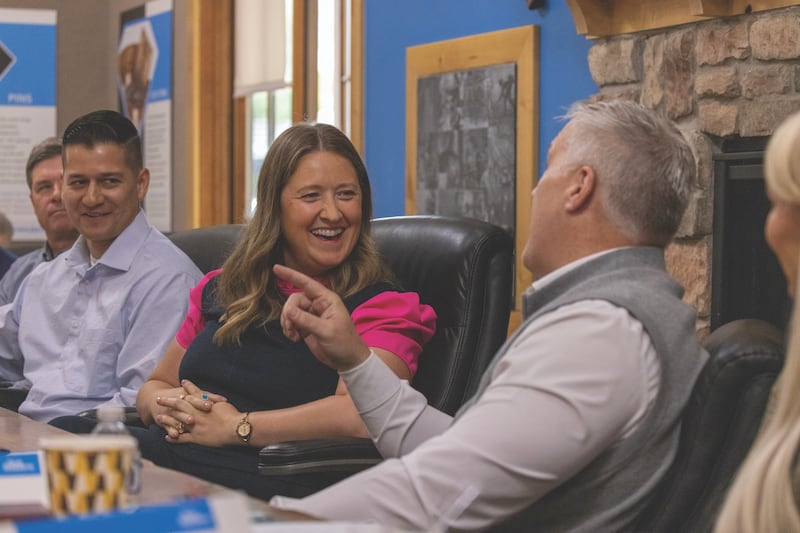
Vanessa Brulotte | Employee Relations Business Partner | BambooHR
[Our co-founders] wanted to build a place where employees can be really excited about the work, then go home and enjoy their lives. For 18 years, none of our values have changed. … Each of us has this battery pack every day. … Sometimes it’s like, “I’m at 50% today.” Do you have a culture where you can be brave enough to say that? [Do you] have a supportive team that could come behind you and say, “I’m here to support you. Let me take off the load”? … We can’t build healthy communities out of exhausted people. … At Bamboo, I hear this more than once: “This person no-showed. I’m really worried. Can we make sure they’re okay?” It’s never about their work. They [say], “We can take care of the work. I’m worried about the person.”
Tiffiny Lipscomb | VP, Human Resources | Intermountain Health
One area where we see our culture come to life is through our LOVE award — Living Our Values Every day. Our patients can nominate our caregivers for LOVE awards, and our caregivers can nominate each other. … We have thousands and thousands of nominations. That tells us that our culture is alive and well. Annually, we recognize those who are selected by a committee. We met just recently at the Capitol and had a huge dinner. … It was incredible. Tears, tears, tears. Their families and coworkers got to come and celebrate them. … We can take those words that are on paper — belonging, better together — and that really tells us that it exists.
K. Bruce Boucher | Director, Professional MHR Program & Senior Lecturer | Jon M. Huntsman School of Business at Utah State University
Culture is actually what happens at the lowest level of our organization; … that really defines our organizations. … The mid-level managers of your organization are crucial. They’re beyond important because people don’t join your organization because you give them words. They join work groups, and they stay for work groups. They stay for managers. … If you have an organization of 350, you can be that leader. But if you have an organization of 3,000, you can’t. … The idea is to replicate yourself. Real leadership is not only you doing what needs to be done; it’s getting other people to do it. Those mid-level managers … have to be exceptional. And if they’re not getting a majority of your time, they need to be.
Jennifer Tarazon | Director, Community Engagement | Mountain America Credit Union
At Mountain America, at least 30% of our team members self-identify as Hispanic or Latino. … Right now, the most populated age for Latinos in the U.S. is between 16 and 19. … The most populated age for non-Latinos? 62. That younger Latino is not just our next team member, but it’s also our next member. … Latinos and older adults more than anybody else prefer to bank in person. … If they find a teller they like, they will stand in line and wait for that one person for hours. And then they’ll bring their aunts, uncles, cousins. … We have to be really cognizant that all of the changes in this younger population, and more diverse population, are also influencing our values. … It’s not changing them, but it’s just broadening what they might look like. Your businesses don’t exist in a vacuum — they sit inside Utah communities. How do you think about the relationship between the culture inside your walls and the community outside them?
Chris Gonzales | HR Director | Swire Coca-Cola, USA
With Swire Coca-Cola, our environment for the majority of our workforce — around 4,500 to 5,000 of them — works every day in a space. They’re not at a production facility, not at corporate headquarters. They’re in the business. … Our CEO recognized a merchandiser that was stocking a store. … He had a very challenging, semi-aggressive customer at the store demanding product that was not our brand, not our product. He doesn’t work for the store. But from his perspective of “I live and work in this community,” … he took this pressured customer, walked him to the other brand section, and helped him try to find a product that was out of stock. And when this individual realized they didn’t work for the store, she said, “Now I know what products I’m going to buy from now on.” … Could he have said, “That’s not my thing. I don’t work for them”? 100%.
If you could change one thing about how Utah’s business community collectively approaches culture and community, what would it be?
Brandon Fugal | Chairman | Colliers
I think we need to celebrate the fun things about our community, … distinctive differences in Utah. … We’re going to be welcoming the world for the greatest open house of all time at Temple Square. … We’re going to see a sports entertainment district second to none. And we are getting ready to welcome the world for the Olympics. … We should be the beacon and set the pace for the world, because whether we like it or not, the world is coming here. … The companies that really lead Utah, there’s one thing in common — they’re mission-oriented; they’re not money-oriented. Performance is not measured necessarily by revenue, but by impact, by fulfilling the mission. When all of your people feel that shared mission, that they’re actually putting a dent in the universe, people are willing to not only bring their best selves every day to work, but they’re going to exceed even their own definition of their potential.
Sandi Hendry | Founder & Owner | Minky Couture
We’re doing a pop-up in New York in October, and the marketing agent said New York [is] hungry for Utah. They want Utah drinks, Utah blankets. … She said, “I can’t bring enough of Utah to New York.” So if we change anything, celebrate more.
Courtney Rodriquez | SVP, People Success and Enablement | MarketStar
Culture is our way forward, and we need to think about how we evolve our culture as our state continues to grow. … Culture should not be confused with traditions. Culture should evolve and grow, and traditions should die and move to the mortuary. We should think about how we grow and evolve with our culture and not confuse the two, because culture and traditions are very different.