
The U.S. defense industry produces no shortage of promising technology. The harder task is turning that technology into integrated, deployable capability.
For smaller and nontraditional companies, the barriers are familiar: demanding compliance requirements, inconsistent purchasing cycles and a contracting system that can be difficult to penetrate. Even technologies that reach the field may remain siloed, unable to share data or work together around the warfighter’s immediate needs.
Adam Fife has seen those breakdowns firsthand. As founder and CEO of Payson-based CenCore, he supports national security and counterterrorism operations around the world. In 2022, Fife helped establish the organization now known as 47G with the goal of connecting Utah’s aerospace and defense capabilities. Throughout that work, he says, he kept encountering the same gap: No one was responsible for helping small companies overcome the barriers to government work and integrating their individual technologies around what the warfighter actually needed.
Fife is continuing to do his part to fill that gap.
The Integrated Warfighter Ecosystem (IWE), founded and funded by CenCore, has brought together approximately 150 predominantly small and midsized American companies so far in this new collaborative environment. Roughly 80% are small businesses, and many of them are veteran-owned. Members do not pay to participate. Instead, CenCore serves as the ecosystem’s integrator and orchestrator, identifying complementary capabilities, helping companies navigate government requirements and assembling them into solutions that can compete for federal contracts.
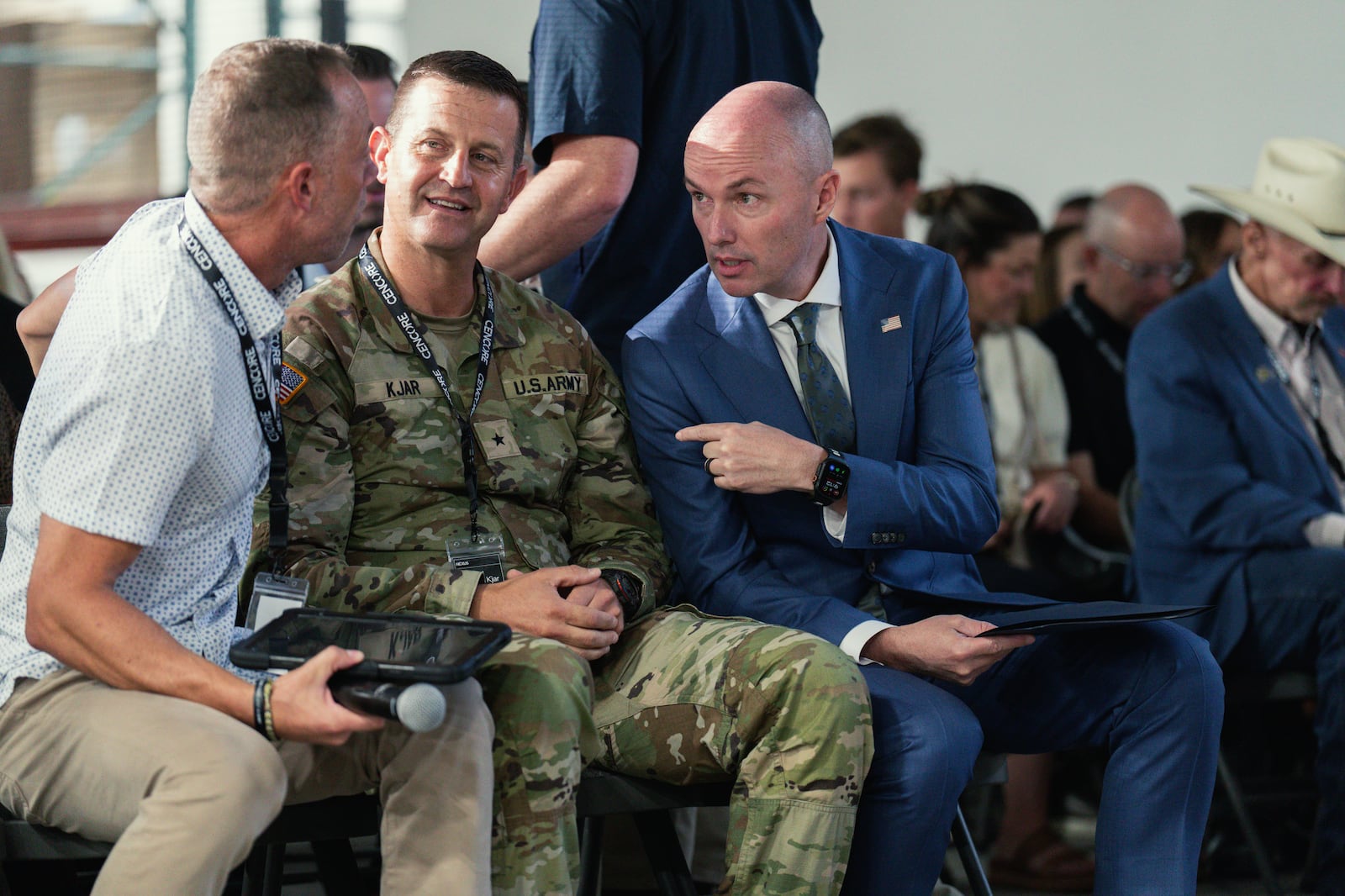
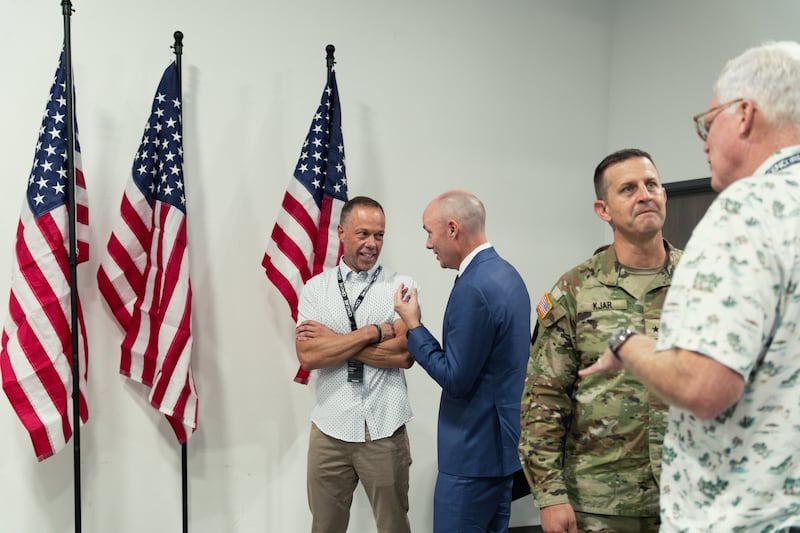
The network formally launched Aug. 21 at CenCore’s 55,000-square-foot headquarters in Payson. In attendance werewas Utah Gov. Spencer Cox, former acting Defense Secretary Chris Miller and leaders from participating companies — many traveling to Utah for the event.
“With Governor Cox, Utah has the right leadership and business climate for defense innovators, and IWE is a prime example of that,” says Adam Lackey, chief operating officer of Onebrief, an IWE member. “Through IWE, CenCore and Adam Fife have created a real network of innovation and collaboration in which startups and government work together to meet the needs of today’s warfighters. That mission is at the heart of what Onebrief does, and we’re proud to be part of this ecosystem.”
This work is personal for Fife. He describes the warfighter as one of his two shareholders, alongside his own family. He also sees IWE as a return to an idea he has pursued for years: creating an ecosystem capable of turning Utah’s entrepreneurial and technical strengths into a nationally significant defense industry.
Fife spoke with Utah Business about what is broken in the defense industrial base, why small companies cannot close the gap alone and why he believes he is a person who can bring the pieces together.
What problem did you set out to solve with the Integrated Warfighter Ecosystem?
The U.S. is amazing at creating incredible technology. We’ve got the best minds and the best inventors. The way our economic system is built incentivizes incredibly creative people to build really cool stuff.
The problem is, you get that really cool stuff downrange and think, “It would be really cool if this piece of technology worked with this other piece of technology.”
Then you learn about things like transferable data rights, meaning the Department of War doesn’t have the actual data rights to make those two things talk. That doesn’t do me any good, because to solve the problem, I need this to talk to this.
That has been a legacy challenge for many years.
How does IWE address that disconnect?
Vertical integration, where a single service provider owns the technology stack, is coming out of vogue. What the government really wants is a community garden. Apple locks everything down. Android says, “If you’ve got an 80% solution, you can deploy it on our platform. We’ll see if it works.”
That is where the Department of War is going. The bigger your community garden is, the better everyone eats. We built this ecosystem to create as big a garden as possible.
The warfighter — someone like a 20-year-old lance corporal who is an Xbox whiz and can play Halo better than anybody — is our target audience. It has to be as easy as Xbox. They need to be able to see how these things work together.
I will argue forever that the warfighter is the ultimate innovator. They need the tools to solve the problem they are facing. The whole point of the ecosystem is to deliver all the tools we can so they can solve that problem.
You’ve described the U.S. defense industrial base as being in crisis. What is broken?
First, the demand signal from the Department of War is inconsistent. That leads into the second challenge: Most of the defense industrial base is composed of mom-and-pop manufacturing shops.
They aren’t going to make the capital expenditure to expand their manufacturing capabilities in the hope of getting a contract. Or they may get one contract that lasts one year and requires 6,000 widgets. They are going to figure out how to deliver those widgets with the minimum capital investment because they don’t know what’s coming next.
That inconsistency leads to challenges within the supply chain, and the ability to get things built becomes harder and harder.
As the ecosystem’s workload and demand grow, we’re able to provide a more consistent demand signal. Because the ecosystem is geographically dispersed but tightly connected, it enables the defense industrial base to be strategically resilient in the event of conflict and self-supporting in its ability to deliver what the warfighter needs.
Manufacturing is one component, but what else does IWE include?
It’s a blend. Manufacturing includes composites, traditional steel, electronics and everything else required to do this.
The whole point is that we have to deliver integrated solutions to the warfighter and the Department of War. You have to have a broad supplier base of providers and technologies so you can deliver the best possible solution to the end user.
You already run a company with plenty on your plate. Why take this on?
It needed to be delivered because it has to happen. … What I care most about is getting the right technology into the hands of the warfighter. As a government, we’re really bad at identifying unique, cutting-edge technology. A big purpose of the ecosystem is identifying and fast-tracking technology that is of immediate use to the men and women dealing with these problems downrange.
You can’t build that kind of organization if it has to rely on outside or public funding. So I said, “Great, we’ll fund the whole thing so we can get these companies on board.”
We’ve also developed a piece of technology that automates the government onboarding process for many of these companies. There are something like 168 compliance boxes you have to check, which is overwhelming if you’re a three-person startup. But you have to do it to work with the U.S. government. So we built that.
As for why me, I don’t know. I don’t sleep. … I offend people. I make people upset sometimes. But you don’t mess around with [security].
What is the broader vision for the ecosystem?
There’s an actual roadmap here. Over the next 90 days, there will be a series of contract award announcements. Those announcements will be public validation of the ecosystem approach, and that validation is the three C’s: customers, cash and contracts.
In the spring, we’re planning a larger kickoff of a national security ecosystem that will reside and be headquartered in Utah, with satellite sites in six other states. I remain convinced that Utah is where these things need to happen.
Why is Utah a natural home for an ecosystem like this?
It is the most entrepreneurial community in the United States. People take venture capital and private equity dollars, but a lot of people bootstrap. They’re used to … doing the work.
In defense, those are the people who end up being successful because you have to grind. I always tell people, “If you’re trying to get rich, do not go into this business.” It takes a long time, and Utahns are wired that way.
The state also makes it easy to get things done. You hear that all the time, but it is very real. We tell our ecosystem members they should be in Utah.
Utah has an incredible talent pool. That’s why we came here in 2015. You have highly qualified people who can do really hard things. They know how to work, they’re well educated and they’re super smart.
All I care about is speed: How fast can I set something up? There isn’t a state that can match it. We have tried [other] states, and there’s a reason we’re here.
In the ideal outcome, what will IWE change for America and Utah?
The phrase I would use is “the power of partnership.” No single company can do this alone. No single individual can do it. It doesn’t matter how big your company is.
For Utah, the opportunities are stunning. I’m hopeful that, slowly but surely, we can genuinely put Utah on the map as a place where these companies can be built and thrive — a place where the federal government can have access to a civilian and contractor base that will help it succeed in its mission.
There is no better state than Utah for that. I genuinely and truly believe that with all my heart.
How will you know whether IWE is working?
The simple answer is dollars on contract. If they’re buying what we’re selling, that means it’s working. If they’re not buying what we’re selling, we clearly got it wrong.
Why is it so urgent to get these capabilities into the field?
Warfare is changing incredibly fast. The evolution of warfare driven by AI is stunning. Logistics wins wars, and in the next war, latency will matter. The proximity of compute to the front is what will win wars.
You have to be able to operate as a stand-alone. You can’t be reliant on a data center in … Hawaii. You have to deploy with your own data center because those milliseconds will matter in major ways. If we actually get into a shooting war, that shooting war will be decided in the first three minutes.
Our greatest threat is the weakness of our infrastructure. Our infrastructure is not secure. As Americans, we do not understand just how vulnerable we are, and we did it to ourselves. Now we’re trying to undo it.
