
This story appears in the February 2026 issue of Utah Business. Subscribe.
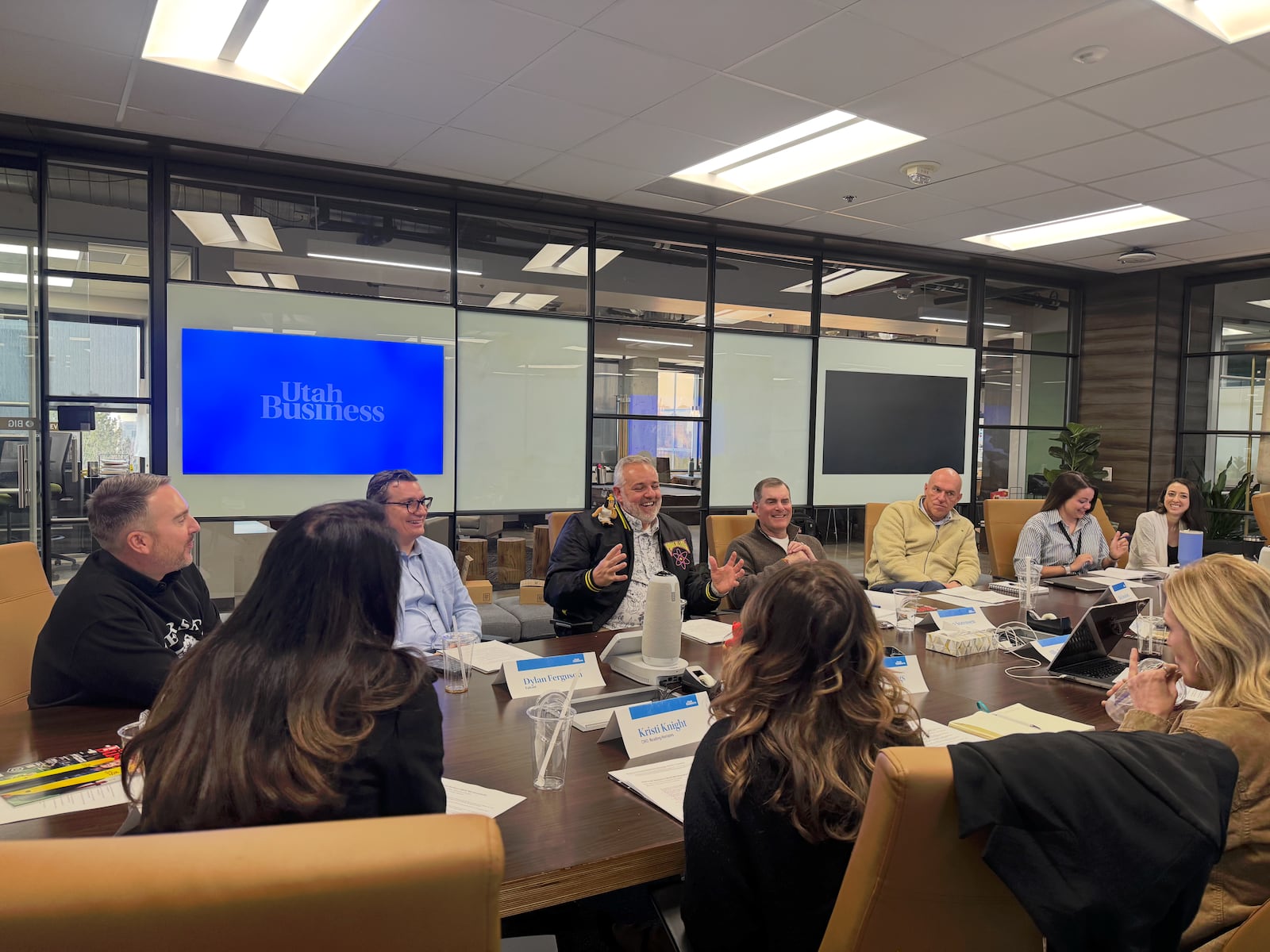
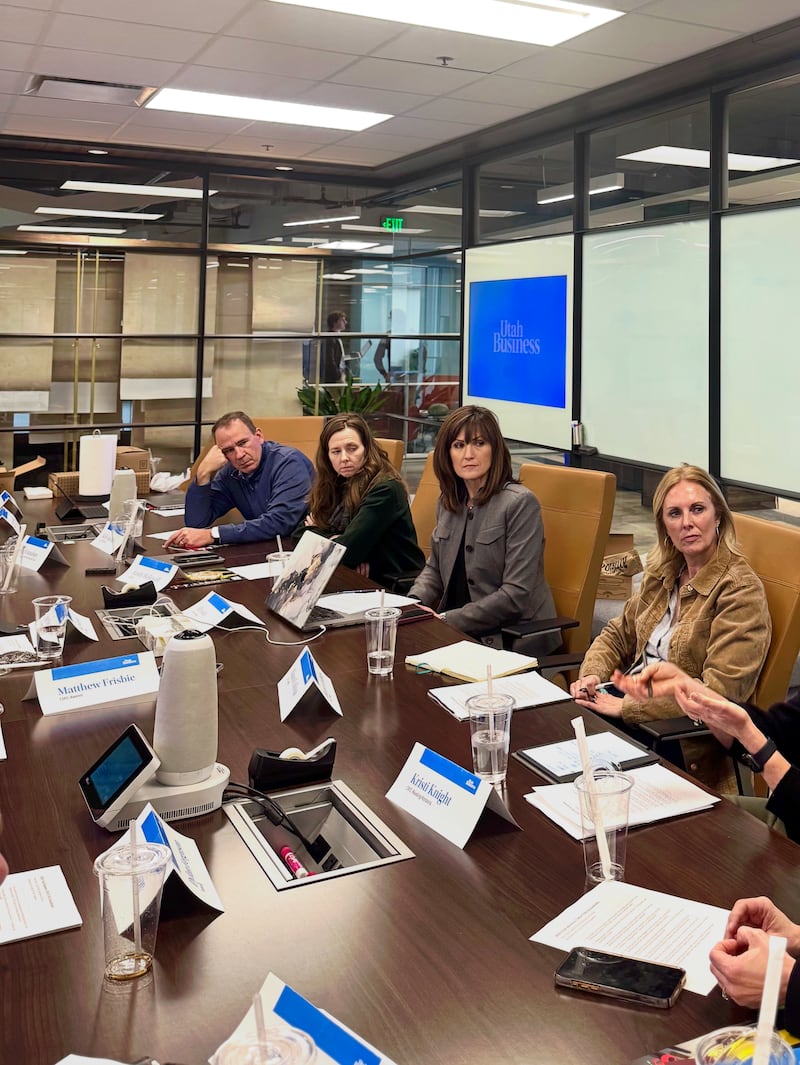
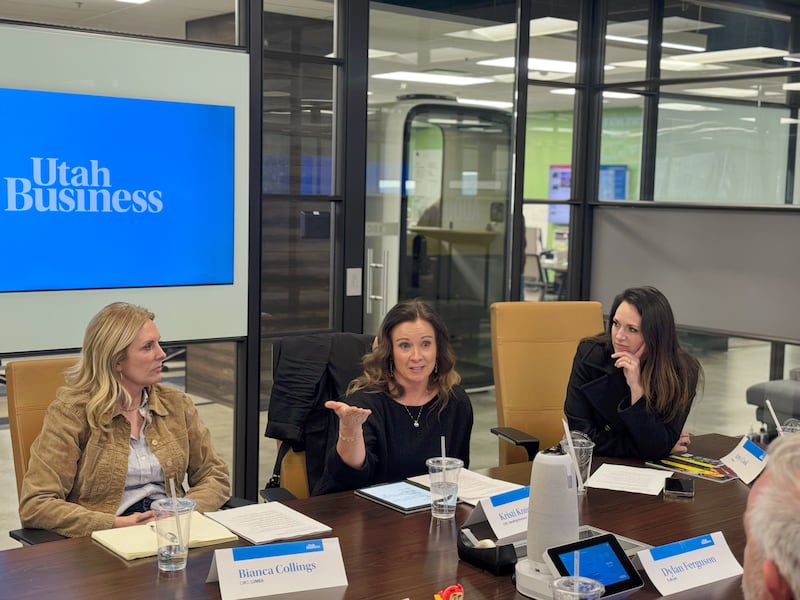
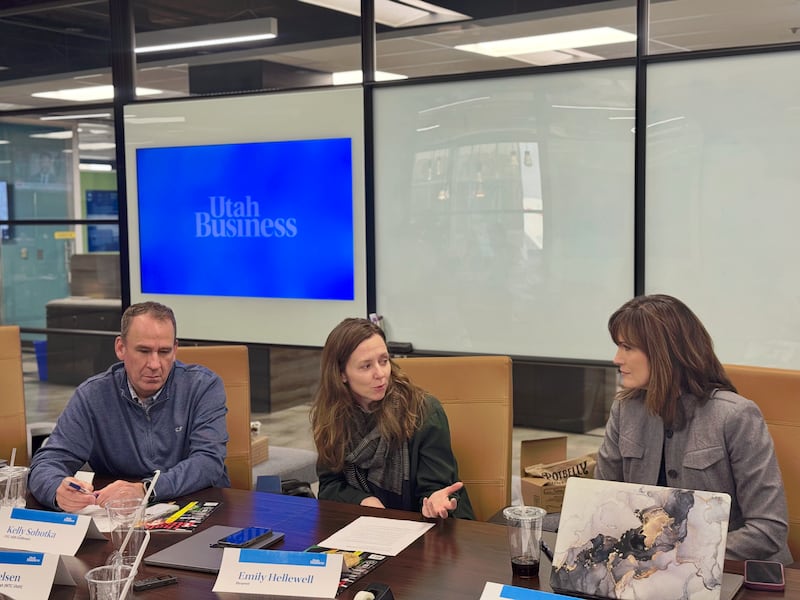
This roundtable conversation was sponsored by Fullcast and moderated by Ally Isom, chief marketing and external affairs officer at Clyde Companies.
What’s been your most successful go-to-market motion in the last 12 to 18 months, and what made it work?
Stan Sorensen | CMO | Altabank
Our parent company, Glacier Bank … has a standard program that all 18 of its divisions use that we are learning slowly to embrace. The thing that has really made it hum for us over the last 12 months or so is to treat it as really just part of the marketing portfolio rather than as a standalone marketing program. We use it as more of a support component that we then surround with advertising and direct mail, social media and sales training for our frontline.
Rich Israelsen | CRO | World Trade Center
We have a product that we’re really thrilled about: the Foreign Trade Zone. It’s not coming out of a marketing department, so to speak, but it’s a product that, for all Utah businesses that import products, particularly around this conversation of tariffs, it can be a shield — not to the tariffs, but to the underlying duties that are assessed to specific products. … It’s been a phenomenal product for companies trying to find some stability in this tariff world.
Ryan Christensen | Senior Sales Director | Fullcast
Utah is a bit behind on the whole Free Trade Zone or these bonded warehouses and things. … I was visiting with a billion-dollar company yesterday out of Arizona, and they talked about how these Free Trade Zones [are] significant to cash flow because I don’t have to pay the duties until it leaves an individual. They can sit in a warehouse, not pay all those import duties and taxes, and then slowly trickle it out at the time of a purchase.
Amy Cook | Co-Founder & CMO | Fullcast
Some of the things that we’ve done with AI this year through the Copy.ai platform are that we were able to organize a whole bunch of AI agents into a cohesive campaign that just did it for us. We got really high-quality blogs for both SEO [search engine optimization] and GEO [generative engine optimization]. We were able to expand that from about 10 [posts] a month to about 30 per week. … We were able to get personalized sales decks at any time, run target account lists and do all of the sales enablement instantly.
How clearly aligned are your sales goals and marketing goals in your current go-to-market plan versus running in parallel tracks?
Stan Sorensen | CMO | Altabank
Each group needs to show its value to the other, but I’ve also always believed that there needs to be a very healthy tension. … If there’s 100% alignment between sales and marketing, something’s wrong. … By that, I don’t mean open conflict, open warfare. … Marketing guys and sales guys are just wired differently. … As a leader, if you can manage that tension, that then helps both groups be very successful.
Emily Hellewell | VP, Marketing & Creative Services | Deseret News
With both sides, there’s some humbleness. My interaction with our sales team is that they’ve got deep experience on that side of things, and I’ve got experience on the marketing side of things. … Sometimes I’m wrong, or sometimes it’s not worth it for me to be right in that situation. Sometimes we’ll go with your recommendation, and sometimes we’ll go with my recommendation. It can be a really good back and forth when you’re having these hard conversations, but you’re both invested in the overall goal.
How do you decide which accounts or motions get true joint ownership versus primarily sales-led or marketing-led?
Dylan Ferguson | Sr. Director Sales | Fullcast
I’ve seen this a lot, where the rev ops team tends to be the one neutral person on the board. A lot of people are missing the boat by not bringing their rev ops team into the board meetings, because they don’t have an agenda the same way sales and marketing does. They can be the one voice of reason to help the C-level executives understand what the reality is versus what the agenda is.
Kristi Knight | CMO | Reading Horizons
My experience has been that when it’s relational first, sales-led matters most — when it’s transactional, marketing-led usually wins. Having said that, I don’t love “sales-led, marketing-led” because it speaks to that “us versus them” [mentality]. I do think that you can look at it and say, “Who is going to respond to a LinkedIn ad?” … That needs to be a sales-led motion, marketing supported. If you’re selling to a schoolteacher, you don’t really need the sales team involved. You can do that through e-commerce, and that can be marketing-led.
Matthew Frisbie | CMO | Axomo
I’m going to challenge that a little bit. … I have actually spent more time capitalizing our acquisition activities by staying in the upsell funnel and taking our customers and doing different types of things, introducing new services, introducing new ways to think about their experience with us. Our revenue has grown more from that, and our ROI is stronger there than it is anywhere in the business. ... Our ICP’s tightened up quite a bit. As I look at where our investment happens, the lowest investment here gets the greatest return, because they’re already here, but marketing leads that. And so, it depends. For me, it’s a “when,” not a “who” and an “if.”
When did insights from one team change another team’s approach?
Ryan Christensen | Senior Sales Director | Fullcast
We spent the last year really figuring out our ICP [ideal customer profile]. Getting that feedback loop after an event and making sure that we refine that process, that completely changes and restructures how budgets are set and how we’re attending new things this year. Consideration always leads to confirmation of where you need to go.
Emily Hellewell | VP, Marketing & Creative Services | Deseret News
When I came into this role, they did a restructure at the same time where sales and marketing were together, and then … separated. That led to a lot of insights on both sides. … I was getting a lot of direction from sales for what marketing should be doing. And I’m coming back and saying, “Actually, let’s think about it a different way.” It led to a lot of learning. … When you’re pulling those teams apart, now you have chances to have different expertise at different levels that you just didn’t have before.
Is hyper-growth still the endgame, or do you sense a shift to sustainable, profitable growth and customer loyalty?
Kristi Knight | CMO | Reading Horizons
I think sometimes hypergrowth is confused. That’s where volume matters more than the value, and you can acquire the wrong customer … for the sake of acquiring a customer versus acquiring a customer that is consistent. The conversations that I’m in now are less about how fast we can go — which would seem to indicate the hypergrowth — and more about how confident we are, because if we’re confident, we can go fast. In the areas where we’re confident, you should go as fast as you possibly can. In the areas that you’re testing, slow down, get some data, prove and then go. Speed is not the enemy.
Bianca Collings | CMO | Lumea
Stay the course. We have to be very aware of the market, but you don’t have to listen to the noise. [You can settle] the sales team because they will say, “Did you hear? Did you see this press release? They’re doing this. They’re doing that.” It’s all right. Stay the course. We are in it for the long game.
How does the role shift from demand generation to driving holistic business value and stakeholder trust?
Matthew Frisbie | CMO | Axomo
I was a CMO at a CPG [consumer packaged goods] brand. … It was a ladder company. … We were at a trade show … and an electrician came through and was looking at ladders, and his wife kept pulling him away. They were bickering at each other and … she said, “Last time you were on a ladder, you didn’t come home,” and she started crying. … I knew that I was with the group that had understood a true pain and what the product solved.
Teach your sales team, your marketing team, your product team to stay in the problem statement, live in the problem statement and talk about it. It transformed the way that I thought about any go-to-market motion. … Everyone has a different product problem to solve, whether it’s money, buying a home or whatever it is that you’re dealing with medically. It may not be a problem today, but when I’m in that situation, I want the best medical care I can get.
Dylan Ferguson | Sr. Director Sales | Fullcast
If you can give [customers] more faith than fear, then you’re going to be able to establish trust. That trust is only going to stay with you as long as it proves true. That’s the other challenge, that marketing can get the demand and serve it up to sales. Sales can close it, but … that customer life cycle is becoming more and more connected to sales and marketing than it ever has. That whole CX [customer experience] side of the business is really important because they have to cash the checks everybody just wrote.
Amy Cook | Co-Founder & CMO | Fullcast
It’s really important to me to not feel so territorial. It’s easy for me to be like, “Pete, why are you revising the way that the calendars are booking on the website?” He, [our CRO], went down a rabbit hole on that last month, but I let him do it because [I knew it was] going to be a better outcome in the end. He feels more control, like he can facilitate some things and then he lets me into his organization too... That trust and humility collaborating back and forth is really good.
Kelly Sobotka | CRO | VOX Fulfillment
That culture within an organization is from top down. … That is the key line in our company’s core statement, is that we want to create a company that cares about our clients internally, because at the end of the day in our business, we are the last people that touch our clients’ products before they get into their customers’ hands. If that’s a bad experience for their customers, it’s bad for us.
What’s the next big thing, and how are you preparing your brand for it?
Kelly Sobotka | CRO | VOX Fulfillment
Our biggest thing is how to incorporate AI into our business in an effective way. … Back not so long ago, there were three major carriers, and now there’s probably 30 or 40 different carriers that can get a package to your home. … All of our clients are always pushing the envelope of how do we do more spending less, and using AI and the tools that are being developed is our big goal for the year.
Rich Israelsen | CRO | World Trade Center
The biggest one lies around preparing for the open house of the Salt Lake Temple for the Church of Jesus Christ of Latter-day Saints [in April 2027]. One of the most important things we do is diplomatic hosting, where we receive, on a weekly basis, dignitaries from other countries. The Church is one of the biggest organizations and most consistent organizations that leans on us to help with that hosting. The estimate of five million people coming through that open house over a six-month period equates out to a little more than 30,000 people a day … and we’re an organization of 25 people.
Bianca Collings | CMO | Lumea
Lumea started with prostate cancer and everything that the company could do to make it a better experience for everyone involved, and inadvertently created a workflow that has been coined as the gold standard in prostate cancer. … What we found is that the pharmaceutical companies are now wanting this platinum-grade data because of what we do. … We’re going to derm [i.e., skin] and GI [gastrointestinal] this year, which we already have a huge market in our software for those two products, but it’s getting that whole cancer journey for those specialties … and creating the same value vertically this year.
If you could change one thing or process in how sales and marketing worked together this year, what would you choose?
Bianca Collings | CMO | Lumea
It’s a year of building better nurturing campaigns, because a lot of things are going into black holes. We are tightening up all of our nurturing campaigns.
Kristi Knight | CMO | Reading Horizons
The one thing that I would change is what I call the obsession with attribution, because that leads to optimizing for credit versus optimizing for outcomes.
Amy Cook | Co-Founder & CMO | Fullcast
This is one I just barely changed, and the outcome’s really good, and that is trying to give my CRO a call every day. It’s so much fun, and we’ve become friends.
Ryan Christensen | Senior Sales Director | Fullcast
We put a lot of work in the field to ops, and sometimes those companies are not organizationally ready to adopt something, so there’s a lot of process to fix. So I would say nurturing closed-lost.
Dylan Ferguson | Sr. Director Sales | Fullcast
Frankly, I would involve marketing in my sales cycles. Having Amy on the phone to talk to the marketing team that I’m talking about, who are already using our product, and say, “Here’s how we’re doing it,” is going to do 10,000% better than if I talk about it.
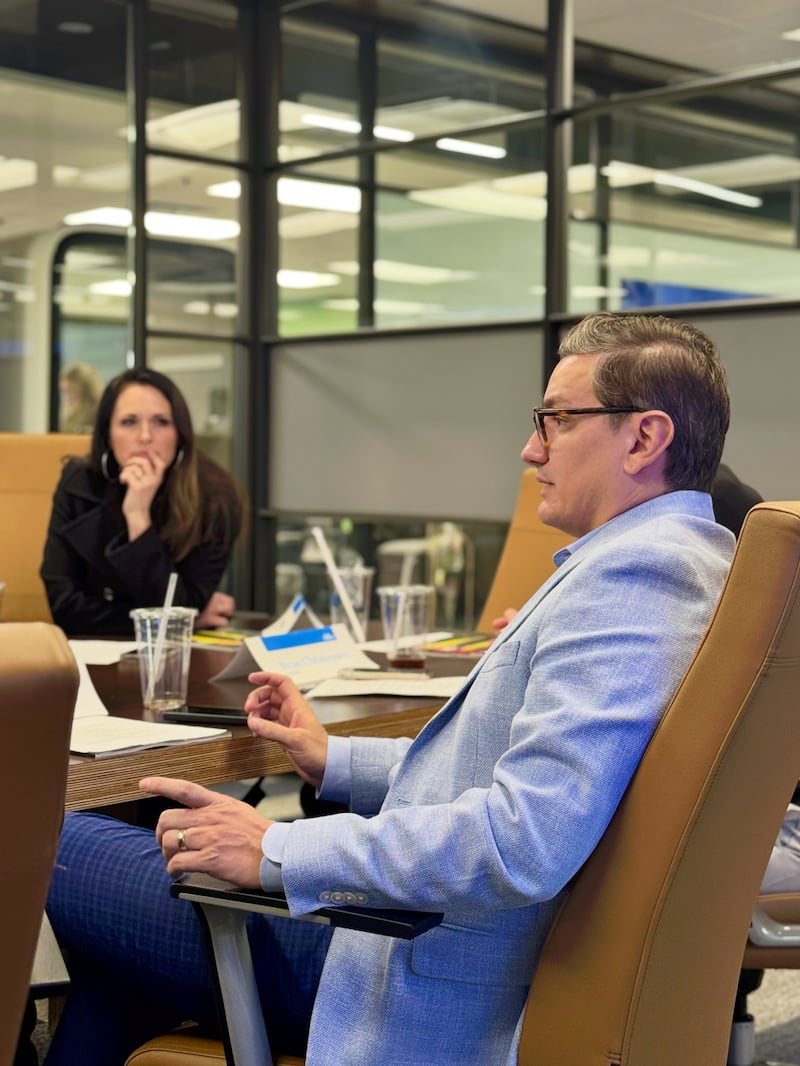
Matthew Frisbie | CMO | Axomo
We’re teaching a lot about discernment of where your attention goes. Our VP of sales and I, that’s what we talk about the most is where we put our attention and what indicates that the discernment is accurate.
Stan Sorensen | CMO | Altabank
Getting some of our core tools up to 20th-century standards — not even 21st century, just 20th century. A lot of our software is aggregating and controlled at the corporate level, and corporate is not a fast mover when it comes to technology.
Rich Israelsen | CRO | World Trade Center
I’d love to steal some more of marketing’s time to just be in with sales as we’re ideating, and they can hear and feel the energy around what the goal is … and then that can flow into what they produce.
Kelly Sobotka | CRO | VOX Fulfillment
We have to be really disciplined in our business about what kind of customers we bring into our facilities, because we could quickly get out of alignment, and all of our clients feel that. So it’s the alignment of what the perfect client looks like, and we all want the same outcome.
