
This story appears in the April 2026 issue of Utah Business. Subscribe.
Welcome to the new downtown. In a world where Amazon delivers same-day packages to our doors, and Costco and Sam’s Club stock the universe in stacks of pallets, the most vibrant downtown hubs in Utah have reinvented themselves. Small-business owners aren’t just stocking shelves with merchandise — they are collaborating to design experiences and create community gathering spaces.
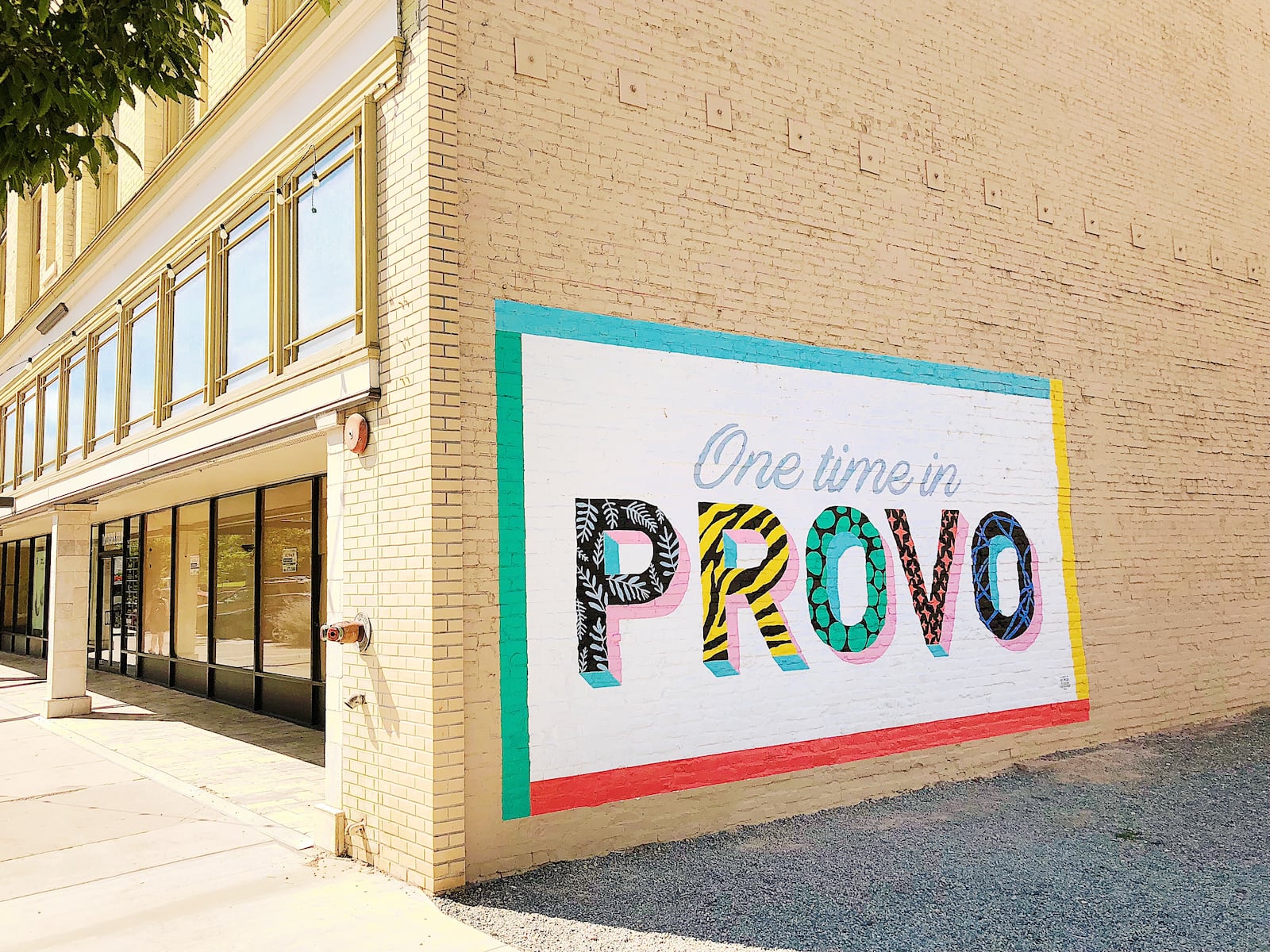
In this five-part series, we’ll explore how Ogden, Salt Lake City, Provo, St. George and Logan create wander and wonder in downtown neighborhood hubs. Let’s visit Provo.
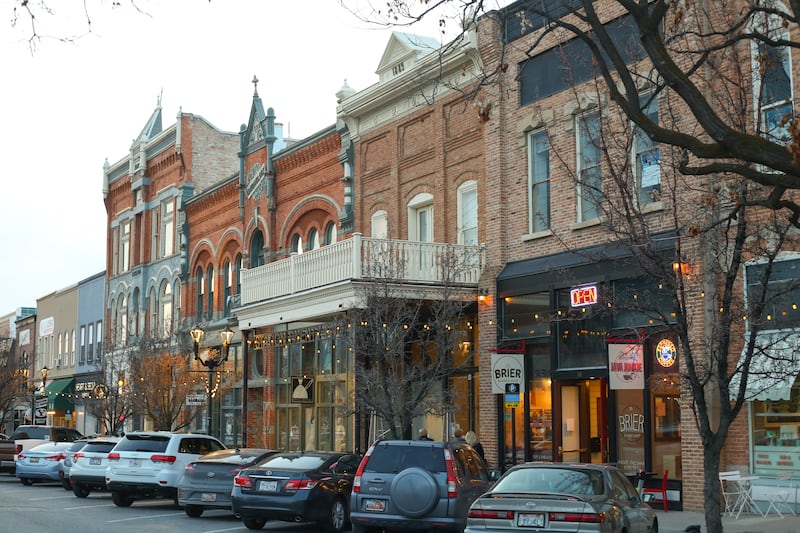
Center Street, Provo
The proper way to explore downtown Provo is to eat your way through it.
There are 79 restaurants downtown, and it surprises newcomers to learn that they can go to a different restaurant every couple of weeks and never eat the same ethnic food twice.
Start your day with a sausage, egg and cheese kolache at Hruska’s Kolaches (recently rebranded to The Kolache Place), the beignets at Peace On Earth Coffee, or the Soul Kitchen bagel at Java Junkie. When it’s time for lunch, choose among the pupusas at El Salvador, the fried goat at the Haitian restaurant Golden Bees, the Cuban sandwich at Mambo or the furikake chicken at the Hungry Hawaiian. For dinner, consider the hog jowl tacos at the Native American Black Sheep Café, Korean barbecue at Yummy’s or the buttery New Zealand meat pies at Kiwi Tu Meke Bites, or maybe compare the lomo saltado at one of the three Peruvian restaurants on Center Street.
“Every single one of them is locally owned,” says Quinn Peterson, who has been executive director at Downtown Provo Inc. since 2017. “It’s not because we’ve created a rule where you can’t have a Subway, but the fact that we have historic buildings, it just means it’s harder for a giant corporation to figure out how it fits in that equation. The retail and food tenants in our downtown are all experiments. They’re all startups. They’re all unique because someone had an idea and wanted to try it.”
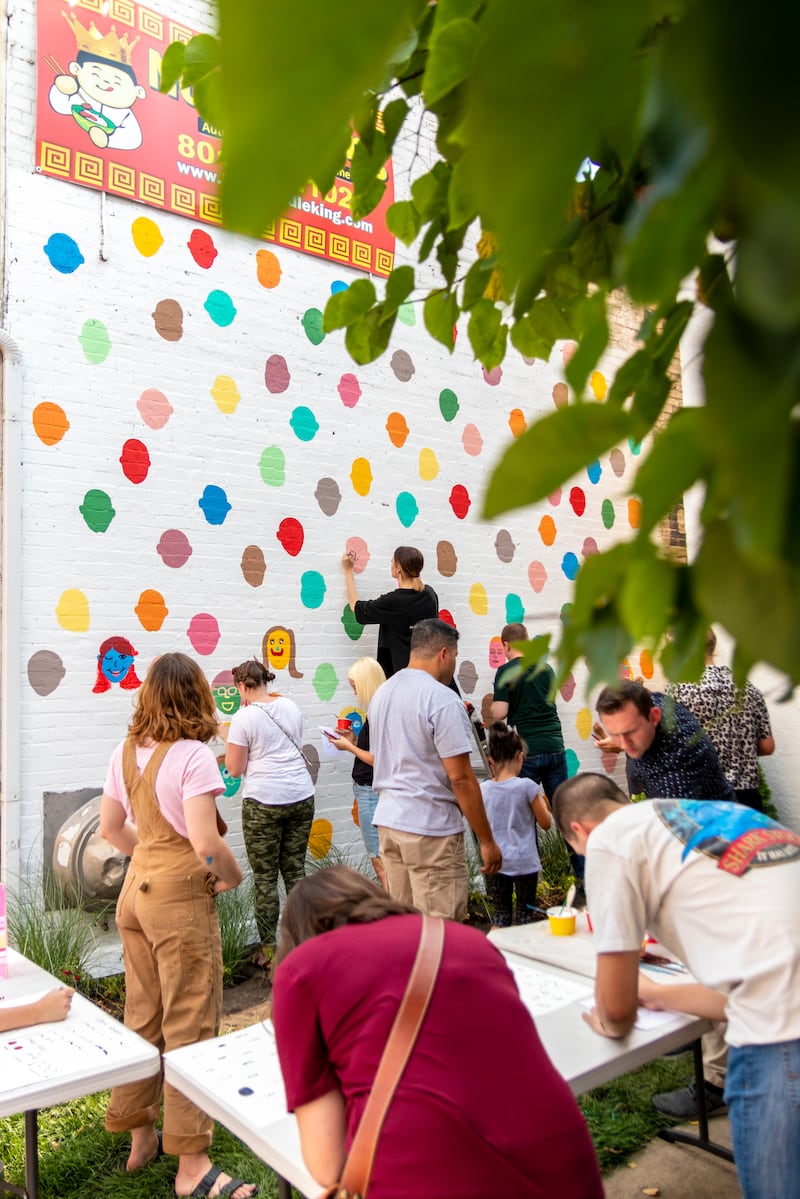
Before becoming executive director, Peterson ran the farmers market held on Saturdays throughout the summer. He believes Brigham Young University plays a key role in the city’s makeup.
“On one of our busier Saturdays, I counted 13 different countries represented,” Peterson says. “It completely blew my mind. I think the university draws people from all over the world who have a church affiliation. People going out on their missions all over the world come back here with an appreciation for the culture. Or with a spouse from that country. It brings a diversity to Provo that a lot of people overlook.”
For downtown advocates in other Utah cities, Provo is a shining example of a downtown that works. Provo City Hall, the Covey Center for the Arts, the Utah Valley Convention Center, a Marriott and Hyatt hotel and the glassy headquarters of Nu Skin Enterprises all sit in the heart of downtown, feeding foot traffic onto the sidewalks and filling the cafes and restaurants on and around Center Street.
Peterson used to run a retail shop on Center Street called Unhinged, which carried a variety of clothing, gift and home décor products sourced from local Utah designers and artists.
“It was a very eclectic space, and when people walked in, they’d be in awe of the creativity,” Peterson says. “My desire was ‘how can we get this creative environment to be more consistent outside the walls of my business?’”
Peterson mentions a new major at Brigham Young University’s Marriott School of Business called Experience Design and Management.
“I talk about the desire for Provo to engage in experience design,” Peterson says. “What we’ve done largely in Provo is lots of bits and pieces to create an environment that feels unique, that feels creative, that feels like a destination even though it’s a collection of different businesses in different buildings. … Historic downtowns need to lean into the identity of charm, events, activities, creativity and collaboration.”
Provo’s insistence on keeping its downtown vibrant was evident when a rock star and a banker joined forces to save the iconic Velour Live Music Gallery when it nearly ran out of cash. Velour is a legendary concert venue that earlier this year celebrated its 20th anniversary. Its owner, Corey Fox, organized the free Rooftop Concert Series that electrified downtown Provo from 2010 to 2019, and Provo Mayor Marsha Judkins recently announced downtown will bring back the series this summer.
Flash back to 2021, however, and Velour, shut out of shows during the pandemic, couldn’t pay the mortgage and nearly had to shut its doors. Dan Reynolds, lead singer of Imagine Dragons, which got its start at Velour, found out and initiated a campaign to raise money to save the venue. Zions Bank teamed with Reynolds and matched the money the band raised dollar for dollar.
“I think part of understanding what makes a successful downtown hub is to understand why downtown hubs all died in the late 1990s, with malls taking over that retail footprint and then e-commerce taking over what was left,” says Peterson. “It really decimated most of these historic downtowns. Big-box stores and e-commerce, those are not going anywhere. As a result, they’ve created a vacancy that downtowns can fill — and that is the desire people have for an experience.”
