
This story appears in the April 2026 issue of Utah Business. Subscribe.
Welcome to the new downtown. In a world where Amazon delivers same-day packages to our doors, and Costco and Sam’s Club stock the universe in stacks of pallets, the most vibrant downtown hubs in Utah have reinvented themselves. Small-business owners aren’t just stocking shelves with merchandise — they are collaborating to design experiences and create community gathering spaces.
In this five-part series, we’ll explore how Ogden, Salt Lake City, Provo, St. George and Logan create wander and wonder in downtown neighborhood hubs. Let’s visit Salt Lake City.
9th South, Salt Lake City
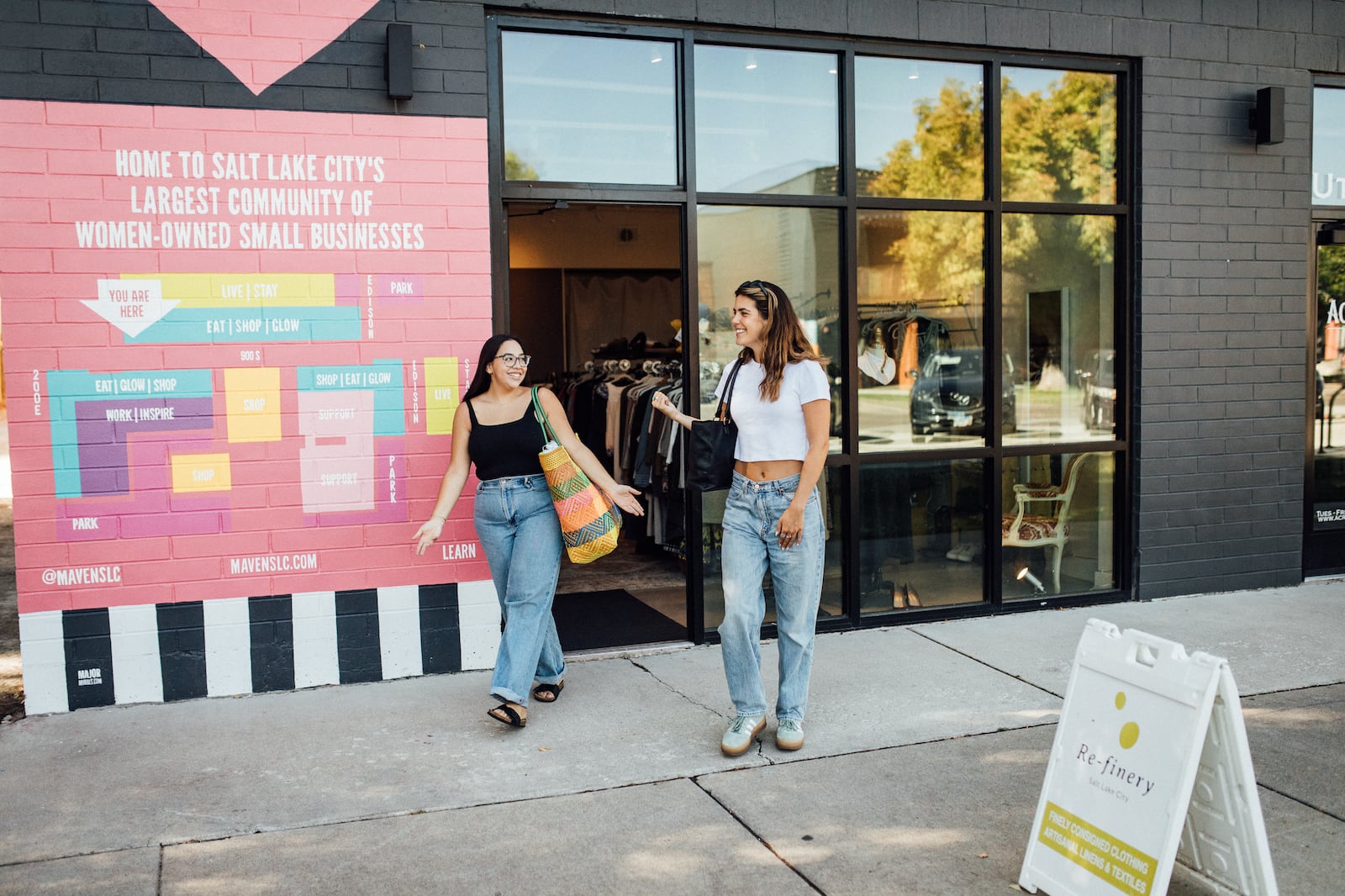
Rocky Donati and Tessa Arneson, co-founders of Maven District in Salt Lake City, know something about building community. Over the past nine years, within a five-block radius of Harvey Milk Boulevard and 300 West, they have built a tight-knit community of more than 100 locally owned businesses, more than 85% of which are women-owned.
As Maven District was getting started, someone told Arneson, “There is no ROI on community.” Arneson calls it the worst piece of advice she ever received.
In 2015, Arneson owned a small Pilates studio in the thriving 9th & 9th neighborhood just east of Liberty Park. Very quickly, she noticed that women new to town would approach her after class and ask for recommendations; at the time, the hair salon or the flower shop or the vintage clothing store she recommended were spread out across Salt Lake City.
She remembers telling her husband one night, “What would happen if we put like-minded businesses together and shared clientele? How cool would it be if you go to a Pilates class, and then have a coffee and hang out, and then you go across the street to do some consignment shopping?”
That idea turned into the Maven District, a community of entrepreneurs that prioritizes human connection, trust and mental well-being. While their businesses are diverse ⎯ salons, art spaces, eateries, tattoo shops, counseling practices ⎯ Maven District business owners can coordinate business hours and promotional campaigns for synergies, and they gather for classes on everything from meditation to marketing.
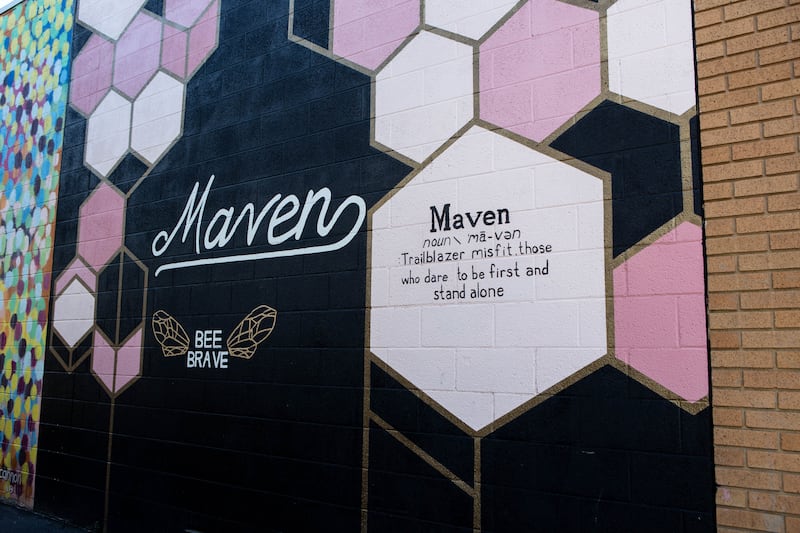
“This is the space to come feel inspired, to feel not alone, to feel empowered, to feel not crazy,” Donati says. “And it’s not just us. It’s not Maven. It is the community of Maven that gives that to people, and we just hold the container for it.”
Michelle Czarka, owner of Pantry Products, sees ROI on community every day. When her business gets a big order, she asks the Maven community if they have an employee looking for extra hours. Unfailingly, another business owner offers help.
Last Mother’s Day, Czarka collaborated with Acrely, another Maven business, on a gift basket for spas. One day, she got a call from Stein Eriksen Lodge in Park City; a manager saw the gift basket and wanted to purchase custom candles for the spa. Pantry Products went on to help the hotel develop a distinctive scent, which led to an order for 8,000 salves to go in every room on the property.
“That’s why I don’t like to say no to collaboration opportunities,” Czarka says. “When someone comes to me and says, they thought of me for this project, you never know what will come of it.”
The 9 Line, a paved bike path along an old railroad corridor, is less a single neighborhood than a connector creating community among many neighborhoods. It runs from the hip shops of 9th & 9th, past Liberty Park to the developing Milk Block; then it continues past the Maven District’s Tandoori Taqueria and Art Haus maker space and Lovebound Library. Keep pedaling past an eclectic restaurant scene on the other side of West Temple, where you can get gyros, vegan diner food, ramen, a flight of ciders or nationally recognized Italian at Chef Zach Wade’s Cosmica; then along the southern edge of the Granary District, past the brunch crowds at Forty Three Bakery, all the way to the greenery of Jordan Park and the International Peace Garden.
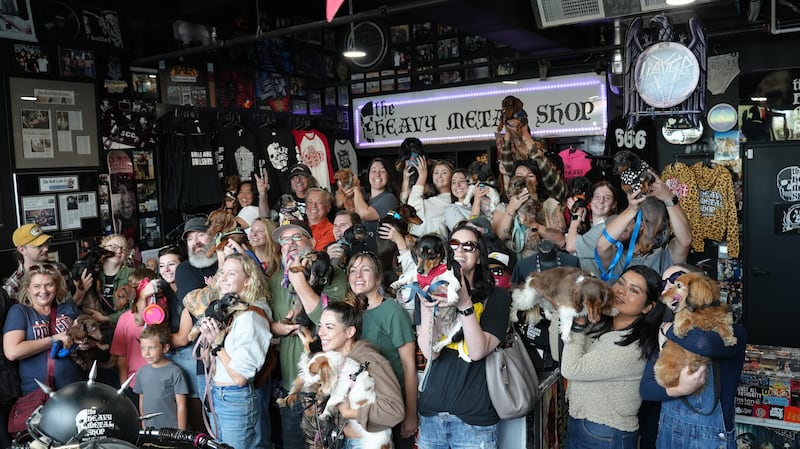
On a recent sunny Tuesday morning on the east side of Liberty Park, Coffee Garden (sign: “No wifi. Make like it’s 1995 and talk to someone”) is packed with students and remote workers, and Loki Coffee on the west side is pulsating with young people huddled together on laptops, families planning a day at the zoo, and walk-ins wearing ski gear.
Maven has developed commercial space that can accommodate an entrepreneur who wants a micro space to pilot a new concept, it has larger spaces for established entrepreneurs and it rents residential apartments.
“People who live in one of our residential buildings have immediate access to the 9 Line,” Donati says. “They can be in the best park in the city ⎯ Liberty Park, we can argue that ⎯ and you have coffee shops, cool restaurants. The diversity of what’s offered here did not exist 10 years ago. You couldn’t walk to anything.”
Josh Bloom, director of community strategies for The Lakota Group, helps cities revitalize historic downtown business districts. He wrote a seminal paper for Main Street America called “The future of retail: Creative approaches to place-based entrepreneurship,” introducing three pillars that still guide Main Street America’s toolkit for helping downtowns regain vibrancy. Create experiences. Lead with local. Form human connection in the digital age.
“In the 1960s and the 70s, you have the development of shopping centers and enclosed, climate-controlled shopping malls with ample parking,” Bloom says. “Those severely hurt traditional downtowns. Later, you had the development of big-box stores, and then 20 to 25 years ago, we saw the advent of online shopping, and now everyone is a victim of that. Downtowns have always had to adapt. We’ve seen a shift to experiential businesses of all kinds ⎯ makers’ spaces, pop-up businesses, food trucks.”
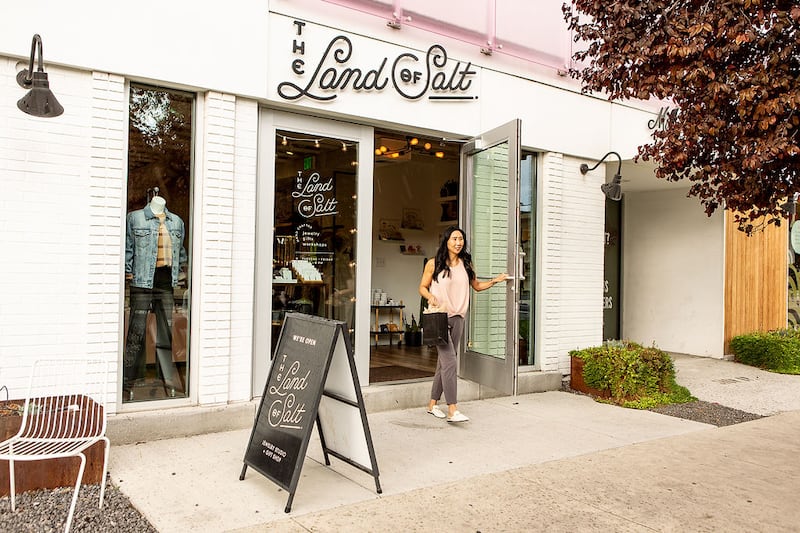
Bloom believes vibrancy is a function of experiences that change with each visit. New musical artists at the coffee shop, changing displays at the art gallery, restaurant specials featuring seasonal local ingredients, Trivia Tuesdays at the bar, Friday night gallery walks and weekend farmers markets.
Donati calls it creating a sense of “wander and wonder.”
“When I think about what makes a city vibrant, I think about the cool cities I’ve been to,” says Donati. “The pattern I’ve seen is that you want to linger in it. You want to keep experiencing it. You feel an energy about it. There’s a uniqueness or a cultural element that makes it unlike somewhere else. You are in wander and wonder mode at the same time.”