
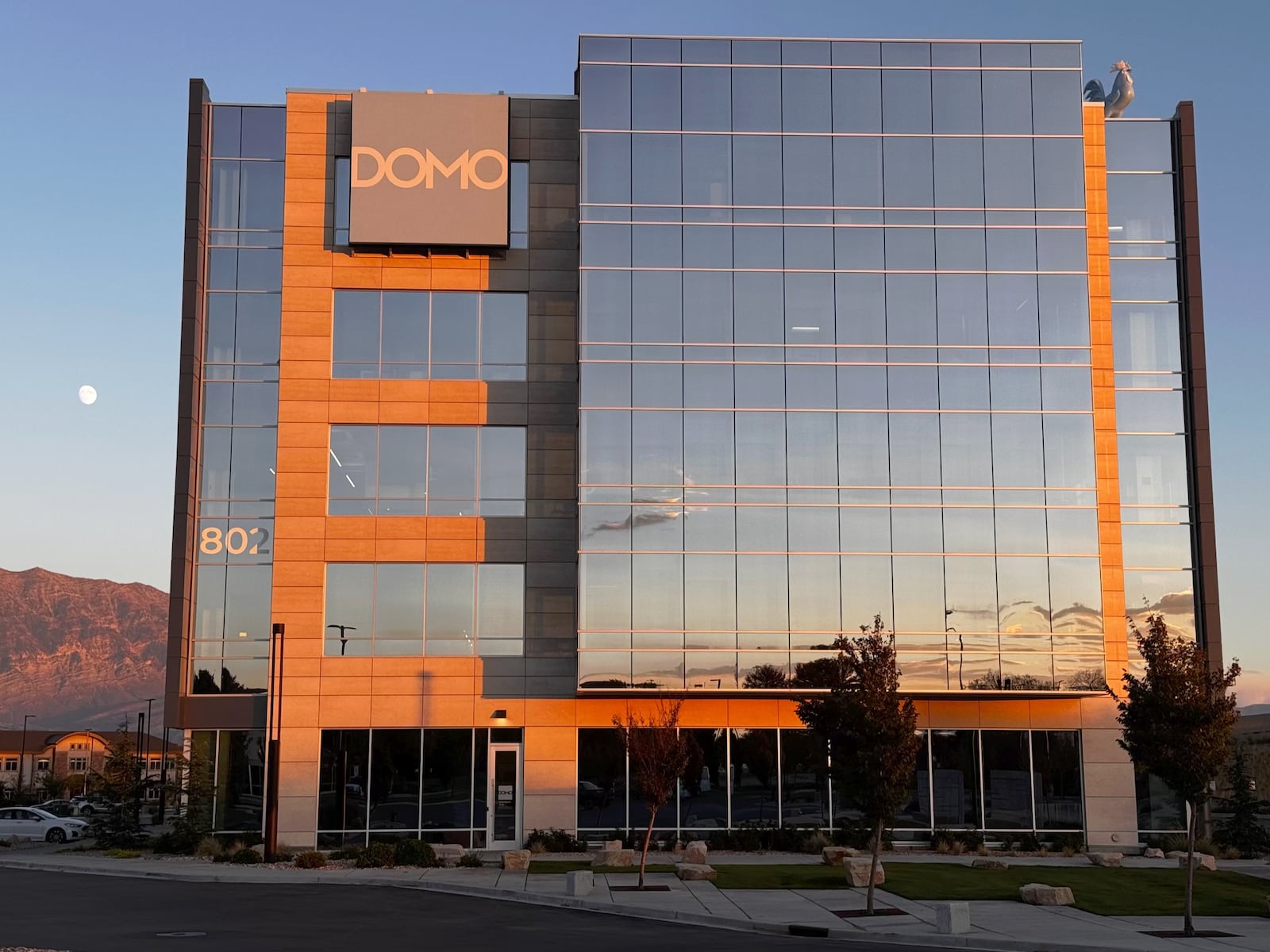
Domo began in the shadows, operating in stealth mode for nearly five years. And now, as it enters its next chapter, the company is preparing to operate under a completely new identity.
At the beginning of 2026, facing slowing growth and tough market conditions, Domo’s board started talks on strategic alternatives. It was a stark pivot for a company that, at its peak, was valued at $2 billion and a notable unicorn in Utah’s tech scene.
A few weeks ago, Domo, an AI and data products platform, announced a definitive agreement to sell its core business to Progress Software, an enterprise software company that helps companies build, deploy, manage, and secure business applications, for $400 million in cash.
For Utah’s tech scene, the transaction marks the end of an era. Founder and CEO Josh James is widely credited with popularizing the term “Silicon Slopes,” the branding that elevated the Wasatch Front into a widely recognized ecosystem of high-performing software companies.
Domo was once a dominant player in that ecosystem, and caught the attention of investors who only had eyes for Silicon Valley. The sale represents the end of Domo as an independent operating software company, reflecting rapidly changing SaaS market demands and new expectations for SaaS- and AI-powered companies.
Stealthy beginnings
Josh James was not new to starting companies when he founded Domo in 2010. His previous company, Omniture, was successfully sold to Adobe for $1.8 billion in 2009. After this exit, James had his eyes set on deploying his newfound capital into a new venture.
In late 2010, James acquired Corda Technologies, a Lindon, Utah-based business intelligence and data visualization company. Working alongside the Corda team, James honed his vision and laid the groundwork for what would become Domo.
In July 2011, James officially renamed the company Domo Technologies, Inc, and then Domo, Inc. in December 2011. Soon after, he announced $43 million in initial funding, comprised of $33 million from Benchmark Capital and $10 million from high-profile angel investors, including Salesforce CEO Marc Benioff and former Symantec chairman and CEO John Thompson.
During these formative years, the company operated in secrecy. They quietly hired employees, developed their platform and raised capital without revealing their product to the public. Potential customers had to sign nondisclosure agreements to see a demo, creating a mystery and exclusivity around the brand.
The unicorn darling
In April 2015, after years of operating in stealth, Domo publicly unveiled its platform.
Shortly after coming out of the shadows, Domo enjoyed no shortage of success and hype. Upon launch, the company revealed it had already amassed over 1,000 paying customers and hit $50 million in revenue in 2014 alone, with plans to double that figure to $100 million the following year.
On top of the public unveiling, the company announced a sizable $200 million Series D funding round led by BlackRock, with Capital Group, Glynn Capital and GGV Capital participating, among others. This financing round crowned Domo a unicorn, valuing the company at approximately $2 billion. Between 2010 and 2017, Domo raised more than $700 million in private investments.
“The biggest shift we’re seeing is that AI is moving very quickly from experimentation into the actual operation of businesses. An agent is only as useful as the data and business context it can access, and companies need to know that access is governed and secure.”
— Cory Edwards
A major focus of Domo during this time of explosive growth was to create excitement through large, high-profile gatherings. In April 2015, the company held its very first “Domopalooza,” where Domo was initially unveiled. In the years following, it became an annual data conference featuring high-profile celebrity performances and speakers. A variety of big-name guests headlined at these conferences, including Shaquille O’Neal, Ryan Tedder of OneRepublic and Ja Rule. Domo became a cultural force, ultimately helping launch the first Silicon Slopes Tech Summit.
“Domo wanted to bring customers and technology leaders from around the world to Utah and show them both what Domo was building and what was happening across the broader technology community,” says Cory Edwards, Domo’s vice president of corporate communications. “People outside Utah came here and saw a technology community with real scale and ambition.”
The IPO highs and lows
On June 1, 2018, Domo publicly filed its S-1 for an Initial Public Offering (IPO). The filing gave the public its first look at the company’s financials. The high cash burn immediately drew investor scrutiny, as the company reported a net loss of approximately $176.6 million on $108.5 million in revenue for the previous fiscal year.
When Domo debuted on the Nasdaq on June 28, 2018, under the ticker DOMO, its IPO price of $21 per share valued the company significantly below its peak private-market valuations.
As a public company, the following years were marked by constant shifts in strategy and executive leadership. Domo worked to expand its platform beyond dashboards, pivoting toward embedded analytics, app development and, eventually, artificial intelligence to keep up with market demands.
The executive suite also saw constant turnover. James stepped down as CEO in March 2022, only to return exactly one year later amid broader leadership departures in both executive and board leadership.
Looming in the background was a struggle for profitability. Domo finally reported its first cash-flow-positive year for fiscal year 2021. However, standard GAAP profitability remained dubious. As growth slowed and net losses continued to appear on the balance sheet, almost 45% of market value was erased in just three months from its 2021 peak. Domo’s valuation never recovered, marking the beginning of a permanent decline.
What’s next for Domo — and Silicon Slopes
In February 2026, Domo’s board initiated a review of strategic alternatives. This culminated on July 22, 2026, when Domo announced a definitive agreement to sell its business to Progress Software.
“After a comprehensive review of strategic alternatives, with the assistance of our outside financial and legal advisors, the board determined that the proposed sale of Domo’s business to Progress represents the best path forward for Domo’s stockholders,” says Carine Clark, chair of Domo’s board of directors, in an official announcement.
This deal, expected to close by late November 2026, is an asset sale rather than a full corporate merger. Progress is acquiring the platform, employees and customer contracts. The remaining Domo Inc. holding company will retain the $246 million in net cash, positioning James and the board to either return capital to shareholders or acquire a new venture under a new brand.
Following the proposed sale, Domo will continue with its current name and ticker until the deal is fully settled. Post-close, Domo will be under a completely new name and ticker.
For Silicon Slopes, the sale of Domo’s operating business closes a defining chapter of its history. It also raises the question: What does this mean for the broader SaaS market?
Domo’s trajectory reflects a shift in how software must be built and sold. The SaaS industry and the way AI is utilized in businesses are rapidly evolving, and it has become an imperative for software providers to evolve similarly.
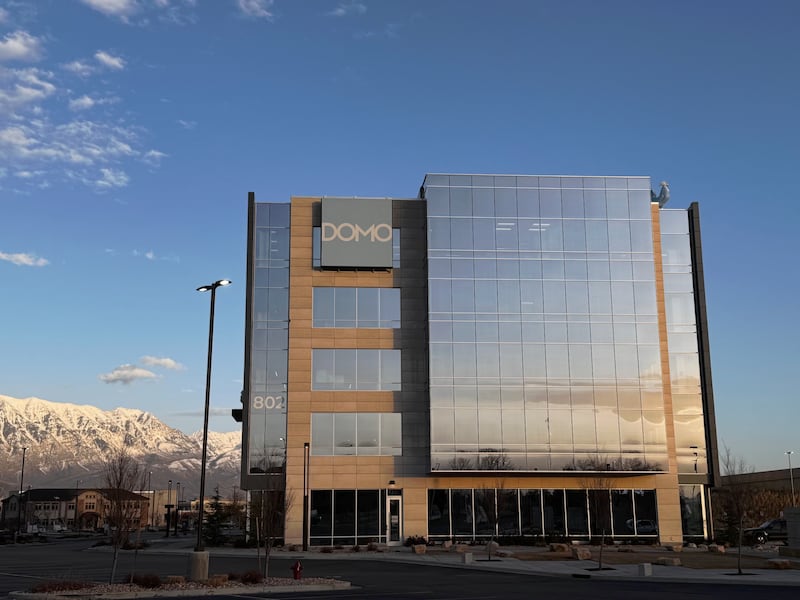
“The biggest shift we’re seeing is that AI is moving very quickly from experimentation into the actual operation of businesses,” Edwards says. “An agent is only as useful as the data and business context it can access, and companies need to know that access is governed and secure.”
The SaaS model that fueled much of Utah’s tech growth is changing as AI reshapes what businesses expect from software. For companies across Silicon Slopes, that shift is increasing the pressure to demonstrate clear value, respond to customers and adapt products. Domo will navigate that transition as part of Progress, while Utah’s broader tech community continues to redefine itself beyond the SaaS boom that helped establish it. The experience developed during that era may help its next generation of companies meet what comes next.
“Many of the people who helped build Domo are now leading teams, starting companies and contributing across Silicon Slopes,” Edwards says. “That kind of experience stays in the ecosystem and continues to shape what comes next.”
