

This story appears in the August 2026 issue of Utah Business. Subscribe.
Many Utahns know Cedar City as the last pit stop on the way to St. George, which the locals aren’t thrilled about; however, that perception evolves as summer approaches.
Like clockwork, athletes from all over the West descend upon this college town in a yearly migration fueled by competition. They’ve been doing it for 40 years, with more athletes heading to Cedar City — Festival City USA — to compete with each passing year.
In its 40th year, the 2026 Larry H. Miller Utah Summer Games invited about 11,000 athletes, and tens of thousands of friends and family members supporting those athletes, into its quiet streets. On June 5, the day of the Utah Summer Games Block Party and Opening Ceremony, every restaurant had a line at the cash register, the rec center pools were packed and drivers were testing the limits of the city’s road infrastructure.
That evening, thousands streamed into Southern Utah University’s Eccles Coliseum to commemorate the Summer Games. Athletes walked around the track, mimicking the Olympic ceremonies, grouped not by country but by sport. As the program kicked off, hundreds of kids and teens ran free around the field, playing catch, until it was time for the traditional torch lighting and fireworks. Somewhere in the crowd was Rich Wilson, co-founder of the Summer Games, wearing his original, 40-year-old Utah Summer Games hat with original sweat stains.
The Summer Games isn’t a one-weekend spectacular, though. This year, the games began in March and end in August with athletes ranging from preschoolers to people in their 90s, but the vast majority being school-aged kids.
Maria Twitchell, executive director at Cedar City-Brian Head Tourism Bureau, was a high schooler when the Summer Games began in 1986. It seemed like the entire city was volunteering to pull it off. And then it grew — fast. By the time Twitchell was in college, thousands of people were attending the Summer Games. It was clear this was going to be a big deal for the city.
“We would really like for people to … come into the community and find out that there’s a lot more going on,” Twitchell says. “[Cedar City] is a university town, so that means … there’s a mix of cultural arts and outdoor recreation. The access is intriguing once people figure it out.”
Now, Twitchell helps fuel a $257 million visitor economy in Iron County. A fraction of her efforts include investing in amenities at Southern Utah University and throughout the city to create an elevated experience for Summer Games’ participants.
From idea to institution
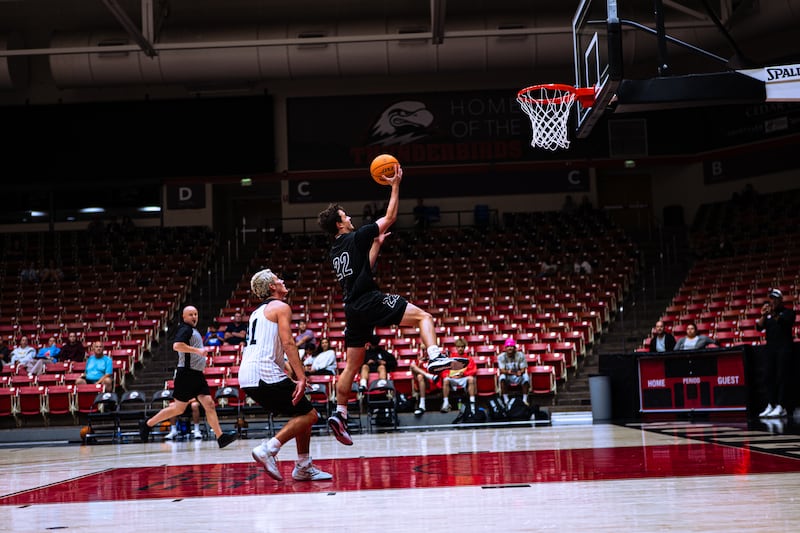
Gerald R. Sherratt, president of Southern Utah University from 1982 to 1997, founded the Utah Summer Games with Rich Wilson, the event’s first-ever executive director. At the time, Sherratt believed if Los Angeles could plan a summer Olympics, he could plan a version of the event in Cedar City.
Both co-founders were natural promoters, spreading news of the new regional event far and wide, Twitchell says, motivated by the boon this event would be for recruitment.
“When the Games began 40 years ago, this was never viewed as a short-term partnership,” says Mindy Benson, president of Southern Utah University. “It was a shared commitment between the university and the community, and over the years that commitment has only grown stronger. As SUU has evolved, so have the Games. Together, we’ve created traditions that span generations.”
Local businesses got on board quickly in the early years, clearly seeing the Summer Games’ potential to draw welcome revenue. Larry H. Miller was one of the early relationships that powered the Games, and The Larry H. Miller Company has been a loyal partner since.
Fast forward to 2002, the year of the Salt Lake City Winter Olympics, which drew an added 70,000 fans to Utah per day, according to the United States Olympic & Paralympic Museum. As Utah’s global exposure grew, the Summer Games grew. People from all over the world traveled to Utah not only to experience the Olympics, but also to experience Utah’s national parks and southern Utah generally.
“The 2002 Olympics was this amazing postcard for Utah,” Twitchell says. “I anticipate that something very similar will happen when the Olympics come back. … [Viewers] are going to see these amazing images of southern Utah, and they’re going to want to come and visit, and so we’re very hopeful that we can be part of that.”
A recent sign of traction is the Summer Games’ official partnership with the Las Vegas Raiders, which has been in the works for a few years. The Raiders jumped on their marketing rights to Utah, with a focus on expanding their local fanbase, promoting youth sports and helping grow girls’ flag football.
“I think our role [is] to be a gateway for Utah 2034, to help provide a connection point for professional franchises,” says Jon Oglesby, executive director of the Utah Summer Games. “I think in the next five years, [the Summer Games] is going to have large-scale relationships with professional franchises in all the Big Four.”
With growing exposure, the likelihood that today’s Summer Games athletes become Utah 2034 Olympians has never been better. Even with fewer participants, Summer Games competitors went on to medal.
Bill Schuffenhauer, a three-time Olympian and bobsled silver medalist in the Salt Lake City 2002 Olympic Games, competed in track at the Summer Games in the early ‘90s. Noelle Pikus-Pace, two-time Olympian and Skeleton silver medalist in the 2014 Winter Olympics, first competed in the Summer Games as a 9th grader with her basketball team. Both walked away from the experience hungry to discover their full athletic potential.
Money and medals
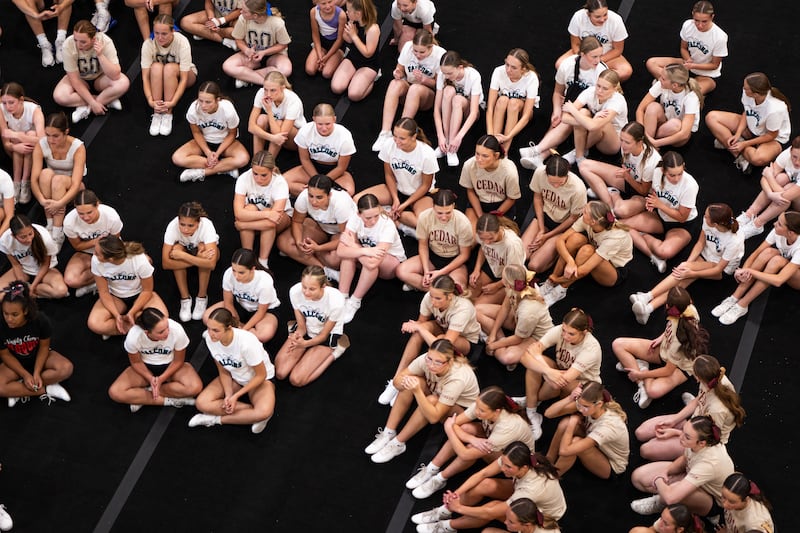
The average Summer Games visitor stays in the Cedar City area for three days. Collectively, these visitors infuse an estimated $17 million into the city each year. Cedar City’s steady growth has made staying and spending easier with the opening of new hotels, including the Hampton Inn & Suites, as well as the opening of both chain and locally owned eateries.
One of the core functions of the Summer Games has always been driving regional economic impact, Oglesby says, whether through long-game university enrollments or one-weekend purchases. The local service businesses, specifically, rely on the Summer Games to kick off their summer sales season.
“It all goes back to tourism,” Twitchell says. “The visitor economy is the gateway to what’s happening in Cedar City.”
It’s not just about driving revenue to the region, though, Oglesby says. It’s having an eye toward supporting the entire state and ultimately reinvesting in people’s individual lives. Looking at the entire ecosystem, industry-wide and geographically, every moving piece is integral.
The Summer Games’ impact extends beyond day-to-day financials by helping build Utah’s sports culture, which produces sports spenders over entire lifetimes, from investing in rec center sports to buying tickets to professional games.
Utah has always been intentional about bringing the entire state into its athletic pride, tracing back to the New Orleans Jazz becoming the Utah Jazz in 1979. Recently, the creation of the Utah Mammoth and the adoption of Utah 2034 as the abbreviated Olympic title align with that pattern.
“As the sports business community in Utah continues to develop — it is [moving] at light speed right now,” Oglesby says. “There’s a space for elite experiences that are accessible to a wide array of people. We’re the space that allows people to have a unique Olympic experience that’s independently their own.”
The Summer Games also offers an opportunity for sports franchises up and down I-15 to connect with fans in rural Utah who they can’t easily reach otherwise, Oglesby says, making it a place where Utahns from all backgrounds and friends in neighboring states can truly unite in the love of sport.
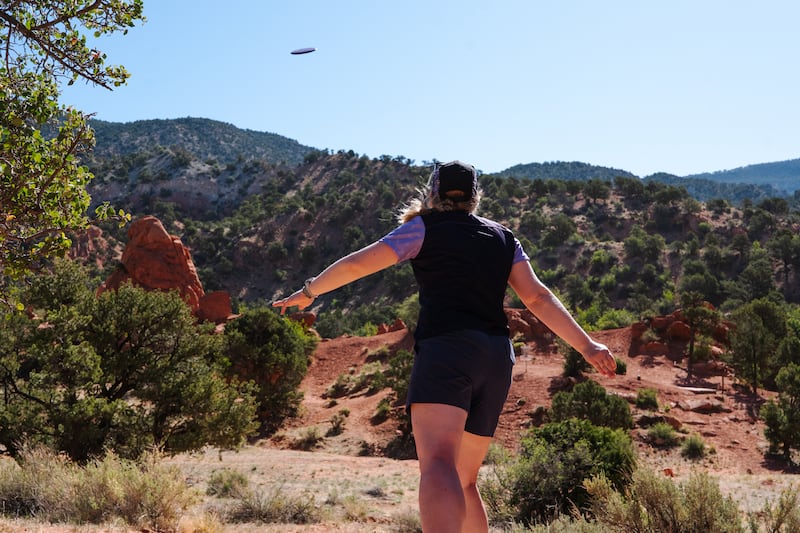
“I’ve always believed that sports unite us,” Twitchell says. “No matter who you are, what you believe, sports tends to bring people together, and it’s definitely ingrained in our culture here in Utah. It seems like everybody has to play a sport or has to follow a team.”
In 2030, a separate national competition called the State Games of America will be hosted by the Utah Summer Games in Salt Lake City, allowing even more athletes to compete in an Olympic-like setting while also functioning as an infrastructure dry run for Utah 2034.
A living open house
The Summer Games were created in part to bring prospective students to Southern Utah University. Forty years later, that recruiting function remains central.
Each summer, young athletes and their families compete on SUU’s fields, courts and tracks, often years before college decisions begin. The Games give them an early, memorable experience with the university and Cedar City that a traditional campus tour cannot replicate.
“For families stepping onto our campus for the very first time, the Utah Summer Games are an unparalleled recruitment and branding powerhouse,” says SUU President Mindy Benson. “It is essentially our most vibrant, living open house of the year.”
That exposure matters beyond enrollment. As Cedar City’s largest employer and one of southern Utah’s greatest assets, SUU plays an essential role in the region’s economy, workforce and identity. Keeping the enrollment pipeline full is critical, and the Summer Games are a clear lead generator.
“Long before a student-athlete or their sibling fills out a college application, they have already stood on our fields, experienced our community, and pictured themselves as part of T-Bird nation,” Benson says.
That connection can last for decades. Steven Gordon first competed on campus as a high school athlete, later earned his degree from SUU and now serves as principal of Emery High School. Spencer and Tessa Douglas met during the 2012 opening ceremony, later married, graduated from SUU and became leaders in the regional economy. Spencer is the chief marketing officer for BZI and Tessa is president and CEO of the Cedar City Chamber of Commerce.
Now, former athletes are returning to the Summer Games, proof that competing even once ignites a lifelong Cedar City bond.

Where Utah fandom begins
The Summer Games is where young athletes discover what it feels like to compete, to be celebrated and to be part of something bigger. This experience creates lifelong fans, volunteers, coaches, ticket buyers and parents who later introduce their own children to sports. In that way, the Summer Games have been fueling the sports economy for four decades.
“Today’s grandfathers competed in the ‘80s,” says Rich Wilson, reminiscing on kicking off the first Summer Games. “Parents competed in the ‘90s to 2010s. Now we have this third generation, and they have the opportunity to see their grandparents and parents competing in a sport they love, and maybe it’s the only place they’ll be able to see them showcase their skills.”
Wilson attributes the Games’ longstanding success to the fact that it’s a family affair. It’s an event that brings families from across Utah and neighboring states to an Olympic incubator where the competition feels both elevated and accessible — serious enough to inspire ambition, but celebratory enough to make people fall in love with the experience.
The Summer Games’ greatest contribution may be giving people a place to develop not only athletic ability, but an identity rooted in dedication, teamwork and community.
For 40 years, that formula has filled Cedar City’s hotels and restaurants, strengthened SUU, introduced generations of families to southern Utah and given the city a role on the statewide sports stage. As the Games expand and Utah looks ahead to 2034, what they have done for Cedar City may offer a glimpse of what they can continue to do for the entire state.
