
This story appears in the July 2026 issue of Utah Business. Subscribe.
On a clear summer night outside Parowan, Utah, Jed Sudweeks led a family out into the desert landscape. There wasn’t much of the unique southern Utah landscape to be seen — it was the dark sky that would be perfect for the views they were hoping for.
Much of the family had come from the eastern United States, gathering in southern Utah for a funeral. After a somber day, they went out to try to catch a peek of the annual Perseid meteor shower.
“Within about 10 minutes, we started seeing the meteors,” Sudweeks says. “Every time one would skip through the atmosphere, it was amazing. They felt like they could reach up and touch the sky.”
The group stayed for hours.
“It was real to them,” Sudweeks says. “It meant something to them. It was an event that has burned a memory into their mind that is forever with them.”
What began as a coincidental distraction became a meaningful memory for the family, who have returned twice more to the area since then. Sudweeks says they always ask, “What’s in the night sky tonight?”
For Sudweeks, the story captures how meaningful a night under the stars can be, and moments like these are becoming part of the draw for what’s now termed “astrotourism.”
Astrotourism in Utah
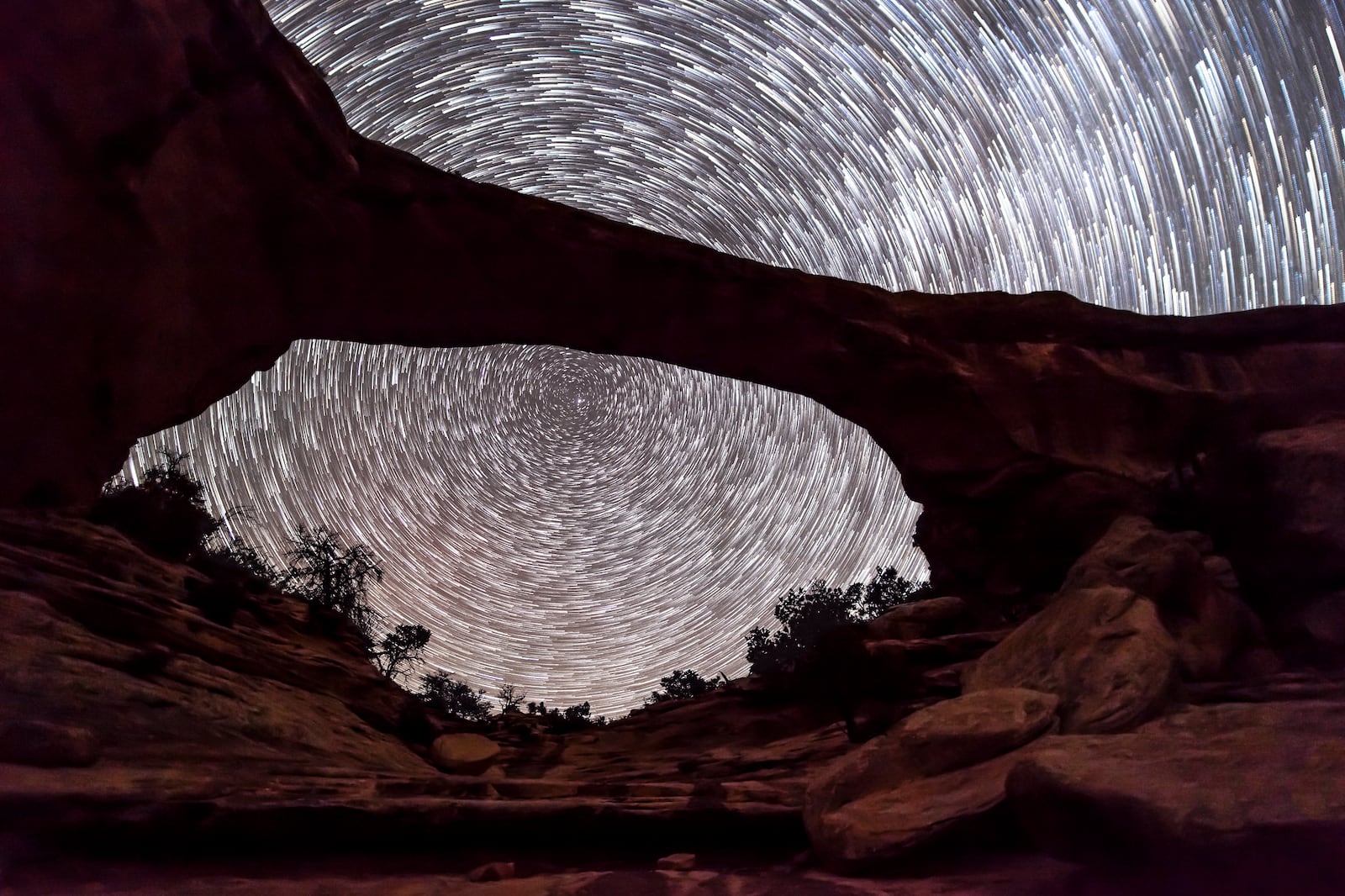
Utah is known for its otherworldly landscapes, from sweeping mountain vistas to red rock arches. But outdoors, community and business leaders have spent recent years drawing attention to Utah’s night sky.
Utah has the highest concentration of certified International Dark Sky Places in the world, with roughly 30 accredited locations. The certification is awarded through DarkSky International to communities, state parks, national parks and protected areas around the world.
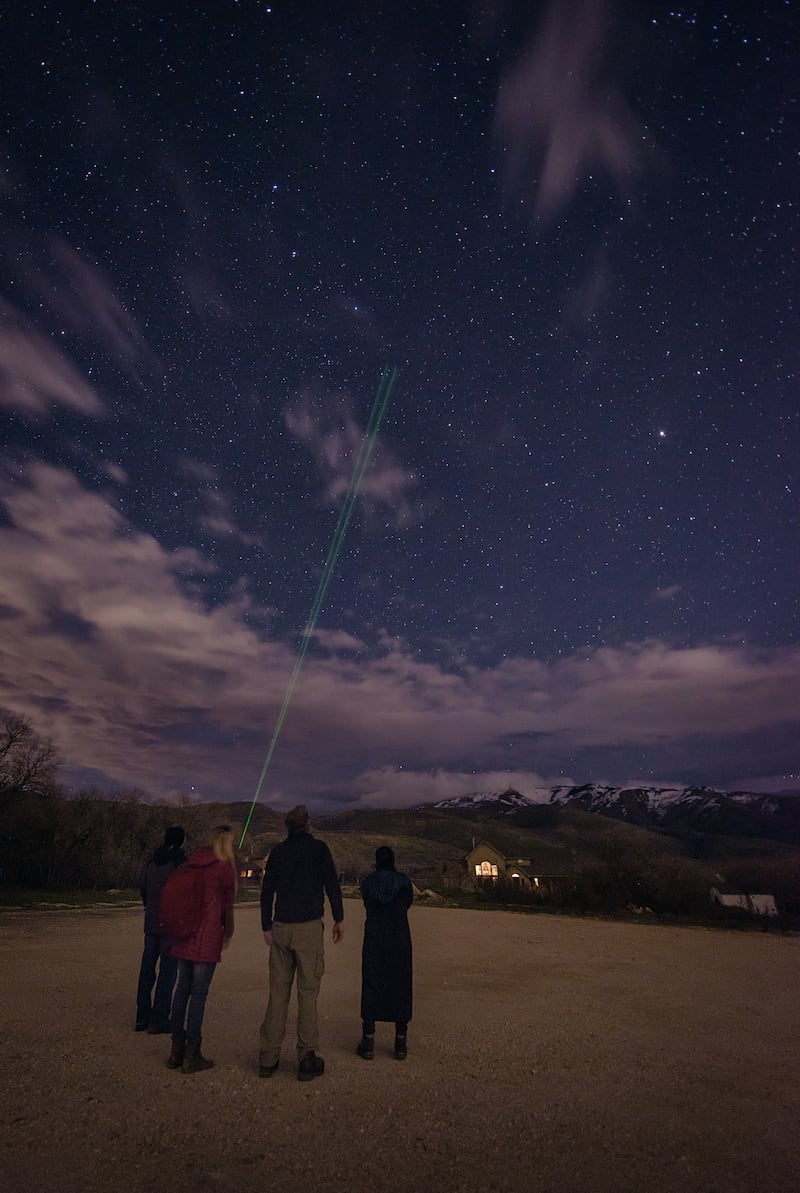
In order to qualify for a Dark Sky certification, parks and communities must work together to reduce any unnecessary nighttime lighting. This includes putting shades on outdoor lighting to angle the light toward the ground and putting lights on timers or motion sensors. Ally O’Rullian, public information officer for Utah State Parks, notes that 10 state parks have received this designation, and more are currently working toward meeting those standards.
“[Light pollution] is the only type of pollution that’s 100% reversible, because all you have to do is turn off the light,” says O’Rullian.
This intentional effort to minimize light pollution also minimizes the environmental impact of tourism and has helped parks and communities proactively reduce their environmental footprint.
An economy built after sunset
The Utah Office of Tourism has embraced astrotourism, encouraging visitors to explore these pristine night skies in addition to the physical landscapes.
Anna Loughridge, director of communications for the office, said they saw the opportunity almost a decade ago to lean into astrotourism and dark skies. Nearly 80% of Americans live in an area where they can no longer see the Milky Way due to light pollution, so for many travelers, the experience of Utah extends beyond sunset.
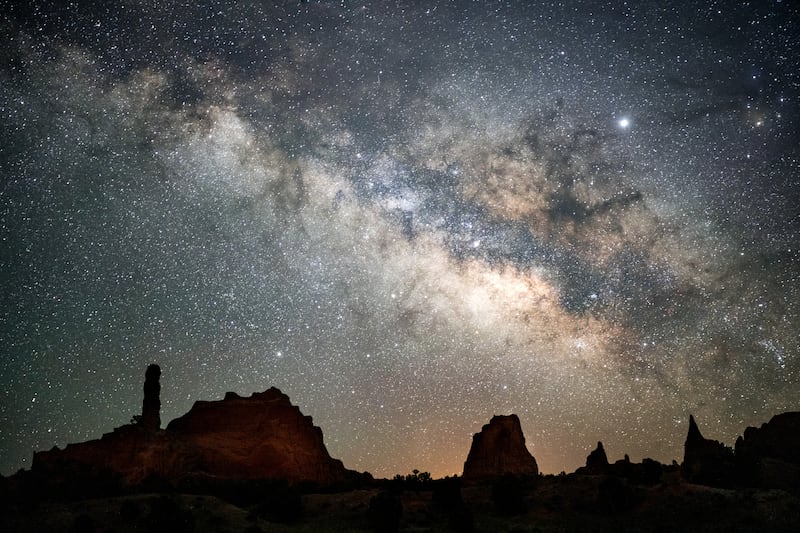
Along with benefits for tourists, a 2019 study found that astrotourism could support over 11,000 new jobs per year in the Four Corners region, leading to $5.8 billion in visitor spending over the next 10 years — a part of which includes overnight stays.
“If you are going to experience and immerse yourself in dark skies in a destination, you are staying overnight,” says Loughridge. “If you’re staying overnight, you’re eating at a restaurant, you’re paying for lodging and you may even hire a local guide for your experience.”
The personal benefits of preserving dark skies
Gov. Spencer Cox has praised the night sky for the economic benefits of astrotourism, saying that dark skies contribute to the “well-being of many animal and plant species” and have positive health impacts on humans and communities.
Different groups have tapped into these positive health impacts. For example, the Utah State University Extension office has created a nature-based program for teens called “Skyward: Recalibrating Life Under the Stars” that supports mental wellness through shared outdoor experiences.
This program was born out of a simple observation: When teens spend time away from light pollution and under a truly dark sky, something shifts. Participants are encouraged to slow down, look up and rediscover wonder, belonging and a deeper sense of calm.
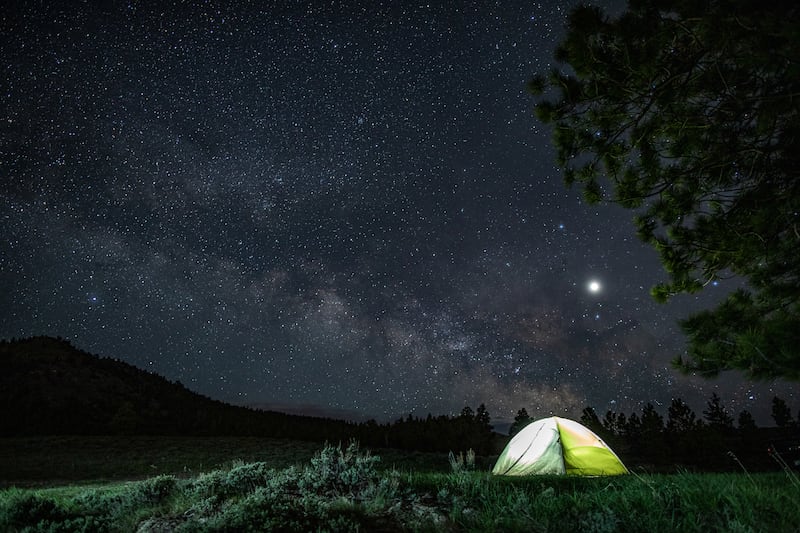
This sense of wonder is an important aspect of astrotourism. “The expansive and varied public lands in the state of Utah tend to inspire a sense of awe, and I really do think it’s magnified when you’re in these places and then you’re seeing the night sky,” O’Rullian says. “Not only are you taking in the beauty that our world has to offer, but now you’re seeing the beauty that the universe beyond us has to offer. It can be very emotional.”
“It is an experience,” Sudweeks says. “It’s very profound. I’ve taken people up to show them the night skies, and sometimes I’ll hear them just softly crying. I mean, it literally brings tears to their eyes.”