
Since the 2020 pandemic sent grocery delivery and curbside pickup numbers soaring, making e-commerce more profitable has been a tough nut to crack for major grocery chains. A Lehi-based startup could hold the key.
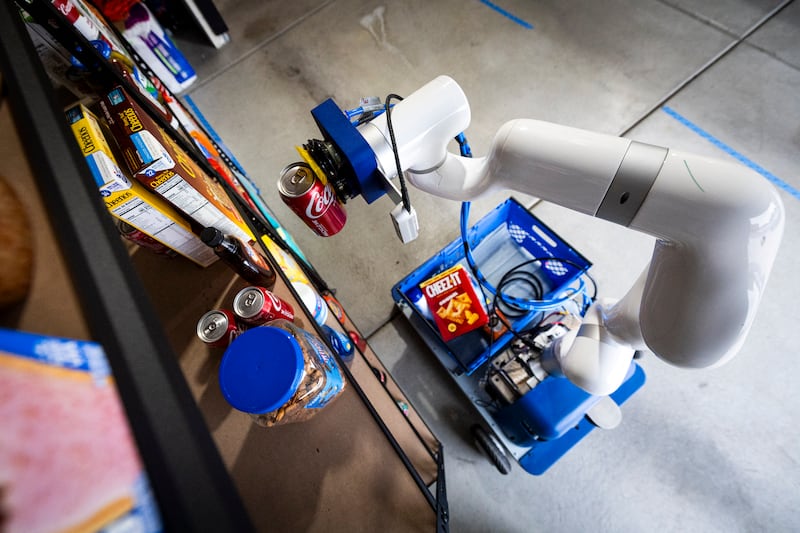
Blue Collar Robotics is betting the future of grocery pickup is in human-assisted robotic pickers. Their prototype — a basket on wheels with a single arm — can pick about 120 items per hour from grocery store shelves, managed by a remote human.
Co-founders Hank Crawford and Yağmur Han Sağlam say they have secured interest from a major grocery chain and are in talks (under a nondisclosure agreement) to launch a pilot program later this year.
Despite the buzz around their robot, the co-founders say their vision is less about replacing humans with robots and more about outsourcing difficult-to-fill entry-level jobs to remote individuals who are more willing to take on the work. Han Sağlam says if grocery stores in the United States struggle to stay fully staffed, it makes sense to open those jobs to remote workers in places like India that have fewer opportunities.
“There is a very good young generation in these countries, and they are begging for work,” Sağlam says.
The company’s pitch is that lower overseas wages combined with increased worker efficiency will make the robots cost-effective. It’s a premise with a precedent. Waymo’s “autonomous” vehicles are remotely supervised by human beings who assist about 40 cars at a time. While the current Blue Collar Robotics technology requires one person to manage each robot, the goal is to have one person manage multiple robots at a time as the software and hardware improve.
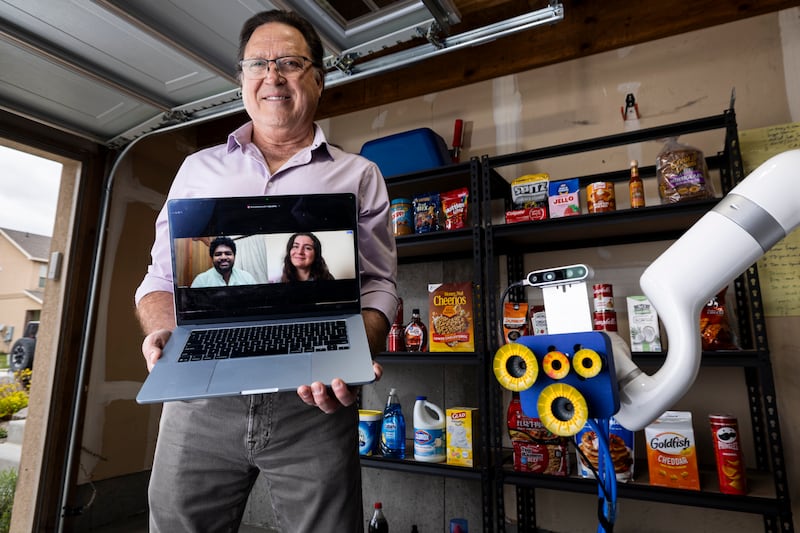
Crawford and Han Sağlam came up with the idea while working together in China as engineers for a trucking company that was trying to create fully autonomous semi-trucks. Their takeaway was that fully autonomous robots for any sector will always be too expensive and take too long to develop. If there were a remote human worker available to step in and handle the more complex edge cases, a solution could hit the market much faster.
“From that, we started to formulate, OK, what kind of business would this make sense for?” Crawford says.
As he returned to the U.S from China, Crawford decided to relocate to Utah, a state he had admired as both business- and family-friendly. The “help wanted” signs in grocery stores and restaurant windows made him realize that the best application for human-assisted robotics might be in entry-level, hourly wage jobs. So he took a job at Smith’s for a month to see how their e-commerce operation worked.
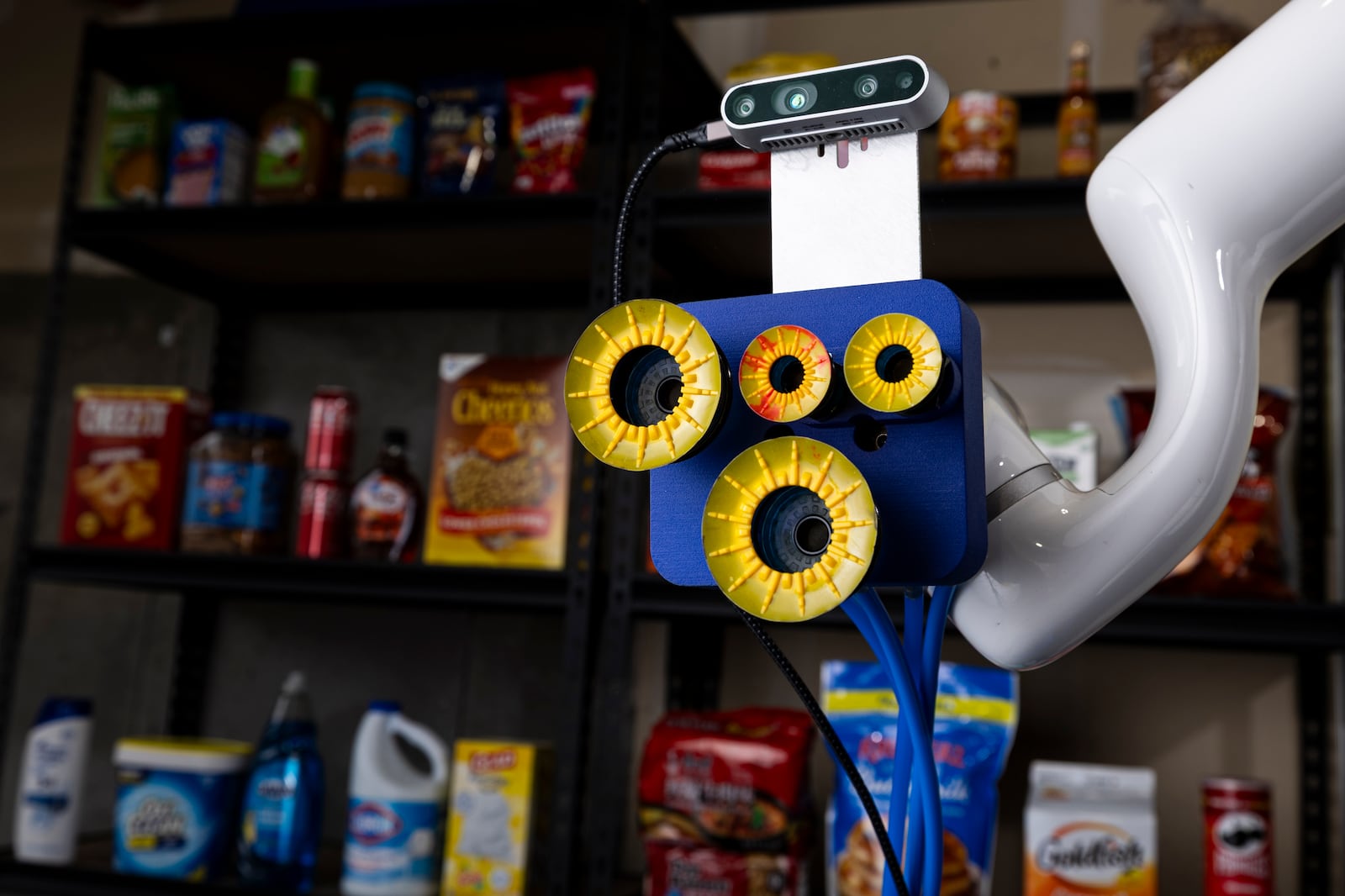
What he saw inspired him to assemble a group of engineers to create a robot that could do the same job faster. They aimed to keep manufacturing costs as low as possible by only using existing, widely available components and not worrying about replicating a humanoid form. Instead of hands, the robot has suction cups that pull items weighing up to 10 pounds off a shelf and place them into a basket.
The project caught the attention of Bill Bennett, former head of e-commerce for the grocery chain Kroger. He signed on as an official strategic advisor for Blue Collar Robotics in February after a mutual connection and former Kroger employee introduced them.
“It felt like it solved all the problems I was trying to solve at Kroger,” he says.
Bennett says the industry experimented with large automated regional warehouses, which failed because people weren’t willing to wait a full day for their grocery order to arrive. Smaller automated microfulfillment centers built onto the back of grocery stores proved to be “space-hungry,” expensive and time-consuming to build, and introduced new logistical inventory headaches.
Blue Collar Robotics’ solution is a relatively low capital investment that doesn’t require waiting for a construction project, Bennett says. He has been impressed so far with their business plan and what they have accomplished since the founding members’ first official company meeting in January 2025.
“They should really be profitable very early on in their journey, and the end stage looks even more promising,” Bennett says.
As the company moves into the manufacturing stage, it plans to stay in Utah. Han Sağlam says they have been beneficiaries of a business-friendly climate that has many angel investors and resources for start-ups. They are currently leasing office space from Kiln, which started in Utah, and have received free business training and other help from the Utah nonprofit Kinect Capital.
If major grocery chains adopt their technology, Crawford is looking forward to the day they can move their workshop from his garage to a light manufacturing facility in Utah. The plan is to ramp up manufacturing of the hardware at the same time that engineers continue to work on the programming side, introducing additional automation capabilities over time.
While Blue Collar Robotics is still in the garage phase, its founders are brimming with optimism about what the future holds. Crawford says the company they are working with is interested in a September launch date for their pilot program. If all goes well, sharing the cereal aisle with a robot could feel commonplace soon enough.