
This story appears in the June 2026 issue of Utah Business. Subscribe.
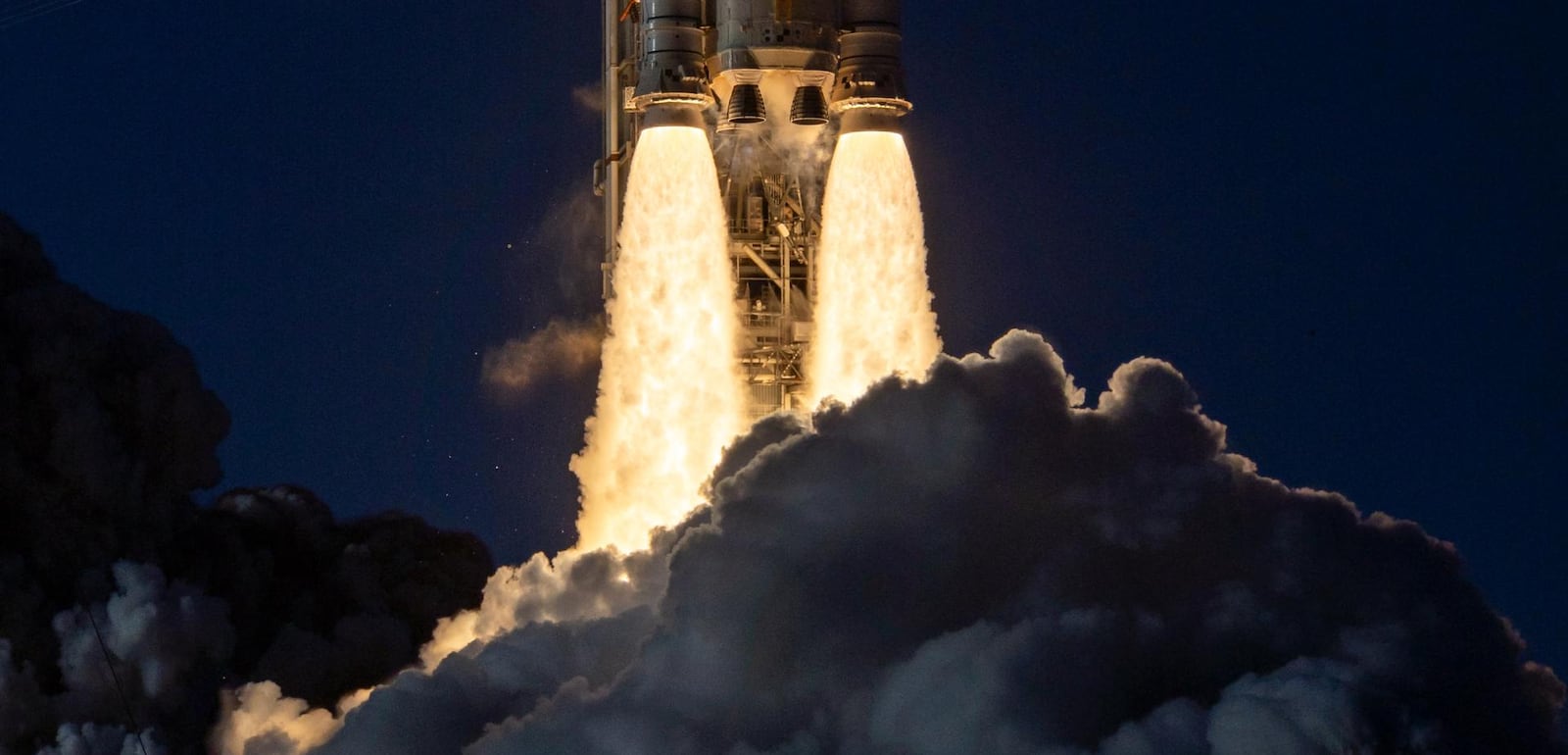
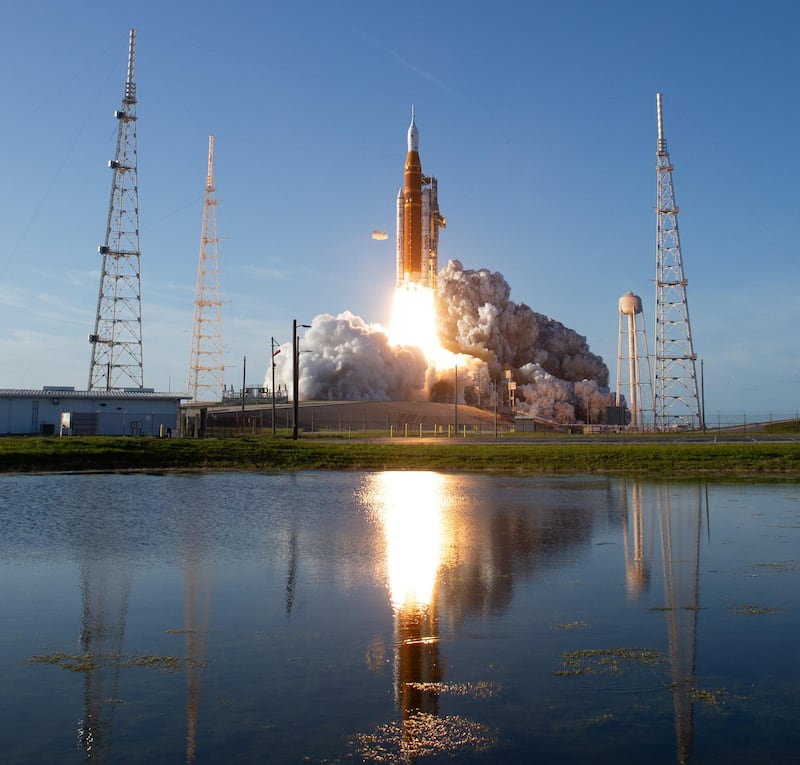
On April 1, NASA’s Space Launch System rocket generated 8.8 million pounds of thrust to launch the Orion spacecraft on its Artemis II mission around the moon, breaking the record for the greatest distance humans have traveled in space. The power behind that launch came from a rural manufacturing city over 2,000 miles away from the launch site: Cedar City, Utah.
Cedar City-based chemical manufacturer American Pacific Corporation (AMPAC) produced the oxygenation source in the solid rocket propellant inside the two boosters used during the launch.
“American Pacific has supported U.S. space launch programs for decades, including supplying the primary oxidizer used in the solid rocket boosters for the Space Shuttle and now the Space Launch System supporting Artemis,” says Kris Griffith, president of American Pacific Corporation.
Griffith has grown right alongside the company for the past 26 years. When he first joined AMPAC as a senior scientist fresh out of graduate school, he didn’t even have an office. Instead, he cleaned out a small storage closet and squeezed a desk inside. “I was just excited to have a room with a door,” Griffith recalls. Now, after more than two decades, he serves as president of the company — a journey he credits to the people, opportunities and culture at American Pacific.
The 71-year-old company is the leading North American producer of ammonium perchlorate (AP), an oxidizing agent that has been used in everything from the launches of the Space Shuttle to the deployment of U.S. defense missiles, making the chemical indispensable to national security.
AMPAC uses a unique process to convert sodium chloride (table salt) into AP, which is then crystallized and sent to customers like Northrop Grumman, Aerojet Rocketdyne and General Dynamics. These companies combine AP with other ingredients and cast it into solid rocket propellant, which is then used in U.S. missile and space launches.
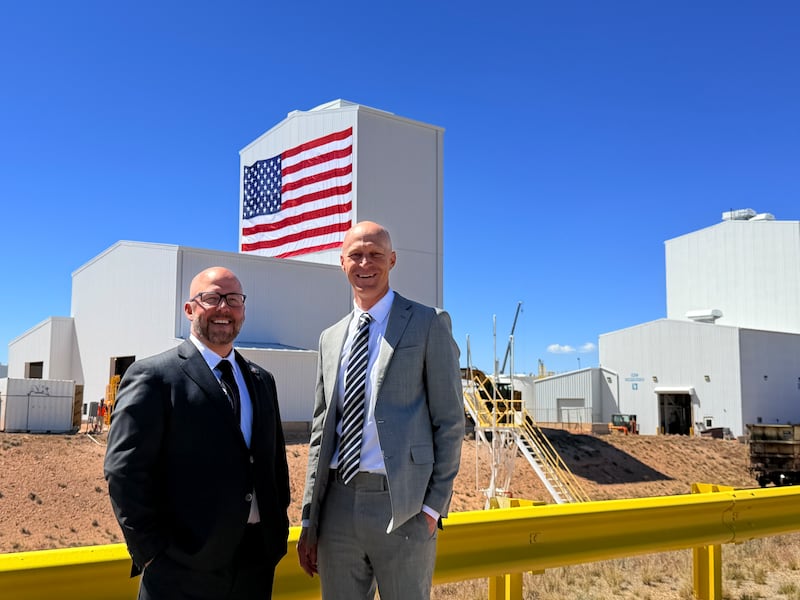
After being acquired by NewMarket Corporation in 2024, AMPAC broke ground on a massive $100 million expansion project in Cedar City last September. The expansion is focused on adding a third production line that is projected to increase production capacity by more than 50%.
So, how did this literal global powerhouse end up in rural Iron County, far away from other aerospace and defense industry peers in northern Utah? Strategically placed land, a proactive local government and a supportive community.
Rebuilding in Cedar City
American Pacific first established in Nevada, under the name Pacific Engineering and Production Company of Nevada, or PEPCON. Following World War II, AP production relied on platinum-based processes that depended on foreign sources of platinum. Out of necessity, the company developed a proprietary process to produce AP domestically without relying on foreign platinum.
However, in 1988, an incident at the Henderson production facility resulted in the loss of the site and much of the existing documentation. The main domestic producer of AP was suddenly unable to deliver the product, which was a major problem for the U.S. government that relied on the chemical for aerospace, defense and space exploration.
The company worked with the government to find a new facility location and, after evaluating multiple sites, AMPAC chose Cedar City “due to the availability of a large, appropriately situated site and community that was highly motivated to support rapid development,” Griffith says.
The city and county helped expedite the design of the facility to meet Department of Defense standards and safety requirements, the issuing of required permits and the construction of the site.
“The result was the successful build and startup of a new facility in a remarkably short timeframe — just over a year — which laid the foundation for the operation we have today,” Griffith says.
“That early partnership and the ‘can-do’ approach from the community have carried forward over the past several decades and remain a key reason why Cedar City continues to be the right place for AMPAC’s long-term future.”
The Cedar City advantage
“Cedar City and Iron County have a long history of being the rural hub for southern Utah,” says David S. Johnson, economic development director for Cedar City and Iron County.
He explained that people in surrounding areas will drive for up to 90 minutes just to work or shop in the city. Cedar City is right off of I-15 and close to the regional airport and two transloading facilities.
“To have the number one AP producer right here in Cedar City, it demonstrates how we have also quietly been a manufacturing hub for the state of Utah,” Johnson added. “Logistically, in the western market, we have greater access than even the Wasatch Front does.”
Cedar City’s benefits are not just logistical, according to Griffith. He explained that the combination of a loyal, dedicated workforce and a supportive partnership with the local government has made Cedar City a great place for AMPAC.
“Our decision to keep, and continue growing, our core operations in Cedar City ultimately comes down to the strength of the people and the community,” Griffith says. “Recruiting, training and retaining talent in a highly technical and safety-critical environment starts with people — and that’s one of our biggest strengths in Cedar City.”
A generational workforce
Because the production of AP is highly specialized and complex, successful teams have to be committed and collaborative. Many of AMPAC’s employees have worked together at the site for decades, so their experience creates consistency and high quality.
“Our community is known for a committed workforce that stays a really long time. I’ve never been in an area that has so many employees who have been with a company for 20 or 30 years,” Johnson says.
Companies like AMPAC create high-paying jobs, allowing families to afford to stay in the community, he explained. Children grow up and don’t have to leave their hometown to find a good job, allowing the company to retain its own generational workforce.
Southern Utah University and Southwest Technical College, both based in Cedar City, have dual enrollment programs with local manufacturers like AMPAC that attract young talent and create a pipeline to work at these companies upon graduation.
“As demand continues to evolve, we stand ready to grow alongside it to ensure the U.S. and its partners have the reliable supply base they need.”
— Kris Griffith
The $100M expansion
AMPAC’s $100 million expansion in Cedar City includes a third production line with new process buildings that are exact replicas of current facilities with identical equipment, controls, piping and operating systems in order to maintain consistency and, as Griffith explains, “ensure that material produced from the new train is indistinguishable from what we produce today.”
He continues, “While AP from different sources may look similar on a specification sheet, factors like particle morphology, surface chemistry and overall particle integrity directly influence how it performs in a propellant. That makes consistency in manufacturing absolutely essential.”
The importance of consistency goes beyond the typical need for reliability within manufacturing; it can quite literally affect the safety of the entire country.
“Our responsibility is to deliver a product that performs the same way every time, across programs that were qualified decades ago and continue to support critical national security and space missions today. Any variation, even subtle, can have downstream impacts, so our focus on quality, process discipline and consistency has to be relentless. In an era of renewed space competition and heightened national security priorities, that responsibility has only increased.”
The expansion also involves upgrades to site infrastructure to increase reliability and resilience across the company. To Johnson, the expansion is also a reflection of AMPAC’s dedication to the community and the area’s readiness for continued progress.
“This expansion is more than a construction milestone. It’s really a commitment to our workforce and community and nation’s defense infrastructure. It’s laying the groundwork for more to come and demonstrating to the market, if you want to be successful, look no further than southern Utah to help your company get to the next level,” Johnson says. “I am so excited to see their investment and continued trust in our community and their desire to be here.”
A new space race
The expansion is also indicative of an increased demand for AP across both space exploration and defense in the U.S.
During a conference in Virginia in February, NASA Administrator Jared Isaacman explained the urgency of the Artemis II launch and reaching the moon again before other competing nations.
Referring to China’s effort to get its own astronauts on the moon, he says, “We are in a new space race, and if we fall behind, we may never catch up.”
Griffith says, “As the U.S. enters a renewed era of space competition, our focus is on ensuring we can reliably support increasing demand — not just for NASA programs, but also for missile defense and broader national security needs, as well as those of our allies. Our ongoing capacity expansion is a direct reflection of that commitment.”

AMPAC’s goal for the next five to ten years is to continue to develop and utilize Cedar City’s generational workforce and strategic geographical placement to safely deliver consistent, high-quality product at scale to support these missions.
“We’re focused on doing what we do best and doing it exceptionally well,” he says. “And as demand continues to evolve, we stand ready to grow alongside it to ensure the U.S. and its partners have the reliable supply base they need.”