
Dave Reynolds knew as a kid he was fascinated by space. The element of exploration drew him in so much that he’d go on to become a subsystems project manager at NASA, helping launch the first manned mission to the moon in more than 50 years.
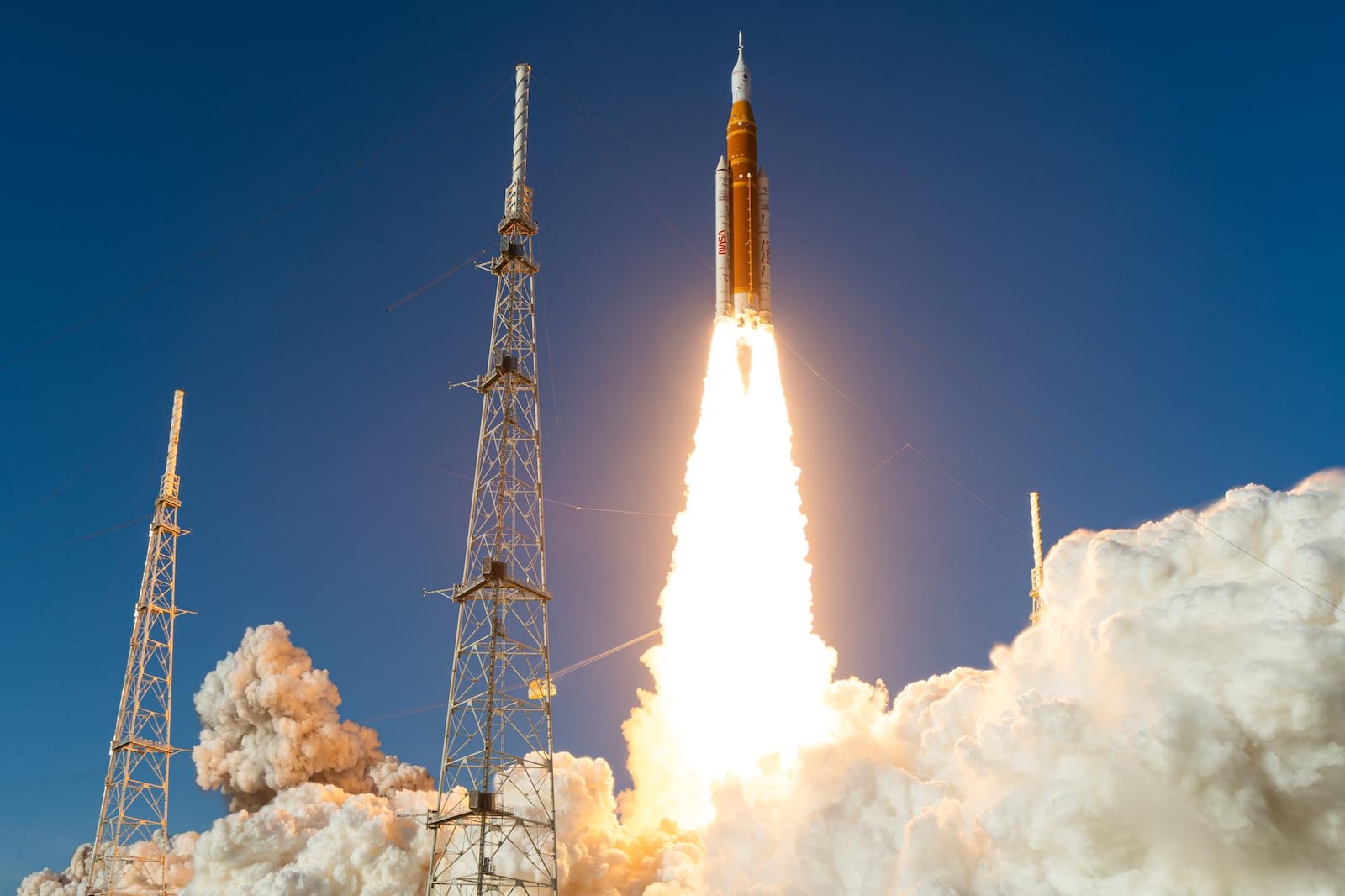
On April 1st, four astronauts left Earth’s atmosphere to travel on a ten-day mission to the moon and back. The Artemis II mission was historic, marking the first time humans have traveled to the moon since the Apollo 17 mission in December 1972. In late 2022, the Artemis I mission successfully sent an uncrewed rocket around the moon. This time, the astronauts went along in hopes that this flyby will enable future missions to have humans explore the moon for longer periods and open up the possibility of potentially farther flights, like reaching Mars.
Reynolds grew up near Ogden and worked on NASA projects for more than two decades after earning his undergraduate degree at Brigham Young University. He notes that Utah is crucial in these historic steps, given the laboratories and facilities involved in designing crucial spaceflight parts like the booster rockets that shoot astronauts outside of Earth’s orbit.
“I heard it said that you can’t get to space without going through Utah,” Reynolds says. “I think that’s a pretty good motto for what we do in the booster office.”
Why Utah plays such a big role
Since the 1940s, the United States’ space programs have used facilities and private companies in Utah to create parts for historic missions. The Artemis II mission in 2026 has helped usher in a new focus for the aerospace industry in the state, with a renewed focus on the role industry can play in supporting exploration and the boost to commercial prospects from technological developments.
One of the major companies supporting this mission is Northrop Grumman. Their origin story is through an evolving chain of companies: Thiokol, along with other Utah entities, was involved in making parts that played key roles in spaceflight. That company was first acquired by ATK in 2001, and then was subsequently acquired by Orbital ATK in 2015, and finally by Northrop Grumman in 2018.
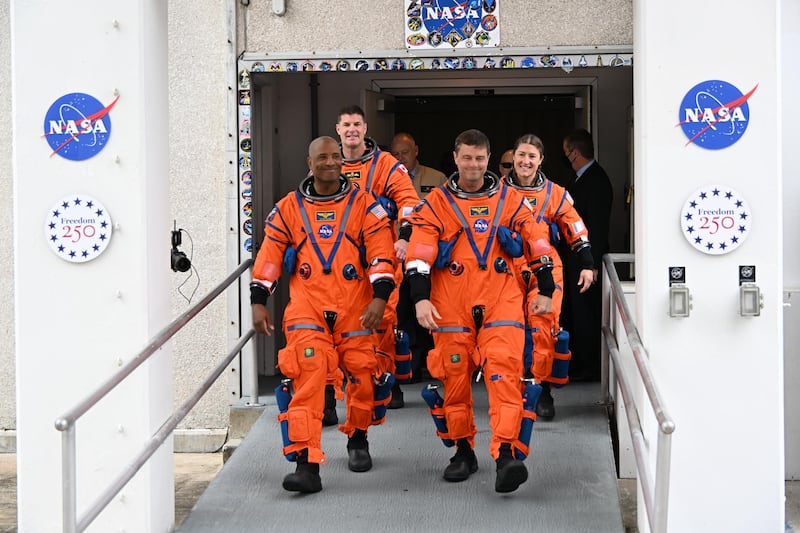
Now, Northrop Grumman has 10,000 employees in the Beehive State, with 3,000 who worked on the Artemis II project.
Artemis I, like many NASA missions before it, was built with key aspects of its design in Utah, even to the transportation, as the Union Pacific rail company delivered rocket motors to Kennedy Space Center in Florida.
How to get a rocket to the moon
Dave Griffin, an engineer at Northrop Grumman and subject matter expert on the booster rockets in Artemis II’s flight, started his career at ATK after growing up in Utah. He explains that the rockets needed a huge amount of power to get the astronauts all the way to the far side of the moon.
“The goal is to get outside of the gravity of Earth,” Griffin says. “It takes a lot of thrust and a lot of energy to be able to do that.”
He notes that the two boosters for the flight, built at Northrop Grumman’s Promontory facility, each have about 3.6 million pounds of thrust.
“They only burn for about 126 seconds,” he continues. “We go from sea level to about 25 nautical miles, about halfway to the Kármán line [an internationally recognized boundary between Earth’s atmosphere and space] in that 126 seconds.”
From there, the boosters fall off the ship and back to Earth, and the rocket will use four engines in the remaining tank to power itself out of the atmosphere. Throughout spaceflight programs, these parts have been built for reuse — meaning these boosters will be recovered and cleaned. In fact, both Griffin and Reynolds point out that the Artemis II used many reused parts built in Utah during NASA’s space shuttle program that ran from 1972 to 2011.

The power of Artemis II’s boosters is a considerable leap from recent spaceflight ventures. Reynolds notes that the shuttle program that ran for 50 years focused on low-earth orbit missions, primarily culminating in the Hubble Space Telescope and the International Space Station (ISS). These projects massively advanced understandings of space and the technology required to operate off-planet missions, while the Artemis era is focusing on pioneering flights in which humans can travel to distances never reached before.
The power required to achieve this feat is considerable. The 3.6 million pounds of thrust Northrop Grumman’s booster provided helped to bridge this gap.
“It gave the capability of this rocket a much-needed boost if you’re trying to go from where we were — just circling the earth at 100 to 200 miles — to being a quarter-million miles away from the moon,” Reynolds says.
The private sector takes note
April’s Artemis II flight opened up new possibilities. From Reynolds’ reading, expeditions and exploration are often government-led, but managed through relationships with private companies. While companies like SpaceX and Blue Origin have made headlines in recent years for wanting to privatize spaceflight, Reynolds believes that the advancement of space exploration will remain within the public sector while fueling the private sector with new contracting opportunities and commercial pathways.
In fact, both SpaceX and Blue Origin are contractors working on the Artemis program, developing the landing mechanisms for when rockets will touch down on the moon’s surface.
For Aaron Starks, CEO and president of the aerospace and defense industry organization 47G, the development of Utah companies playing a major role in Artemis rockets highlights a key policy point for his nongovernmental organization (NGO). 47G aims to promote Utah’s role in space and defense technology, and he sees an ambitious future for private companies as a result.
“It was our initial vision and plan back in 2023 to resurrect the idea of creating a spaceport in Utah,” Starks explains. “We have participated in the space economy in many ways — certainly at a company level — but in 1971, Utah was one of four states that competed for the space shuttle program. At that time, NASA wanted to take passengers to space every month through the space shuttle vehicle. We ultimately were not selected. Kennedy [in Florida] was, and that’s because we didn’t have open water that would allow us to return the boosters to Earth to reuse them.”

Even without serving as the primary launch site, Utah has seen many opportunities take hold over the years.
Noting that 47G has investments from every college and university in Utah, Starks points out that the NGO serves as a springboard for talent within the state to get involved. Private companies approach the organization with projects, and they help facilitate contacts. With programs like the Space Dynamics Laboratory at Utah State University, for example, Starks notes a strong connection between the academic, private and public sectors in the state to compete for more of these types of projects going forward.
“Now they’re talking about the future of aerodynamics, space engineering, pharmaceutical research in space,” Starks says. “All of that is starting to happen.”
As Artemis II’s journey to the moon strengthens the bonds of collaboration between Utah and spaceflight exploration, back on Earth, the mission serves as a launching point for a private sector that wants to commercialize the stars.