
This story appears in the February 2026 issue of Utah Business. Subscribe.
As Chris Livingston and his wife Bailey Dalton were on their way out the door to have dinner with friends, they learned their babysitter didn’t have a cellphone. They realized if things went awry, there was no way of getting in contact — and they found themselves wishing they had a landline.
It was this unexpected moment that forced them to confront that gap and find a solution, leading to the Wiley Home Phone — where retro corded phones meet Wi-Fi.
From problem to innovation
Chris and Bailey immediately started looking for solutions. They didn’t want to give cellphones to their four-year-old twins, Greta and Ingrid, and quickly learned landlines are expensive. Upon further inspection, they found out their home was unserviceable. Fortunately, Chris saw the situation not as a problem, but as an opportunity.
Chris has always been a problem solver. Early in his and Bailey’s marriage, he couldn’t find a travel toiletry bag to meet his needs, so he launched a Kickstarter to create one. That project, Gravel, raised $165,000 during its first campaign and became the couple’s full-time job for eight years.
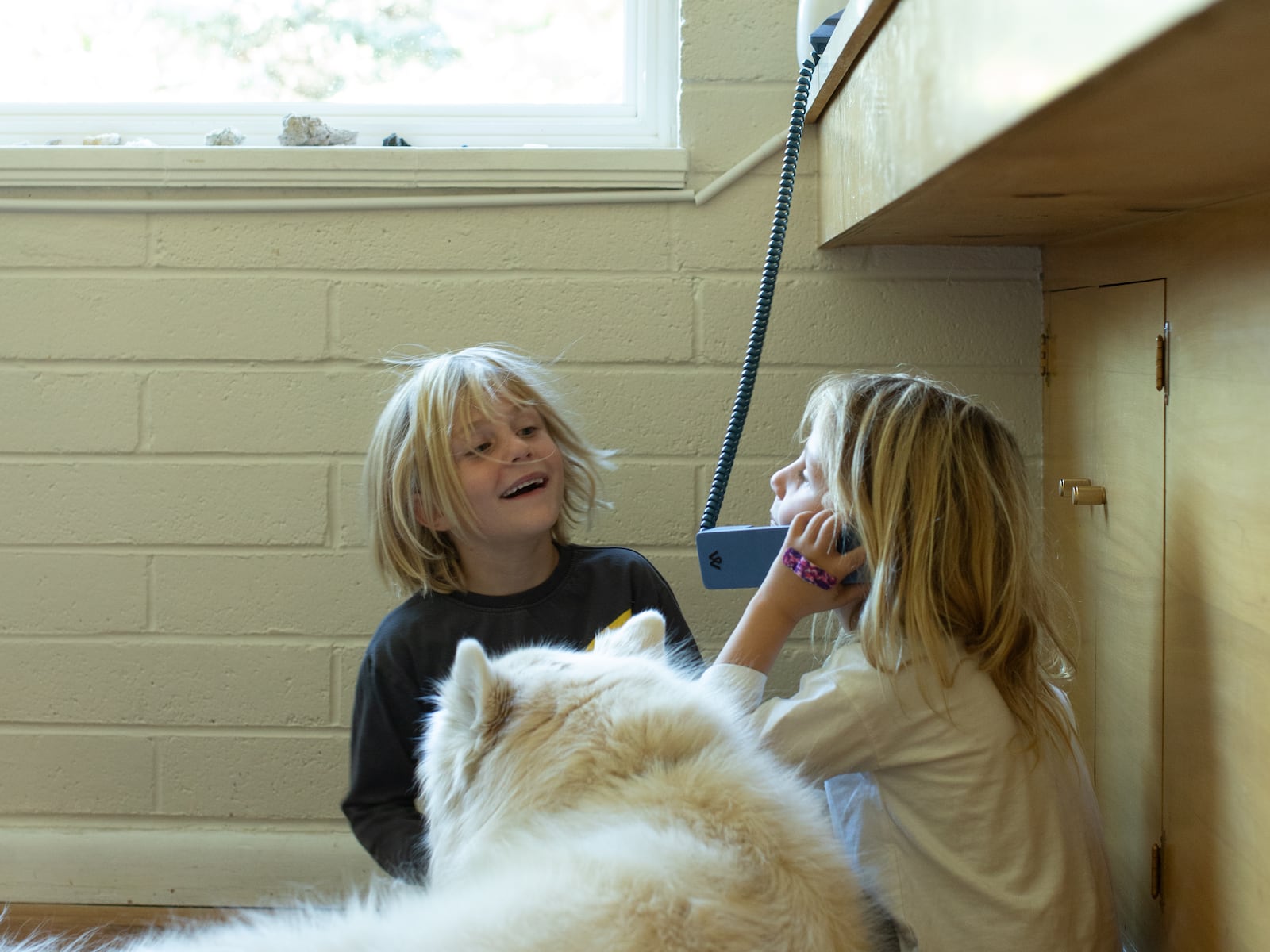
Tapping into these innovator roots, he bought a 1986 phone on eBay and converted it to plug into the internet router at their home. Greta and Ingrid, now six, loved it. They even started calling their grandparents and friends. “And they did it all on their own,” Chris says. “I showed them one time how to use the speed dial, and boom.”
Soon, friends and neighbors became interested in the product. Chris set out to make it work with Wi-Fi, so the phone could be plugged into any outlet, rather than just the internet router. As Chris says, “A lot of people have a router in a utility closet or in an office,” but the goal of Wiley is to be in a central location as a family hub — it’s a home phone.

And people love the idea. Ruth and Doug Thomas, who have been beta-testing the phone with their young sons, have loved their experience. Doug says, “I think it’s helped our family have both more independence and togetherness. The kids are more independent, they’re more connected with us and they’re more connected with their friends.”
Ruth elaborates on this, explaining that Doug set up the phone when she was out of town, and she was one of the first people the boys called.
“At first it was just a novelty,” she says. “It was just kind of a new toy. But then, very quickly, it became a thing for connecting. They were calling me wanting to talk about their day or some emotional thing that was happening ... These are the fleeting moments that make a relationship really valuable.”
The Thomases love their Wiley phone and think everyone should get one, saying the setup is easy, and that there are really “no downsides” to having the phone.
Twice funded on Kickstarter, Wiley is set to roll out a simplified version of the phone in February 2026, the Wiley Buddy, with the decked-out version with an LCD screen expected in October 2026.
The complete version of Wiley includes a plethora of features: speaker phone, caller ID, speed dial, voicemail, do not disturb, spam and robocall blocking, a lockable screen (so kids can’t change your settings) and enhanced 911 that provides emergency responders with the caller’s location. It’s extremely customizable for parents, with options for calling only approved contacts, filtering and screening, monitoring call history, call blocking and forwarding to another number.
But all in all, the magic of Wiley is that it’s simple — it’s a tool for connection and a nod toward retro tech.
A return to retro tech
Chris pulls prototype after prototype from the bag he’s brought with him, showcasing the intricacies and features of each landline-style phone. It feels like watching Mary Poppins pull endless trinkets out of a magic carpet bag, each prototype more spectacular than the last. Despite their differences, every iteration of Wiley phones exists for the same reason: to help kids connect without handing them a screen.
“You can say as much as you want, that you want to keep your kids off of screens,” Bailey says. “But until you have the tools to do it, it’s hard.”
Right now, the nation is experiencing a trend toward older technology. In an age where technology and cellphone usage are more prevalent than ever, people are trying to find ways to dial back into simpler times.
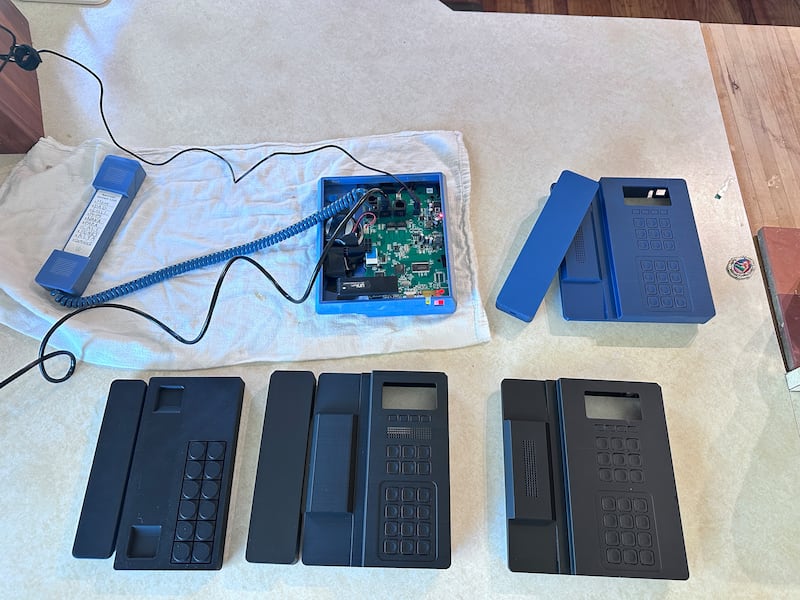
There’s a resurgence in popularity in products like vinyl records and DVDs, and simpler, locked-down technology like Gabb phones and watches are sprawling across the market. Landline-style phones are just another avenue in the return to simpler, more intentional technology.
Experts agree that one of the biggest detriments that comes with cellphone usage is social media.
“Social media giants know that the earlier that they can hook kids onto social media, they’re essentially hooked for life,” Chris says. Because their brains are still developing, those habits get locked in.
Maybe you’ve even noticed this in yourself and thought — I would get rid of my phone if I could still connect in the ways I need to. Wiley gives families the freedom to connect without the detrimental effects of screens and social media.
A phone for the family
When I asked about Tin Can, a company creating a similar product, Bailey says she isn’t too worried about competitors. She compares it to phone plan providers. While there are many providers, they all have plenty of customers. She thinks that Wiley, Tin Can and similar companies are all working toward the same thing.
“We didn’t miss the boat,” she says. “There’s such a market for this. Anything that helps people give these skills and tools to their kids, I’m behind.”
Users agree.
“I think the more people who commit to living lower-tech lives, the easier it will be for all of us to do it,” Alicia Sanford says, a Tin Can user (although she’s snagging a Wiley phone as soon as they become available).
And while Tin Can focuses on being a kids’ phone, Wiley is more focused on being a family hub.
Everything Chris and Bailey do is guided by this idea. “I want to always be in tune with what the parents are thinking,” Bailey says. “How do we really make this serve families, not how can we maximize profit?”
What’s the verdict?
One of the first people to benefit from Wiley phones was the twins’ grandmother, Dawn Dalton. “I’m really excited to see that they chose me to call when the phone rings,” she says. “I like being remembered.” She loves it when Greta and Ingrid leave a message or ask to talk to grandpa, because it shows that they’re learning phone literacy and social skills.
Now, more and more families are getting set up with this landline approach, and it’s making a world of difference.
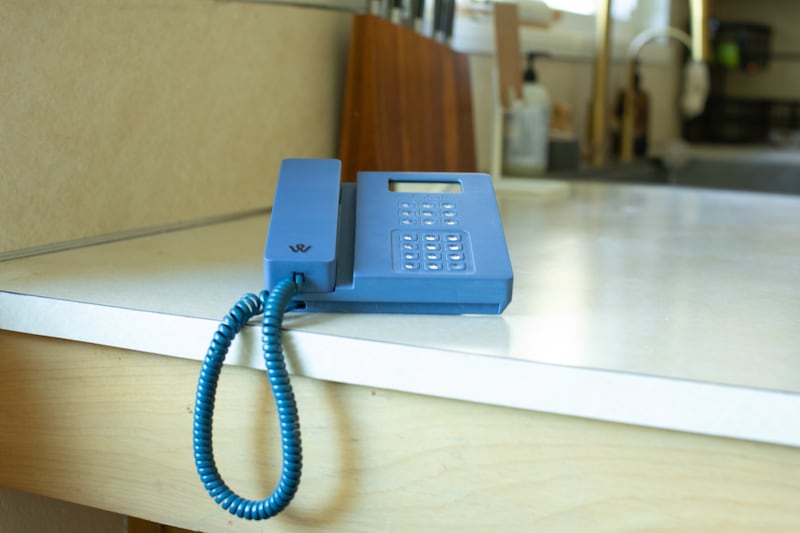
Jenny Wecker, a Wiley user, had been looking for a cellphone alternative for a long time. She says, “When I heard about Wiley, I knew it was a good fit for our family because their mission is to do more than just get kids off screen, but connect the entire family.”
The Wecker kids were ecstatic to receive their Snoopy home phone. Wecker says it’s magical when the phone rings and all three of her kids dash to answer it.
“Whenever someone calls, we almost always end up passing the phone around while we’re all together in the kitchen,” Wecker says. “It’s really been not only a practical thing, but has brought so much joy, fun and connection to our home.”
For Chris and Bailey, that’s what it’s all about. Connection.
“This is a tool for the home,” Chris says. “It’s not an addictive screen. It’s all about connection.”
And best of all, it “lets kids just be kids” for a little while longer.