
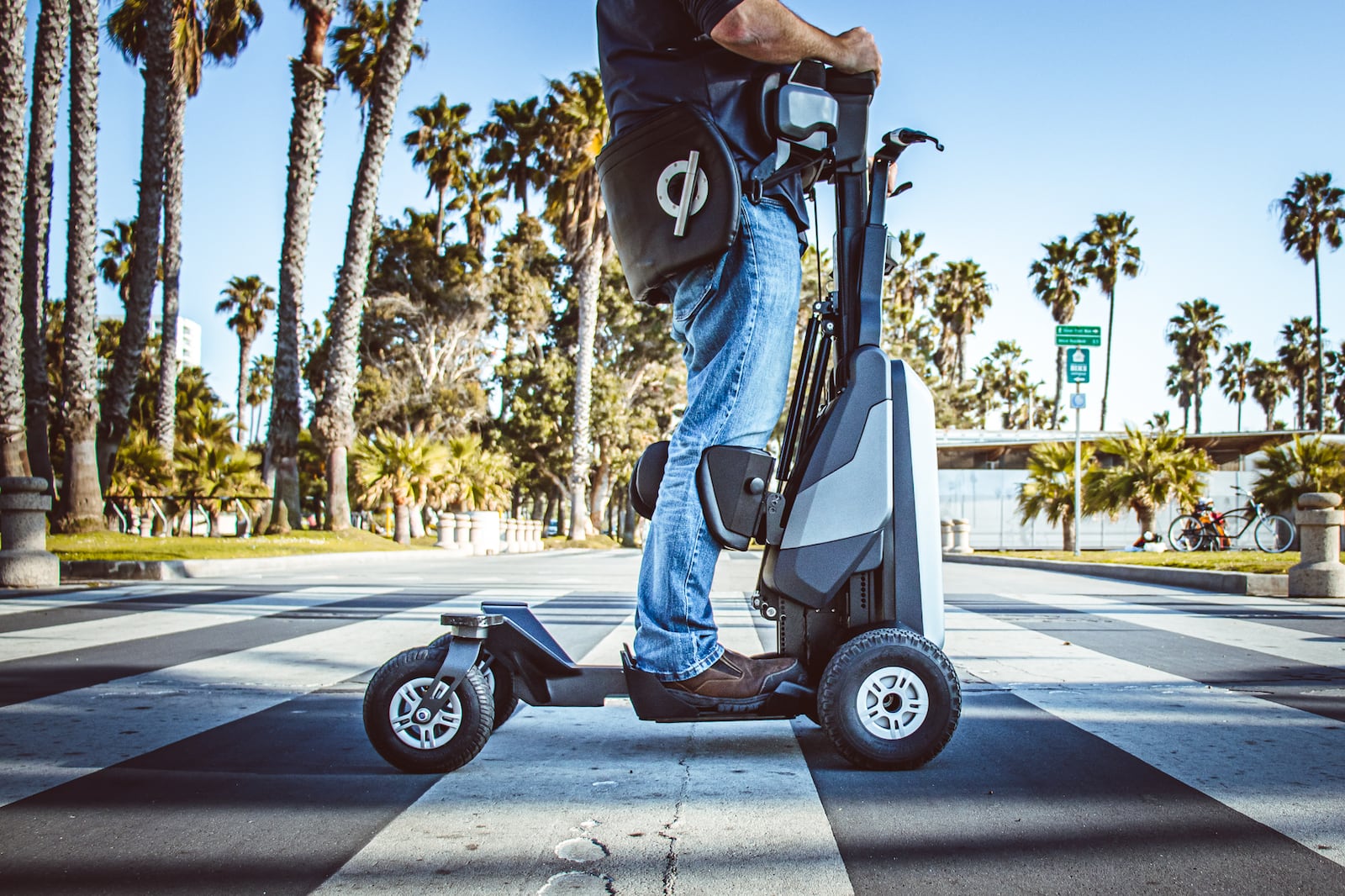
The beginnings of Matia Mobility were first crafted in a lab at a university in Turkey, where robotics student Necati Hacıkadiroğlu created a wheelchair that used hydraulics to lift the user into a standing position.
The device quickly gained traction on Gizmodo — an online media outlet covering technology, science and internet culture — where Silicon Slopes entrepreneur Steven Boal first became aware of the invention, now known as the TEK RMD.
Boal saw promise in the concept and reached out to the young inventors to offer strategic advice. Rather than taking him up on his offer, they invited Boal to a trade show where they’d be showcasing their invention in Leipzig, Germany.
One of the things that excited Boal most was the newness of the challenge. After receiving the invitation to the tradeshow, he invited his business partner at the time, Paul Keen. “It’s right up our alley,” Boal told Keen. “It’s hardware, it’s software, it’s regulatory, it’s a cross-border medical device. We’ve never done anything like it, but if we can make this company stand on its own, we can do a world of good for people forever.”
Boal, who has since attended many tradeshows, remembers this first one vividly. One woman, pushing herself in a wheelchair, came to their booth and asked to try out the device. Strapped into the chair, she was lifted to eye-level for the first time in years. “I was struck,” remembers Boal. “I watched her face change from dour to bright-eyed. She had a huge smile on her face, and she was now eye level. I had no idea what that meant to people. I do now.”
From Silicon Valley to medical devices
Boal provided advice and guidance as the inventors launched their company with Boal and Keen as full partners. Initially, Boal continued in his role as founder and CEO of Coupons.com, but eventually he sold the company and came on as CEO of Matia Mobility. “It’s the most rewarding thing I’ve ever done in my life,” Boal says.
Moving from the world of Silicon Valley to medical device production was a learning curve for Boal. “It’s indescribably different,” he says. While he had previously dealt in software and digital products, this company requires a more hands-on approach. To deliver the TEK RMD to the hands of customers who need it most, the company works with insurance companies to bridge the costs.
“We battle with insurance companies all day long on behalf of patients, which is really hard,” he explains, “but we’ve made huge amounts of progress.”
Because the TEK RMD is now completely manufactured in the United States and meets the requirements of the Trade Agreements Act (TAA), the Department of U.S. Veteran Affairs can buy devices for disabled veterans. Blue Cross Blue Shield also recently accepted Matia Mobility in their network, and Boal and his team are working to become in-network with other insurance companies.
Although navigating the inner workings of the American healthcare system can be overwhelming, Boal maintains, “I’ve never been more satisfied watching people stand for the first time in their lives.”
Research and development
The Matia Mobility team continued improving the TEK RMD, working with the FDA and industrial firms to bring the product to U.S. safety standards. They’ve also created different accessories that can be added to the TEK RMD to personalize it for the user’s preferences.
As a guide for their improvements, the team gathers feedback from actual users, another process that varies vastly from what Boal was used to in Silicon Valley. “In software, there are all sorts of tools to gather feedback,” he says. “There’s eye-tracking, surveys, customer panels and beta testing.” But with a user medical device like the TEK RMD, Boal and his team have learned to gather feedback directly at trade shows and from owners who use the device on a daily basis.
One of those users, Bill Winchester, was the first patient to own the device in the United States. After a bad bike accident in 2014, Winchester was left with the reality of navigating life without the use of his legs.
His father was researching how to help Winchester improve his bowels, bladder circulation, bone density and other medical complications that arise with living life in a seated position, when he came across Matia Mobility and reached out to Boal. Matia Mobility was still working for FDA approval, but when the TEK RMD was approved, Winchester was the first to know.
“My first experience using the device was actually in our residence at the time,” says Winchester. “I was able to stand for the first time since the accident; and not just stand, but actually move around.”
Previously, Winchester had been using a standing frame, which allows people with walking disabilities to be held up in a standing position; but, the frame is immobile and the user depends on someone moving them in and out. Using the TEK RMD, in addition to improved capabilities like an outdoor-friendly wheel set and using a remote control to move around, Winchester was now able to “move around the house, do my chores, cook a little bit, as well as do other things like go outside, get the mail, throw the football around, things like that.”
For those without a mobility disability, it can be hard to conceptualize the challenges that wheelchair users face. While one study reported that 3.3 million Americans use wheelchairs, there are still significant physical and social barriers that wheelchair users face daily.
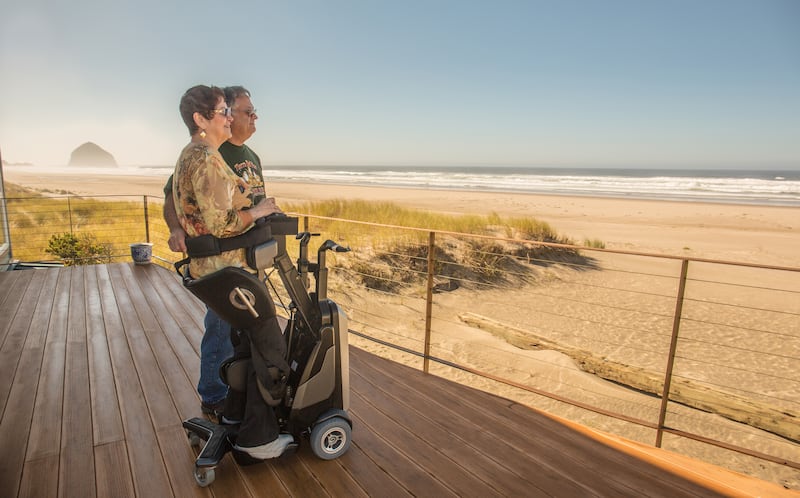
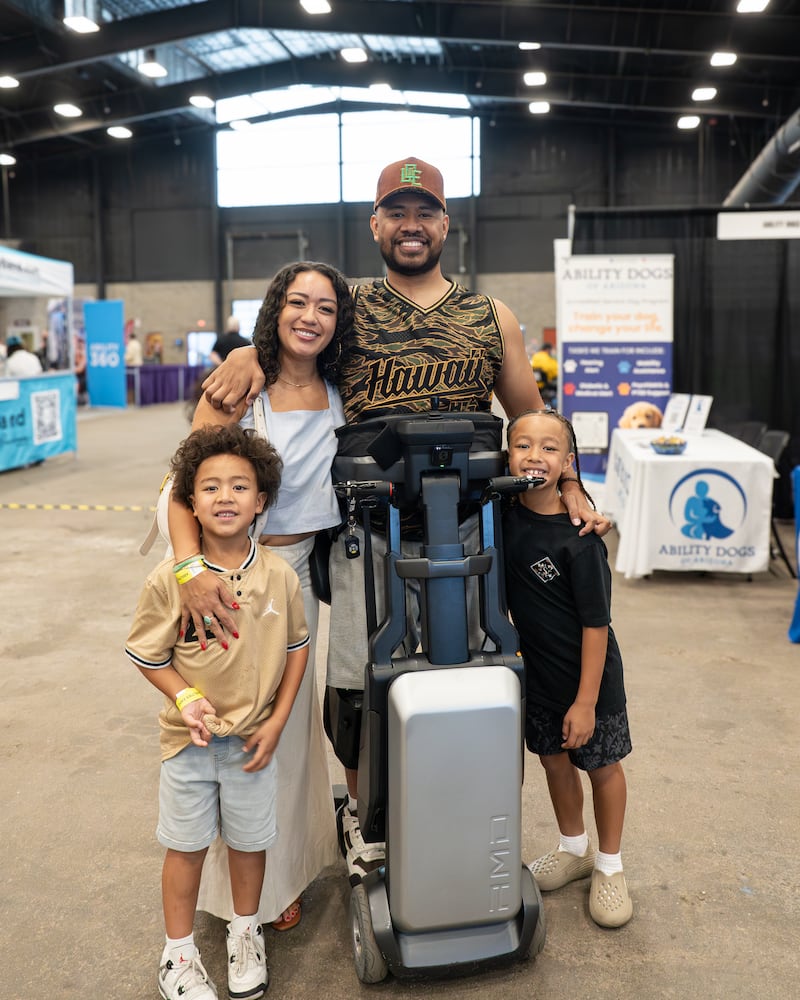
While Winchester reaps physical benefits from being able to stand in the TEK RMD, he says that the social and mental benefits are, “believe it or not, the most impactful.” Especially when attending parties or holiday gatherings, he’s able to “look at other people eye-to-eye, which is much more engaging than being looked down upon in a wheelchair.”
Building the company
While Hacıkadiroğlu has continued to refine and hone the design of the TEK RMD, Boal has streamlined the backend of the process. Utilizing new technology, Boal and his team have automated their system to perform patient eligibility, checks for insurance, appeals, document collection and more.
“Whereas years ago we would have had to have lots of people taking care of these types of processes, now we can use automation to push as much cost savings as possible through to the customer,” says Boal.
Part of Boal’s excitement in working on a small company is the possibilities for innovation that big companies often miss out on as they strive to maximize sales. “But, small companies also don’t have the budgets and the wherewithal to be able to build markets and sell against bigger companies,” explains Boal.
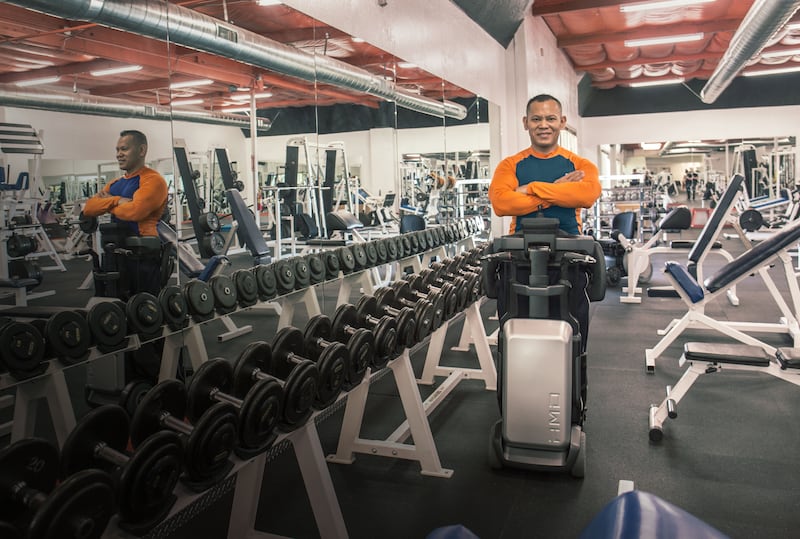
The team’s partnership with the United Spinal Association, one of the largest associations for people who have spinal cord injuries in the U.S., has been instrumental in getting the word out about Matia Mobility. The association’s tech advisory committee found and endorsed Matia Mobility and has been helping them get the word out. “The committee’s goal is to find companies like us that are doing good for people with spinal cord injuries and to help promote them,” says Boal, “Because they know we don’t have the kind of marketing dollars that the bigger companies have.”
While Boal believes that larger companies have an important role in the mobility assistance landscape, he believes that their small company is what really fosters innovation. “Nobody’s done anything like the TEK RMD before because they’re investing in the growth of their existing products,” says Boal. “Partnerships like United Spinal and others help us get the word out so that people who need this product can get a hold of it.”
A Utah success story
After spending much of his career in California, Boal decided to make Park City his home base seven years ago. “There’s no better state to do business in the United States than Utah,” says Boal.
Matia Mobility’s manufacturing facility is located on Interstate 80 with easy connections to rail, trucking and air shipping. But it wasn’t just the manufacturing opportunities that brought Boal and Matia Mobility to Utah — it was also the workforce, which he says makes the biggest difference. “Here, people want to build a career at a company and they want to help people, and you just don’t get that in other places,” he says.
Matia Mobility’s engineers are continuing to work on improvements to the TEK RMD and plan to soon launch the second iteration. Boal explained that they are talking to Utah-based investors for capital and are looking to grow their Utah office.
“I have a personal goal of making this a Utah success story,” says Boal.