
This story appears in the December 2025 issue of Utah Business. Subscribe.
Each of Utah’s 29 counties offers unique advantages for businesses and talent alike. Let’s visit Morgan County.
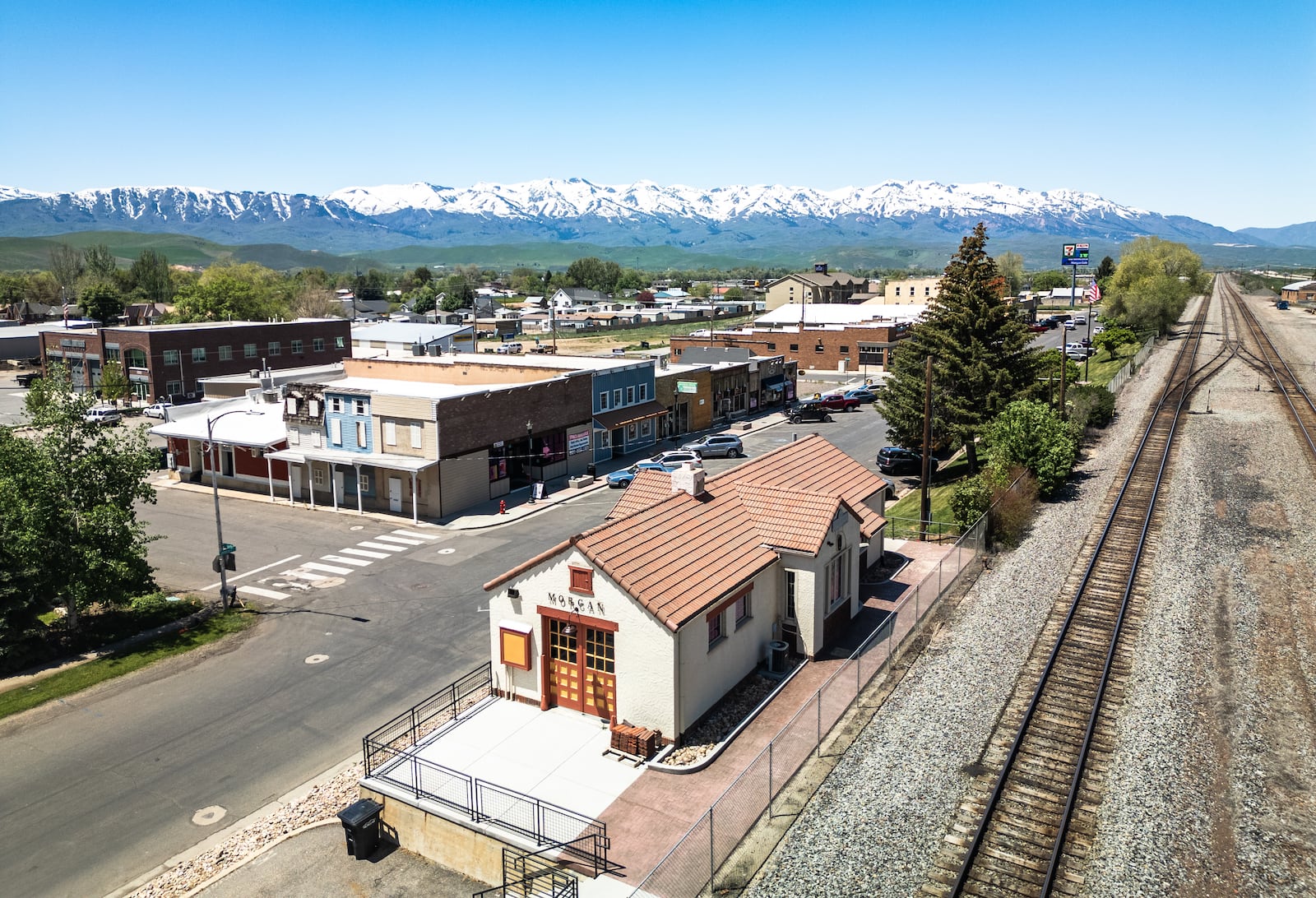
Fully decorated Christmas trees, each with a unique theme and goodies tucked amongst the boughs, will soon start appearing in shops along Commercial Street in Morgan, Utah. The festive foliage comes as part of the city’s Hometown Christmas and Tree Festival, where each donated tree will be auctioned off. The Morgan Area Chamber of Commerce uses the proceeds to help those in need celebrate the season through targeted giving or food pantry support.
In the weeks leading up to the tree auction, community members and visitors can scope out the trees by visiting each participating business.
“To try to get people to go into the businesses, the Chamber does a passport thing,” Traca Wardell, president of the Morgan Area Chamber of Commerce, explains. “We make up a little card that has every business listed that’s donating a tree and where it can be viewed. If you go into that location and view the tree, they’ll stamp your passport. Then we collect [the passports] at the festival and draw for prizes.”
From gift cards to iPads, the winnings can vary, but the effect is the same: increased business and community support. And Wardell says there is always room for more.
“I would love to see it grow, to see more businesses donating trees, to see more people come out and buy the trees,” she says. “It goes toward a good cause. … We try to divide the money and have as much of an impact as we can.”
Redeveloping a magical main street
While Commercial Street seems idyllic today, Morgan’s thriving main street businesses and day-trip worthy festivals took years to get to this point. Ty Bailey, Morgan’s city manager, says the street used to have several vacant buildings that needed redeveloping to bring them up to code.
“We gave four different grants for four different buildings, and all four of them went from vacant to new businesses,” Bailey says. These grants are possible because Commercial Street was designated as a redevelopment area (RDA) in 1993, a status that allows the city to collect and utilize a tax increment to enhance the city’s economic base through improvement projects.
Bailey says for every $40,000 given in grants, the city has seen around $500,000 in additional investment by businesses and individuals. The grants certainly helped focus and spur the development, but the city and its businesses banded together to truly bring in the Christmas magic.
With this program, Commercial Street businesses have saved their historic buildings from decline and improved them and the surrounding street areas for modern use. The program even brought Morgan its first hotel, located right on Commercial Street.
“The new problem is parking,” Bailey says excitedly. His team is already working on the solution: “We’re building an alleyway that’ll go behind most of the businesses on Commercial Street so visitors can have rear access. It will provide additional parking, and it’s going to include a plaza.”
Morgan doesn’t currently have a central gathering spot for downtown activities like festivals or farmers’ markets, making it difficult to host large events without having to shut down streets. Bailey says the new plaza provides that extra space to host events and build community.
“The festival space will be a huge thing for the community,” Wardell agrees. “Right now, we shut down Commercial Street, but it can still get a little crowded. This will open it up so that we’ve got more room, and we can hold more events.”
Time to market the magic
Although Morgan County has only 12,295 people, Bailey says the Hometown Christmas and Tree Festival attracts around 2,000 visitors each year. The number is likely to grow as, according to Justin Rees, director of tourism for Morgan County, the county-wide tourism has been steadily growing as well.
“The first thing we did was work on the brand,” Rees explains. “We opted to use the wording ‘Morgan Valley’ because we felt like it was more inviting than just a governmental organization, like a county.”
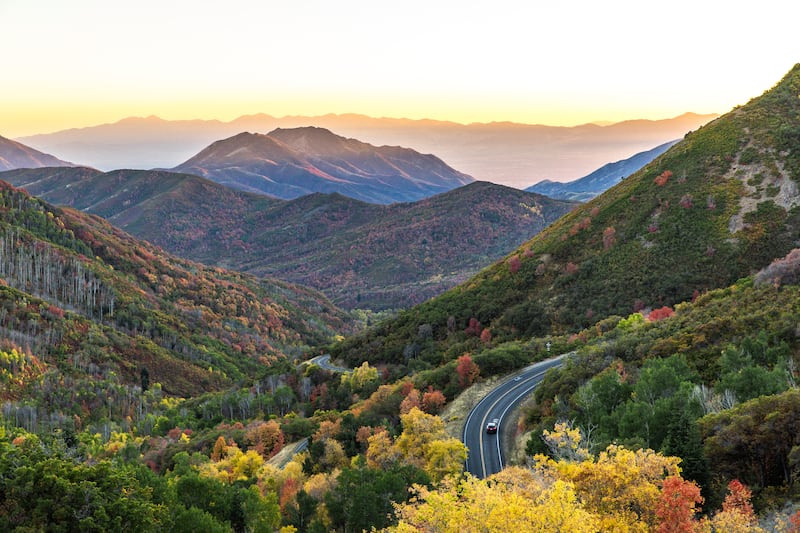
The rebrand highlights everything from the Weber River’s rafting and fishing to the hiking, camping and lake adventures at East Canyon and Lost Creek reservoirs. Rees and his team have also focused on expanding awareness through social media, influencer partnerships and a long-term destination plan that defines short-, mid- and long-range goals for sustainable tourism.
“We started inviting influencers into the valley, connecting them with local businesses … and that’s turned out to be very, very successful,” he says.
The results are visible in both the growing number of day visitors and in the renewed investment downtown. “There’s a lot of excitement,” Rees says. “We’re moving in the right direction.”
For Morgan County, the future of tourism lies in balance — preserving the valley’s small-town warmth while inviting more people to experience its magic year-round.
“Commercial Street came back to life,” Wardell says. “It’s a pretty happening little street now. It’s got that old-time feel to it.”