
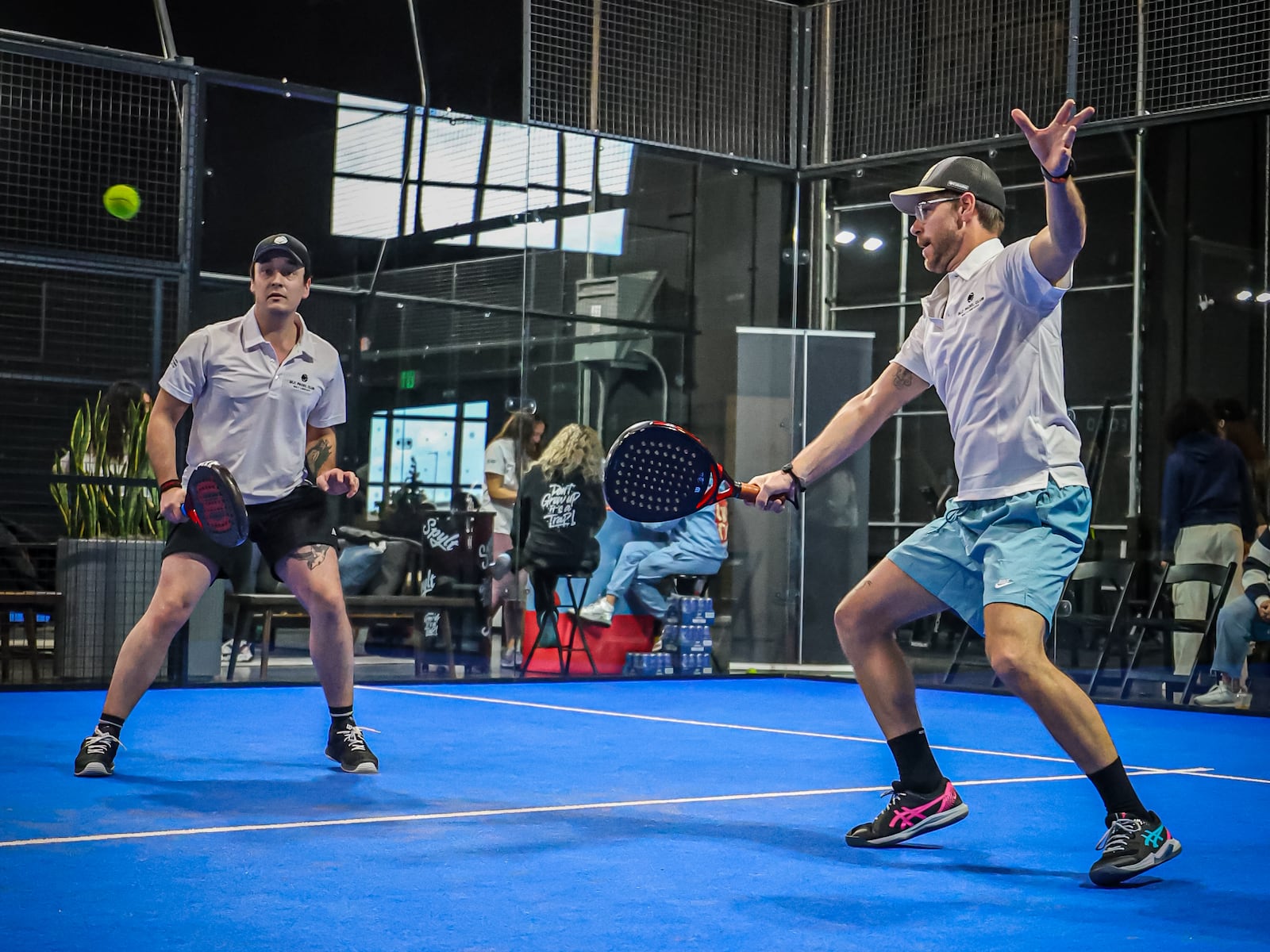
Utah’s newest obsession in casual and competitive racket sports has touched down in a large commercial space in Woods Cross, where the glass walls glow under bright indoor lights, and the rallies ricochet off surfaces that would be out of bounds in almost any other game.
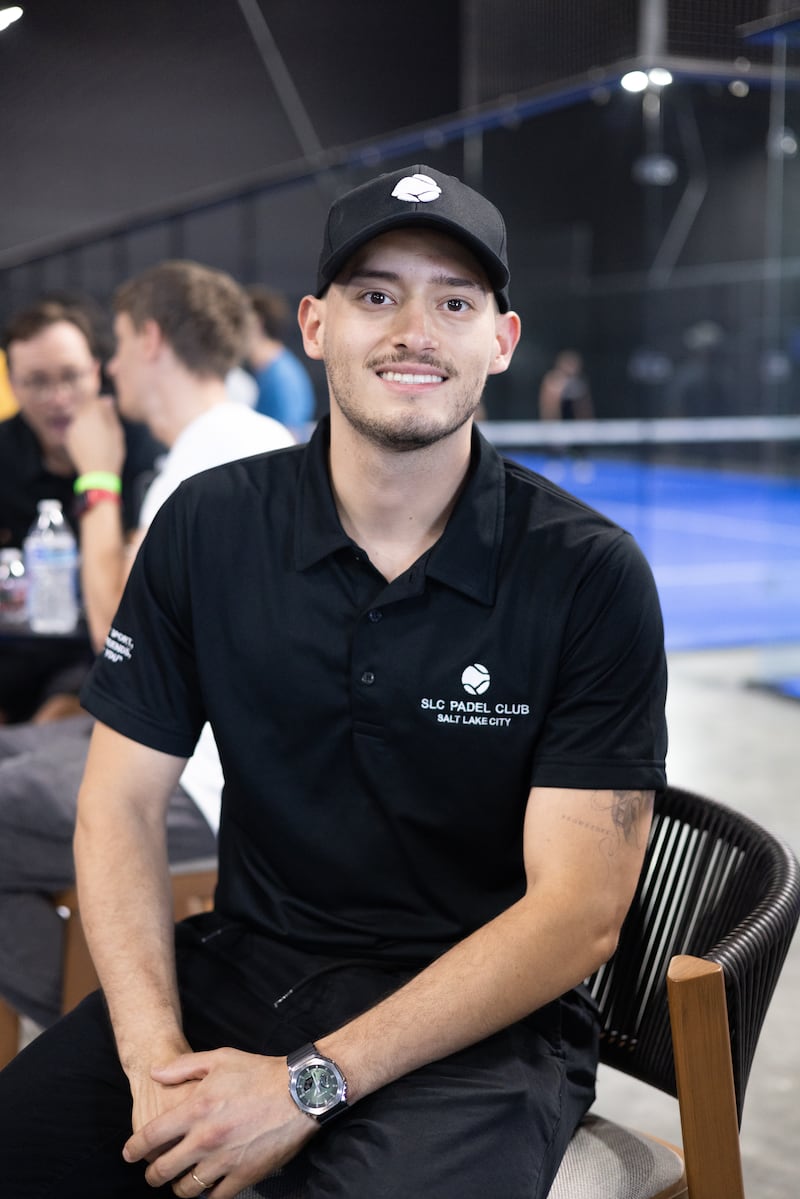
SLC Padel Club is the name, padel is the game. It’s more than a place to try a sport that’s on the rise; the club is a community project for its owner, 26-year-old Pedro Bautista.
“I wanted something community and sports related,” Bautista says. “Not something you only play for 90 minutes.”
From Venezuela to Utah
Bautista is from Venezuela, but moved to Florida for college. From there, he moved to Utah, and has been here for the last five years. He’s a trained biomedical engineer and worked in medical manufacturing. His sports background, until recently, didn’t include rackets. He preferred jiu-jitsu, boxing, CrossFit, running and swimming.
Padel, though, was always in his orbit.
“I have family in Miami, I have family in Europe,” Bautista says. “I have always seen how big it is … every time that I visited, I would play.”
He wasn’t a lifelong devotee. “Not consistent enough to be like a pro … or even intermediate,” he says, adding that he’s now “transitioning to an intermediate.” But he understood the size of the wave, and he understood Utah didn’t have it yet.
That combination — a global trend plus a local gap — was enough to get him moving.
A family business, not a hype project
SLC Padel Club bills itself as Utah’s first dedicated padel club, featuring indoor courts and programming built around open play, coaching and events.
Bautista says the club is a family business. It’s just him and his dad, who is also named Pedro, investing in the company, though his dad still lives in Miami.
“We always knew we wanted to do something together,” he says. “And for me, I wanted something community and sports related. And for him, he wanted something new. And of course … we wanted something that makes money.”
Miami was a non-starter in their minds. It was too saturated. Utah was the opposite. It was hungry for new activities, full of transplants and still early in padel’s U.S. expansion.
As soon as the idea solidified, he and his dad started building the brand before they even had a lease. They launched the website and social media early, then hunted for the right space. He had already seen announcements from others planning to enter the market, and he wanted to get ahead of the wave rather than chasing it.
When they found the Woods Cross location, he says, they didn’t hesitate. Part of the location’s appeal was the other buildings nearby. There was a soccer club next door with hundreds of kids, a school across the street, a CrossFit gym, a trampoline park and other fitness businesses.
“As far as we know … all of the clubs … are south,” he says, naming areas such as West Valley, West Jordan, Lehi and Orem. “None in this area. Davis County is ours.”
He calls it an untapped market with a built-in radius from Layton to Woods Cross.
Why padel, why now?
Padel’s shorthand is “tennis-meets-squash,” but the sport has its own identity. The glass walls keep the ball alive longer, and they turn points into puzzles. The paddle is solid with holes instead of strings. The ball has its own feel. The court plays like a contained arena where chaos is allowed — even encouraged.
Most importantly, padel is typically played in doubles. That changes the vibe immediately. Players aren’t just competing, they’re coordinating, adjusting and communicating. The built-in social structure is a big reason why the sport is booming globally, and why so many operators are sprinting into the space. Bautista has studied the sport’s growth projections but is also trusting the momentum he felt seeing padel played during his travels. Still, he doesn’t want to mimic everything he observed.
“There are these clubs that, for example, in Miami, they’re automated,” he says. “You just come and play, and there’s no one at reception. That may work over there, but that’s not really the vision that we have here.”
“The real competition … is sports that are not racket sports. The people that we really have to try to get through a facility … are the people that maybe have never swung a racket.”
— Pedro Bautista
The slogan is the strategy
Bautista wears the mission on a club-branded shirt. It reads, “New sport. New friends. New you.” It’s not just merch. It’s the whole business plan in six words.
“New sport,” he says, because Utah is still being introduced to padel. “New friends,” because padel is a social sport by design. Doubles is the default, and people often need help getting plugged in. He gives an example of a visitor from Mexico who didn’t know anyone in town. The visitor called the club and asked if they could find him three other people to play with. They did. Within weeks, Bautista says, the visitor had his own regular group.
“That makes you start. You need to meet people no matter what,” Bautista says.
Then there’s “new you,” because trying something unfamiliar tends to rearrange your routine. You gain new skills and new movement patterns. You also gain new social circles. The game becomes the reason you show up. The community becomes the reason you stay. The “stay” part is intentional.
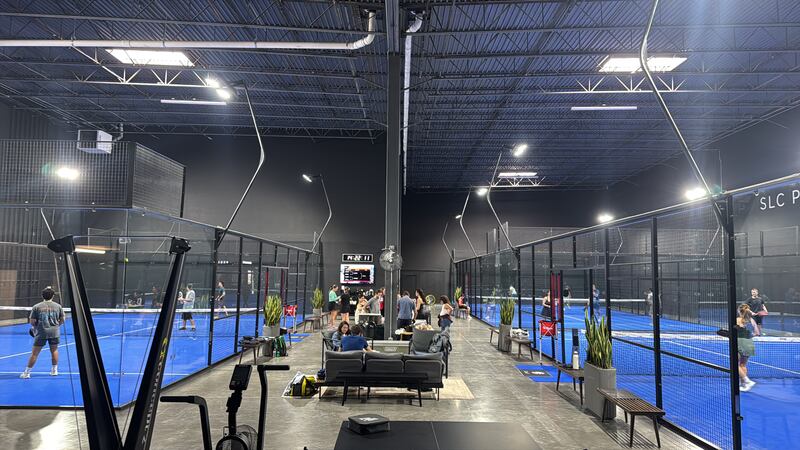
Bautista points to the space itself. There is warm-up equipment, places to sit and a casual hangout atmosphere designed to stretch the experience beyond “play for 90 minutes and leave.”
For locals and people who miss home
Utah is famously family-oriented, Bautista says, and that helps padel. Utahns are always looking for social, active and repeatable activities. But there’s another group he is paying attention to — transplants.
He says the club is already pulling in a mix of backgrounds and accents. In one snapshot, he rattled off players from Chile, Venezuela, Mexico, Paraguay and the U.S. That matters because padel isn’t “new” to many of them. It’s something they grew up with and lost when they moved.
“I have Argentinians that have been here for 10 years that haven’t had a chance to play again,” he says. “And as soon as we said that we were going to open, they started coming often.”
In other words, for some customers, SLC Padel Club isn’t just a new hobby. It’s a piece of home, rebuilt in Woods Cross.
Designing padel for newcomers
Bautista is candid that padel can feel less accessible than some other activities. Courts are specialized, equipment isn’t as ubiquitous and facilities require serious buildout. However, he’s trying to design entry points that make the sport feel approachable instead of exclusive.
The club offers memberships and drop-in play, plus events designed to reduce friction for newcomers. Memberships include longer sessions, included rackets, built-in matchmaking and discounts tied to specific days.
One signature example is Tapas Tuesdays. It’s a two-hour rotating-partners round robin. The club brings food, from Venezuelan to Argentinian to Peruvian. The social part is inseparable from the format. Bautista frames those nights as both community builders and skill builders. People meet, eat, play, rotate and improve.
They also run specials like family-oriented pricing on Sundays, bring-a-friend deals, and themed programming, including a “mom’s club,” he says they’re rolling out.
The pattern is clear. If padel is going to work in Utah, it can’t be a members-only bubble. It has to be a place where people can try it, meet someone, and come back.
Not the next pickleball
Padel is often framed as “the next pickleball,” but Bautista isn’t interested in picking a fight with any sport, especially not in a state where pickleball is thriving.
“Competition? Not at all,” he says. “Padel is its own thing.”
He also flips the usual comparison. In his view, the real competition isn’t pickleball, tennis or racketball. It’s everything that keeps people from trying any racket sport in the first place.
“The real competition … is sports that are not racket sports,” he says. “The people that we really have to try to get through a facility … are the people that maybe have never swung a racket.”
That’s the bet. If the sport is fun enough, social enough and welcoming enough, it won’t need to “beat” pickleball to win. It needs to be a club where you don’t just learn a new game. You end up knowing someone’s name by the end of the night.