
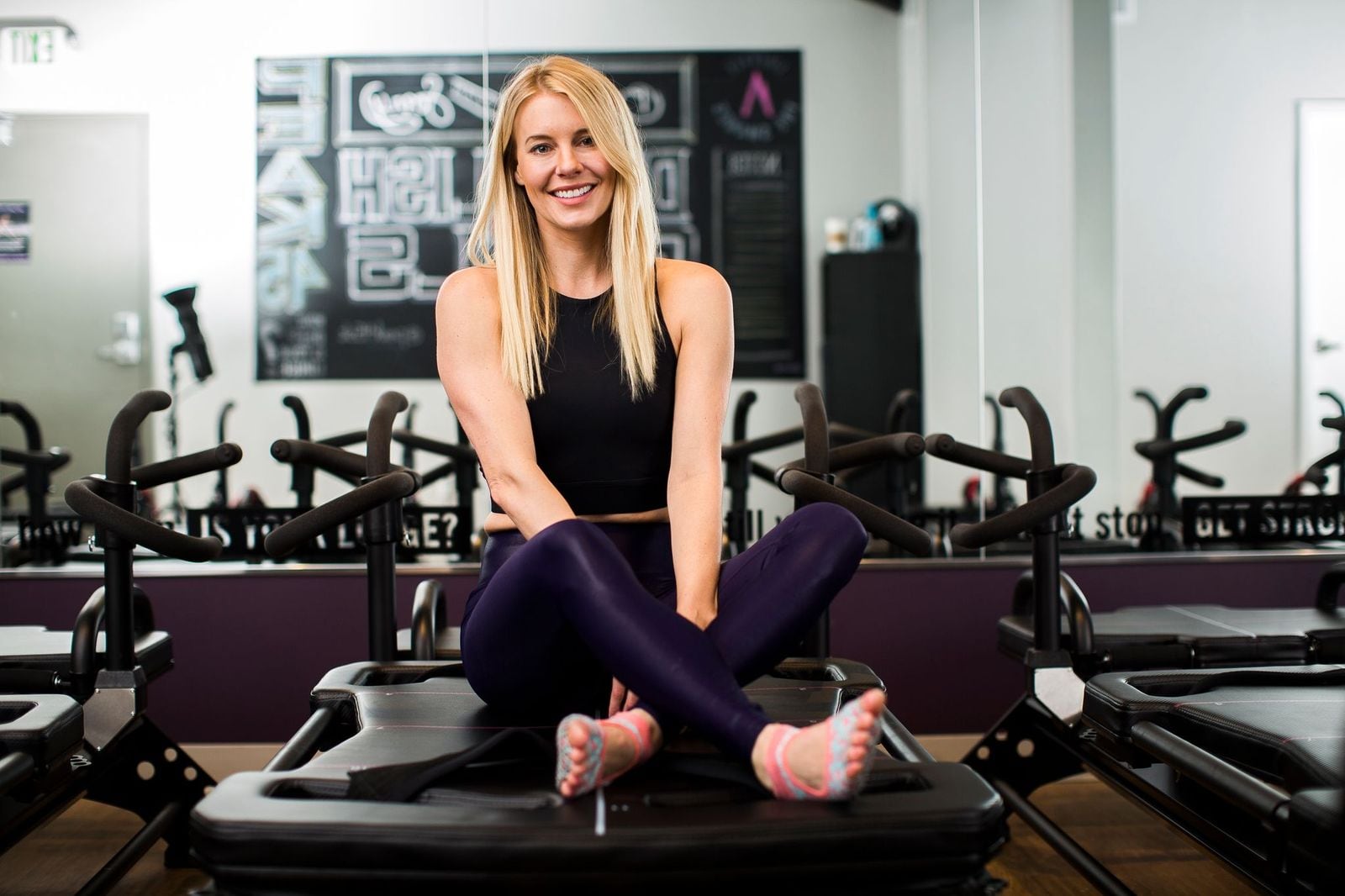
While Kristen Kenney may have been known for her camera-ready smile on the Jazz’s basketball court and her ability to tell stories, her tenacious edge drives her to build and create behind the scenes as the co-founder and CEO of Peak|45. “It’s like this bug … My mind is like, ‘What else can I do?’” Kenney says. “I love hustling.”
When Kenney was in college, she played Division I soccer at the University of Miami. That fed her competitive streak, but, “I had a love and passion for storytelling,” she says. “That’s the foundation of my career.” She got her first television job working for a local PBS station covering human interest stories.
PBS granted Kenney a leave of absence in 2007 to travel to Tanzania and film a documentary about a dear friend. While there and far from any hospital, Kenney contracted a life-threatening case of malaria. She got the medicine she needed, but that experience changed her. “I felt in my heart that I was meant to do something.”
That feeling led Kenney to create a nonprofit called Malaika for Life, “malaika” meaning “angel” in Swahili. “When I first was going to start the nonprofit, there were some people who told me, ‘You don’t know anything about that … I was like, ‘Oh no, I can figure it out,’” Kenney says. She dove into starting the website, learning all the legal requirements for creating a nonprofit, finding partner businesses, and organizing supply, production, and distribution. She helped Tanzanian women start a microbusiness creating bracelets that Kenney would sell, using the proceeds to buy malaria medication for children. “That was my first entrance into starting something from scratch outside of storytelling,” she says.
All that time, Kenney was relying on her income from her television job and never paid herself for her nonprofit work. “TV was something I was skilled in, but … it didn’t satisfy me 100 percent. When I was doing these things, like building and starting something from absolutely nothing, there was so much gratification.” That experience left Kenney with an itch to continue creating.
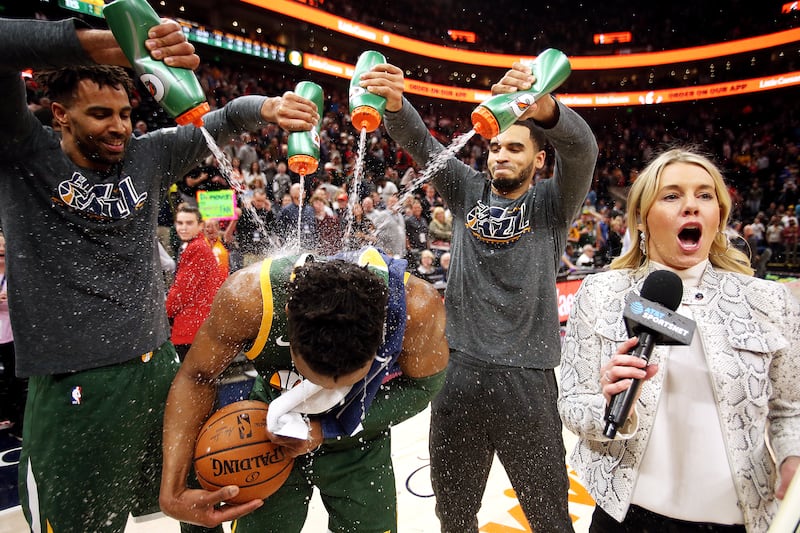
From PBS, Kenney moved through several high points in her television career, including covering the 2012 London Olympics, hosting a show on the Golf Channel, and even hosting college football tailgate shows. A big step came in 2016 when Kenney landed a job as the Utah Jazz’s first female sideline reporter.
Finding a fitness fix
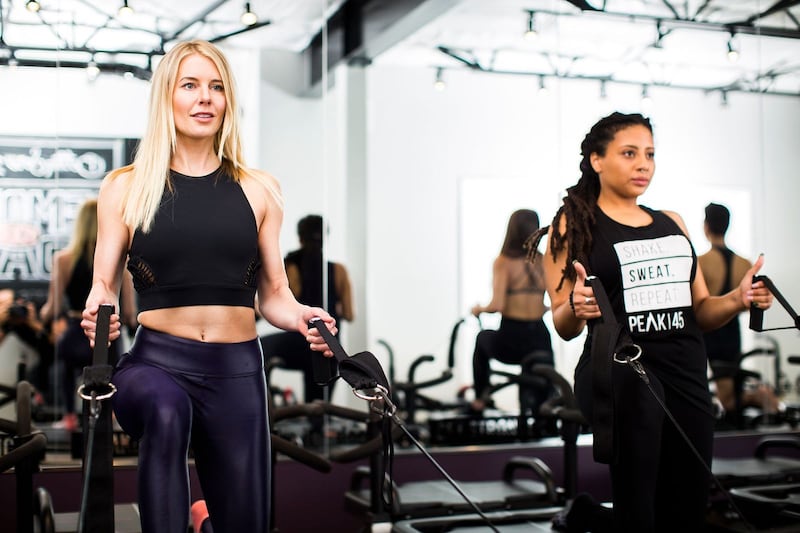
While Kenney was laying down roots in Utah, the Jazz took her across the nation. As she traveled, she would try out Lagree studios, exploring the popular fitness method known for being high-intensity and low-impact, combining Pilates with strength training on a Megaformer machine. Kenney had been introduced to Lagree while she was living in Los Angeles, its birthplace. “As a former athlete,” Kenney says, “I missed something like that that pushed your body but was also low impact,” unsuccessfully finding something similar in Utah.
Instead, Kenney found herself at Salt Lake Power Yoga (SLPY), where she asked her instructor if they knew of any Lagree studios nearby. Soon, Kenney was put in touch with the SLPY owners, who had been considering options to fill a small room off of the building’s kitchenette.
Greg Galloway, co-owner of SLPY and co-founder of Peak|45, wasn’t new to starting a business. “Most of my life has been spent in that realm,” Galloway says. “So, after a few different conversations, I felt like it was going to be a great partnership to start, and I was excited to start something from scratch and go from there.”
Growing the Lagree community
By 2017, Kenney and the SLPY partners had purchased eight Megaformer machines to fill the little room, and they called the studio Peak|45 for their 45-minute workouts. A Megaformer machine can run $10,000-$11,000, so Kenney was grateful for the cheap space where they could test the popularity of a Lagree studio in the market. “We started as small as we could,” Kenney says.
Unknowingly, the Peak|45 team was actually capitalizing on a key time for investing in Lagree as its popularity quickly spread across the nation. In 2019, Lagree was named the fastest-growing fitness trend in America. Within six months of opening, Peak|45 had gained enough popularity for the team to tear down a wall and install more machines. “People loved it, so it worked,” Kenney says.
Peak|45 was profitable after the first year, but instead of taking a salary, Kenney and the team reinvested all profits back into the business. “We had different jobs that were paying our bills,” Galloway says, with him running SLPY and Kenney continuing to work for the Utah Jazz. “We chose to pay our staff versus ourselves for years,” Kenney explains.
By 2020, Peak|45 was ready to expand to a second location in Park City. “We actually had quite a few people that were driving down from Park City, and even farther than that,” Galloway says, so the location was a no-brainer. However, four weeks after the Park City opening, COVID-19 hit.
“That was a time when my whole industry shut down,” Kenney says. The NBA suspended its season, and the rest of the world paused. “I lost my main income stream, and I had to shut down the studios,” Kenney says. “I went through a pretty heavy, really tough mental time, and I needed to step away.”
Kenney handed the business off to Galloway and Lacy Harrison, co-owner of Peak|45, who carried the company through the pandemic. “I was a little bit stubborn, and I made it our mission that we were going to come out of COVID,” Galloway says. In that time, he did a lot of heads-down work applying for grants to keep the studios afloat, keeping in touch with local regulations, and finding ways to welcome back clients who felt safe attending the studios. They also had to be careful with expenses, as they were operating at half-capacity. “Kristen was more front-and-center, and I like to be on the back end doing operations,” Galloway says. “I definitely had to take a more forward-facing approach with a lot of things.”
While Galloway was being stretched, Kenney was doing some growing of her own. “If I didn’t go through that period, I don’t know what I would be like,” she says. But over time, she felt ready to step back in, and by April 2025, she returned to help Peak|45 grow. “It was the right time,” Kenney says.
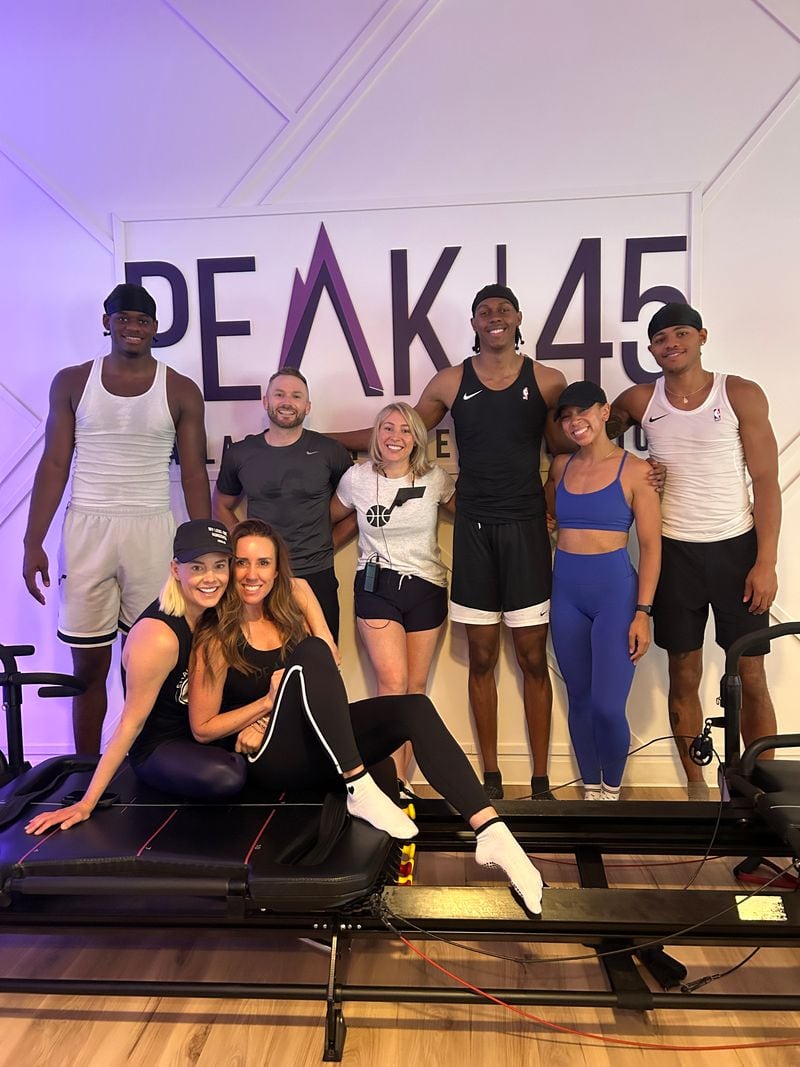
Among all the successes Peak|45 has experienced — including its expansion to five studios — the community that Kenney and the team created within Peak|45 is the true feat. In a modality known for high intensity, Kenney and the team “created this community where people feel loved, empowered, supported, uplifted and safe,” Kenney says. “It’s not about being strong enough, being thin enough, being whatever. It is enough to come where you’re at, and you feel safe.”