
Picture this: It’s the evening before Thanksgiving, and you answer a panicked call. It’s a dialysis center, and without their equipment working, the individuals they help face serious health risks.
The rest of the staff has left, and you were just about to follow. But this is urgent, and you’re committed to finding a solution even though they aren’t a current client. Thankfully, you’re able to give instructions over the phone that get the system up and running.
If you’re Brady Jones, you don’t have to imagine this scenario. Not only did it happen, but his business faces situations like this every day. Perhaps the most surprising part? We’re talking about a water company.
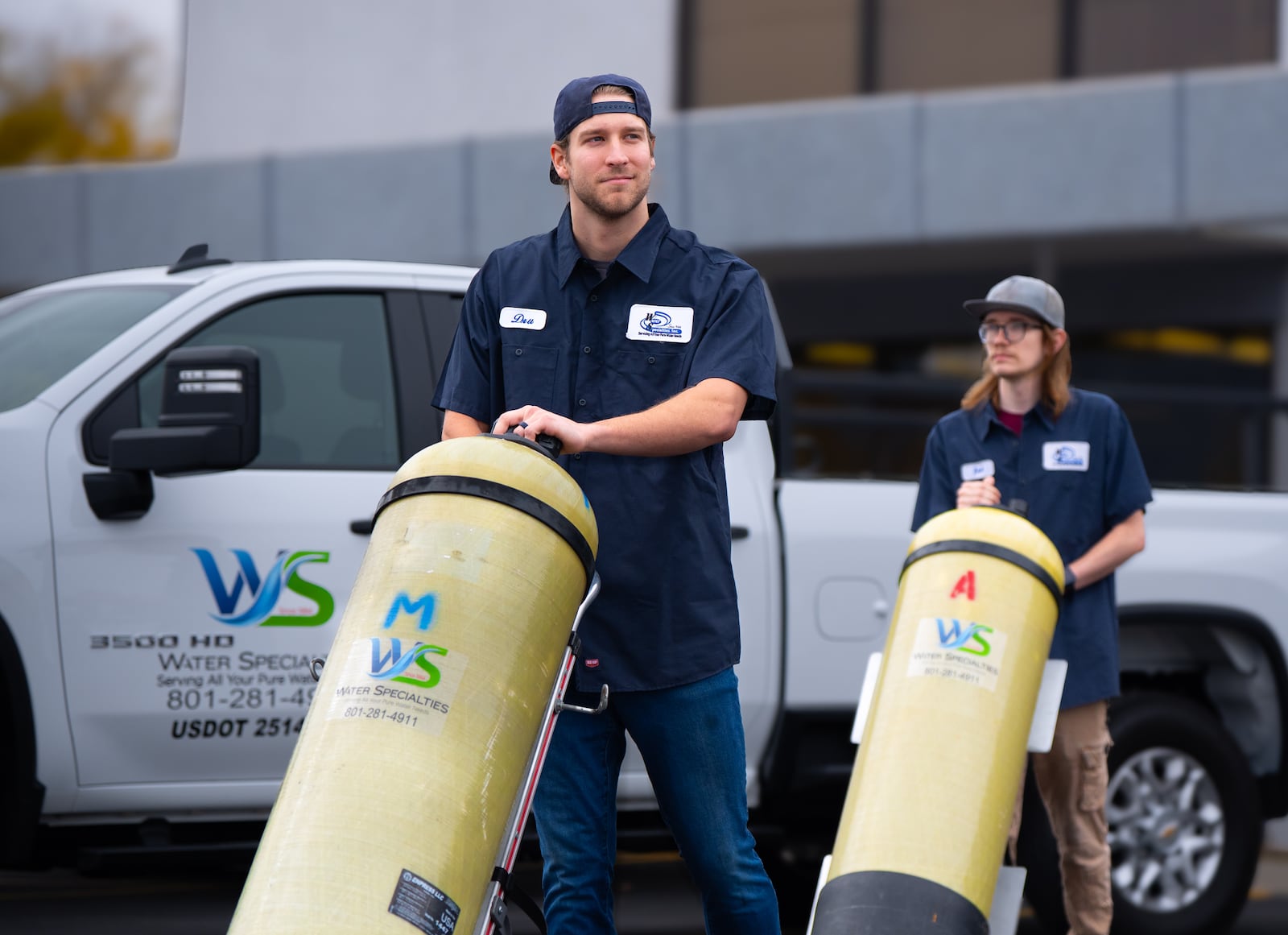
Jones is the owner of Water Specialties, which specializes in providing high-quality water services to businesses and residents. These services include everything from water coolers and residential systems to commercial deionization, filters and reverse osmosis. Primarily serving Utah, the company was started by Jones’ father in 1984 and has remained family-owned.
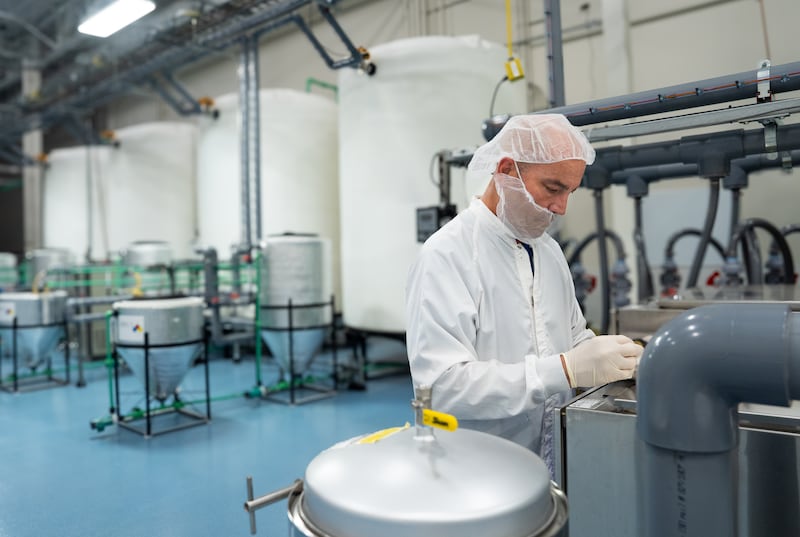
“Our main focus is ultra-pure water systems,” Jones says. “We engineer them, we build them. We have a contractor’s license; we install them, we service them. And all of them require a lot of constant service. We sanitize systems every day. Sometimes we’re at multiple locations in a single day.”
From a garage to multiple locations
After being passed over for a promotion while working at a national water company, Jones’ father decided to move on. Following a period of work for the University of Utah, he decided to return to water purification — this time on his own.
Today, Water Specialties holds its own against those big water companies. They’re even expanding with a third plant to meet the growing demands of the power industry. Such development is impressive for a family-owned company that’s considered a small player compared to national brands.
Although family-owned businesses make up around 27 percent of small businesses, they have seen little growth since 2014, according to the Small Business Administration. Water Specialties is part of a competitive industry, and Jones credits the company’s success to utilizing the latest technology, expanding clientele and a commitment to customer service.

“The main changes that have occurred [since 1984] are really the industries we deal with,” Jones says. “The semiconductor industry basically is the driving force behind all the innovations and pure water systems.”
With every smaller microchip produced, the water used to create it must be even purer. Similarly, water used for scientific testing also has increasingly high standards. Jones explains that, since water is the primary solvent used in laboratory testing, every impurity must be removed from it.
Changing instrumentation means improved water testing capabilities to match.
“In the ’80s, everything was measured in parts per million … and now everything’s measured in parts per trillion,” Jones says.
Bigger isn’t always better
When the dialysis center called for help, they picked Water Specialties for a reason.
“They said, ‘Our guys are trying to figure out how we’re going to get this up and running, and we can’t find anyone. We thought of you guys and know that you’re quick to respond. Could you give us a hand?’” Jones says. “I said we could; we’ll work something out.”
Jones knows that in the grand scheme of things, his company occupies a unique space. Jobs and contracts that are sizable for Water Specialties are small enough for other water companies to turn down or are pushed to the bottom of a maintenance list.
But that’s also where Water Specialties’ strength lies. They don’t lose track of their customers, they’re quick to respond to issues, and they have local specialists. Larger companies typically have to fly someone in since specialists are hard to come by.
“There’s always someone here answering the phone,” Jones says. “There’s always someone here who can answer any technical questions and help the customer out. We can always get people on site extremely quickly, within an hour or two. That’s really where we thrive, where other people can’t.”
Still, competition is tough. Jones says you “only get one opportunity” to make an impression in this industry.
“If you get in the door and can’t service [a water system] right, or you don’t have the technical background to be able to answer their questions and take care of this account, you’ll never get back in,” he continues.
Sometimes, those questions are baffling to even the most experienced water specialist. Jones recalls a high-profile Utah laboratory that had a unique bacterium enter their water system — something only found in elk’s milk. Jones and his team had to research what would kill that type of bacteria and how to eliminate it permanently.
“A lot of people think it’s just water. But there’s so much more to it; how the water reacts with all these other minerals and chemicals,” Jones says.
“Utah has a great economy and lots of businesses moving here, so hopefully that keeps us driving and growing.”
— Brady Jones
Hand-in-hand: Management and talent
Water Specialties isn’t the same business it was in 1984 — technologically or managerially. “I’m definitely not my dad,” Jones says.
He says they often clashed and had conflicts due to different approaches to handling things. Even so, it doesn’t seem to have affected employee morale. Many employees have been there more than a decade and have experienced both management styles.
“We still get compliments regardless of who was running the company. I think the main focus is just keeping the customers happy, being quick to respond and making sure we’ve got educated people here.”
Another contributing factor may be the focus on talent training and retention. Finding water specialists is a persistent challenge. It’s not a job option many think of, and there isn’t a lot of information on how to get started. Most specialists are already employed by large companies outside Utah, making it tricky to find anyone local.
Other complications include smaller water companies that are bought and then eliminated, which Jones says has “destroyed the market and talent pool.”
Becoming a water specialist requires completing training and getting certified through the Water Quality Association. There are only a few ways to get into this career, says Jones. One is to obtain an engineering or similar degree through a university, or to find a company that will help sponsor you through the training. Water Specialties does the latter, and they were the first company to have certified master water specialists in Utah.
Keeping his current team happy while balancing customer demands requires balance, but Jones knows it’s essential.
“Whether it’s a good economy or a bad economy, whether there’s tons of people available to work or not, it’s still difficult to try to find someone capable or knowledgeable in this industry.”
A clear future
Despite technological and talent challenges, Water Specialties looks forward to remaining family-owned and Utah-based. Jones says the company is looking to get into mobile water purification systems; trailers that can provide purification needs when labs, power or gas companies are undergoing renovations but still need water. It’s another benefit to being a smaller company — bigger companies have decided to pursue bigger profits and abandon their mobile equipment, leaving a hole for Water Specialties to fill.
The residential systems side of the business is also strong. In fact, they haven’t had to advertise for it in years thanks to word-of-mouth referrals. Most inquiries come from the labs or other businesses that Water Specialties services; employees are impressed and want to know if they do residential work.
Although Water Specialties also does work in Nevada and Wyoming, Jones says Utah is the ideal place for the company to be headquartered.
“Utah has a great economy and lots of businesses moving here, so hopefully that keeps us driving and growing,” he says.
