
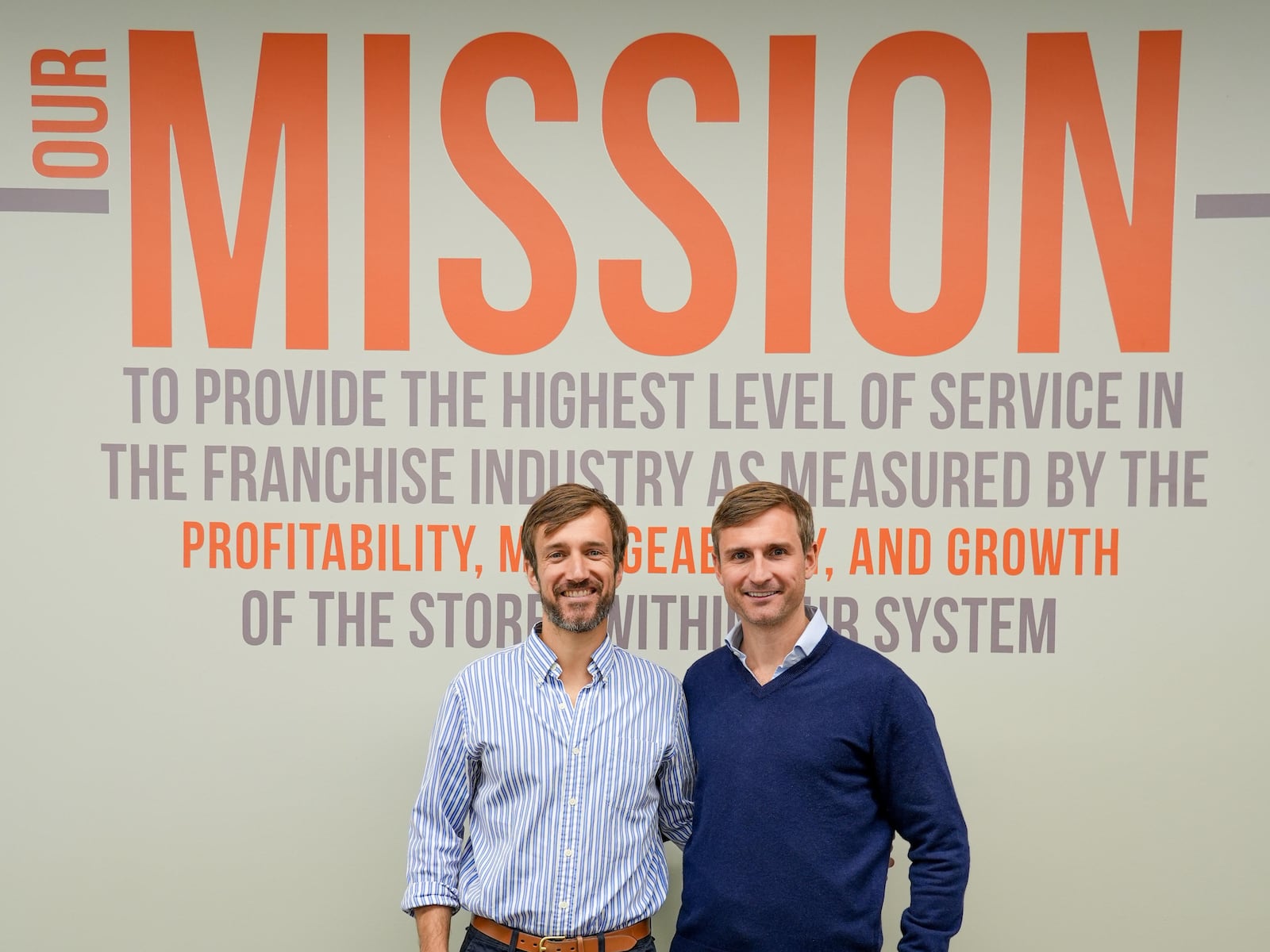
When Zach and Tyler Gordon first became acquainted with Uptown Cheapskate and Kid to Kid a few years ago, they initially thought about opening their own stores. But as the brothers were introduced to the profiles of different franchisees, they became excited about the possibilities in front of them.
“We almost couldn’t believe what we were seeing in terms of growth opportunity,” Tyler says. “It just got us excited about the long-term prospects.”
Wanting to see the growth potential through, the Gordon brothers offered to buy a controlling share in BaseCamp, the parent company of Uptown Cheapskate and Kid to Kid. For BaseCamp co-founders Brent and Shauna Sloan, who are still actively involved in the business, both as franchisees and board members, the offer came at the right time. But more importantly, it came from the right people.
“My wife and I recognized that to grow [BaseCamp] into a company, say, the size of a Winmark, we needed different skill sets than we had … and these were the right guys to do it,” Brent says. “I’m very pleased with what they’re doing. I think they’ve been tremendous partners.”
Combining Zach’s background in franchising with Restaurant Brands International and Tyler’s background in private equity investing, the brothers appeared to have the skills and experience to take BaseCamp Franchising to the next level. And in just over three years, they’ve done exactly that.
As of 2025, Uptown Cheapskate and Kid to Kid boasted over 280 operating stores across the U.S., with more than 50 in development. Since the Gordon brothers joined the BaseCamp team three years ago, system-wide sales are up 50 percent, and they recently surpassed the $300 million mark.
So, how did they do it? By troubleshooting processes and ensuring they’re as streamlined as possible.
More process, more preparation
When Zach and Tyler took the reins at BaseCamp, there wasn’t a comprehensive set of tools or roadmap for opening new stores. Instead, the information was scattered. Many employees across franchises held a piece of the operations puzzle.
Now, Zach says, they have an 10-person team fully dedicated to the new store process.
“It’s operations, store design and construction, [and] marketing,” Zach says. “We have the entire process mapped out.”
In addition to a dedicated new store team to help franchisees, Zach designed the new store playbook to guide franchisees through the process of opening a new store.
“We’re always making improvements, frankly, we never reach the standard of perfection that we vie for, but I’d say that pretty much everything you need to know from our experience is in what we call the new store playbook,” Zach says, “and then all of the accompanying processes that we have around that kind of core roadmap in the new store playbook.”
That internal shift had great external results. In 2024, Zach says new stores on average had really strong grand opening weekend sales. This year, they’ve opened even more stores, and the average grand opening weekend sales are up two times, representing a 100 percent improvement.
“You can’t underwrite a business based on one weekend of sales. However, we’ve seen that if you have a really strong grand opening, the correlation then with having a really strong first year and then a really successful store longer term is very high,” Zach says. “It seems like more process, more preparation, more visibility into what needs to happen when, and then a team of people making sure it gets done … would lead to better results. That’s definitely what we’ve seen.”
Find the right people
Another small change with a big impact is tightening franchise applicant standards.
“If you’re a prospect, they have to really know if you have the ability to run one of these stores successfully,” Brent says. “The level of success based on the type of people we are recruiting and the processes that we’re implementing — especially on the front end — has borne tremendous dividends.”
Tyler says much of what they look for in a potential franchisee isn’t the kind of thing that will necessarily show up on a resume.
“It’s mainly about a willingness to work hard, a determination to succeed, an ability to build, manage and motivate teams, and a desire to learn from and follow our franchise systems,” he says.
Another critical factor? Realizing retail is open seven days a week.
“A lot of people think they want to be a business owner until they realize what business ownership entails,” Tyler says.
To find these sorts of people, Tyler says they’ve made two changes in particular:
- Be extremely direct about expectations. He says they’ll even overemphasize potential challenges to applicants, so anyone who joins the franchisee community does so with eyes wide open.
- Be highly selective. Because this is an incredible business opportunity, Tyler says they have the luxury of being selective. Currently, they reject more applications than they accept, and the bar continues to rise.
The biggest red flag, according to Tyler? Overconfidence.
“Just because you love thrifting doesn’t necessarily mean you’re well-suited to own a thrift store.”
Find the right business
Before you can find the right people to run a business, you have to find the right business. For the Gordon brothers, finding the right business requires a mix of logic and intuition.
On the logical side, Tyler says one of the major things he likes to focus on is durability.
“There are so many trends that end up being a flash in the pan,” he says. “Whether you think about a specific business or a set of industries, not just pace of growth but durability of growth is really critical.”
According to Tyler, there are two elements to trend durability. The first, and easiest, is backward-looking. With a business like BaseCamp, which has experienced steady growth since the first Kid to Kid opened in 1992, there is over 30 years of data that can be analyzed to determine durability. It’s a business that has survived years of economic turmoil and likely will continue to survive and thrive in the years to come.
The second element is a little trickier to analyze, but it provides more value, Tyler says. Forward-looking requires observing what has driven business performance historically and analyzing whether those same trends will continue for years to come.
Tyler points out that around five years ago, the idea of developing or acquiring subscale software development or software companies was attractive. But now, AI has thrown software businesses for a loop.
“You could have been right backward-looking, but unfortunately very wrong forward-looking,” Tyler says. “So there always has to be that combination of grounding yourself in what has happened historically, and really thinking, are those key drivers of business performance things I can get comfortable with on a prospective basis as well?”
Logic can’t be the only driving force, though. That’s where intuition comes in. Zach says it was vital for him and his brother to find a business that resonated with them. There’s no perfect business, he says, but it’s critical to find a company you care about.
“There’s so much opportunity ahead that easily stretches the next 10-20 years, and that was really important for the two of us. We weren’t just trying to come in and find the next stepping stone in our career, but find a thing that we can sink our teeth into and hopefully grow and add value for a very long period of time.”
— Tyler Gordon
“Building a business is really tough. It takes a very long time,” Zach says. “You’re going to be working, living, breathing the industry, the business itself, day in and day out, so you want to make sure you’re doing something good that resonates with you on some level.”
Previous experience with an industry can be a huge help, he says. But perhaps more important is the “feel good” part.
“Any business where you, as a participant on the business side or as the consumer, can feel good about what you’re doing, either because it’s healthy for you or it’s healthy for the environment or sustainable, that just intuitively makes sense as a place you’d want to be,” Zach says.
Knowing that Uptown Cheapskate and Kid to Kid bring value to consumers by making things affordable, while also keeping clothing out of landfills, the Gordon brothers can feel purposeful going to work every day.
“At Burger King (working with Restaurant Brands International), I could tell people I’d sold 50,000 Whoppers in a year. I don’t feel bad about that, but I don’t feel great about it,” Zach says. “(With BaseCamp), there’s fundamental value and on top of that, you can feel really good about what you’re doing.”
This is the place
The future is bright for the Gordon brothers, and for BaseCamp, as they plan to settle in for a while.
“There’s so much opportunity ahead that easily stretches the next 10-20 years, and that was really important for the two of us,” Tyler says. “We weren’t just trying to come in and find the next stepping stone in our career, but find a thing that we can sink our teeth into and hopefully grow and add value for a very long period of time.”
That desire to commit to a business long-term was key to the Sloan family feeling good about turning over a controlling share to the brothers.
“One of the things that we liked (about Zach and Tyler) is, these were not traditional venture capital guys,” Brent explains. “They said, we don’t want to come in and do this for five years and then flip it and go do the next thing. We want to come to a place where we can put down roots, stay and maybe never leave the company. We want to grow it and grow it and grow it.”
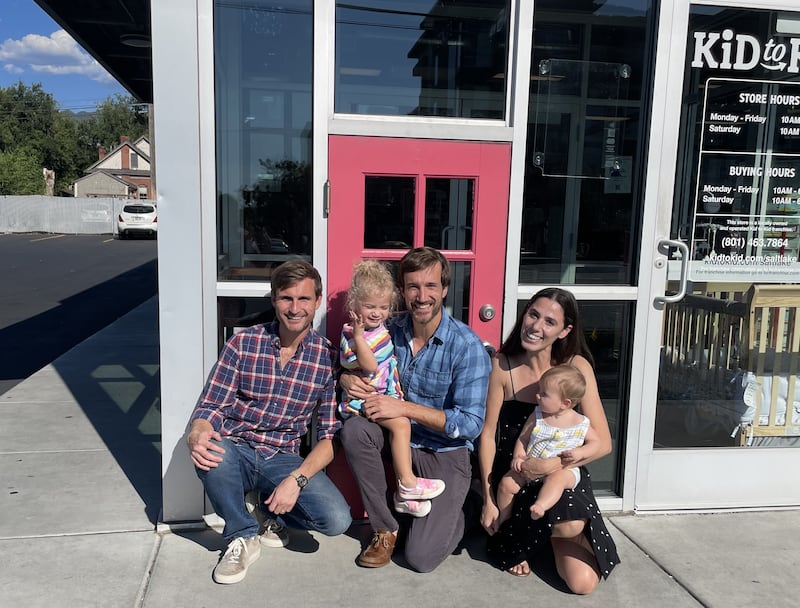
For the Gordon brothers, Utah is the perfect place to grow the business and their families.
“We feel so incredibly fortunate to have ended up in Salt Lake City,” Tyler says. “It’s purpose-built for young families, so as far as a place or a backdrop that we, our families, our lives could be for the next several decades, I don’t think we could have bumped into a better set of circumstances.”