
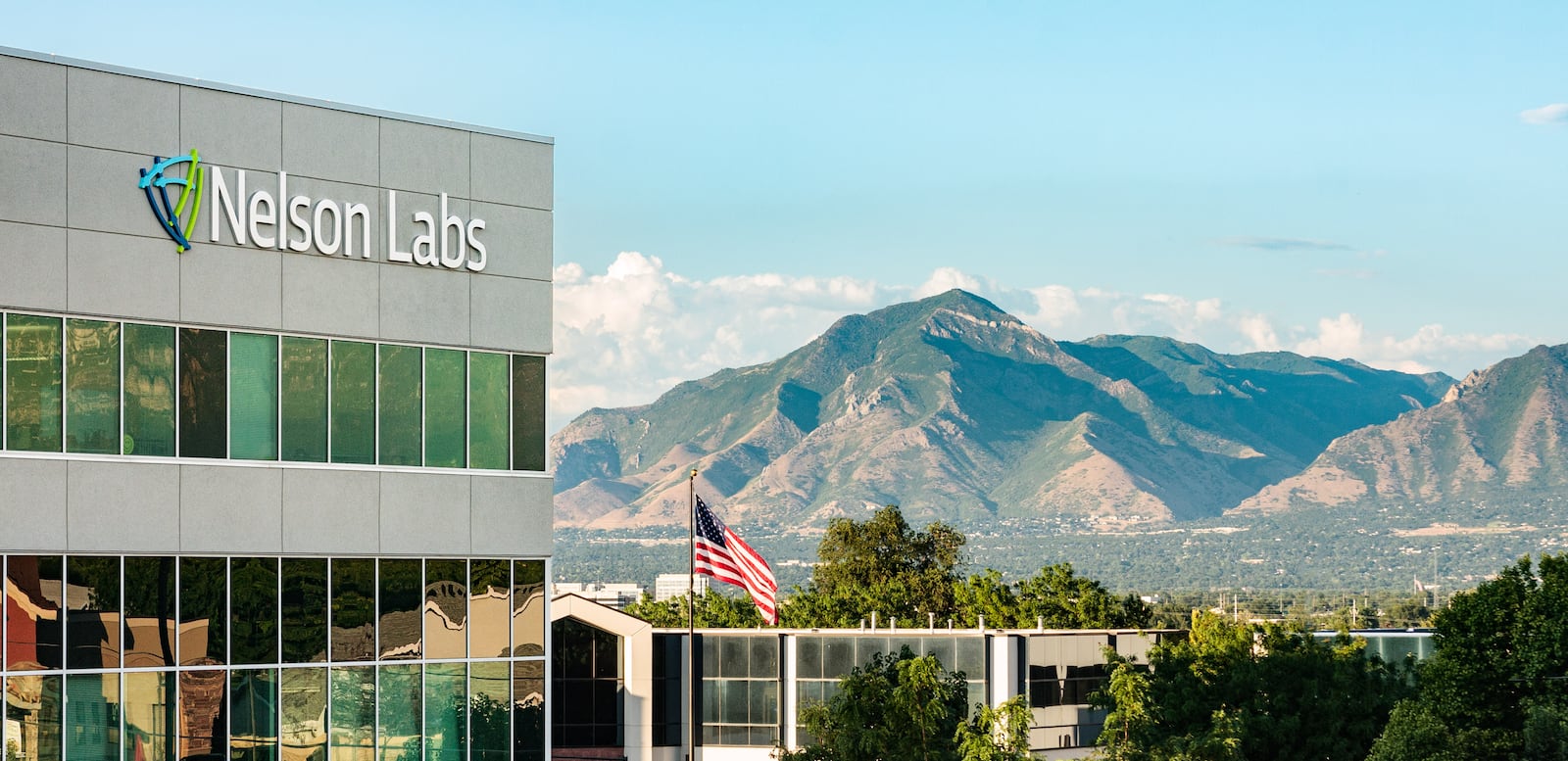
Think of major technology businesses in Utah and Nelson Labs might not immediately come to mind. Those who work for Nelson Labs, which is celebrating its 40th anniversary, are proud to work for a widely impactful yet relatively unknown company.
“If you talk to anybody in the medical device or pharmaceutical world, Nelson’s like a household name,” says Thor Rollins, biocompatibility expert at Nelson Labs. “But if you talk to someone on the street, Nelson doesn’t come up … It always surprises me that people don’t realize a company like this is sitting right there in the valley.”
A humble heritage
Established in 1985 by Dr. Jerry R. Nelson and Lynda S. Nelson, the Salt Lake City-based company began with just a handful of employees, providing microbiological testing for medical devices. Today, there are multiple locations worldwide employing more than 700 scientists.
Joseph Shrawder was named president of Nelson Labs in 2020. He’s proud to say the company has stayed true to the original vision, and everything they do comes back to the “original core” of safety and regulatory compliance.
“Safety means more than just sterility,” says Shrawder. “It means biocompatibility. It means that the product is safe and sterile — and remains so through the supply chain and distribution by having packaging that will protect and keep it safe.”
Rollins, who joined the company 25 years ago, says the company wouldn’t be successful if it didn’t continue to hold true to the goal of getting life-saving devices and pharmaceuticals to patients.
“Even though we started in a small little lab up in Research Park, to now having global labs across the world, that is pretty much a value that has stayed consistent from going to a local mom-and-pop shop to a publicly traded company,” Rollins says.

Becoming a global leader
If a foreign company wants to develop a new medical device or have its current one approved in the U.S., Nelson might be their first stop. The company can help with every stage of development, and the company knows the final product will be safe and meet regulations.
This reputation is the result of many strategic decisions. Shrawder highlights a few key milestones:
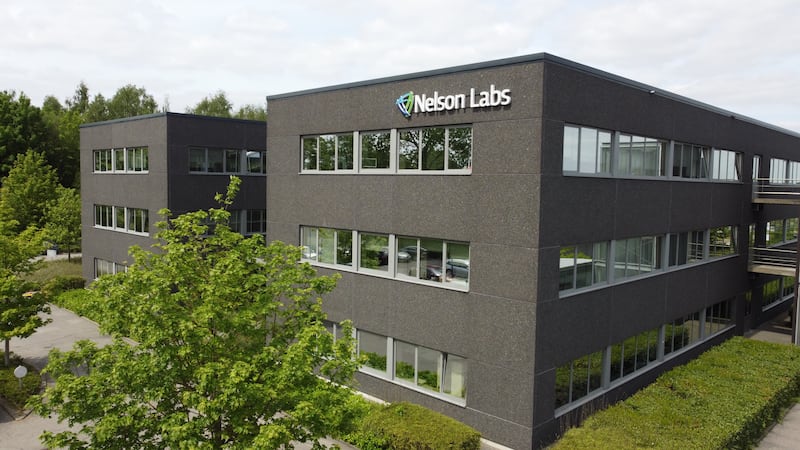
“The acquisition in 2017 of our European lab in Belgium really got us aggressively and effectively into the pharmaceutical industry and the analytical chemistry testing space,” Shrawder says. “We’ve had many others along the way as we’ve added products, services and distribution into other parts of the world.”
He also cites the 2016 acquisition of Nelson Labs by Sotera Health as a turning point. Their sister company, Sterigenics, is the second-largest global contract sterilization service company. This partners well with Nelson’s testing capabilities, which shortens turnaround times for their joint customers who require products to be sterilized and tested.
Nina Moreno, global segment director at Nelson, agrees that the Belgium lab is one of the more significant milestones and says Nelson also highlights the power of employee involvement.
“Something that’s been fantastic with our company is that we’ve encouraged and developed people to be technical experts and represent our state on a global platform,” says Moreno. “Being a part of an organization that encourages that growth and development has been amazing.”
Shrawder says participating in these boards and organizations is partially how the company manages to adapt to changing standards and environments.
“We have to evolve our testing capabilities to match when testing requirements get more stringent, and we have to be able to deliver for our customers,” says Shrawder. “One of the ways we do that is we actively participate in the organizations and committees that are actually developing and ultimately setting these standards.”
Tackling new challenges
The medical device and pharmaceutical industry is constantly evolving. Regulations change and technology evolves. Yet Nelson has managed to grow and provide critical health care support. During the COVID-19 pandemic, for example, they were one of the only labs in the world to provide pretesting for N95 masks, according to Rollins.
One recent development is the launch of RapidCert™, a new method of biological indicator sterility testing. This shortens the time it takes to prove that a product has been properly sterilized, sometimes down to just two days. In healthcare, this difference can be critical.
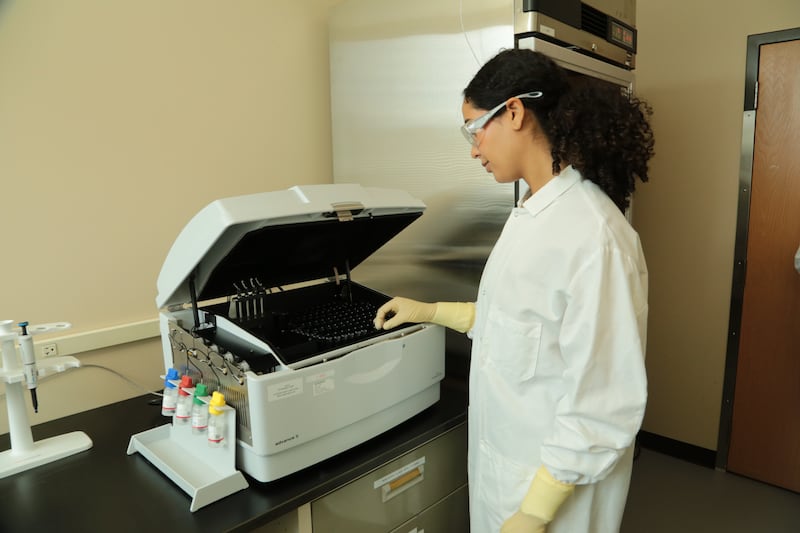
“In some cases, we have patients waiting for [a device] to be sent to the hospital,” says Rollins. “So seven days doesn’t sound long, but when you have a loved one waiting for a life-saving implant, that seven days is a long time.”
Moreno explains that using science to create this rapid testing and make products safe is all thanks to the quality of the experts involved.
“[RapidCert™] brings the patient some advantages, and it brings healthcare providers advantages as well,” Moreno says. “And we do it in a way that’s completely based in the science and quality expectations, so we can feel good about the work that we’re doing.”
Nelson has also been expanding further into pharmaceuticals. Moreno says they are working on honing into pharma expectations and test requirements so they can expand those offerings.
Part of medical device testing includes ensuring the packaging of the device is also safe. Moreno says they have been expanding their capabilities in this area, too, including pre-filled syringes.
“We are adding entirely new testing to the company as well as expanding on offerings that we already have,” says Moreno.
Also looking ahead is Rollins, who says a recent industry shift is seeing a trend toward home-centered and wearable devices. Nelson wants to remain proactive in this area and work to help manufacturers have safe devices.
“We’re trying to help initiate this by looking at new testing that these types of devices need … because a lot of these manufacturers are in the digital space, the technical side, and not on the testing side,” says Rollins.
Utah: A fitting home
Despite global opportunities, Utah is still the right fit for Nelson Labs.
“We have a very positive environment here. We have an amazing workforce,” says Shrawder. “We have terrific universities in the state that continue to produce a pipeline of great talent for the roles we need to fill. We have a very supportive environment in terms of government and in terms of regulation … we’re in an area here in Utah that is becoming known for growth in the life sciences space, so to be a part of that makes us very proud.”
He says while the company will continue to expand globally, he can’t imagine a scenario taking the headquarters away from Salt Lake.
Rollins also notes the “special sauce” of being located in Utah. He says the state has a culture of hard-working and educated individuals who are looking to do something they love in a place where they can raise a family.
“That’s why we got a degree in science — because we love it,” says Rollins. “We get a lot of individuals from these universities who are hungry to make their name in science.”
Nelson works closely with universities, with some employees working as adjunct professors nationwide. The company offers internships that expose students to various aspects of the business. Rollins says while there’s a reputation that you can’t make a career in science, places like Nelson make it possible and are eager to find great talent.
Shrawder also wants the company to be known for its culture, not just the products it produces.
“We take pride in being a good employer, in being a great place for people to work. We take that seriously,” Shrawder says.
Continued stability
Even though Nelson Labs might not be a household name, Moreno says that means they’re doing their jobs.
“What we’re doing is making sure health care workers don’t need to be concerned that the materials they’re using are unsafe,” she says. “And then on the other side of that, patients don’t have to wonder if this particular item is going to cause an issue for me … so while it’s not flashy, it’s certainly critical to supporting global healthcare expectations.”
Most businesses don’t last more than five years. For a company that started with under 10 employees in a small city, the 40th anniversary is an opportunity to recognize their achievements and renewed motivation to continue forward.
The company’s president hopes the anniversary signifies stability and helps others recognize their hard work.
“I think what we’re most proud of is the resilience and durability of this company and the fact that it has evolved to changes in regulations and market dynamics; being viewed as the science and technical leader that, when customers really have a tough problem to solve, they come to Nelson Labs.”
