

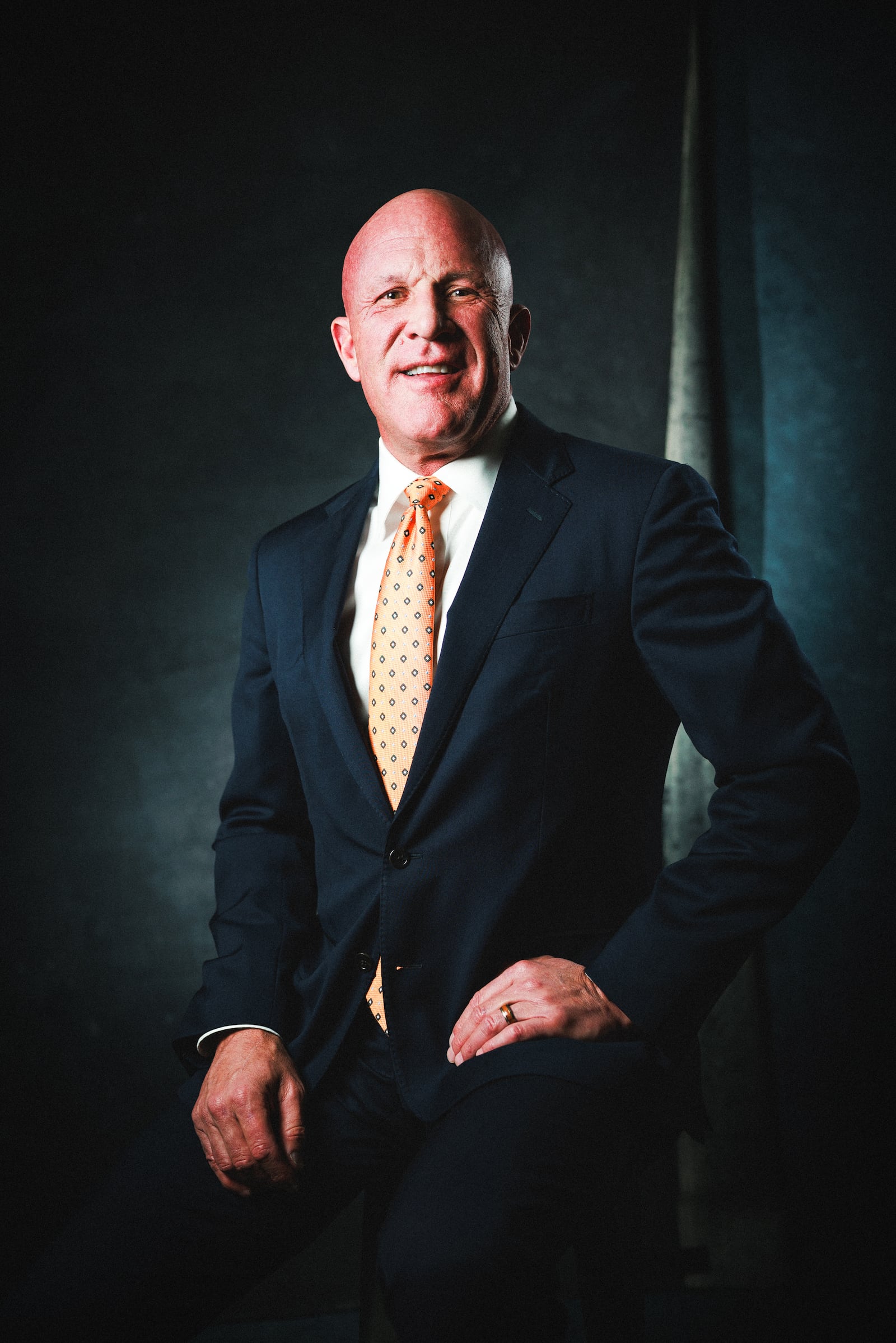
Rob Allen
CEO & President | Intermountain Health
What emerging market trends or disruptions are you preparing your company for?
Healthcare is facing a number of challenging trends we have to prepare, plan and adjust for. The first is staffing. We face a staffing shortage in almost every category of caregivers and providers. In addition, the nation’s population is aging. Many of our doctors will be retiring in the coming years. Future trends show increasing patient needs and fewer hands to provide that care. So, we’re focused on redesigning models of care. We’re focused on making healthcare processes and experiences smoother with less administrative burden, and we’re focused on training more physicians, nurses and other clinicians to take care of the people in our communities.
Another headwind we’re facing is legislation passed in Congress this last year that will take nearly $1 trillion out of funding for Medicaid patients over the next 10 years. These are patients who are underserved in our community and experience financial distress, and Medicaid is a safety net for them and their families. For Intermountain Health, it will reduce our payments by hundreds of millions of dollars, and we are working hard to adjust our expenses and provide avenues of care for these people when they need us most.
What has been a significant challenge you’ve faced? How did you overcome it?
One of the biggest challenges in my entire career was the pandemic. In healthcare, as you can imagine, it brought a new set of realities that we had to face every day. Working with our caregivers, we were able to make sure we were focused on taking care of the patients and the community at a time when we didn’t know at the beginning of the pandemic what the disease would really bring.
I was so proud of our caregivers and how they showed up with bravery to take care of our communities in the face of the unknown and at personal risk to them and their families — because they believed in what we do. Our job is to make sure we take care of you when you need our services.
The pandemic was also a time when we had to face the financial realities of shutting down many services when the communities slowed services and we canceled all elective cases. Fortunately, Intermountain Health is a strong organization, and we were able to keep all of our caregivers employed during that time so that their families continued to have income and were able to be positioned to take care of our community needs as the pandemic progressed.
How do you define success for yourself and your company?
It is a privilege to serve as the president and CEO of Intermountain Health. We were founded in 1975 when The Church of Jesus Christ of Latter-day Saints gifted its hospitals to the community. At that time, Intermountain received a charge from church leaders to be a model health system. As the leader of Intermountain Health, it’s my responsibility to carry forward that charge, along with the charge to be a model health system was a statement to be a “shining light to the nation.”
We work hard every day with our caregivers to take care of the health needs of our communities when they need us, and we are also continually looking at how to improve. For decades, we have been recognized as a leader in clinical quality in the United States, evidenced by industry benchmarks and national recognitions. One of these is Premier’s Top 15 Hospitals/Health Systems, a list of hospitals and health systems across the country that provide the best outcomes for patients. Those outcomes are studied using AI tools, and Intermountain is named as one of those top 15. What that study found was that if the rest of the country practiced medicine like Intermountain Health and those other 14 identified health systems, 171,000 Americans would not have died last year, and 336,000 additional patients would not have had complicated hospital stays.
So, the work Intermountain doctors and caregivers are doing is a shining light for others to engage in. As we’re fulfilling the charge we’ve been given, we work harder to further that charge. Even though our numbers are excellent, we recognize there’s more opportunity for us to improve — so our clinicians not only give great care today, they’re working hard to improve that care for tomorrow.
