

This story appears in the September 2026 issue of Utah Business. Subscribe.
Imagine you are walking along a river and hear a cry for help. You jump in and pull the person to safety. Moments later, another comes down the river, then another, then another. Soon a crowd of rescuers is pulling people from the water, exhausted and overwhelmed, until one of them stands up and starts running along the bank. “Where are you going?” you shout. “We need everyone here.” The rescuer replies, “I’m going upstream to find out why so many people are falling into the river.”
–The Suicide Prevention in the Workforce Employer Toolkit
Behind Utah’s strong economy and high quality of life, a quieter struggle affects individuals in every corner of our state. According to the National Alliance on Mental Illness (NAMI), roughly 700,000 adults in Utah live with a mental health condition, more than three times the population of Salt Lake City; and 1 in 20 adults have serious thoughts of suicide each year. These aren’t just numbers. They are a coworker, a neighbor, a friend, a parent. In some cases, it’s us. This moment is serious and requires significant effort and support from everyone.
The encouraging news is that Utahns are working hard to help. Business and public leaders, health systems, and philanthropists are stepping forward with new resources, new places to turn and a real openness to talk about what so many Utahns quietly carry.
We are moving closer and closer to the goal that everyone experiencing a mental health crisis has a safe person to talk to and somewhere safe to go. Consider just some of the recent community efforts happening:
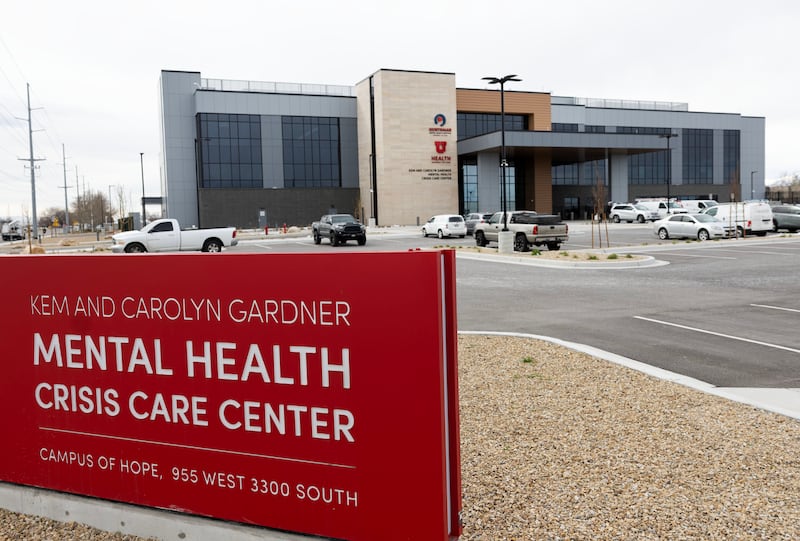
- The Kem and Carolyn Gardner Mental Health Crisis Care Center opened in South Salt Lake, providing 24/7 walk-in care for adults in crisis, regardless of ability to pay.
- The Huntsman Mental Health Institute launched a Youth Crisis Care program offering the same around-the-clock walk-in support for children and teens ages 5 to 17.
- A partnership between Intermountain Health Primary Children’s Hospital and the Trauma and Grief Center screens children during routine visits and trains therapists across Utah to provide care before trauma suppresses or leads to adult behavioral health issues.
- The University of Utah received a $75 million gift from the George S. and Dolores Doré Eccles Foundation to build a new 800,000-square-foot hospital and medical campus in West Valley City.
- The 988 Suicide and Crisis Lifeline marked its four-year anniversary. Last fiscal year, Utahns called nearly 115,000 times, a 25% increase from the previous year.
- Utah’s workplaces, leaders, managers and employees alike are talking candidly about mental health and are building solutions side by side. We are seeing more mental health-focused summits and forums, such as Utah Community Builders’ Workplace Mental Health and Well-Being Series.
- The Utah Chamber and Salt Lake Chamber, through our Utah Rising initiative, established the goal of investing $1 billion in training mental health professionals and improving student/counselor ratios, among other mental health initiatives.
Together we are building a Utah where no one carries their struggle in silence. This work is vital and we must each commit to doing our part. Improving mental health outcomes is everyone’s work, and the most valuable asset our state will ever have is its people.
If you or someone you know needs mental health support, help is available.
988 Suicide and Crisis Lifeline: Call or text day or night to reach a trained crisis counselor.
Utah Warm Line: Call 833-773-2588 for peer support
To build mental health support into your workplace, review the Suicide Prevention in the Workforce Employer Toolkit: A resource that supports building environments where mental health is met with safety and support, both in prevention and in crisis. Available here.
