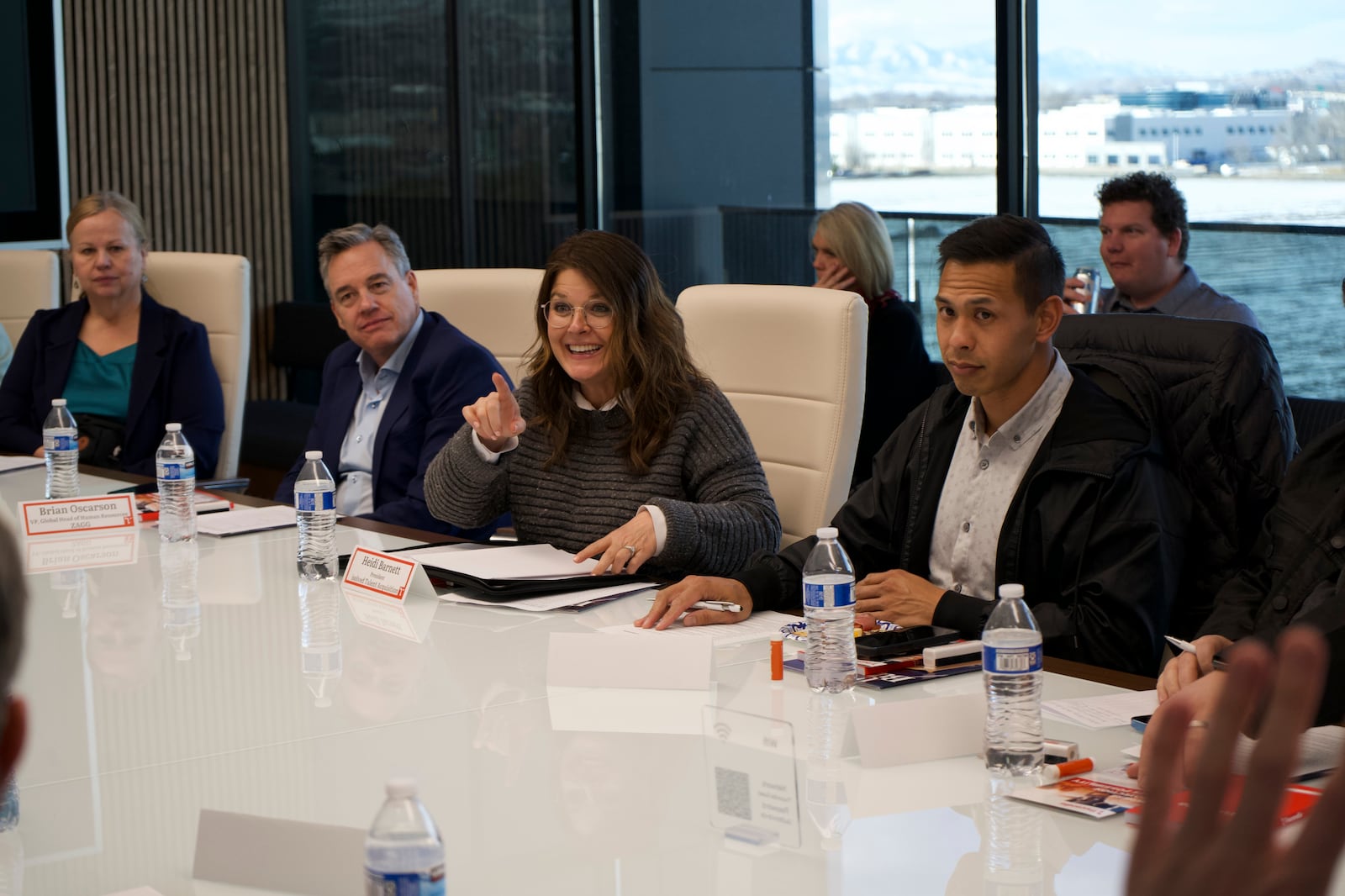
This roundtable conversation was sponsored by Trucordia and moderated by Heidi Barnett, president at isolved Talent Acquisition.
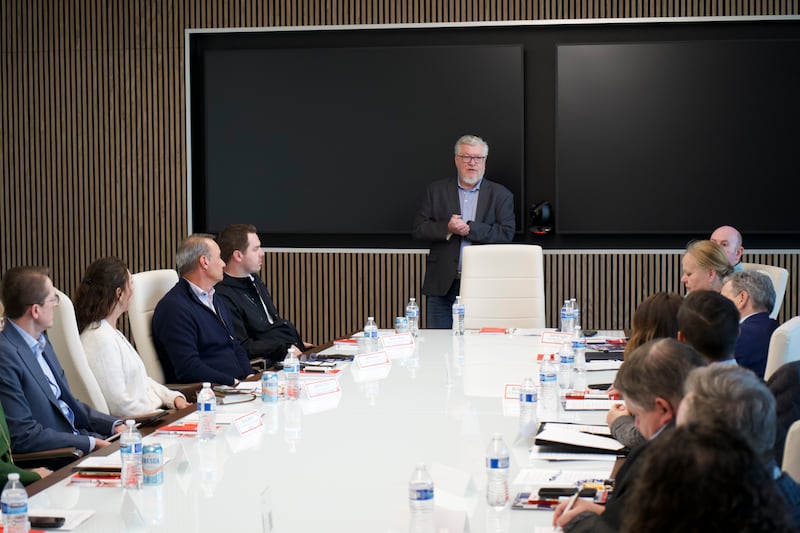
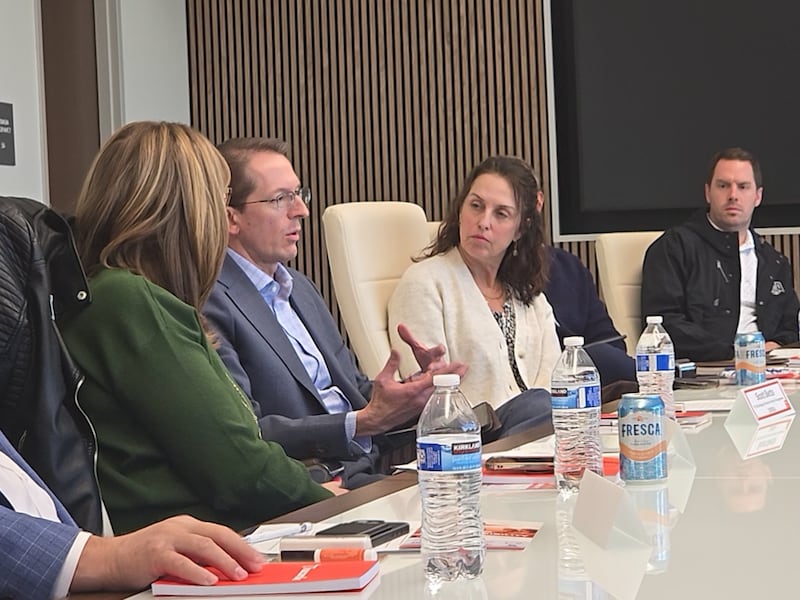
At the Trucordia headquarters in Lindon, moderator Heidi Barnett kicked off the conversation, saying that from her experience, compensation and benefits used to be more of an administrative function. “But I feel like more and more, it’s becoming a strategic function,” she says. “Nearly half of employers say that compensation is their top HR concern right now. At the same time, employee expectations are evolving. That’s what we’re going to do. We’re going to talk about it today.”
What innovative benefits or perks are you implementing to stay competitive in today’s talent market?
Thien Nguyen | CRO | IsoTalent
In a previous life, I was a VP of people ops. Part of our benefits package, I think it’s a big dynamic in your benefits package, you have to tie two things together: culture and people’s lives. … What we did was provide a “Love Work, Live Life” benefit. … That new car, that housekeeper, the dinner on Friday nights, all that was provided through our Love Work, Live Life benefit.
Jeff Wright | Total Rewards Sr. Director | Weave
One of the things that we started offering a few years ago was professional development. A lot of the companies we had talked to where I’d worked in the past, [we’d tell them], “Hey, we’re going to do tuition reimbursement or student loan repayment.” But we got feedback from our employees that were like, “I’m not in that stage of life anymore. That doesn’t benefit me.” They wanted access to professional-level [benefits] where they could attend conferences, different trainings and classes so they could use it for tuition.
Drew Shaw | Business Performance Advisor | Insperity
Know your employee base and what their needs are. … One thing we offer is education assistance. At the same time, caregiver assistance has really been popular. And then adoption and fertility assistance, if that’s the kind of stage of people that we have with the company. People want choice, if you can afford it; the more choices that cater to your people, that creates retention.
Ann Johnson | VP, People & Culture | Joyce University
When we were all in one location, we were known for our perks like massages, gym memberships, donuts and all the things that you can only get while being together. … So, we have a wellness scholarship that our full-time remote employees can apply for. It’s a way for them to pay for their own perks. … That has really helped us make our remote employees feel more a part [of the team]. … We have a leadership academy that’s open to everyone in the organization … and [we’ve] adopted the philosophy that everyone is a leader and has influence. It doesn’t matter if you’re the brand-new receptionist or a vice president on the senior leadership team; anyone can be a leader.
What role is AI and automation playing in your compensation management and benefits administration?
David Alsop | CHRO | Ultradent Products Inc.
One of the biggest challenges we’re having isn’t trying to stay at the cutting edge of the AI space; we’re trying to stay behind the lawsuit stage of it. … One of the things I really encourage my HR team to do is to be always at the top edge of AI and the tools that we’re creating to be able to hold the hands of our employees to get there, and not necessarily just hand it off to them and put them in a space where they revolt against it. … We’re playing a middle ground role to help bridge that gap to get people there so we don’t leave them behind.
Debra Fiori | Chief People Officer | PROG Holdings Inc.
We created [an AI assistant called] Piper. … Tech is building onto Piper, but HR was the first. I’m really proud of that in our company. They’re going to have ticketed service for basic tech questions and connect to Confluence so that it can respond to password resets. … It’s also allowed me to repurpose talent in the function to other higher-value work.
How are you addressing pay equity concerns within your organization? Is there anything that you are doing to make this feel equitable and to earn the trust of your employees?
David Alsop | CHRO | Ultradent Products Inc.
We moved away from merit increases, and we call it a pay assessment. … We’re seeing our employees and our managers stop complaining and comparing about, “Why didn’t I get an increase?”, to more of a conversation of, “Am I being paid appropriately?” With that, there’s only a certain amount of budget that they get, and they have to manage that. With that, we call it a pie. If you pay someone too much in the pie, you can’t get other people to be equitable in that pie.
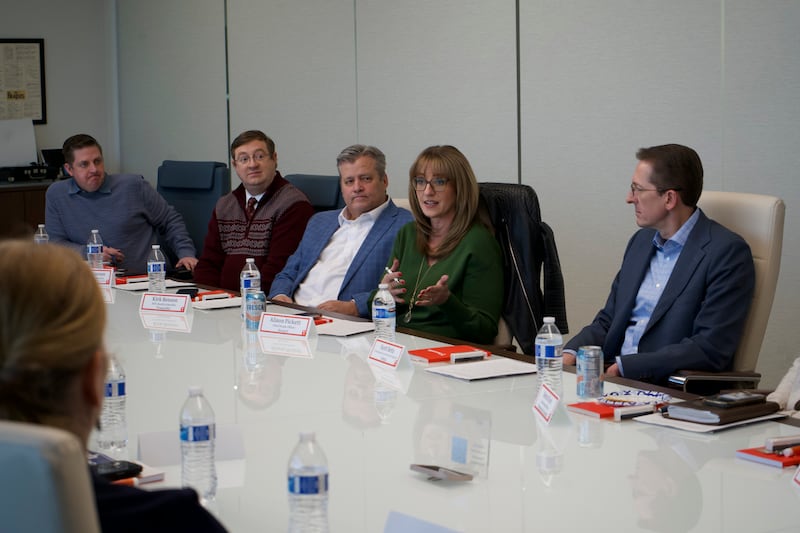
Alison Pickett | Chief People Officer | Kenect
As a woman in Utah, … don’t say pay equity matters in your business if it doesn’t, because there are women who are looking. You have women throughout your business. You have other women leaders. Oftentimes, they’re in your HR department. … If you’re not there, it’s OK to talk about and that you’re working towards it.
What mental health and wellness benefits are proving most impactful for your workforce?
Ann Johnson | VP, People & Culture | Joyce University
One of the most important things that we do is robust manager training on mental health. … The person who’s “quiet cracking,” they can recognize that before anyone else. [We’re] helping our managers learn how to live into the values, how to recognize signs when something’s wrong. … You’re not managing tasks. A lot of times, you’re managing emotions. You’re managing the people who are doing the tasks.
Jake Oyler | VP, Benefits | Larry H. Miller Company
As of January, we have a health center at the Larry H. Miller Company. … What they’ve said so far is on average, they see about 10% uptake on month one, and then that goes to 20% to 30% month over month. We’re at month two, and we’re at 65% capacity.
Scott Allen | SVP, HR | MetaSource
I push hard, probably harder than most, to create transparency between my team and our broker to make sure that what we know is happening, in terms of a care need, is actually closed by care delivered. For me and my team, that’s what we’re trying to make sure that we’re bringing — as close to a one-to-one relationship as possible. We realize that some people may say, “Hey, I now know I have the safety net, but I haven’t needed to use it yet.” But what’s worse is we know that there’s a need that’s not being met from a care perspective.
What metrics are you using to measure the effectiveness of your compensation and your benefits programs?
David Alsop | CHRO | Ultradent Products Inc.
Our executive team has dashboards that are reviewed every week. And for HR, we’ve got a responsibility for profit per employee, gross sales per employee, our EMPS score and then our retention. Those blend together for accountability downward, because, this is going to sound like I don’t have great culture because of my style of HR, but I believe my job is to help the company deliver the best results, profitability and sales-wise, for the least amount of cost. Those measures help us understand and hold ourselves accountable to, “Are we growing sales faster than we’re growing people costs?”
Debra Fiori | Chief People Officer | PROG Holdings Inc.
Our workforce is changing really fast with AI. … it’s a new metric that we all have to start paying attention to in our roles … because [AI is] impacting our workforce more than anything else. …Our workforce is changing. It scares me that I don’t even know how fast it’s happening. I believe that we should be on the front of it; our function is absolutely on the front of it, partnering with tech.
What retention strategies involving compensation and benefits have been most successful?
Jared Olsen | Chief People Officer | JobNimbus
Proactively going to your top performers and giving them money before they even ask. … You can’t wait for them to come to you because then you’re just going to be in a bidding war and as soon as somebody verbalizes, “I’ve taken another offer,” or “I’m considering this offer,” they never get that out of their heads. … I don’t think it has to come through the form of just base salary. It can be, “This project you did was so good. Here’s a one-time bonus.”
Thien Nguyen | CRO | IsoTalent
Our average employee life cycle was roughly two years and four months. The first six months are generally good. People are generally content. The last six months are generally when people gripe the most; they want out. Finding the compensation point that was important to us to solve was roughly before the year mark. If we waited for the year mark, employees felt entitled to ask for a pay increase because it’s an event, it’s a milestone; but [since] we did it before the year, we were seen as proactive.
How is your organization leveraging AI to enhance your recruitment processes, and what impact has it had on your candidate selection?
Alison Pickett | Chief People Officer | Kenect
I’ve got a good friend who runs HR for a tech company in San Francisco, and they tried to adopt the AI screener and people just refused. They were like, “You want me to what? No, if you can’t bother showing up for the interview, I don’t want to participate.” They had varying degrees of who would show up and participate and who wouldn’t, and so they ended up scrapping it.
Brian Oscarson | VP, Global Head of Human Resources | ZAGG
One thing I’ve seen where it can be pretty effective is if you have [someone] perfect on paper, people can identify that, and AI agents can dial that in, but how do you find those skills that aren’t obvious on paper? … Look at LinkedIn recruiters with their AI agent. As you dial it in, it can do some of those things that are cool, where you can save a lot of time. The first time I tried it, I hated it because it’s just dumping everybody in because I didn’t have it dialed in.
What are the biggest challenges you’re facing with integrating AI technologies into existing HR systems?
Alison Pickett | Chief People Officer | Kenect
Our premier product is an AI product. We’re finding that there is this AI FOMO where people quickly adopt AI, but don’t know how to utilize it within their ecosystem, so they quickly back out. … It’s so hard right now to know if you’re spending ROI dollars in something that’s actually going to help move the needle.
Scott Betts | VP | DMBA
In HR, we deal not just with FOMO, but the fear of messing up. … The difficulty we’re dealing with is taking all of the knowledge base that we have as we train new staff who do benefits support, and to get that out of a system into a new system that AI can actually do well in, and then put the guardrails on so that we can use the effective value of what AI can do, but not create lawsuits at the same time.
What are the most requested flexible work arrangements, and how are you adjusting compensation to accommodate these preferences?
David Alsop | CHRO | Ultradent Products Inc.
As we’ve been talking about remote work and the challenges with it, we’re an on-site workforce, obviously because of manufacturing, but most of our workforce is not manufacturing-based. We went through that challenge coming back from the pandemic. … We had to help people understand that if you show up and you honor, respect and work with us, you’d be amazed how flexible we are. … So much of [what’s talked about with] flexibility is about being remote, and that’s not what flexibility truly is.
Ann Johnson | VP, People & Culture | Joyce University
We have flexible PTO. … It used to be knock-down, drag-out fights in December. … I’ll hear my team talking, “I want to be gone this day. Are you here that day?” Or, “I got Thanksgiving, you take Christmas.” And it’s been an amazing change for our culture. It’s worked. We are finding that flexibility is the number one factor that our employees say drives their retention.