
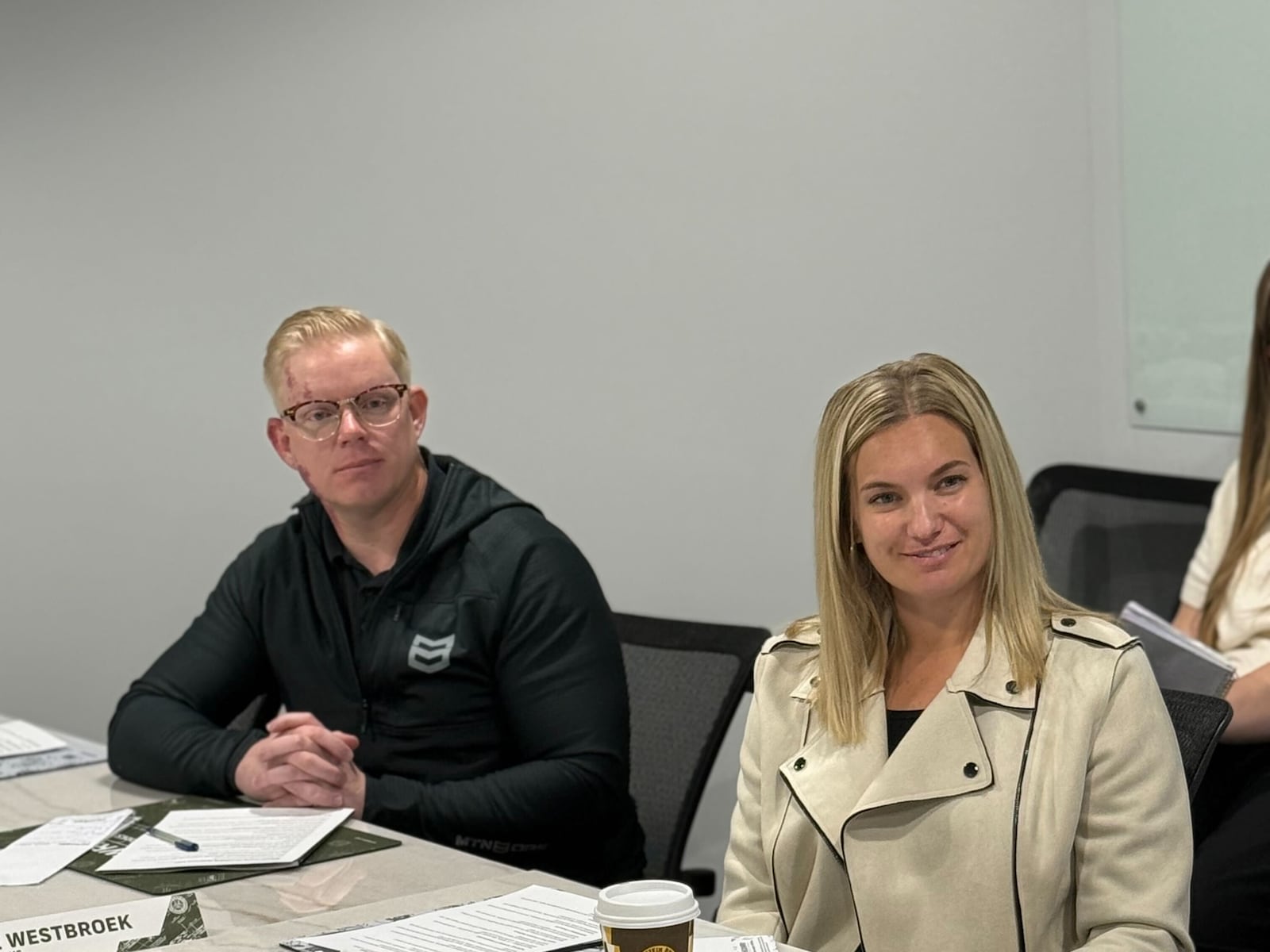
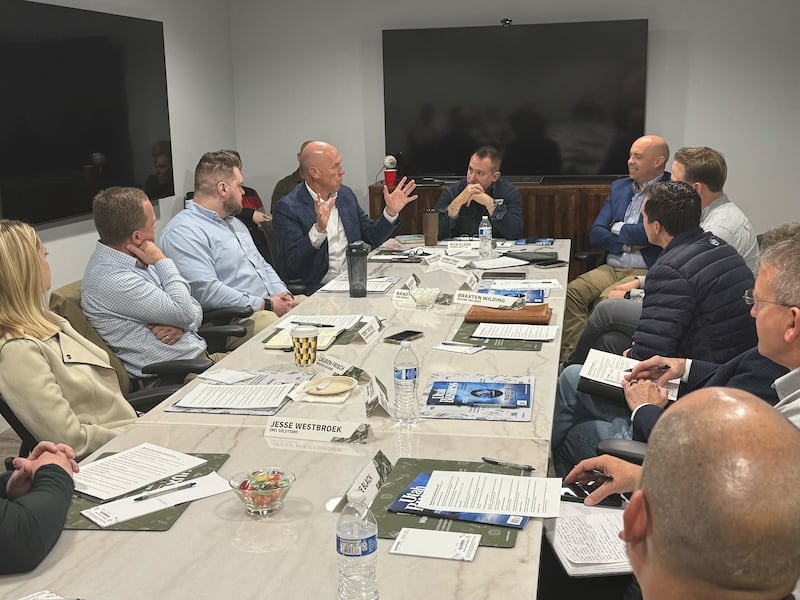
This roundtable discussion was sponsored by HUXWRX Safety Co. and moderated by Johnny Ferry, CEO of Utah Manufacturers Association.
What’s driving manufacturing growth here in the state of Utah?
Heidi Seaman | Associate Director of Warehouse Operations | Purple
We have a lot of rural areas outside of Salt Lake City that are still very vast, very open, and have the potential for growth. With Purple, when we went out to Grantsville, a main reason we did that was to be able to expand and tap into a workforce that didn’t like coming into Salt Lake. They liked staying out in the country, and it was incredible for a lot of years to have that vastness.
Tyler Margetts | Owner, CEO | LR Dynamics
People are realizing that you can have innovation and create a great place to work that rivals, and in some ways is better than what you can see in the tech industry. Thinking outside of the box, and applying those innovative mindsets into manufacturing, and even though it’s harder to develop a new product or to improve a product …you can still apply those innovative techniques to find new markets to solve problems and do it in an efficient way.
How do you measure growth in your organization?
Jake Hadlock | CEO | Nutriient
Growth is a really sexy word when you’re an entrepreneur, and that’s what we all want, so we went after that so hard. Then the realities of that growth are kind of what slowed it down, too. It’s macro factors, but it’s also just the systems that have to be put in place … and the systems they follow and realized we needed to slow down in order to provide a better experience for the people we’re working for.
Lauren Frisch | Vice President of Administration | Wasatch Container
We measure growth across three areas: people, process and performance. When our team is developing, our systems are getting leaner and more efficient, and our customers are seeing stronger outcomes, we know we’re moving in the right direction. For us, growth isn’t just a sales number — it’s the continuous improvement we see across every division. It’s this mindset that enables us to stay competitive, innovate quickly and uphold the high standards that Utah’s packaging and manufacturing community is known for.
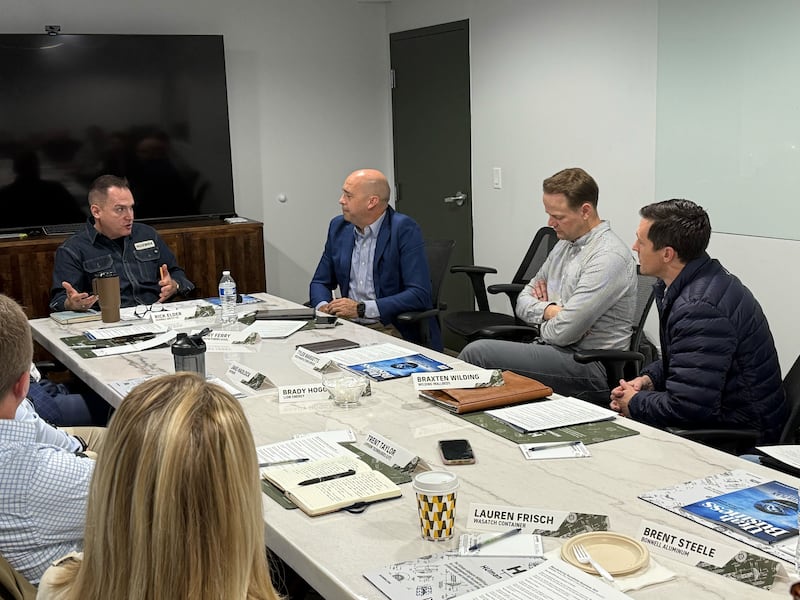
What is top of mind as you implement new technologies to grow and improve profitability?
Rick Elder | CEO | HUXWRX Safety Co.
Growth for growth’s sake is an absolute waste of time. We have a responsibility in this group to balance because the truth is, technically, most of our jobs are shareholder-valued. The day I have … one programmer running 400 robots ... I have no interest in it whatsoever because there’s no place for a person to land. What is the point if a person can’t make a fair wage, do a good thing, grow, represent their family and have a piece of the dream?
Jesse Westbroek | President | EMS Solutions
We have increased our revenue 40 percent from last year, but our customer base has 80 percent flipped basically because we saw that, ‘Hey, in order for us to grow steadily, it might not be sexy, it might not be an explosive growth, but grow in a steady way that can be more predictable, you have to do a combination of managing your personnel with technology, but then also managing your customer base with expectations and transparency.’
Trent Taylor | Director of Manufacturing Operations | LiveView Technologies
LiveView is very tied to that technology side, and yet we manufacture our own product. … We invest heavily in that innovation side because in the security field — with digital security and visual security — it’s a very quick turnaround before someone comes out with something new camera-wise, analytics-wise, software-wise, so we’ve invested heavily inside to develop those things ourselves to stay ahead on that innovation front.
What are the best ways to attract and retain talent?
Justin Jensen | Director of Operations | Xlear, Inc.
One of the best ways to attract and retain talent is to create a culture where employees feel heard, valued and involved in continuous improvement. At Xlear, we’ve excelled in retention because our team knows their opinions matter, and we’re always willing to try their ideas when we believe they’ll add value to the line. This level of trust and collaboration not only strengthens engagement but also fuels innovation. We’ve even seen a growing list of employee referrals from people eager to join Xlear, which speaks to the positive environment our team helps create.
Steven Black | Director | Utah Manufacturing Extension Partnership
Coming back to the marketing of manufacturing to the youth, and as a field, as a growth engine for the nation, this is a message we can’t say loud enough. [As] you’re looking at your future, you’re looking for a safe place, manufacturing is that safe place, whether it be in healthcare, whether it be in construction, whether it be actually building something.
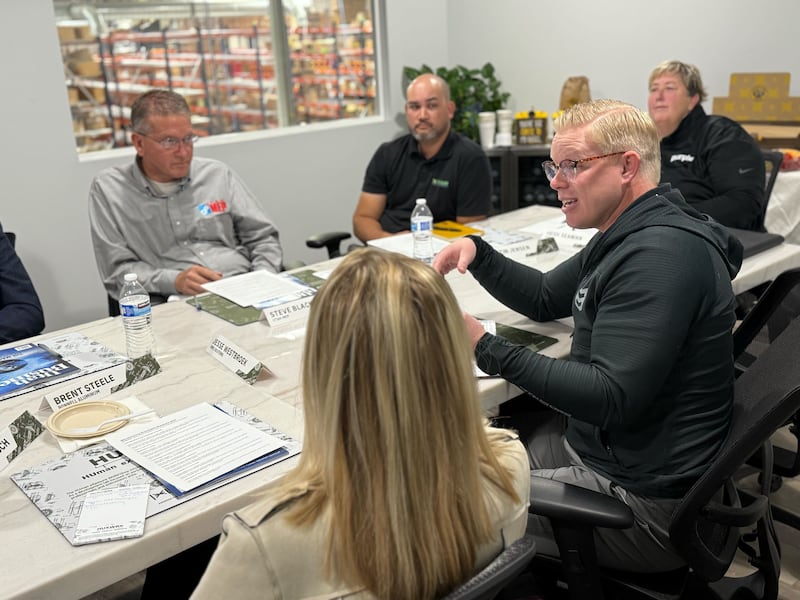
Based on what you are seeing, how are youth approaching entering the workforce?
Trent Taylor | Director of Manufacturing Operations | LiveView Technologies
They’re so fearful of the future. Manufacturing is a great way to get your foot in the door and try something … I had a welder that was welding on my night crew, and he’s now one of our top software developers. Because he was putting himself through college, he got ingrained in the manufacturing side of the company, really got invested in what we do, and said, ‘Well, I’m going to change my major. I’m going to get into software because I want to get paid more, but I’m going to stay at LiveView and continue growing.’ We have that happen all the time, trying to move people from manufacturing into the maybe more glamorous parts of the company where they can earn more money and have more satisfaction.
Rick Elder | CEO | HUXWRX Safety Co.
Two quick points. One is hustle always wins. It’s the common denominator across probably most people sitting at this table. The other [common] thing … is that you inherently felt like no matter what you were going to do, you could do anything. That was inherent. Today, it’s all what you can’t do… Letting that kid … be despondent or have despair when the world is literally their oyster, and going, ‘Hey, you can work your way through anything and crush this and be awesome, and by the way, if your peers aren’t doing it, go win. It’s okay to win. Winning’s good.’
What challenges come with attracting frontline workers?
Jesse Westbroek | President | EMS Solutions
I’ve worked with OTECH (Ogden-Weber Technical College). I sit on a board with their manufacturing [instructors] to help base their curriculum off of opportunities in the Ogden area. There are some unique skill sets that we don’t necessarily have opportunities to provide education for in the state of Utah currently, which would really help bring awareness to the industry and bring awareness [to opportunities] in high school.
Tyler Margetts | Owner, CEO | LR Dynamics
We have a lot of welders and they are so hard to find, and they make a lot of money now because they’re hard to find. Every welder I’ve ever met absolutely loves their career. I’ve been promoting welding to so many people like, ‘Hey, people love to weld and they make really good money now, so you should be a welder.’
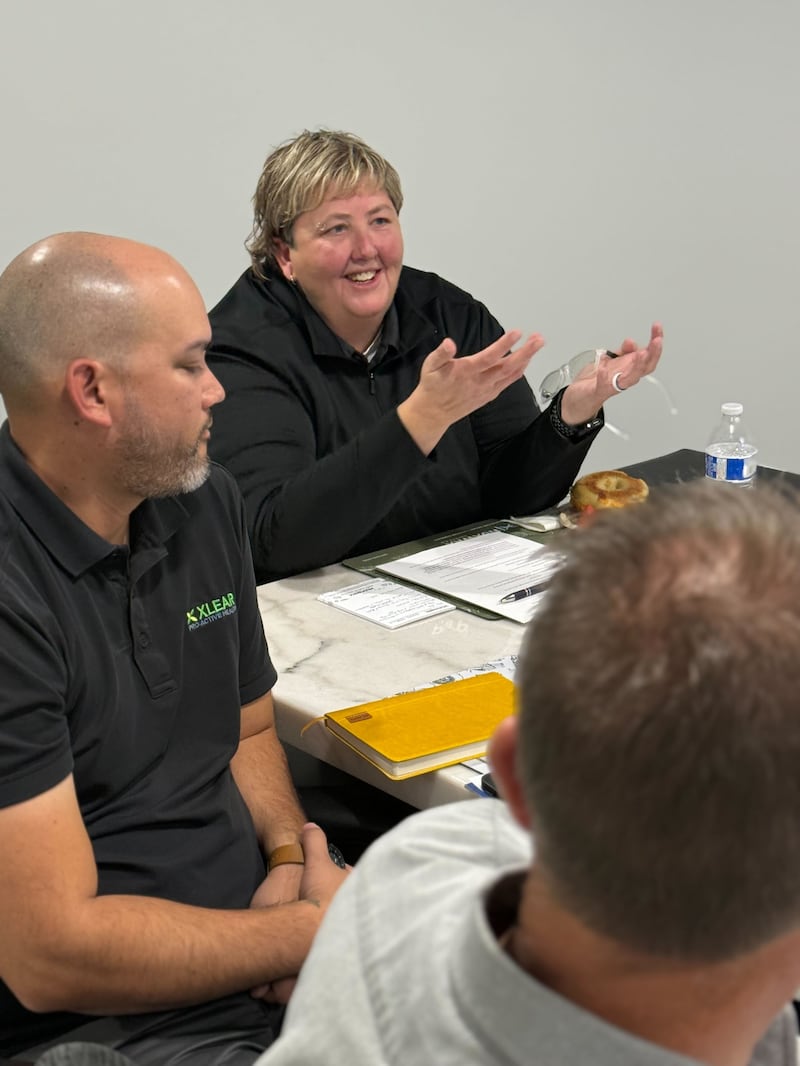
What challenges come with creating opportunities for workers to become leaders?
Heidi Seaman | Associate Director of Warehouse Operations | Purple
This newer generation that’s coming up … standing in front of people and leading, there’s so much anxiety there. … Trying to get them to that next level … instantly made me go, ‘I need to help evolve our leadership group on that first and second level so that they can understand why it’s so important to have a voice and speak to that voice.
Brent Steele | Plant General Manager | Bonnell Aluminum
We take the rock star in the front line, and we go, ‘That’s a leader,’ and we move them into this leadership position, and they fail because they don’t have the training. That is our biggest challenge right now. It takes time to create a training program.
How have the recent immigration enforcements impacted your workforce?
Braxten Wilding | VP of Finance | Wilding Wallbeds
We had some really good employees who were from, I think they were from Nicaragua, and they came to the United States legally under some asylum program, and then that asylum program was canceled, and they were no longer legal to be here. They were such good workers, and they’ve begun self-reporting. To lose a good one, it just really hurts.
Brent Steele | Plant General Manager | Bonnell Aluminum
We actually have town halls with our employees saying, ‘ICE cannot enter our facility. This is a safe place for you.’ Because we had employees that were just completely fearful, watching the news that ICE was going to come into our facilities and literally take them away, even though they’re legal.
Years after the chaos of COVID-19, what are you experiencing with supply chain right now?
Jake Hadlock | CEO | Nutriient
We’re sourcing ingredients from all over the world to bring here to combine together. What’s been really tough for us to do is being a contract manufacturer … we’ll win a PO that’s locked in based on the price last week. Well, this next week, when we place a PO with our vendor, there’s a new line item for a tariff charge that wasn’t factored in. We’re dealing with that on a weekly basis, and it just makes it a nightmare.
Heidi Seaman | Associate Director of Warehouse Operations | Purple
The biggest fake news, if you will, is that China is hurting from us not importing. No, our consumers are hurting because it’s costing us more money. We really need to look at that and how we need to change that mindset, so that we can get back to being able to provide to our [customers] what they want and what will help them to improve their own lives.
How are tariffs affecting your industry?
Braxten Wilding | VP of Finance | Wilding Wallbeds
The thing that kills us is the uncertainty. We place an order [wondering] how much is this going to cost? … We’re calling our freight broker, and well, is that tariff authoritative, or is that just a comment that an official made? We’re placing orders without really knowing how much it’s going to cost and from a smaller manufacturer, the cash flow impact could be significant.
Rich Israelsen | Chief Revenue Officer | World Trade Center Utah
The way the tariffs are written, they’re locked in. You don’t have an answer for the tariffs, however the duties … you’re working off of, those can be alleviated. Depending on the situation they can be in, you can delay the payment of [tariffs] or if you’re exporting, you can alleviate those altogether.
What does the outlook look like in manufacturing? Are you excited? Is there a lot of optimism?
Tyler Margetts | Owner, CEO | LR Dynamics
Something that we have to keep our eyes on is this transition of ownership because … there are a lot of manufacturing companies, especially the smaller ones, where you have ownership that is getting close to retiring and has no succession. It’s below where private equity firms and venture capital play. A lot of those manufacturers are smaller, too small for those groups.
Trent Taylor | Director of Manufacturing Operations | LiveView Technologies
The key to our growth, and growing our people, is really basing merit on our individual employee success. As we build up the people and allow them room to grow and add to our organizations. … That merit is critical.