

This roundtable conversation was sponsored by Dorsey & Whitney and moderated by Layne Smith, corporate attorney at Dorsey & Whitney.
What challenges do you see for the dental industry, both in Utah and more broadly?
Mike Baird | Founder & CEO | Accelerate Dental
Utah has some of the lowest insurance reimbursement rates in the entire country. I’ve heard different statistics, but it’s in the bottom 10. The reasons why are a little bit unknown. Is it because the insurance companies collect a flat fee per family and we have more kids per capita? Is it because, historically, they said there were too many dentists here per capita? No one really knows why, but there hasn’t been a big push to change it. So both on the regulatory side and practice side, that’s a massive issue.
Matt Mulcock | CEO | Dentist Advisors
The typical hygienist now earns $75 an hour in most states or higher. … Dentists are saying they need hygienists, and there’s a massive shortage. I’m hearing this from almost every dentist across the country that I talk to almost every week.
Kimball Payne | VP, Sales | Pearl
There’s actually a pandemic of underdiagnosing cavities in the U.S. It’s a hard job. [Dentists work] 8 to 5, sometimes later a lot of times, and they have that decision fatigue as well, a lot of things might go missed. On the patient side, there’s a huge lack of trust. … Patients feel like they know more than the dentist because of WebMD or ChatGPT. There is a disconnect between diagnosing and the actual treatment that patients accept.
Ken Kaufman | Co-Founder | Accrudent
There are a lot of dental support organizations (DSOs) right now that are in receivership, and the way they got there was because the intermediary drove for the highest price possible, the highest exit value. I’m not saying it’s a bad thing, but the debt load that the private equity group had to layer on in order to be able to facilitate that exit value created razor-thin margins. … The rolled equity becomes worth nothing, and they get a lot less than they ever started with.
Steve Clark | VP, North America | Ultradent Products Inc.
A lot of people went into the practice because it allowed for a good family life. They only had to do four days a week and they didn’t have to work Saturdays. That’s one of the challenges that we’re having here in Utah: You have to be open to changing that — working later, working Saturdays, doing something that differentiates yourself from others. That’s also a disconnect for a lot of people because that’s not why they got into dentistry. They did it because their wife could be their office manager, they could have all this time off and be done at 3 p.m., but now you can’t be profitable doing that.
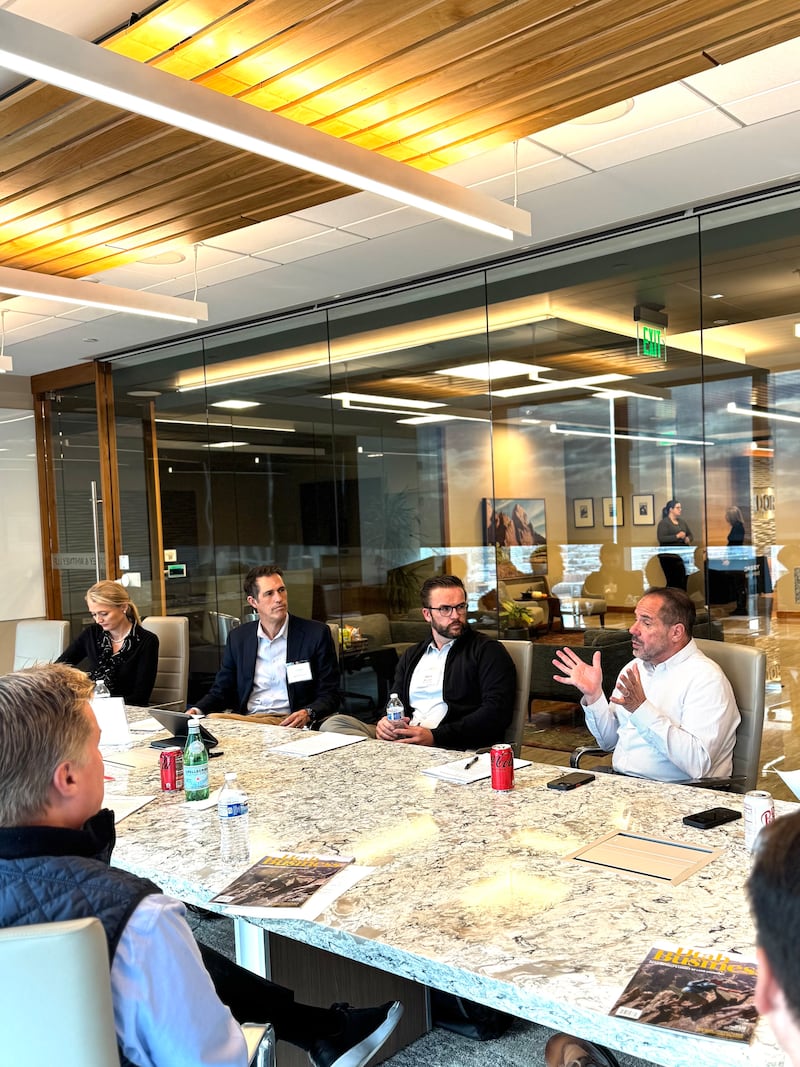
Troy Keller | Partner | Dorsey & Whitney
As attorneys, we see across a number of industries. We see what you described, in one version or another, in almost every industry. How it used to be is not how it’s being done anymore, and AI is accelerating that change. That’s the world we live in; things change very fast.
Matt Mulcock | CEO | Dentist Advisors
The typical dentist right now is about $350,000 just in dental school debt. A lot of young dentists we’re talking to now, dental students and otherwise, are very nervous about what that means for them. If consolidation continues the way some say it’s going, … one of the consequences will be decreased income for dentists at the corporate level.
Jeff Harmon | Director, Finance & Transitions | Dental Cooperative
Most patients think that their dental insurance is just like their medical insurance; they should have a copay and then have insurance pay for everything else. We’re very preventative, and most dental insurances aren’t going to 100 percent cover preventative. Cleanings are going to be covered at 80 to 100 percent. But if you don’t go there, you need to fill — maybe that’s covered at 70 percent. Then, uh-oh, now you need a crown. That’s covered at 50 percent. Now you didn’t take care of that, so you need an extraction and an implant, and you’re going to be paying a lot more out-of-pocket.
Maria Davlantes | CEO | Dentive
One thing we haven’t talked about so much is the mentorship of associates. The future of the practice, regardless of who owns it — you have to think about that transition. And sometimes it’s challenging. … That’s as much about leadership as it is about dentistry.
What technological changes do you see on the horizon, and how do you think they will impact the industry?
Jacob Larsen | Co-Founder | Kolla
We’re really good at extracting data. We provide a unified API across all these practice management softwares that we then give to tech startups so they can connect to that data. …The number of calls I take a week for people trying to start an AI receptionist company would blow your mind. I have had 26 contacts in the last two months. … People are feeling the opportunity inside dentistry with AI.
Kimball Payne | VP, Sales | Pearl
Use technology to make it so you can focus on the patient-doctor relationship. Let technology take away the mundane.
Ken Kaufman | Co-Founder | Accrudent
We have a group we’re helping with on some different projects in Australia. They have figured out how to turn the final bridge around in two hours. It’s really fascinating.
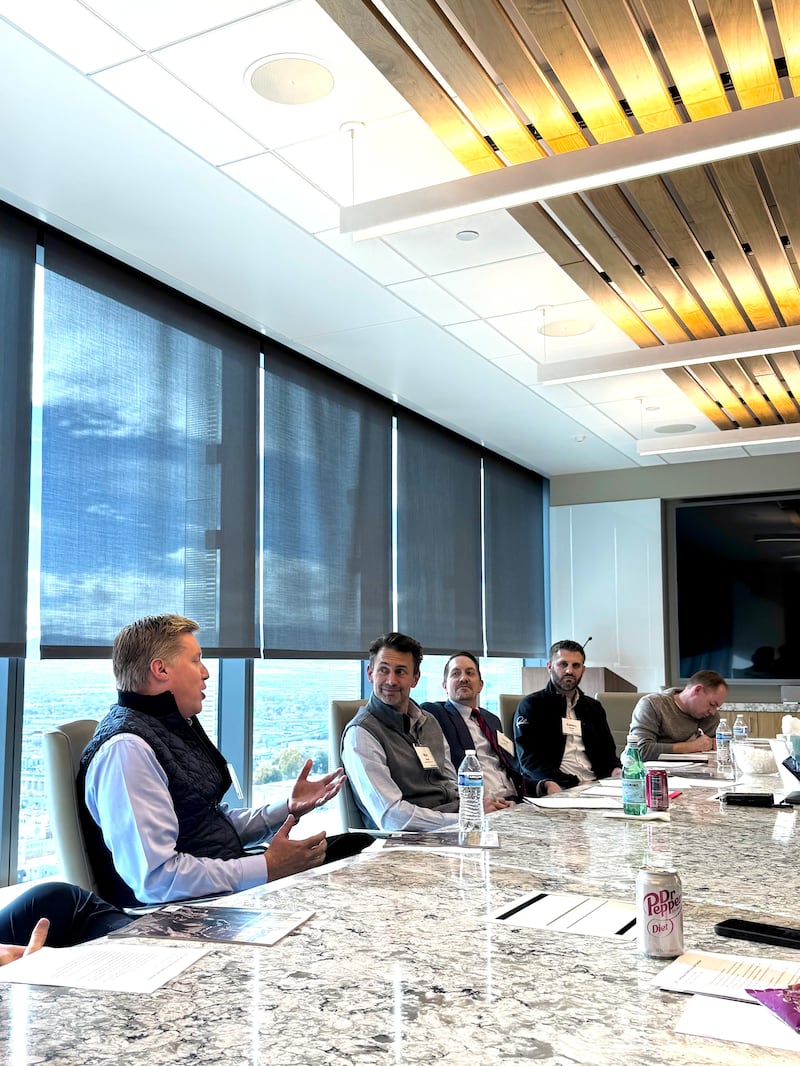
How does the deals market look right now?
Mike Baird | Founder & CEO | Accelerate Dental
Most DSOs will not even look at you if you’re not over $1.5 million in collections. It’s just not worth their time and effort. … I would say 70 percent of practices in Utah are going to be under that threshold. There are 800,000 practices and the average dental practice is $750,000.
Troy Keller | Partner | Dorsey & Whitney
In the dental space, the challenge is that the business owner has a day job, and it’s not negotiating a sale deal. That can just add enormous amounts of time just to do what otherwise should be a pretty straightforward, small transaction.
Matt Mulcock | CEO | Dentist Advisors
The days of being able to have a three-operatory practice, hang a shingle and make money — those days are gone. The days of a DSO being able to throw some fake numbers at a client or at a dentist and promise all these things with no way to back it up — those days are also gone. It’s not believable anymore. Dentistry, for better or for worse, is a very small space. Very connected. We have now heard countless stories of these receivership-type instances where dentists are trying to buy their practice back, and it’s been an absolute nightmare for a lot of these dentists.
What growth opportunities do you see in the state of Utah for the dental sector, including dental providers, DSOs, dental tech and dental supply companies? Is there already a critical mass of these businesses?
Mike Baird | Founder & CEO | Accelerate Dental
We do have a critical mass. I believe Utah is the Silicon Valley of dentistry. There are so many companies here. There’s nowhere in the country that has as many dental companies per capita. … We’ve seen innovations in DSOs. We’ve seen innovations in manufacturing and from the product side. We’ve seen innovations in the services side. It’s no surprise that Dentist Advisors is based here because there are just so many dentists here. There’s something special about Utah, and I don’t think [the dental industry] shows up on Governor Cox’s list of top exports, but I think it should.
Ken Kaufman | Co-Founder | Accrudent
From my perspective, the sky’s the limit. I don’t see constraints. … People will continue to have teeth, and they’re going to live longer. Patients will always have a need.
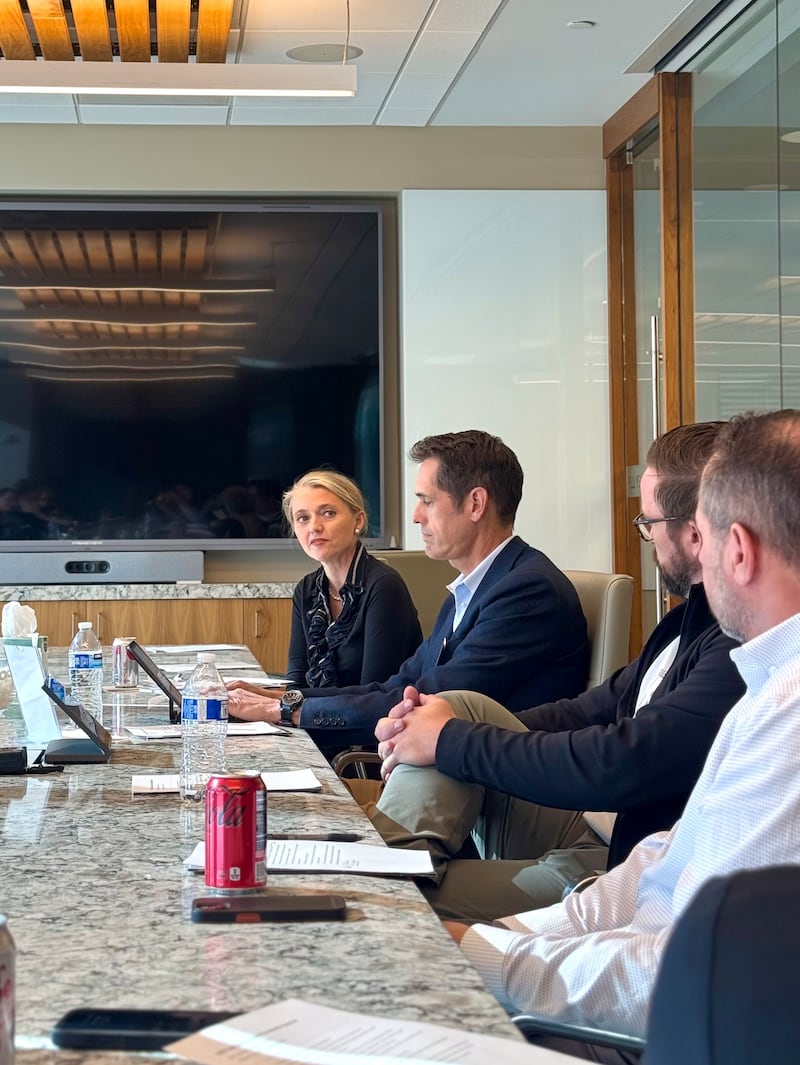
Jacob Larsen | Co-Founder | Kolla
The industry as a whole, relative to other spheres, is often behind the times a little bit. You’d be shocked at how many large dental organizations with lots of offices and lots of data have no real idea of what data is actually available to them and how to use it. There’s a ton of opportunity in the fact that dentistry, as a whole, is just behind the times when it comes to many things.
Jeff Harmon | Director, Finance & Transitions | Dental Cooperative
Depending on what research you look at, 50 percent of the population doesn’t go to the dentist. From a population health standpoint, what can we do? I think the answer is a combination of the private sector and government sector to help with that because it’s a real need and a real opportunity.
Maria Davlantes | CEO | Dentive
Compared to the national average of 50 percent not going, around 70 percent [of Utahns do go to the dentist]. That still means 30 percent of the population is not going. The technology and the richness of the entrepreneurial environment here are ultimately going to help those things. …We’re only scratching the surface of it with the great entrepreneurship that’s here in Utah.