
A young girl stands in a checkout line clutching a picture book to her chest as her parents watch the checker scan their weekly groceries, the total price flashing higher and higher on the display screen.
The woman next in line watches as the parents recount their small stack of bills and decide how many items they need to put back. Removing the picture book from their daughter’s arms, they reassure her she can pick out a book on a future shopping trip.
“I’ll pay for the book, and anything else you need,” the woman next in line says.
She produces a few bills from her purse and insists the family take the money. The family leaves, grateful, and the cashier asks, “Do you know them?” The woman responds, “No, my company lets me do this.”
Derek Miner, co-founder at Build Then Bless, recalls an employee sharing this story with the team at Lemonade Stand, a full-service digital marketing agency Miner joined as a partner. Lemonade Stand employees were the guinea pigs for a new kind of culture-building activity — enabling generosity in their daily lives. This employee “benefit” was so successful that Lemonade Stand clients wanted in, so Miner took that as a sign to create the Build Then Bless platform to make internal recognition and external generosity easy for any company.
Kind by design
Every month, Mountain West Financial LLC in Sandy, Utah, gives its employees $20 to recognize a co-worker with a gift card for going above and beyond at work and $50 to do a kind deed outside of the company. Matt Pettit, CEO of Mountain West Financial, says employees have done everything from buying cat food for an elderly man who ran out of funds to buying flowers for a family whose dog passed away.
The Build Then Bless software integrates with fintech companies to make both types of “blessing” possible. Integrating with fintech platforms BILL, Brex and Ramp, Build Then Bless automatically records the location each time an employee uses their card, creating a dashboard that maps where acts of generosity happen to measure the program’s collective impact.
Additionally, the Build Then Bless platform includes an internal feed where employees celebrate each other through recognition posts and an external feed to share employee giving stories on the company website.
“One of the greatest ironies in life is the more we think about ourselves, the unhappier we are; the more we think about others, the happier we are.”
— Derek Miner
Arrive Home, a subsidiary of Mountain West Financial LLC, includes Build Then Bless stories on their website. Bret Cline, the company’s director of mortgage servicing, wrote, “This month, I’m using my funds to help honor a buddy who recently passed away due to complications from diabetes.” Pages of stories like it follow.
Pettit says this unique benefit to employees is built on the philosophy that service increases quality of life, so naturally, the company is also assembling a kindness committee to maximize that idea. This is exactly what Miner hoped Build Then Bless would inspire other companies to do when the idea was formalized.
Built from experience
Miner grew up with parents who served constantly, mostly through small, simple, neighborly acts. When it was time to launch his career, Miner joined an early digital advertising startup during the dot-com bubble that had a strong, connected team and brought his parents’ examples with him. The startup team became so close while building that there were few dry eyes at the table when the CEO announced the company’s acquisition. The culture at this startup set the bar high from Day 1.
“[The CEO] said, ‘You’ll spend the rest of your lives trying to recreate the culture and the team and the relationships that we have here,” Miner says. Since then, Miner has taken a proactive approach, diving deep into company values and what makes culture stick.
When Miner met Greg Trimble, founder of Lemonade Stand and co-founder of Build Then Bless, he knew he’d found his culture match. When it came to building a team and workplace culture, they had the same priorities, which is why Miner joined his agency.
A few years into building Lemonade Stand, the company sent a check to a nonprofit, but for some reason, the check was never deposited. At the same time, Lemonade Stand employees were hungry for a healthy dose of humanity during the pandemic.
“COVID highlighted how much we needed meaningful human connection as a growing team, especially with most of our employees being remote,” Miner says. “We were actively looking for ways to bring our people together around a shared purpose that didn’t just exist over Zoom. We wanted to still feel human in a world that suddenly relied wholly on technology.”
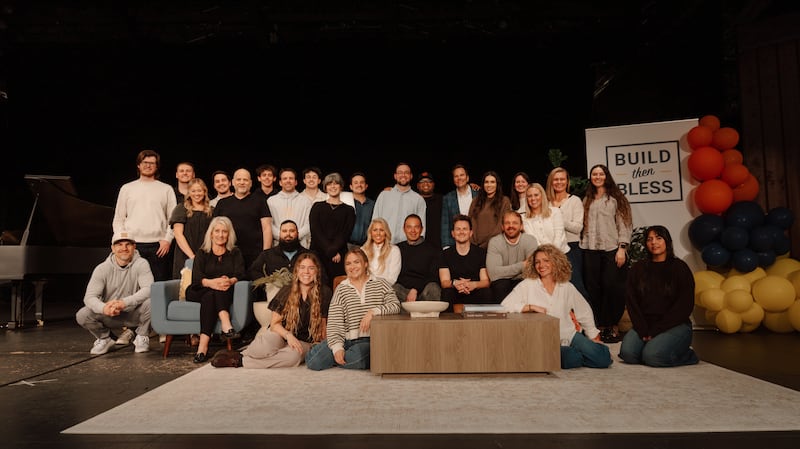
Miner and Trimble put their heads together and decided to let the employees choose where the nonprofit dollars should be spent. Suddenly, Lemonade Stand had a philanthropic arm — employees going about their daily lives. The shift further improved the culture almost immediately.
“I think culture is what you believe and it’s what you actually do, and how consistent are those two things?” Miner says.
Now, giving employees a reason to think outside of themselves was consistent. It was built into the organization. Adding $50 to an employee’s pocket may not change lives, but it changes hearts — which changes lives, he says.
Employees helped pay down school lunch balances, buy groceries for neighbors, donate to GoFundMe accounts and so much more. Inspired by each other’s acts of service, employees became more united in kindness. That kindness translated into the workplace.
Build before you bless
The generosity program didn’t come first. Culture did.
Miner points out that Build Then Bless isn’t a shortcut to fixing a disengaged workforce or a substitute for strong leadership. Before a company can empower employees to bless others, it has to build an organization worth believing in that executes on promises. Companies need healthy revenue to bless others.
“You have to build,” Miner says. “You have to have the foundation first. That’s where the whole name came from.”
For Miner, culture isn’t measured by office perks or inspirational mission statements. Culture is measured by employee retention, returning customers and whether people consistently show up for one another when it matters most. A Build Then Bless dashboard can track gift cards and dollars spent, but the real metrics are found in a team that rallies for its teammates, through which they find belonging, connection and purpose.
“One of the greatest ironies in life is the more we think about ourselves, the unhappier we are; the more we think about others, the happier we are,” he says.
The empathy multiplier
Miner cites a University of Toronto study that estimates each person has roughly nine opportunities every day to practice empathy, to notice someone else’s needs, offer encouragement or lend a hand. Most of those opportunities pass by unnoticed.
The Build Then Bless platform doesn’t create generosity so much as it creates the conditions to pay attention to who is in need. With a small monthly budget, employees become more aware, both inside and outside the office. Recognition becomes habitual and kindness becomes visible.
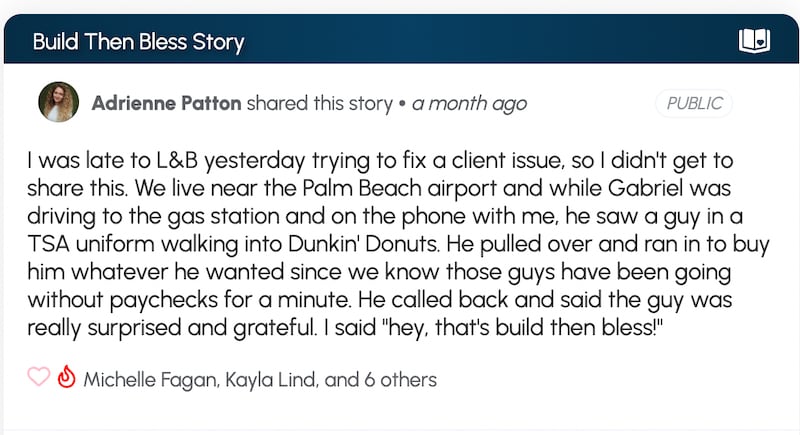
If every employee came to work looking for ways to encourage a colleague or brighten a stranger’s day, what would happen to engagement? To retention? To customer experience? Those outcomes may never fit neatly into a spreadsheet, but Miner believes they compound over time.
“I would like to see millions of lives impacted through kindness and millions of stories captured to inspire others to do good,” he says. “I want dots all over the map. … I want to fill the earth with these acts of goodness.”
