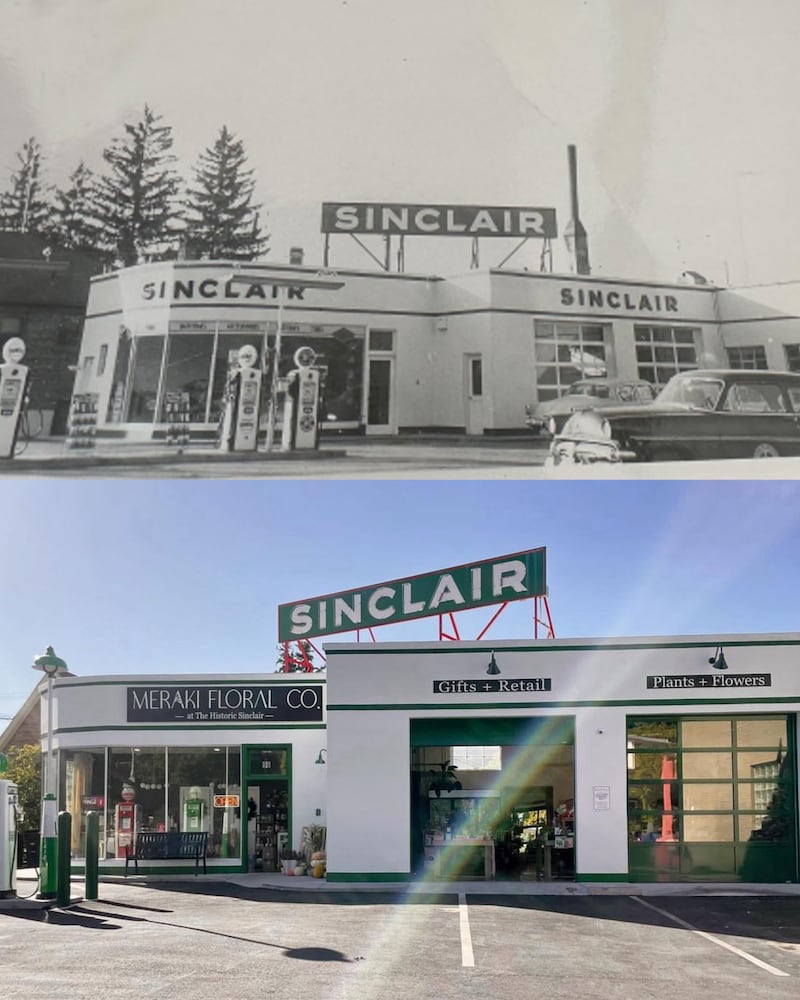
An organ manufacturer in a church meetinghouse, a florist in a gas station and rock climbing in a trolley building. These are just some examples of how businesses throughout Utah are helping preserve historic buildings through available programs and grants.
Amber Anderson, the deputy state historic preservation officer at the Utah State Historic Preservation Office, handles many of the buildings that come through the office. If a building is on the National Register of Historic Places, she determines what tax credits, incentives and grant money may be available for business owners.
Turning these old buildings into functional businesses helps preserve history, Anderson says. “Standards for rehabilitation actually acknowledge that in order to keep buildings alive and serving the community, oftentimes they have to have a new use,” Anderson says. “We can do a good job of preserving their historic character, but you can’t turn everything into a museum, right? It has to be a living, breathing resource.”
Why might business owners consider a historic option over a new build? Anderson says it comes down to a few factors.
“There is the feel-good aspect of it, in terms of connecting people to their history. … We also believe that historic preservation is economic development, whether it’s by creating those connections and that sense of ownership in people, generating excitement or drawing people to the area.”
The following list highlights some successful projects, from small local businesses to large operations. For more information, the historic preservation office has staff dedicated to helping business owners identify available locations and programs.
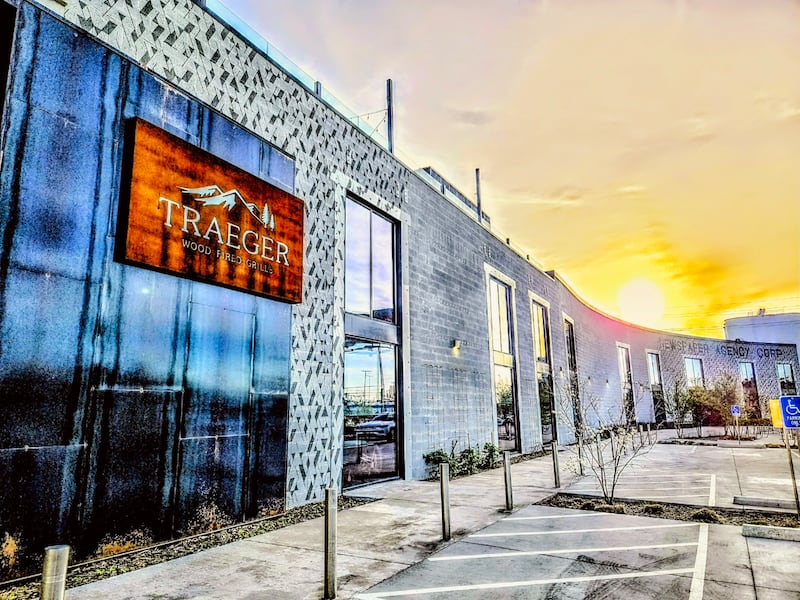
Newspaper Agency Company → Traeger Pellet Grills
This historic industrial building previously served as a newspaper printing and distribution center for the Intermountain West. In 1952, the Deseret News and Salt Lake Tribune worked out the 30-year Joint Operating Agreement that founded the Newspaper Agency Company (NAC). At a time when both papers were struggling, this move combined the costs of press advertising, circulation and the mechanical departments. The NAC was a subject of antitrust investigations, but was protected in 1970 by the Newspaper Preservation Act signed by President Richard Nixon. The agreement was renewed in 1982 and continued until 2012.
In 2020, Traeger Pellet Grills LLC announced it would expand its headquarters by leasing the old NAC building. Traeger manufactures and sells pellet grills that use hardwood pellets to grill, smoke, baste and barbecue meals. Located in the historic Post District of Salt Lake City, the NAC building was one of the first Opportunity Zone projects of this scale. At the time of the announcement, Jeremy Andrus, CEO of Traeger, said, “We couldn’t help but jump in and be part of this new reimagined space in downtown Salt Lake City.”
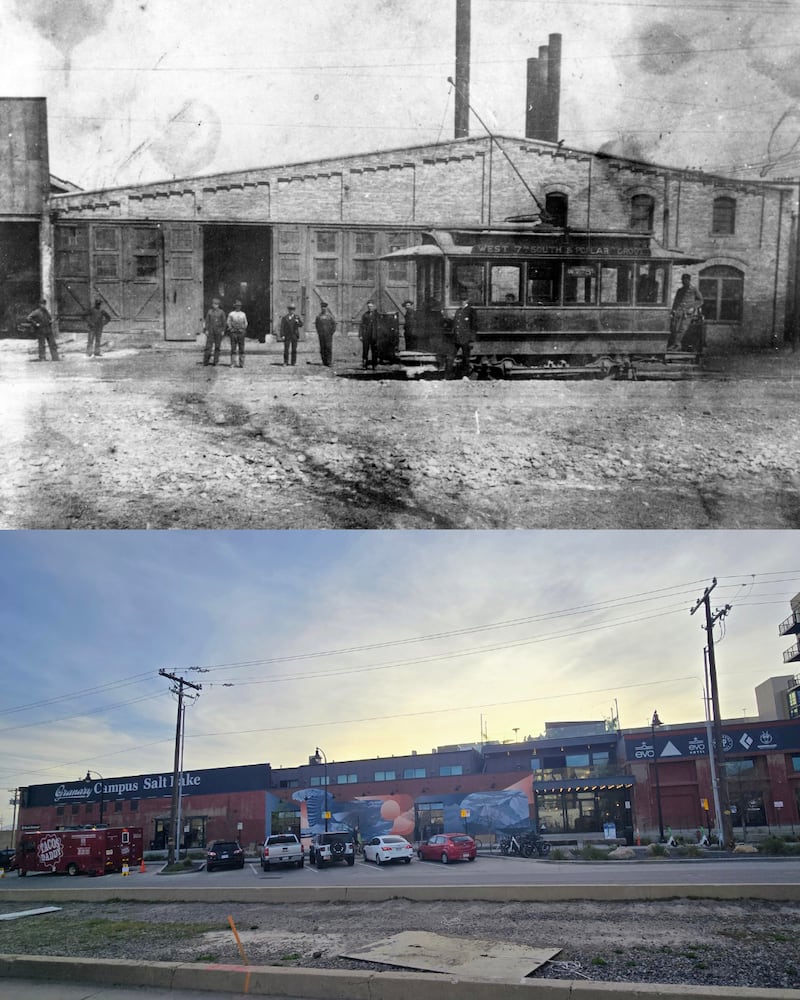
Salt Lake Rapid Transit Complex → Evo
Salt Lake Rapid Transit was one of the first two electrified trolley systems in Utah, and one of the earliest in the United States, coming just a year after Richmond, Virginia. Construction began in 1889, and the building was added onto throughout the 20th century. It has transitioned through various warehouse, commercial and industrial uses. Salt Lake Rapid Transit was listed on the National Register of Historic Places as a contributing property in the Salt Lake City Warehouse District in 2016.
After approval for Federal Historic Tax Credits in 2022, the entire complex was renovated to become Evo Salt Lake City, an outdoor recreation hub featuring a skate park, bouldering gym, hotel, coffee shop and home to outdoor retailers. The Salt Lake City location was the latest addition to the outdoor brand, which also has spots in Japan, Canada and across the U.S. Evo believes in giving back to communities, and Salt Lake is the second of their locations with an All Together Skatepark — a 5,000-square-foot indoor and outdoor space designed to help skaters of all ages and abilities progress.
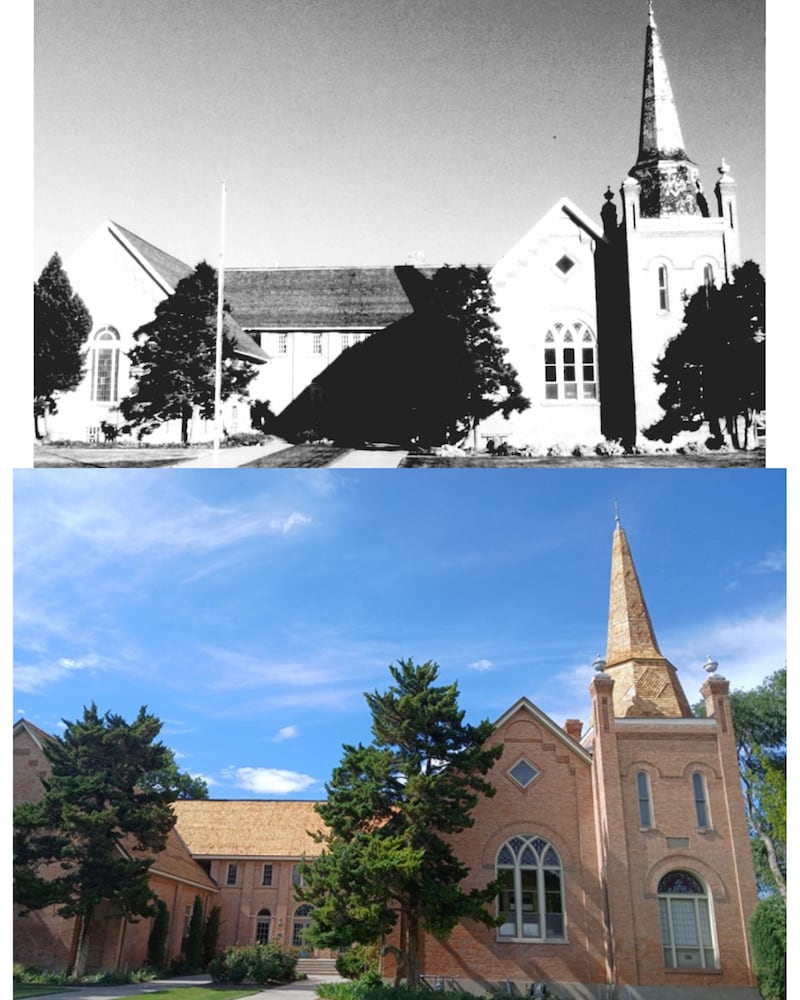
American Fork 2nd Ward Meetinghouse → Bigelow & Co.
Four meetinghouses with the late eclectic Gothic Revival style were constructed in American Fork between 1903 and 1904, but only the 2nd Ward Meetinghouse maintains its appearance. It was expanded in 1930 to match the Church of Jesus Christ of Latter-day Saints’ then-new policy of including church auxiliaries and their functions in one building. Listed on the National Register of Historic Places in 1992, the building is on track to receive credits for a major roof renovation project for its current occupant, Bigelow & Co.
Since 1978, Bigelow & Co. has built premium organs that can be found in more than 40 universities, churches and homes in the United States. Projects include the organs in the First United Methodist Church in Salt Lake City, St. John’s Episcopal Church in Fisher’s Island, New York, and First Presbyterian Church in Clarksville, Tennessee. In June 2025, the shop shared photos and news of the building’s roof restoration, featuring historically correct western cedar red shingles.
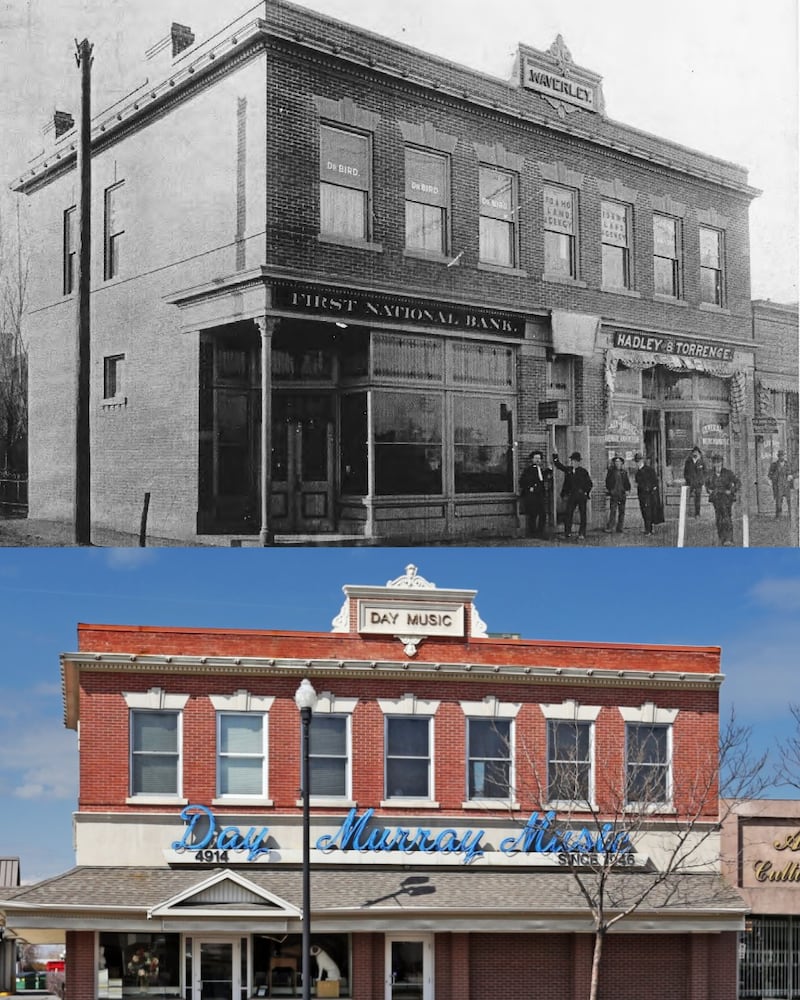
Waverly Building → Day Murray Music
Located in Murray and built in 1904, the Waverly Building was listed on the National Register of Historic Places as a contributing building to the Murray Downtown Historic District in 2006. Today, it is the only extant commercial building in the area retaining characteristics of the Victorian Commercial style. It has operated as a bank, a mercantile, offices and a drugstore. The current occupants, Day Murray Music, have been there since the 1940s.
Day Murray Music was founded by Arlette and John Day in 1946. Together, they built a business known for its large sheet music collection. Today, the business sells instruments, sheet music and vocal scores. They also provide an in-house string instrument repair technician and lessons for voice and instruments, including piano, guitar and violin.
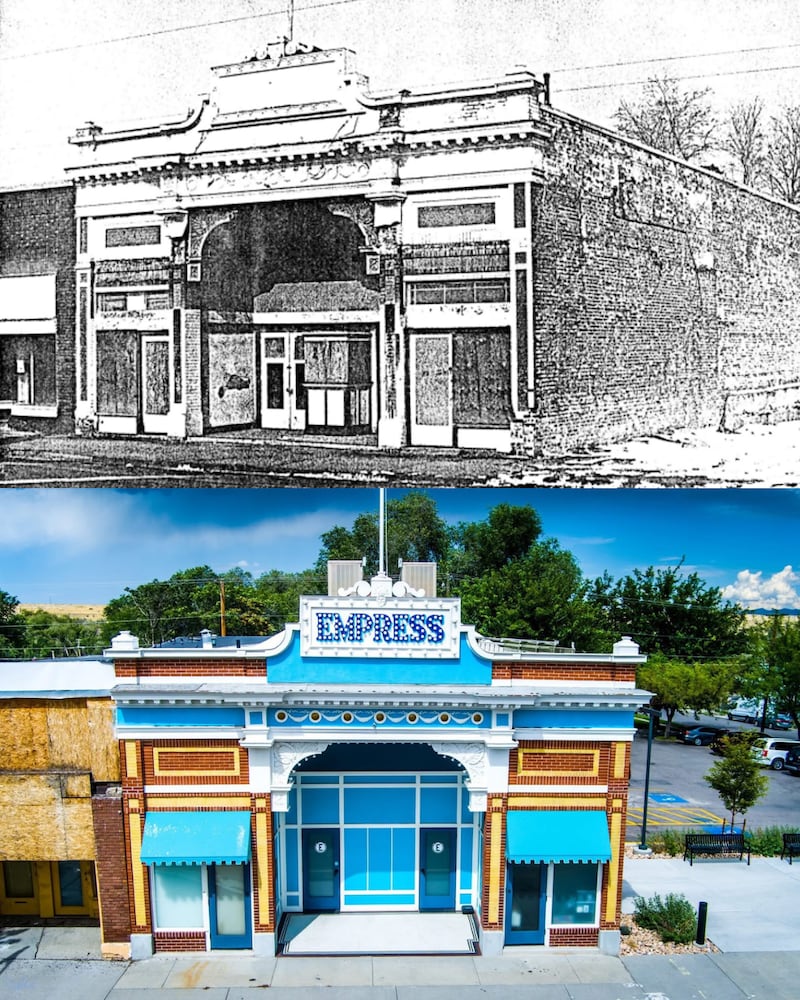
Empress Theater → Oquirrh Hills Performing Arts Alliance
Built in 1916, the Empress Theater is one of the oldest and best-preserved commercial buildings in Magna. It is also the oldest theater in the area. When it first opened, the Empress operated as a burlesque theater for miners at Kennecott. In 1917, it began showing silent films and remained a movie theater until around 1930. It was listed on the National Register of Historic Places in 1985.
After a lengthy renovation that hit several obstacles, the theater reopened its doors as a performing arts theater in 2006 thanks to grants, a large community effort and donations from local organizations. Since the reopening, the theater has featured more than 140 shows and runs entirely on volunteer hours. The Empress was purchased by a group of investors in 2021, but still operates under the Oquirrh Hills Performing Arts Alliance.
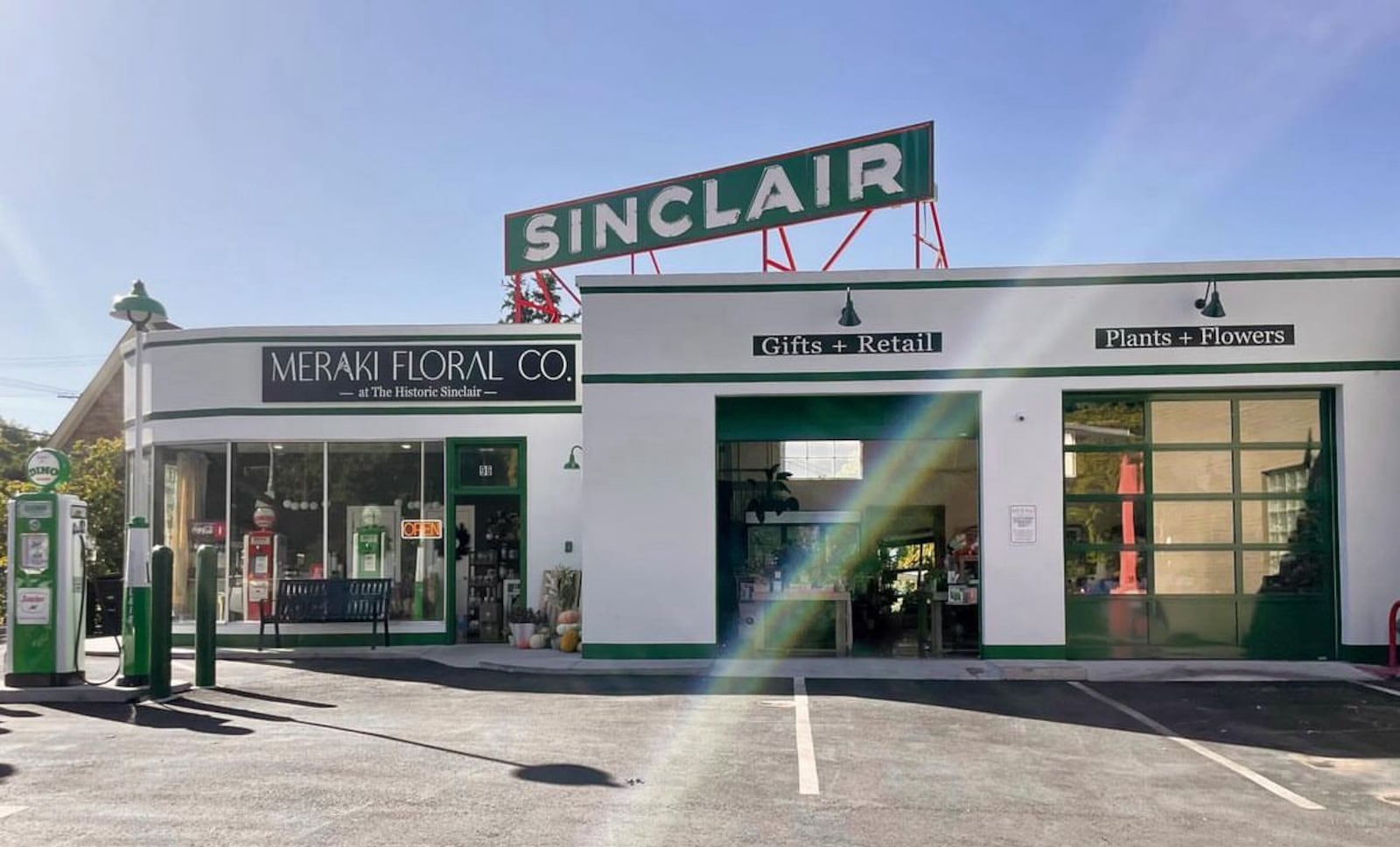
Dale’s Sinclair Service Station → Meraki Floral Co.
This mid-century modern building was completed in 1955, featuring one of the Sinclair Refining Company’s standardized plans and signature green-and-white color scheme. It is the best-preserved example of a mid-century gas station in Logan. The Logan Center Street Historic District was named on the National Register of Historic Places in 1979, but the service station didn’t meet the 50-year-old requirement. Efforts are underway to update this building to be included as a contributing resource, and the current owner is pursuing Federal Historic Tax Credits for a rehabilitation project.
Today, Meraki Floral Co. leases the space. Owner Haily Larsen had been eying the space since she saw renovations happening and opened up her florist business there. She loves being located in a historic space.
“I’m from [Cache Valley], and it’s been great to see it become this cool, safe place when it wasn’t always known for that,” Larsen says. They often have people wanting to just take pictures of the building and love the spotlight it brings to the community.
“I quickly just fell in love with [the building]. It’s been fun being part of the historical part of Logan and breathing life back into the area,” Larsen says.