
This story appears in the March 2026 issue of Utah Business. Subscribe.
The Translational Research Building, part of the Huntsman Mental Health Institute, began the same way many businesses do: identifying an unmet need in the market and finding ways to creatively fill the gap.
Over the past decade, Utah has ranked among the states with the highest rates of suicide, according to data from the CDC (Centers for Disease Control and Prevention). An estimated 700,000 adults in the state are living with a mental health condition, and suicide remains the leading cause of death among Utahns ages 10 to 17.
For people struggling with mental illness, problems with treatment rarely come from a lack of effort or care — it’s a system that isn’t built to connect the dots. Insights uncovered by researchers can take years to reach clinicians, while patterns that clinicians see in patients may never inform a researcher’s scientific study.
Slated to open in 2027, the Translational Research Building aims to bridge that divide, creating a single ecosystem where research and care evolve together.
“We’re really trying to move the needle with mental health,” says Danielle Brinker, VP of philanthropy for the Huntsman Mental Health Foundation. “If we want to find cures and better treatments for mental health, we need a building that will accelerate progress.”
Translational collaboration
While comprehensive crisis centers are critical in responding to mental health challenges, mental health innovators believe they are short-term solutions unless paired with research-backed, data-driven interventions.
Physical injuries are routinely treated through coordinated care, with surgeons, physical therapists and other specialists contributing to a shared patient treatment plan. Mental health care, on the other hand, has historically lacked that level of integration. With experience in both psychotherapy and neuroimaging, Dr. Deborah Yurgelun-Todd, PhD, vice chair of research at Huntsman Mental Health Institute, recognized that research insights and clinical practice were rarely brought together when patients were evaluated or treatment decisions were made.
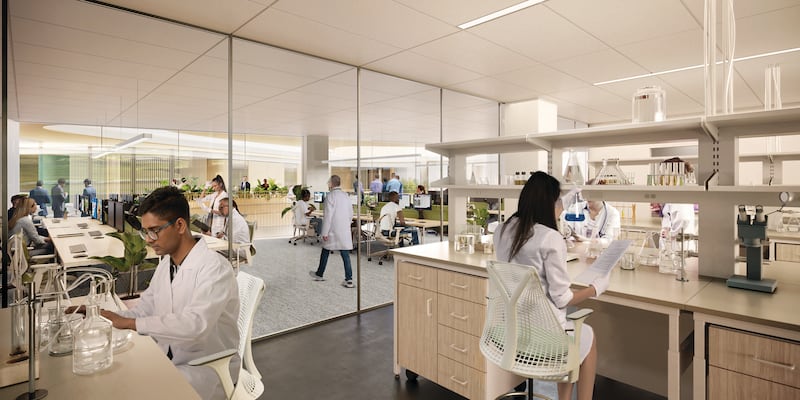
“If we want to advance science quickly around mental health and behavioral health, the research initiative as well as the clinical initiative, we have to put many disciplines together,” says Dr. Yurgelun-Todd.
In the Translational Research Building, there are wet labs — which focus on hands-on experiments with chemicals, biological samples and liquids — located near dry labs, which focus on computational, theoretical and data-driven work. With these labs just steps away from each other, Dr. Yurgelun-Todd and her team hope to accelerate discovery and break down silos.
The building will also house a 7-Tesla MRI, the only one in the world that will be solely dedicated to mental health and clinical innovation. The machine enables scientists and clinicians to see the brain at the cellular level. The high-definition images will help researchers understand how mental illness takes shape in the brain, identify early warning signs in individuals, and develop more precise and personalized treatments for patients.
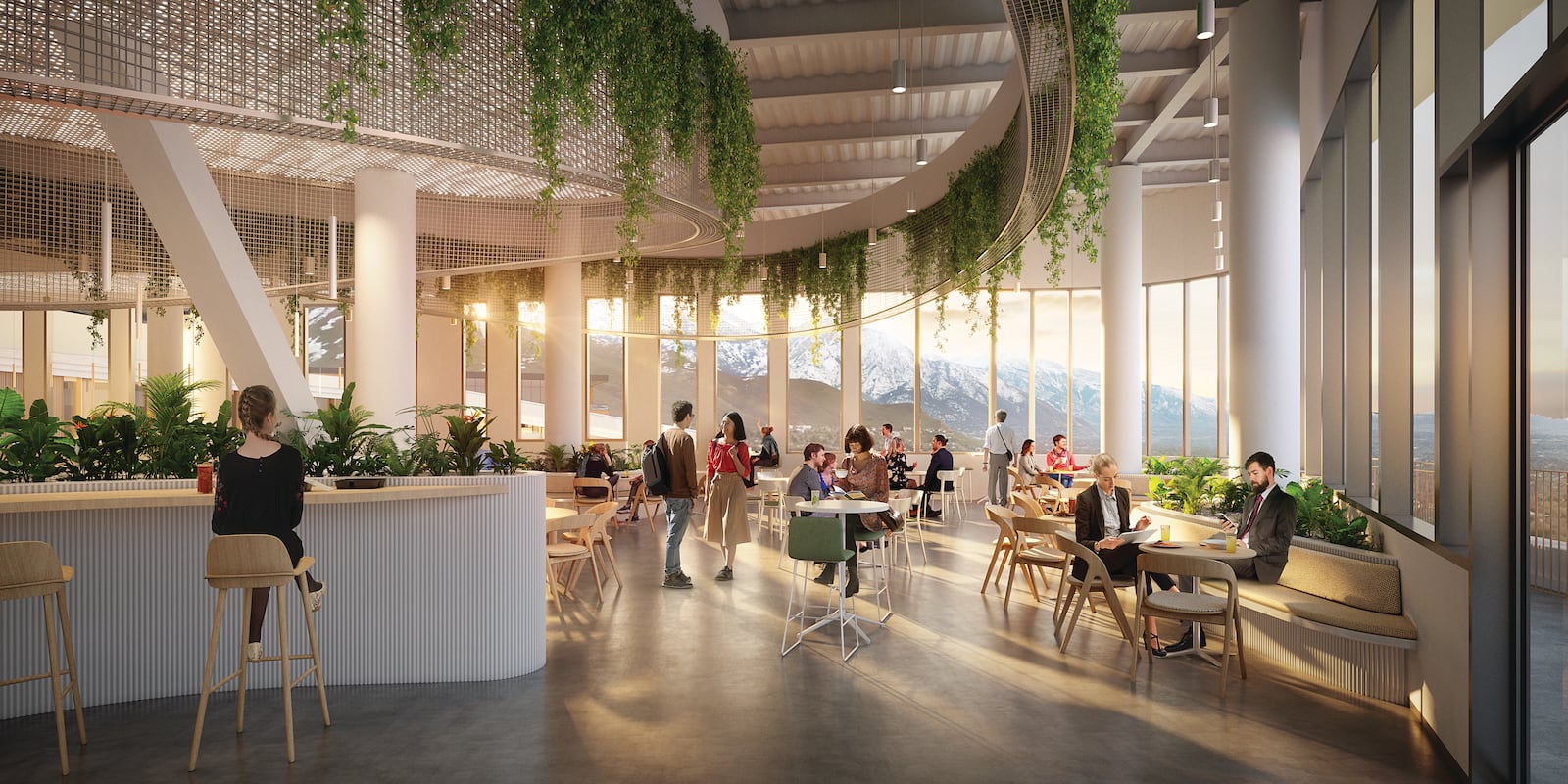
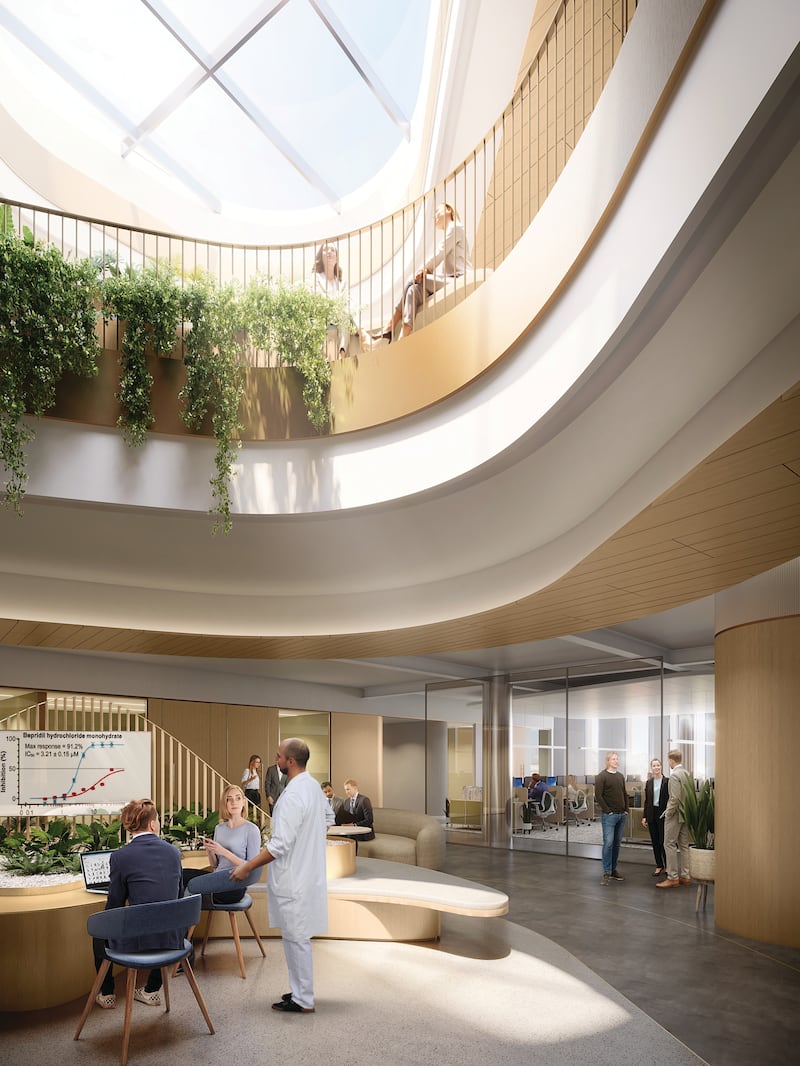
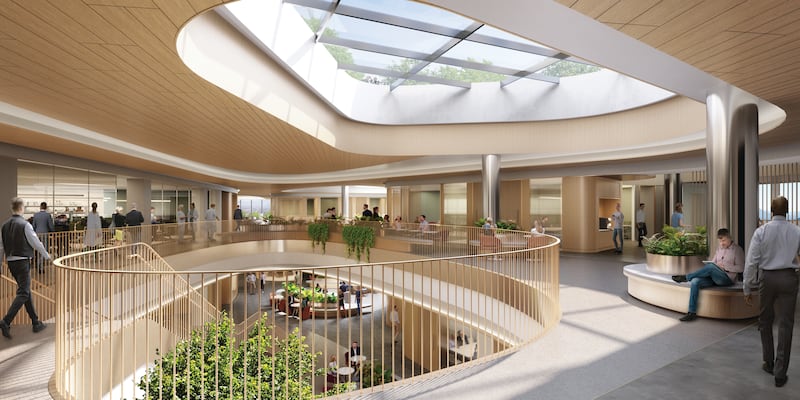
Along with labs and treatment areas, there are collaborative spaces, seminar rooms and an auditorium where researchers and clinicians from across the globe can come to share their work. “Our plan is to be able to bring those people together, to collaborate, to share what we’re finding, to learn from them and really be able to accelerate our pace of progress when it comes to mental health research and findings,” says Brinker.
Dr. Yurgelun-Todd recalls someone once teasing her that the new facility’s approach to treating mental health was, “Throwing the whole kitchen sink at it.” In a sense, she agrees. “I don’t know anything that doesn’t relate to how you feel,” she says.
By bringing so many disciplines under one roof, she believes the time from discovery to real-world implementation will shrink dramatically. “On every level,” she says, “We’re going to be faster and more efficient.”
Why it’s important that this research is happening in Utah
Adam Denison, assistant VP at the Huntsman Mental Health Foundation, sees this project as a proactive response to worsening mental health trends in Utah. “This is a perfect alignment of people who are in positions to make a difference,” he says.
The building is under construction on the University of Utah campus in Salt Lake City, where it will integrate into the broader University of Utah Health system, including the recently completed Kem and Carolyn Gardner Mental Health Crisis Care Center.
Researchers connected to the Translational Research Building are already collaborating with clinicians at the Gardner Crisis Center. “We’ll be evaluating new treatments, measuring how quickly effective care can be delivered, and building on the crisis center as a critical component of our research,” says Dr. Yurgelun-Todd.
Funding the future of mental health care
Funding for the Translational Research Building comes from a mix of public and private sources, including state and federal grants, philanthropic donations, and contributions from local Utah businesses.
According to Brinker, donors can support the project through naming opportunities for research hubs and shared spaces, as well as by funding specific areas of focus, such as substance use disorders or suicide prevention. “This shows how a business is talking about mental health,” she says, “And how they are helping promote mental health for their employees.”
In years to come, project leaders envision educational programming where lead researchers and clinicians can help educate the community, business leaders and policymakers on mental health issues and solutions.
“One way we can start to address this mental health crisis is by providing support within the workplace,” says Denison. “But that requires understanding beyond just putting foosball tables in the conference room. We need to really understand what people need and what an employer can deliver that would actually help with mental health.”
Beyond construction funding, the institute is also pursuing partnerships with local companies whose products and technologies can support ongoing research. Dr. Deborah Yurgelun-Todd said those collaborations may include tools such as artificial intelligence platforms, nutraceuticals and other emerging innovations that can be evaluated and integrated into mental health studies.
Long-term impact
Translational research is about turning scientific discovery into real-world solutions — moving from lab experiments to clinical studies to treatments that reach communities.
For mental health patients now and in the future, Dr. Yurgelun-Todd and her team hope their research will not only improve treatments but also help prevent mental health crises before they start. She envisions findings that shape public health policy, workplace programs and community support, giving researchers the tools to proactively address mental health.
While the facility is based in Utah, project leaders aim to serve patients from across the country and around the world. “We really want to be the leader in mental health care and mental health research,” says Brinker.
As the building rises in Salt Lake City, it stands as a symbol of what’s possible when research, care and community align. It’s a reminder that Utah is poised to lead the way in solving one of society’s most urgent challenges.