

This story appears in the December 2025 issue of Utah Business. Subscribe.
For decades, Utah’s independent film industry has been defined by the high-profile accomplishments of the wildly popular Sundance Film Festival, which is considered one of the five most important in the world. In 2027, the festival will debut in its new home of Boulder, Colorado, leaving a brood of smaller “siblings” wondering how to see and define themselves in terms of who they are, as opposed to who they are not.
The Utah Film Commission launched what was originally called the Utah/US Film Festival in August of 1978 with the goal of stimulating tourism and filmmakers’ awareness of Utah as a great place to make movies. Three years later, the event was moved from Salt Lake City to Park City and later renamed Sundance.
When Sundance announced its departure in the spring, Gov. Spencer Cox alluded to the state’s support for creating a replacement, adding, “Whatever we do, it will be bigger.”
So, what might that replacement be?
Life after the Sundance Film Festival
“Many people thought Sundance was Utah’s only film festival, but it isn’t,” says Warren Workman, founder of the Utah International Film Festival. “We have 30, though only one that most people have heard of, and when it moves to Colorado, it will leave a hole that can’t be filled. But many are going to try, and it’ll be like the Wild West. The reality is, Sundance succeeded and grew because of a perfect storm of timing, resources and celebrities coming together. I don’t think that can be duplicated in today’s environment.”
Jonathan Martin is an independent filmmaker and founder of FilmQuest, one of those promising — and in niche circles, extremely popular — younger sibling film festivals held annually in Provo, Utah. He views Sundance’s departure cynically.
“Sundance started here with pure intentions but lost its way,” Martin says. “I was told by somebody who would know that Sundance made their decision to leave over a year ago. They were playing us like a free agent baseball player would play their hometown team to boost competing bids. And I think the legislature knew that, so they poked the bear.”
Martin says the new state of independent cinema in Utah presents a true opportunity.
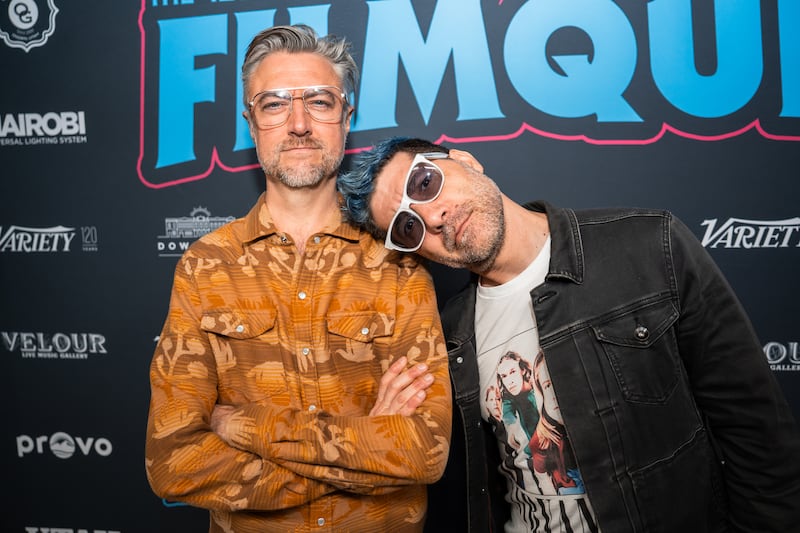
“If we do things correctly here, we’re going to see a renaissance in Utah independent filmmaking by various institutions, groups and individuals that now no longer feel constrained by Sundance,” he says. “We’re going to find out what we actually have here, and younger generations are going to rise out of this, and the older ones are now going to make their choice. Maybe they’ll just be into documentaries, which is great because we have DOCUTAH. Or do they want LGBTQ cinema? Utah’s Queer Film Festival is one of the largest and longest-running. Is faith-based, family-friendly what they want? Go check out the Zion Indie Film Fest [ZIFF].”
Marshall Moore, who runs ZIFF alongside his wife, Michelle, says he has no intention of replacing Sundance.
“We just want to expand what we’re doing in ways that are the most beneficial to the most people,” he continues. “We want to make it easier for creatives to realize that they can get a movie on the big screen and out into theaters; that they can make enough money to make their next movie. I think we’re going to stick to that mission.”
Michelle thinks Sundance has benefited Utah in two important ways: one that is evident looking back, and another that is evident looking ahead.
“What Sundance leaving has done is begin a real conversation about what film festivals are and where to go from here, and that’s helpful for all of us,” she says. “Sundance leaves behind a true legacy in Utah that will never leave, and we get to build on it.”
International eyes on Utah’s film scene
In 2027, the list of Utah’s indie film festivals will grow by one when the United Kingdom’s Raindance Film Festival expands into the United States by putting down roots in Ogden, Utah — the city documentary filmmaker Dan Davis calls home. He speculates Raindance chose Utah in part because of the successes of the state’s smaller film festivals.
“Organizers of film festivals pick their locations based on where they feel they can get support,” Davis says. “Raindance could have picked any place in the country, but they went with Ogden, Utah. That says a lot about how Utah is perceived as a place where independent film has a strong presence and is welcomed. As commercialized as Sundance became, we do have it to thank for helping the film community here get where we are today.”

Jenny Mackenzie, a Utah Valley University digital media professor and documentary filmmaker whose 2018 film “Quiet Heroes” was featured at Sundance, is optimistic about the future of Utah’s “robust” and “very alive” film ecosystem.
“When you go through a loss and a transition away from a significant brand that is connected to that ecosystem, it gives you an opportunity to pause and step back and, hopefully, very thoughtfully evaluate and even reimagine how we can repurpose, reinvent and strengthen an already robust film community that has a lot of strength and depth,” Mackenzie says.
In my view, it’s like growing up with an older brother. When big brother moves out, the house becomes much quieter, but also roomier. Spaces once dedicated to shiny trophies can now show off fingerpaints. A whole room will be made available for guests to visit.
Utah’s many remaining film festivals may never grow up to be the one everybody knows, and they seem to be fine with that.
Editor’s Note: This article previously misstated the origins of the Utah/US Film Festival; it was launched by the Utah Film Commission in 1978, not by Robert Redford.