
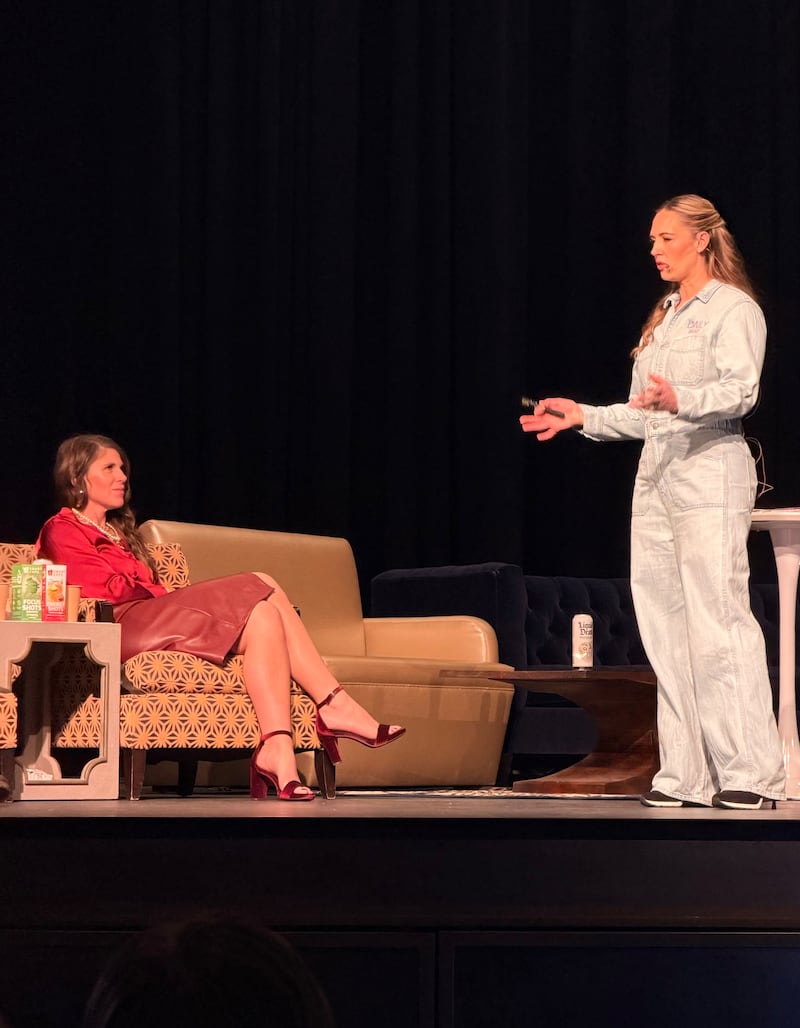
“Do you know this is the very first investor pitch I have ever given in my whole life?” Breelyn Vanleeuwen told a crowd of cheering investors, who assembled yesterday on the eve of the Sundance Film Festival, to film a pilot of The CUT.
Vanleeuwen, the Salt Lake City-based founder of Daily Shade sunscreen, spoke after winning the popular vote for top funding pitch, beating out seven founders from around the country who pitched to four judges and a room full of investors at the DeJoria Center in Kamas, Utah.
“I can’t believe how much practice it took to do this in three minutes,” says Vanleeuwen, who developed a unique chemical-free mineral sunscreen that goes on clear. In her pitch, she shared that some surveys rank Utah number one in the entire country for melanoma.
The CUT, a new entrepreneurial pitch programming concept (similar to Shark Tank), is the brainchild of Kent Richeson, its Spanish Fork-based CEO. He wants to turn his pitch shows into a pilot that he can sell to a major distributor. In the past year, he has taken The CUT ⎯ which he previously called “Sh*tPitch” ⎯ on a 15-city tour, and through those events, he says founders raised nearly $9 million in capital.
“The big picture is the television show,” Richeson tells me as the judges tally their final votes. “We’re working with some cool execs over at Netflix and others to try to make this happen. This was a pivotal point for us to actually close the first chapter, which is a pilot so we can finish funding and go to distribution. This is a big win for us today.”
Richeson has a passion for bringing together investors and founders. The twist he adds to The CUT is to ask founders to first deliver a three-minute pitch for a “hilariously horrible” idea. On Wednesday, Palmer Fox from Austin, Texas, had to pitch “CluckCrox,” sandals for chickens, and Chris Kanik from Los Angeles found himself pitching carpeting for bathtubs. Vanleeuwen pitched toenail lashes ⎯ fake eyelashes for toes. They had 15 minutes to prepare their pitch decks.
“It lets investors see how founders communicate, adapt and think on their feet,” Richeson says. “It’s about discovering the human behind the founder’s pitch.”
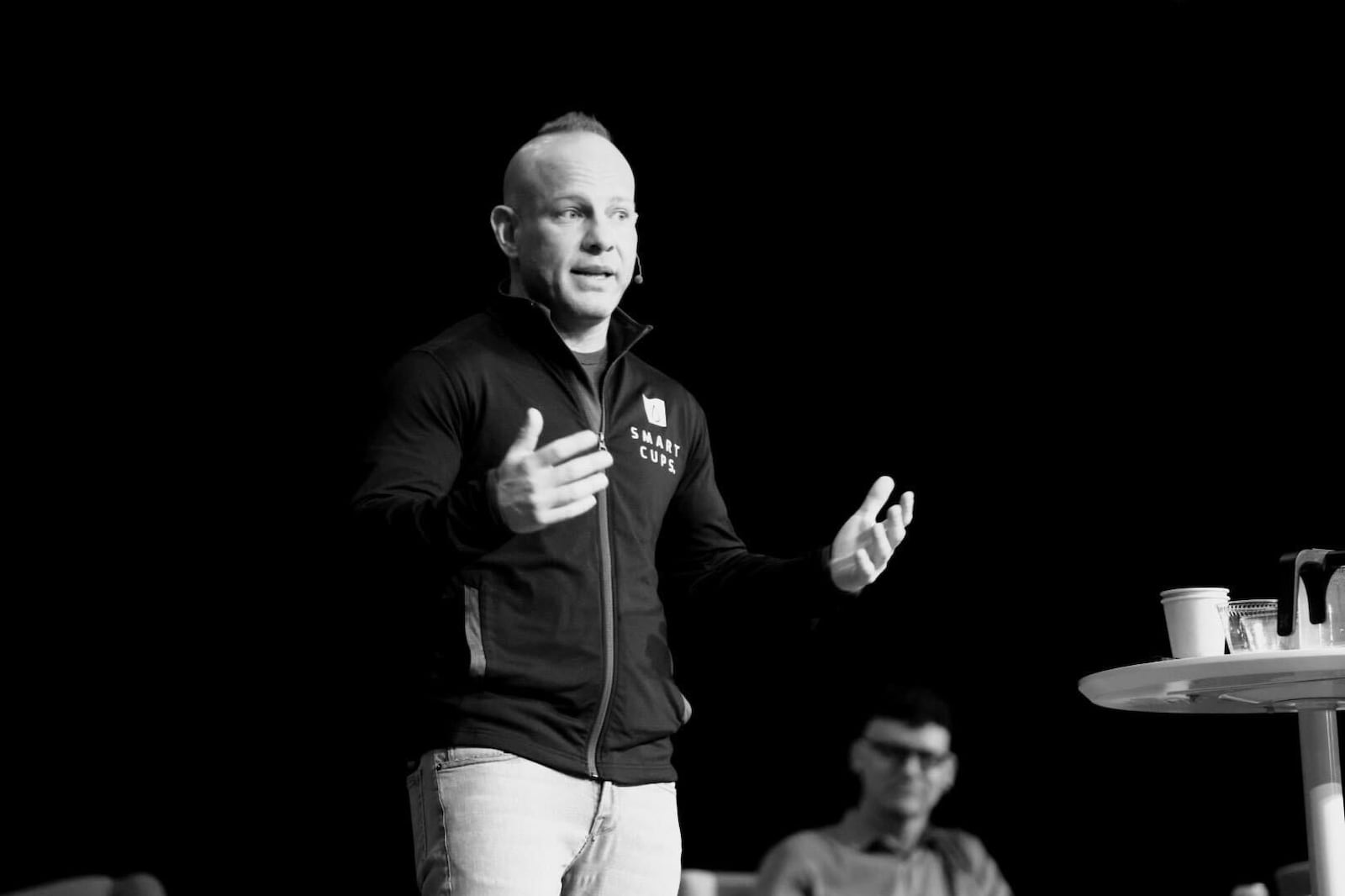
Then, once the four judges have a good read on the founders’ personalities, the real pitches begin. Kanik pitches his company Smart Cups, which prints consumable drinks into the surface of a cup; he adds hot water and it turns into a cup of coffee that he hands to judge Reuben Levinsohn, who tells the audience it tastes like a legitimate cup of joe.
Another judge, Emily Breunig, coaches Kanik on his ask. “I don’t want to hand you a check and see you later,” she tells him. “I want to help you with partnerships. That’s a huge part of what I can do and the investors in this room can do. We can give your capital legs.”
Kanik went on to win the judges’ vote. “[Smart Cups] is my life,” Kanik tells the crowd. “I’m just very humbled. Every day, there is so much work that needs to get done, and all I need is just a little bit of capital to get me over the hump.”